The 8 Most Successful Amphibious Assault Ships in the World (2026): From the America Class to the Juan Carlos Export Family
Summary Not Found.
The amphibious assault ship has become the centrepiece of expeditionary sea power, fusing the helicopter carrier, the landing platform and, increasingly, the light F-35B aircraft carrier into a single hull. This Defense News-style ranking weighs proven operations, air-wing capability, well-deck capacity, export reach and procurement momentum to identify the most successful big-deck amphibs in service today, from America’s 45,000-ton LHAs to the Navantia design that has armed four NATO and partner navies.
Each system is scored 0-10 across 8 criteria; the weighted total is out of 100.
Criterion
Weight
What It Measures
Operational Success
%18
Mission performance and operational reliability
Combat Experience
%16
Proven record in real conflicts
Technology Level
%16
Level of sensor, weapon and protection technology
Export Success
%12
International sales and contract volume
Operator Count
%10
Number of active operator nations
Upgrade Potential
%10
Availability of upgrade and modernization paths
Production Status
%10
Whether serial production continues
Cost-Effectiveness
%8
Unit price and life-cycle cost
Ranking Table
Rank
System
Origin
Score
#1
Juan Carlos I (L-61) class
Spain
77.2/100
#2
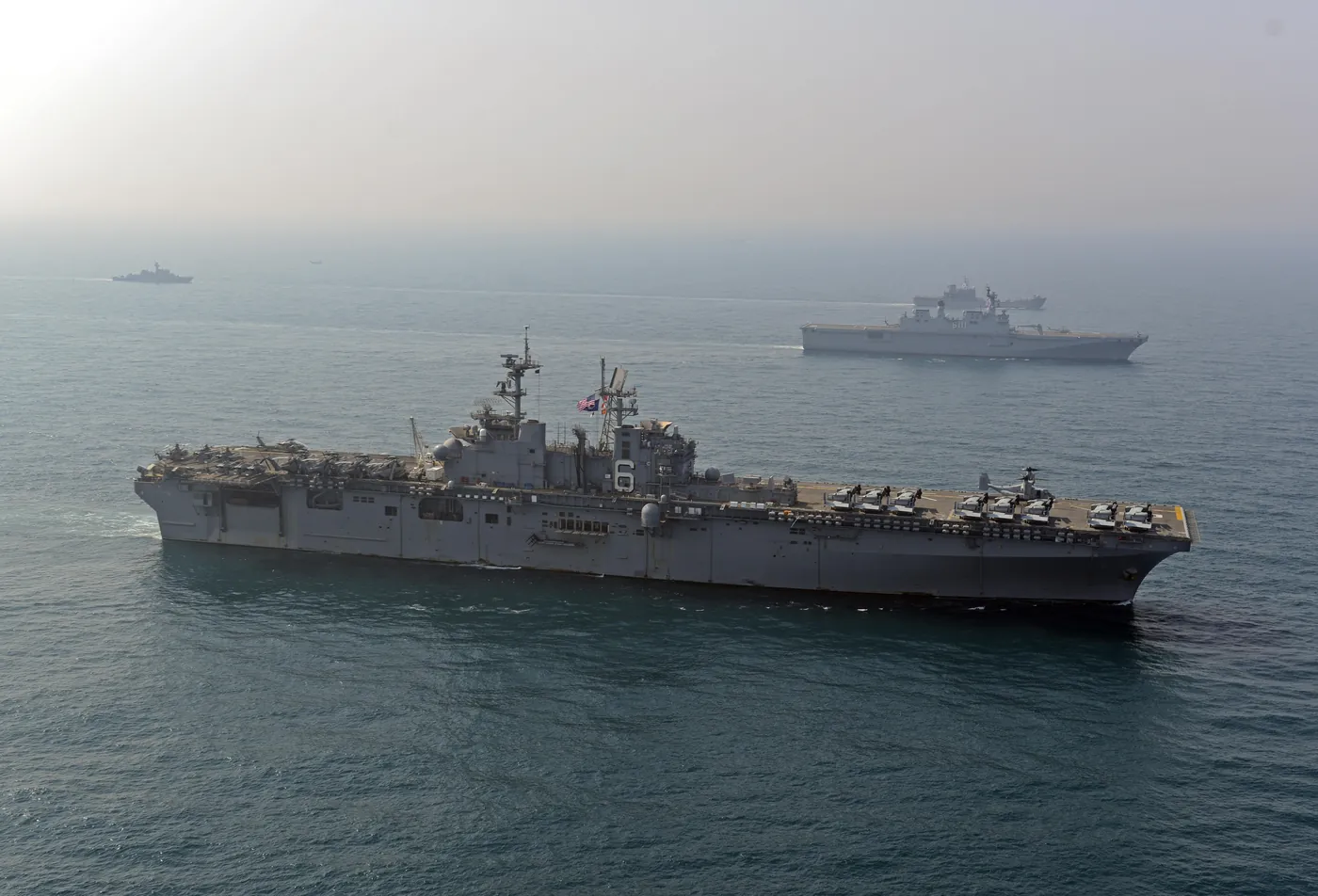
America class (LHA-6)
United States
76.4/100
#3
Wasp class (LHD-1)
United States
75.2/100
#4
Mistral class (L9013)
France
70.8/100
#5
Canberra class (L-02)
Australia
66.2/100
#6
Izumo class (DDH-183)
Japan
65.6/100
#7
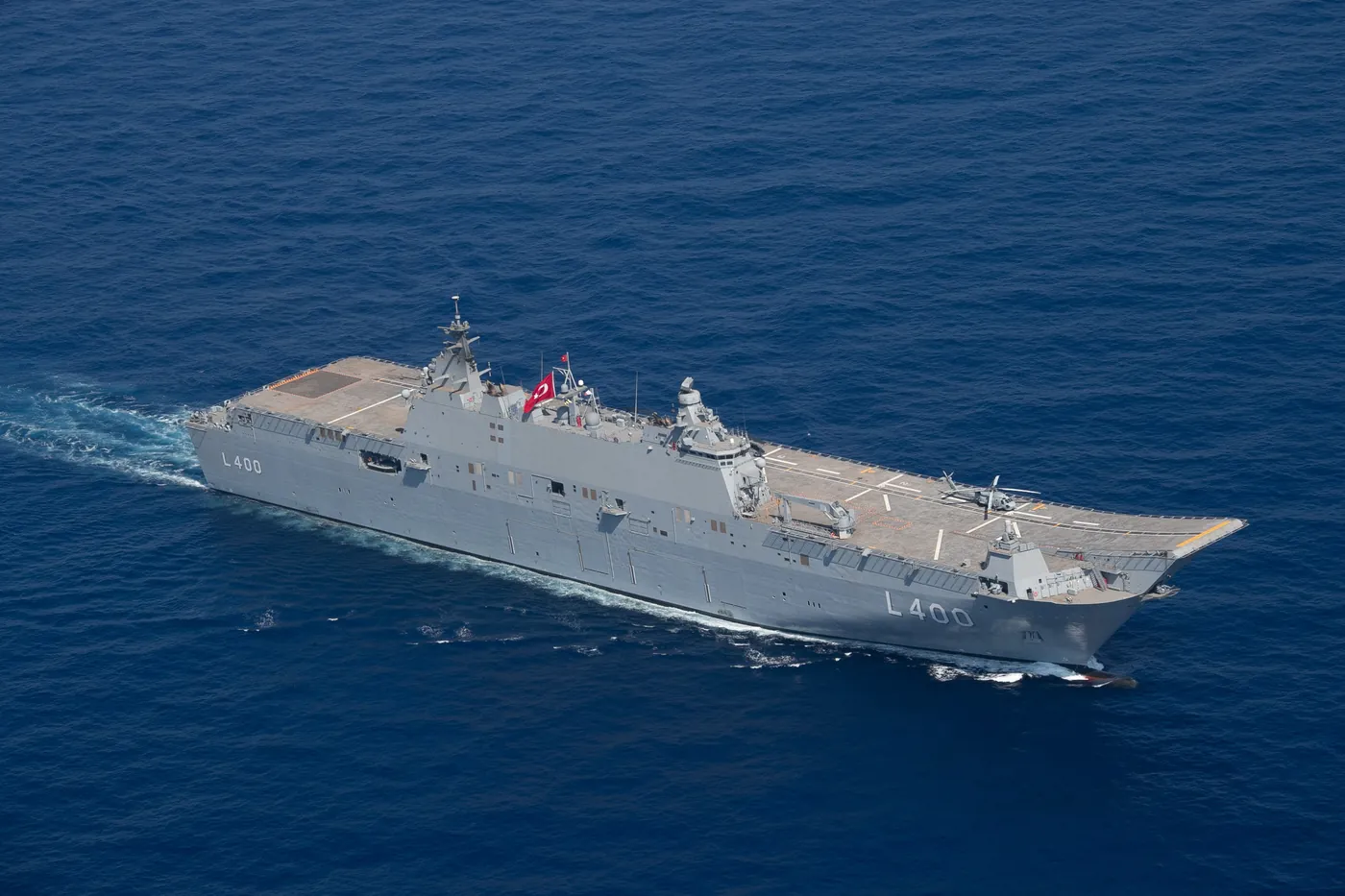
TCG Anadolu (L-400)
Turkey
64.2/100
#8
Dokdo class (LPH-6111)
South Korea
55.8/100
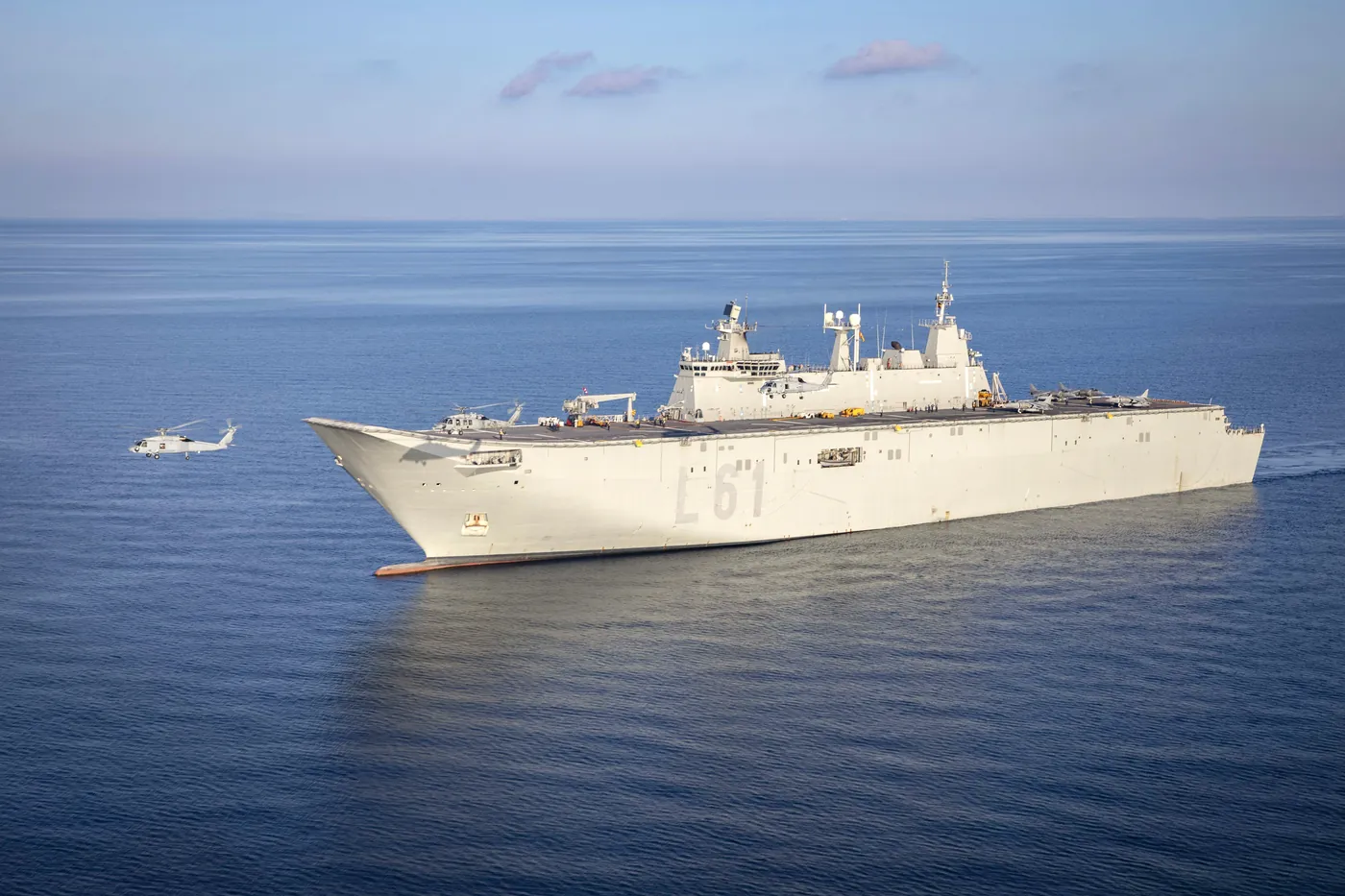
#1 — Juan Carlos I (L-61) class (Spain) · 77.2/100
Juan Carlos I (L-61) class — Public domain
Score Breakdown — 77.2/100
Operational Success8/10
Combat Experience6/10
Technology Level8/10
Export Success9/10
Operator Count8/10
Upgrade Potential8/10
Production Status8/10
Cost-Effectiveness7/10
The Navantia Juan Carlos I is the most commercially successful big-deck amphib design of the 21st century, a flexible LHD that doubles as a light carrier thanks to its ski-jump.
Its export wins, two Canberra-class ships for Australia and the TCG Anadolu for Turkey, make it the reference platform for navies seeking carrier-like capability at amphibious cost.
Key Specifications
Export record
Design sold to Australia and Turkey
Displacement
~27,000 t full load
Length
231 m
Flight deck
Ski-jump for STOVL (AV-8B / F-35B capable)
Well deck
4 LCM or 1 LCAC
In service
2010
#2 — America class (LHA-6) (United States) · 76.4/100
America class (LHA-6) — Public domain
Score Breakdown — 76.4/100
Operational Success10/10
Combat Experience9/10
Technology Level10/10
Export Success3/10
Operator Count4/10
Upgrade Potential10/10
Production Status8/10
Cost-Effectiveness3/10
The America class is the most capable amphibious warship afloat, built around the F-35B to function as a de facto light aircraft carrier while still embarking a Marine Expeditionary Unit.
The aviation-centric Flight 0 ships trade the well deck for hangar and fuel volume; from LHA-8 Bougainville the well deck returns, balancing the air wing against surface connectors.
Key Specifications
Air wing
Up to ~20 F-35B in ‘Lightning carrier’ role
Displacement
~44,500 t full load
Length
257-261 m
Aviation focus
Flight-deck optimised; Flight 0 has no well deck
Troops
~1,600 Marines
In service
2014 (USS America)
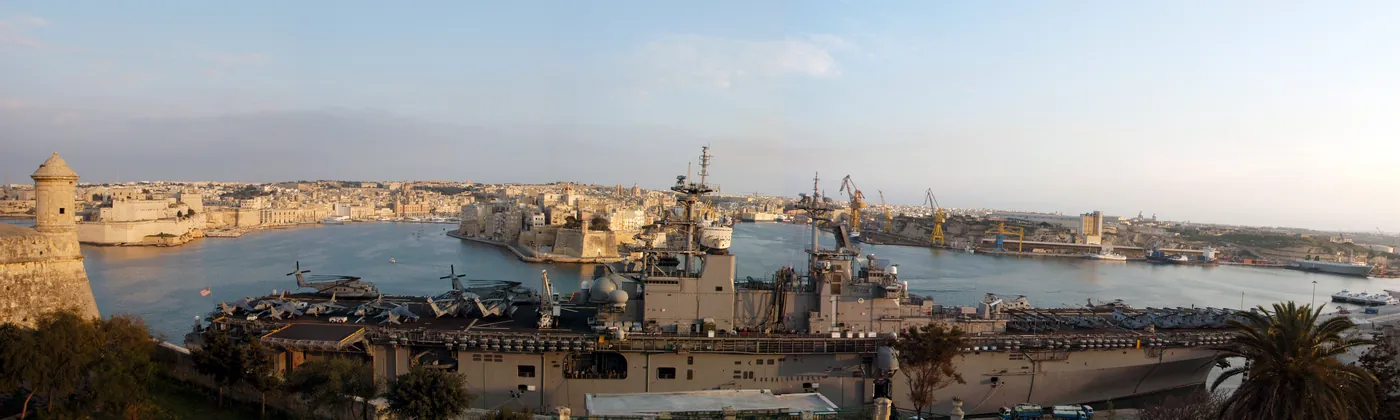
#3 — Wasp class (LHD-1) (United States) · 75.2/100
Wasp class (LHD-1) — Public domain
Score Breakdown — 75.2/100
Operational Success10/10
Combat Experience10/10
Technology Level9/10
Export Success3/10
Operator Count4/10
Upgrade Potential8/10
Production Status8/10
Cost-Effectiveness4/10
The eight-ship Wasp class is the proven backbone of US amphibious power, combining a large well deck with a full aviation suite and a heavy command-and-control fit.
Battle-tested across Iraq, Afghanistan and humanitarian operations, the class is being modernised for the F-35B, with USS Wasp’s service life extended to keep big-deck numbers up into the 2030s.
Key Specifications
Well deck
3 LCAC hovercraft + AAV/ACV vehicles
Displacement
~41,000 t full load
Length
257 m
Air wing
F-35B/AV-8B, MV-22, CH-53, AH-1Z
Troops
~1,900 Marines
In service
1989 (8 built through 2009)
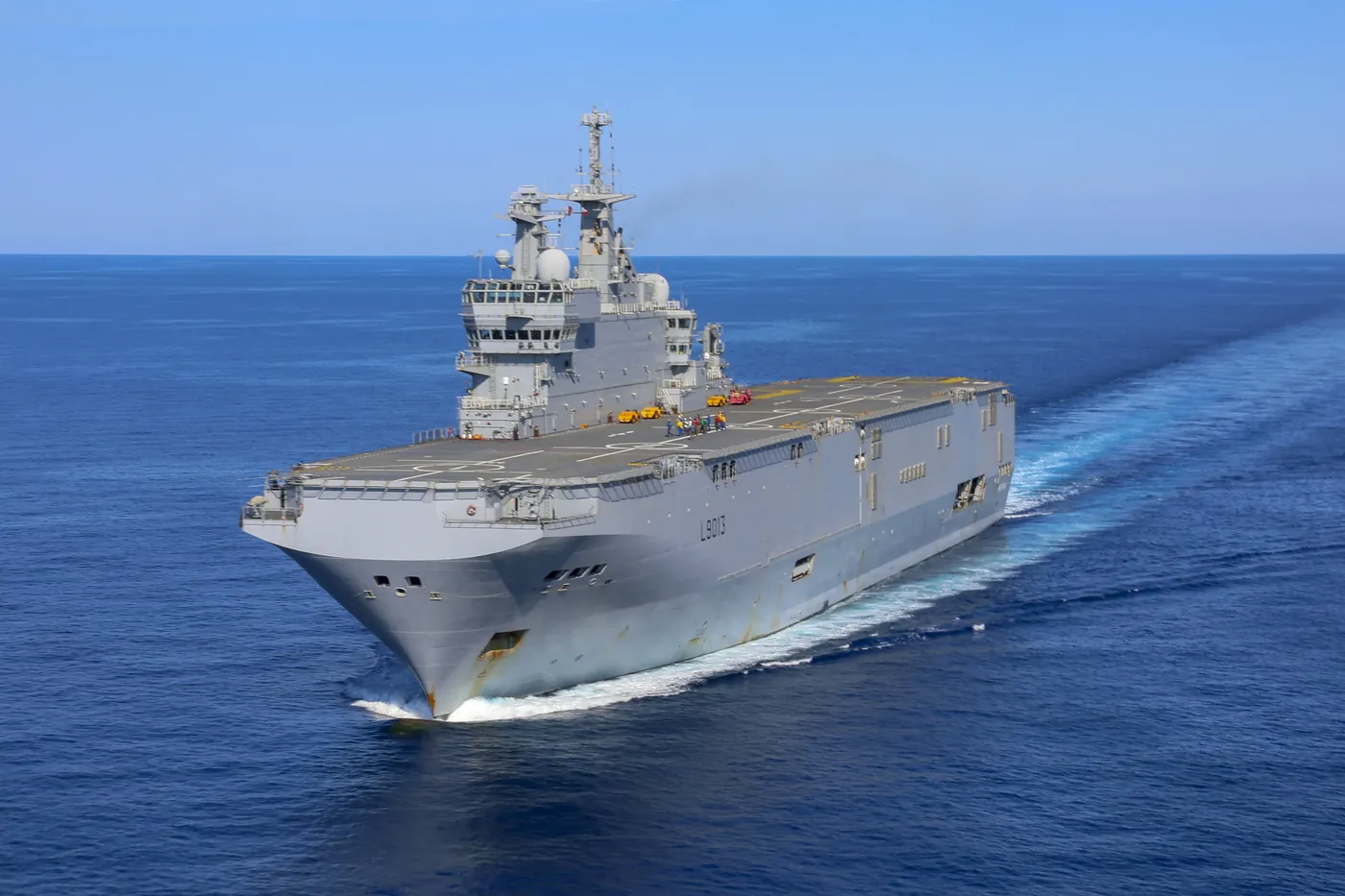
#4 — Mistral class (L9013) (France) · 70.8/100
Mistral class (L9013) — Public domain
Score Breakdown — 70.8/100
Operational Success8/10
Combat Experience7/10
Technology Level7/10
Export Success7/10
Operator Count6/10
Upgrade Potential7/10
Production Status7/10
Cost-Effectiveness7/10
The Mistral class is the most combat-experienced European LHD, deployed by France for operations off Libya, in the Sahel and across the Mediterranean as a command and aviation platform.
Its export story is unusual: two hulls built for Russia were embargoed and sold to Egypt, giving Cairo the most powerful amphibious ships in the Middle East and North Africa.
Key Specifications
Operators
France + Egypt (ex-Russian pair)
Displacement
~21,300 t full load
Length
199 m
Aviation
16 helicopters, hospital + command suite
Well deck
2 LCAC or 4 LCU
In service
2006
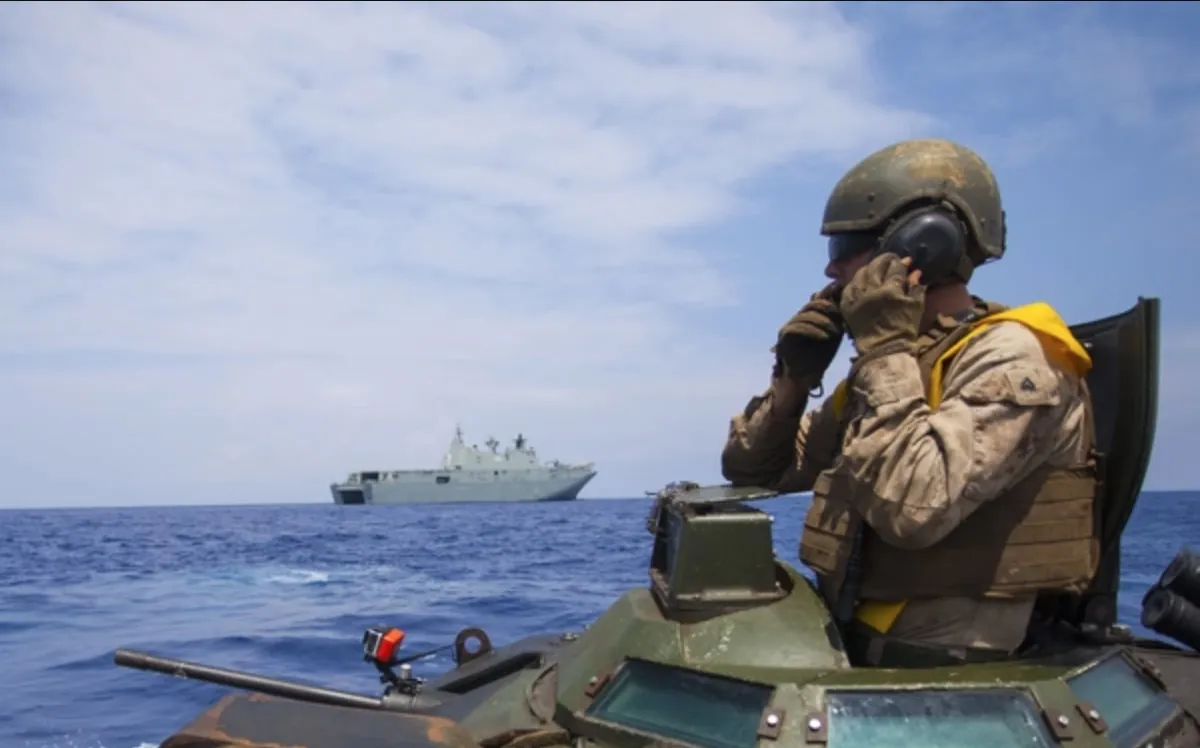
#5 — Canberra class (L-02) (Australia) · 66.2/100
Canberra class (L-02) — Public domain
Score Breakdown — 66.2/100
Operational Success8/10
Combat Experience6/10
Technology Level8/10
Export Success4/10
Operator Count4/10
Upgrade Potential8/10
Production Status7/10
Cost-Effectiveness7/10
The two Canberra-class ships are the Australian-built derivative of the Juan Carlos I, giving the Royal Australian Navy a genuine amphibious and disaster-relief capability for the Indo-Pacific.
Used heavily for regional engagement and humanitarian missions, they demonstrate how the Navantia design transfers cleanly into an allied industrial base.
Key Specifications
Marquee role
RAN’s largest-ever warships
Displacement
~27,500 t full load
Length
230.8 m
Aviation
Up to 18 helicopters; ski-jump retained
Well deck
4 LLC landing craft
In service
2014 (Canberra), 2015 (Adelaide)
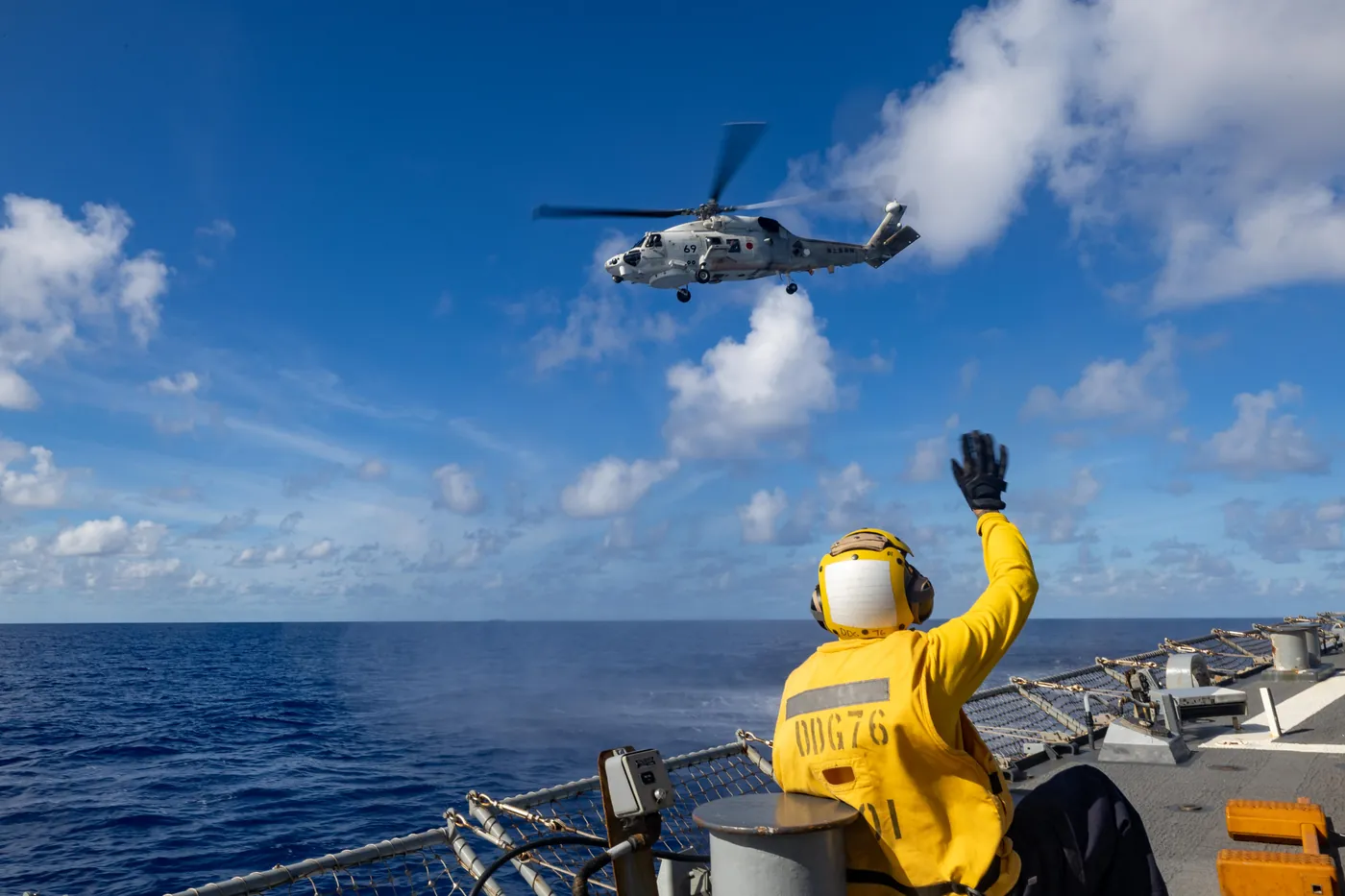
#6 — Izumo class (DDH-183) (Japan) · 65.6/100
Izumo class (DDH-183) — Public domain
Score Breakdown — 65.6/100
Operational Success8/10
Combat Experience6/10
Technology Level9/10
Export Success2/10
Operator Count3/10
Upgrade Potential10/10
Production Status7/10
Cost-Effectiveness6/10
Classed as a helicopter destroyer for political reasons, the Izumo class is being converted into Japan’s first fixed-wing carriers since 1945, embarking the F-35B from a flat, bow-modified deck.
It lacks a well deck and a true assault role, but as a sea-control and aviation platform it anchors Japan’s response to Chinese carrier expansion in the Western Pacific.
Key Specifications
F-35B conversion
Decks reworked to operate STOVL F-35B
Displacement
~26,000 t full load
Length
248 m
Configuration
No well deck; flat-top aviation ship
Air wing
~12+ F-35B / 14 helicopters
In service
2015 (Izumo), 2017 (Kaga)
#7 — TCG Anadolu (L-400) (Turkey) · 64.2/100
TCG Anadolu (L-400) — Public domain
Score Breakdown — 64.2/100
Operational Success7/10
Combat Experience5/10
Technology Level9/10
Export Success3/10
Operator Count3/10
Upgrade Potential10/10
Production Status7/10
Cost-Effectiveness7/10
Built in Turkey on the Juan Carlos I design, TCG Anadolu is the world’s first amphibious ship conceived to operate fixed-wing combat drones, after F-35B access was withdrawn.
Bayraktar TB3 deck trials have validated the unmanned air wing concept, positioning the ship as a pioneering hybrid of assault carrier and drone mothership.
Key Specifications
World first
Designed as a UCAV carrier (Bayraktar TB3 / Kizilelma)
Displacement
~27,400 t full load
Length
232 m
Air wing
TB3 UCAVs, T129 ATAK, transport helicopters
Well deck
LCM / LCT landing craft
In service
2023
#8 — Dokdo class (LPH-6111) (South Korea) · 55.8/100
Dokdo class (LPH-6111) — Public domain
Score Breakdown — 55.8/100
Operational Success7/10
Combat Experience5/10
Technology Level7/10
Export Success2/10
Operator Count3/10
Upgrade Potential7/10
Production Status6/10
Cost-Effectiveness7/10
South Korea’s two Dokdo-class ships are the heart of the ROK Marine Corps’ amphibious capability, blending a well deck with a helicopter air wing and a sophisticated combat system.
The improved Marado upgrades radar and flight-deck handling, and the class is the stepping stone to Seoul’s planned larger LPX-II light carrier.
Key Specifications
Sensors
Carries indigenous AESA-class radar fit
Displacement
~18,800 t full load
Length
199 m
Aviation
~10 helicopters (UH-60, Surion, MUH-1)
Well deck
2 LCAC (Tsurugi-type)
In service
2007 (Dokdo), 2021 (Marado)
Technical Comparison Table
System
Origin
Key Spec
Score
Juan Carlos I (L-61) class
Spain
Design sold to Australia and Turkey
77.2/100
America class (LHA-6)
United States
Up to ~20 F-35B in ‘Lightning carrier’ role
76.4/100
Wasp class (LHD-1)
United States
3 LCAC hovercraft + AAV/ACV vehicles
75.2/100
Mistral class (L9013)
France
France + Egypt (ex-Russian pair)
70.8/100
Canberra class (L-02)
Australia
RAN’s largest-ever warships
66.2/100
Izumo class (DDH-183)
Japan
Decks reworked to operate STOVL F-35B
65.6/100
TCG Anadolu (L-400)
Turkey
Designed as a UCAV carrier (Bayraktar TB3 / Kizilelma)
64.2/100
Dokdo class (LPH-6111)
South Korea
Carries indigenous AESA-class radar fit
55.8/100
Operating Nations
System
Operators
America class (LHA-6)
United States (USS America, Tripoli; Bougainville building)
Wasp class (LHD-1)
United States (8 ships in service)
Izumo class (DDH-183)
Japan (Izumo, Kaga, F-35B conversion)
Juan Carlos I (L-61) class
Spain (design also Australia, Turkey)
Canberra class (L-02)
Australia (Canberra, Adelaide)
TCG Anadolu (L-400)
Turkey
Mistral class (L9013)
France, Egypt
Dokdo class (LPH-6111)
South Korea (Dokdo, Marado)
Frequently Asked Questions
Which is the best amphibious assault ship in the world?
The US Navy’s America class tops the list. At roughly 44,500 tons it can operate up to twenty F-35B fighters as a ‘Lightning carrier’ while still embarking a Marine Expeditionary Unit, giving it strike, sea-control and assault capability no other amphibious ship matches. The Wasp class follows closely thanks to its proven well deck and full air wing.
What is the most successful amphibious assault ship for export?
Spain’s Navantia Juan Carlos I design is the export champion. It was selected by Australia for the two Canberra-class ships and by Turkey for TCG Anadolu, making it the reference platform for navies that want carrier-like aviation capability at amphibious cost.
Why is TCG Anadolu significant?
After Turkey lost access to the F-35B, TCG Anadolu was reconfigured as the world’s first amphibious assault ship designed to launch and recover fixed-wing combat drones such as the Bayraktar TB3, pioneering the unmanned-carrier concept on a big-deck hull.
What is the difference between an LHA and an LHD?
Both are big-deck amphibious assault ships. An LHD (Landing Helicopter Dock, like the Wasp class) prioritises a large well deck for landing craft alongside aviation, while an LHA (Landing Helicopter Assault, like America Flight 0) emphasises aviation capacity, in some cases deleting the well deck to maximise hangar and fuel volume.
How are these ships ranked?
Each ship is scored on operational reach, combat capability, technology, export success, operator base, modernisation, production maturity and cost-effectiveness, with aviation power, well-deck capacity and proven service weighted most heavily.
Share"The 8 Most Successful Amphibious Assault Ships in the World (2026): From the America Class to the Juan Carlos Export Family" share the content titled.