US Army Cuts China Dependence: Anniston Depot to Become Drone Motor Production Hub
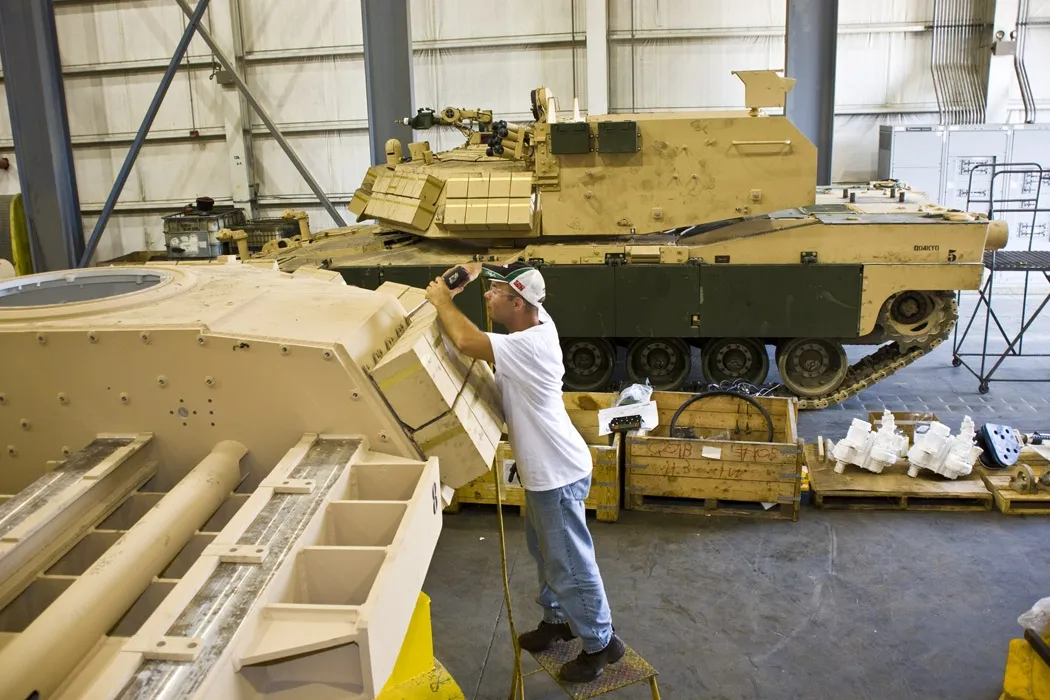
The US Army has awarded Siemens Government Technologies (SGT) an $80 million contract to convert Anniston Army Depot in Alabama into a secure production hub for drone motor components. Selected from among 11 bids by Army Contracting Command at Detroit Arsenal, SGT will build stator assembly lines for the electric motors used in unmanned aerial systems. The move is driven above all by China’s roughly 98 percent grip on the rare-earth magnets that power US drone production.
At a Glance
- The US Army has tasked Siemens Government Technologies with converting Anniston Depot into a drone component production hub under an $80 million contract.
- The 12-month project will build electric motor stator assembly lines, with completion expected by August 2027.
- The primary rationale is that China controls roughly 98 percent of the rare-earth magnets used in drone manufacturing.
- SGT will use AI-driven digital twin technology to model and test production lines before physical construction begins.
- The project is part of a broader US push to reshore critical defense supply chains.
Background
One of the biggest structural weaknesses in US unmanned systems manufacturing is heavy reliance on China for motor and magnet components, leaving the supply chain highly exposed to disruption in wartime or crisis scenarios — a concern that echoes the Pentagon’s recent public warnings about munitions and platform production capacity. Anniston Army Depot dates back to World War II and has long specialized in armored vehicle maintenance and overhaul; SGT’s task is to convert that legacy infrastructure into a modern, high-precision electric motor production line. The project’s “born digital” approach means production lines will be modeled and validated through digital twins before any physical build-out, aimed at both speeding up delivery and minimizing errors. Producing under government control at a secure facility is also seen as a way to strengthen supply security for classified or sensitive military programs.
What It Means for Turkey
Washington’s push to reshore its own drone supply chain offers Turkey’s defense industry both a reference point and an indirect opening. Companies like Baykar, ASELSAN and Vestel Defense have already achieved high levels of localization across drone components — from motors to optical systems — over the past several years, essentially building the model the US is now scrambling to construct. That track record gives Turkish firms a concrete talking point when marketing their supply chains, or when pitching allied nations on “supply security” partnerships. The US effort to cut its rare-earth dependence on China is also fueling a broader search for alternative suppliers, and Turkey’s growing mining and processing capacity could take on added strategic value in that context over time. In short, this US move is less a direct commercial opportunity for Turkey than a validation of the localization strategy Ankara has pursued for years.
FAQ
What will be produced at Anniston Depot? Stator assembly lines for electric motors used in drones.
What is the contract’s value and duration? An $80 million, 12-month contract, with completion expected by August 2027.
Why is the US taking this step? To secure its supply chain, given that China controls roughly 98 percent of the rare-earth magnets critical to drone production.
Sources
- The Defense Post, “Siemens to Revamp WWII Depot Into US Army Drone Component Factory,” August 12, 2026.
- Drives&Controls, “Siemens wins $80m US Army contract for drone stator production.”
- Defence Blog, “U.S. Army pays $80 million to build drone motors on U.S. soil.”