What is the Tomahawk Cruise Missile? America’s 1,600 km Subsonic Strike Workhorse, Explained
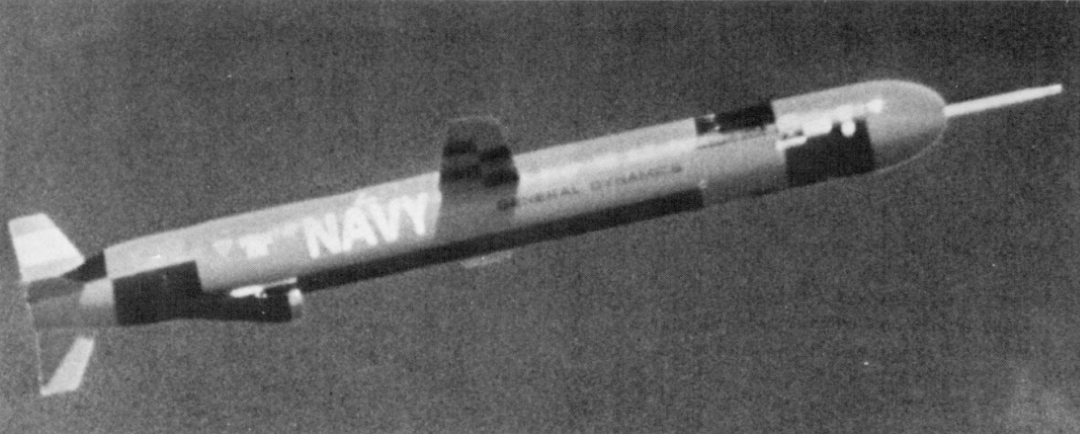
The BGM-109 Tomahawk is the U.S. Navy’s flagship long-range, all-weather, subsonic cruise missile, manufactured by Raytheon (RTX). Since first combat use in Operation Desert Storm (1991), more than 2,300 Tomahawks have been fired in anger — making it the most-employed Western cruise missile in history. The current Block V generation extends the family with a multi-mode seeker, anti-ship variant (Maritime Strike Tomahawk), and the post-INF return to ground-launched configurations on the U.S. Army’s Typhon system.

Key facts at a glance
| Attribute | Value |
|---|---|
| Type | All-weather subsonic long-range cruise missile |
| Manufacturer | Raytheon Missiles & Defense (RTX) |
| In service | 1983 — present |
| Length | 5.56 m (6.25 m with booster) |
| Diameter | 520 mm |
| Launch weight | 1,300 kg (1,600 kg with booster) |
| Warhead | 450 kg WDU-36/B unitary or submunition |
| Range | 1,600 km (Block V); 2,500 km (Block IV with extended fuel) |
| Speed | Mach 0.74 (~880 km/h) |
| Cruise altitude | 30–50 m (terrain following) |
| Guidance | INS + GPS + TERCOM + DSMAC (Digital Scene Matching) + MMS seeker (Block V) |
| Engine | Williams F107 turbofan |
| Operators | U.S. Navy, U.S. Marine Corps, U.S. Army (Typhon), UK Royal Navy, Australia, Japan (planned), Netherlands (planned) |
| Unit cost | ~ USD 1.9 million (Block V, 2024) |
| Combat firings since 1991 | 2,300+ |
Origins: the BGM-109 lineage
Tomahawk traces to a U.S. Navy 1972 study for a sea-launched cruise missile (SLCM) to replace the troubled Regulus. General Dynamics (later acquired by McDonnell Douglas and ultimately Raytheon) won the SLCM contract in 1976. First test flight took place in March 1976; the missile entered Navy service in 1983 aboard surface ships and 688-class attack submarines. Two original variants split the early production: a nuclear-armed TLAM-N (retired in 2010) and the conventional TLAM-C/D with unitary or submunition warhead.
The Block evolution
| Block | Year | Key feature |
|---|---|---|
| Block I | 1983 | Initial production; TERCOM-only mid-course |
| Block II | 1986 | DSMAC scene-matching terminal seeker |
| Block III | 1993 | GPS, improved penetrator warhead, lighter airframe |
| Block IV (TacTom) | 2004 | Two-way satellite datalink, mid-flight retargeting, loitering up to 4 hours |
| Block V | 2021 | Modernized comms, navigation jam-resistance |
| Block Va (MST) | 2024 | Maritime Strike Tomahawk — multi-mode seeker for moving naval targets |
| Block Vb | 2025 | Joint Multi-Effects Warhead — programmable kinetic, fragmentation or penetrator modes |
Combat record
Tomahawk’s combat history is the deepest in the cruise-missile world:
- 1991 — Desert Storm. 288 fired in 24 hours; the first time cruise missiles were used as the opening strike of a war.
- 1993–2003 — Iraq containment. Steady use against Iraqi air-defense and command targets.
- 1998 — Operation Infinite Reach. 75 Tomahawks struck al-Qaeda training camps in Afghanistan and a Sudanese pharmaceutical plant after the U.S. embassy bombings.
- 1999 — Kosovo. 218 fired against Serbian air defenses and infrastructure.
- 2003 — Iraqi Freedom. Over 800 fired in the first 24 hours; the largest cruise-missile salvo in history at the time.
- 2011 — Libya. 200+ Tomahawks knocked out Libyan air defenses in the opening night of Operation Odyssey Dawn.
- 2017 — Syria (al-Shayrat). 59 Tomahawks struck the Syrian air base after the Khan Shaykhun chemical attack.
- 2024 — Yemen. Continuing strikes against Houthi missile and drone launchers.
- 2025 — Iran (June). Aegis-equipped destroyers fired Tomahawks against Iranian air-defense radar facilities during the June 2025 strikes.
The Maritime Strike Tomahawk
The 2024 entry of Block Va Maritime Strike Tomahawk (MST) restored an anti-ship capability the U.S. Navy abandoned in 1994 with the retirement of TASM. MST integrates a passive radio-frequency seeker plus imaging IR for terminal homing against moving naval targets. Combined with the Block IV’s two-way datalink, MST allows an Aegis ship or P-8A Poseidon to retarget a Tomahawk in flight onto a different ship — a critical capability in the Pacific theater where Tomahawk dramatically extends the strike radius of the surface fleet against Chinese naval forces.
Ground-launched return: the Typhon system
Tomahawk was banned from land-based launchers under the 1987 INF Treaty. After the U.S. withdrawal in 2019, the Army revived ground-launched Tomahawk under the Mid-Range Capability (MRC) / Typhon system: four Mk 41 vertical-launch cells on a heavy truck trailer. First Typhon battery deployed to the Philippines in April 2024, providing the first U.S. ground-based long-range cruise-missile presence in the Indo-Pacific since the Cold War. Japan and Australia have requested Typhon and Tomahawk under FMS, with deliveries beginning 2026.
Tomahawk vs. its peers
| Tomahawk Block V | Storm Shadow / SCALP | Kalibr 3M14 | JASSM-ER | |
|---|---|---|---|---|
| Range | 1,600 km | 250–560 km | 2,500 km | 900 km |
| Speed | Mach 0.74 | Mach 0.8 | Mach 0.8 | Mach 0.8 |
| Launch platform | Surface ship, submarine, truck (Typhon) | Aircraft | Surface ship, submarine | Aircraft |
| Anti-ship variant | Yes (MST) | No | Yes (3M54) | Planned (LRASM) |
| Combat-proven | Yes (Iraq, Syria, Libya, Iran) | Yes (Iraq, Ukraine) | Yes (Syria, Ukraine) | Yes (Ukraine 2024+) |
Why Tomahawk matters
The Tomahawk redefined Western airpower in 1991, ended the Cold War argument over whether cruise missiles or manned aircraft should open a war, and is now expanding into ground-launched and anti-ship roles that the U.S. abandoned for thirty years. With Block Vb production scaling to over 200 rounds per year by 2027, Tomahawk will remain at the heart of U.S. and allied conventional strike planning through the 2040s.