What is the Brimstone 3? MBDA’s Dual-Mode Precision Strike Missile, Explained

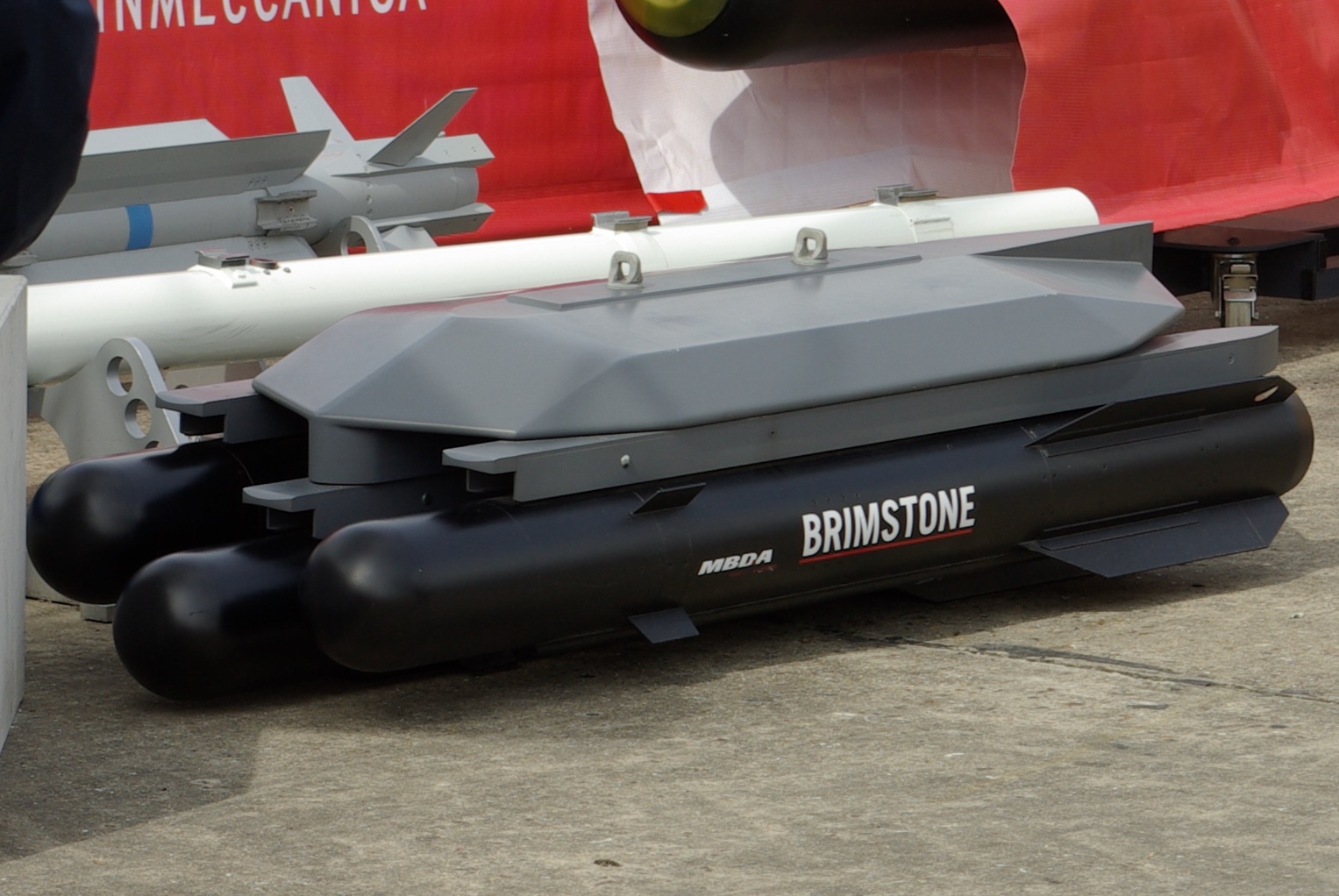
The MBDA Brimstone 3 is the latest production variant of the British dual-mode precision strike missile family, designed and produced by MBDA UK at Stevenage and Lostock. Originally conceived in the 1990s as a tank-killer for the RAF Tornado, the Brimstone has been continuously evolved across three major models and is now a tri-service multi-purpose weapon used by fast-jets, attack helicopters, ground launchers and naval platforms. The defining innovation is its dual-mode seeker: a millimeter-wave radar plus a semi-active laser, combined in the same nose, allowing the missile to switch between fire-and-forget and human-confirmed engagement modes. With combat use across five major conflicts and an emerging role on Ukrainian land-launched platforms, Brimstone has become the UK’s most-employed precision-strike weapon since the Maverick generation.
Key facts at a glance
| Attribute | Value |
|---|---|
| Type | Dual-mode precision-strike missile |
| Manufacturer | MBDA UK |
| In service | 2005 (Brimstone 1); 2016 (Brimstone 2); 2024 (Brimstone 3) |
| Length | 1.80 m |
| Diameter | 178 mm |
| Weight | 50 kg |
| Warhead | 6.3 kg tandem HEAT + blast-fragmentation |
| Range (aircraft) | 20+ km (high altitude); 7 km (low altitude) |
| Range (ground-launched) | 10 km |
| Speed | Mach 1.3 |
| Guidance | Dual-mode: 94 GHz millimeter-wave radar + semi-active laser; INS mid-course |
| Platforms | Typhoon, F-35B (in test), Tornado (retired), AH-64E (in qualification), Wildcat, Apache, ground launchers, USVs |
| Operators | UK, Saudi Arabia, Germany (under negotiation), Ukraine, Japan (in negotiation) |
| Unit cost | ~ USD 160,000 per round |
Variants
| Variant | Year | Key feature |
|---|---|---|
| Brimstone 1 (RAF) | 2005 | Initial production; millimeter-wave only; designed for swarm engagement of tank columns |
| Dual-Mode Brimstone (DMB) | 2008 | Adds semi-active laser seeker; deployed urgently to Afghanistan for low-collateral strikes |
| Brimstone 2 | 2016 | Improved range, programmable warhead, lighter; tri-rail launcher allowing 9 rounds per F-35B sortie |
| Sea Spear | 2018 | Maritime variant for naval USV / fast-attack craft |
| Brimstone 3 | 2024 | Enhanced motor; range past 20 km; new seeker discriminating between active protection systems; integrated with British Army truck-launcher |
How dual-mode guidance works
Brimstone’s defining feature is the dual-mode seeker, combining two complementary sensors:
- 94 GHz millimeter-wave (MMW) radar – active homing; allows fully autonomous fire-and-forget engagement of armored vehicles in any weather, day or night. Particularly effective in dust, fog and rain that defeat optical seekers.
- Semi-active laser – homing onto a laser spot from another aircraft, drone, or ground forward observer; allows positive human-controlled engagement in environments where collateral damage must be minimized.
The gunner selects mode pre-launch. Mid-flight, the missile prefers the laser spot if available; if not, it autonomously transitions to MMW homing.
Combat record
- 2008-2014 – Afghanistan. First combat use of Dual-Mode Brimstone. Used heavily against Taliban vehicles, command posts and bunkers. The dual-mode capability proved particularly valuable in compound-strike scenarios where minimal collateral damage was required.
- 2011 – Libya. RAF Tornado strikes against Gaddafi-regime armor and SAM sites.
- 2014-2018 – Iraq / Syria. Heavy use against Islamic State vehicles and weapons systems under Operation Shader.
- 2018 – Syria. Brimstone strikes against Syrian regime targets.
- 2024 – Yemen. RAF Typhoons fired Brimstone against Houthi land-based cruise-missile launchers.
- 2023-present – Ukraine. Ukrainian forces received truck-mounted Brimstone launchers from the UK starting in 2023. The system has been used to strike Russian armor, artillery and small naval craft in the Sea of Azov. Verified Ukrainian Brimstone destruction of T-72B3, MT-LB and BTR-82A vehicles.
Multi-role platforms
Brimstone is unique among Western precision missiles for the breadth of its host platforms:
| Platform | Configuration |
|---|---|
| RAF Typhoon | 2x triple-launcher = 6 Brimstones per sortie |
| RAF F-35B | Internal carriage (Block 4 – planned) |
| British Army Wildcat helicopter | Underbody triple-launcher |
| U.S. Army AH-64E (qualification) | Tri-rail launcher |
| Land-launched | Truck-mounted launchers – delivered to Ukraine 2023 |
| Maritime | Royal Navy Sea Spear – small ship and USV mounting |
Brimstone vs. its peers
| Brimstone 3 | AGM-114R Hellfire | Spike NLOS | JAGM AGM-179 | |
|---|---|---|---|---|
| Range (aircraft) | 20 km | 11 km | 32 km | 11 km |
| Seeker | Dual-mode MMW + SAL | SAL only | EO + fiber-optic | Dual-mode MMW + SAL |
| Fire-and-forget | Yes (MMW mode) | No | Man-in-loop | Yes |
| Multi-platform | Fast-jet, heli, ground, naval | Heli, drone | Heli, ground, naval | Heli, drone |
| Combat-proven | Afghanistan, Iraq, Yemen, Ukraine | Heavy – 40 years | Israel, Ukraine | Limited |
SPEAR 3 successor
MBDA is developing the SPEAR 3 (Select Precision Effects At Range) as the long-term Brimstone successor. SPEAR 3 is a turbofan-powered, 100+ km range networked missile carrying a smaller warhead but designed for swarm employment from the F-35B and Typhoon. First operational deliveries are planned for 2027. Until then, Brimstone 3 remains the UK’s standard tactical precision strike weapon, with production increasing at MBDA’s Lostock facility to meet UK reorders and Ukrainian demand.
Why Brimstone matters
Brimstone is the only Western precision-strike missile in series production with dual-mode (radar + laser) guidance, multi-platform integration across fast-jets, helicopters, ground launchers and ships, and combat use across five major conflicts. The system has been validated in Ukraine for land-based use and increasingly integrated on platforms outside the RAF – particularly the U.S. Army Apache and the British Wildcat – giving it a niche no other 50 kg-class precision missile occupies. As Brimstone 3 production scales and SPEAR 3 follow-on enters service, the family will define UK precision-strike doctrine through the 2030s.