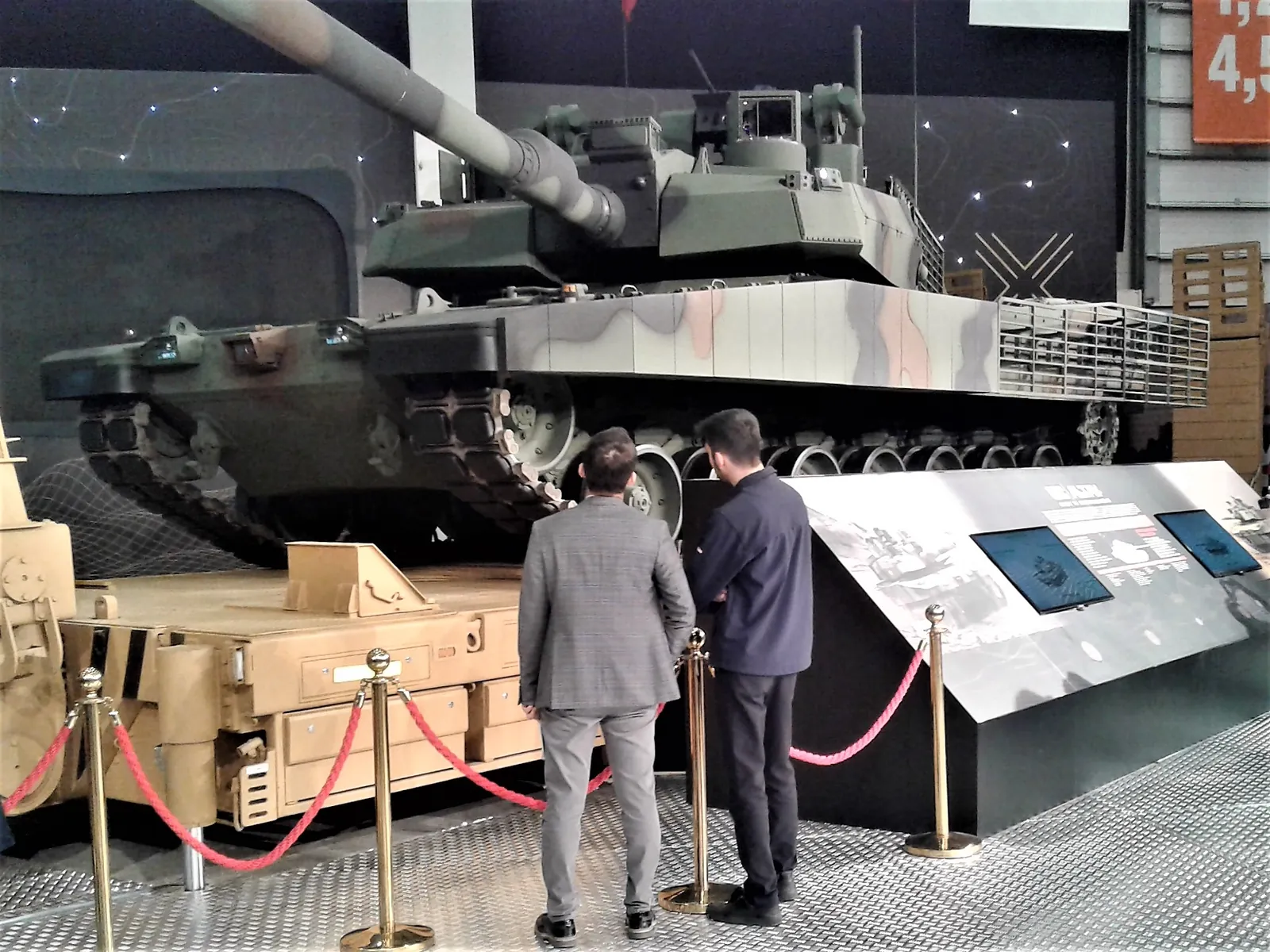
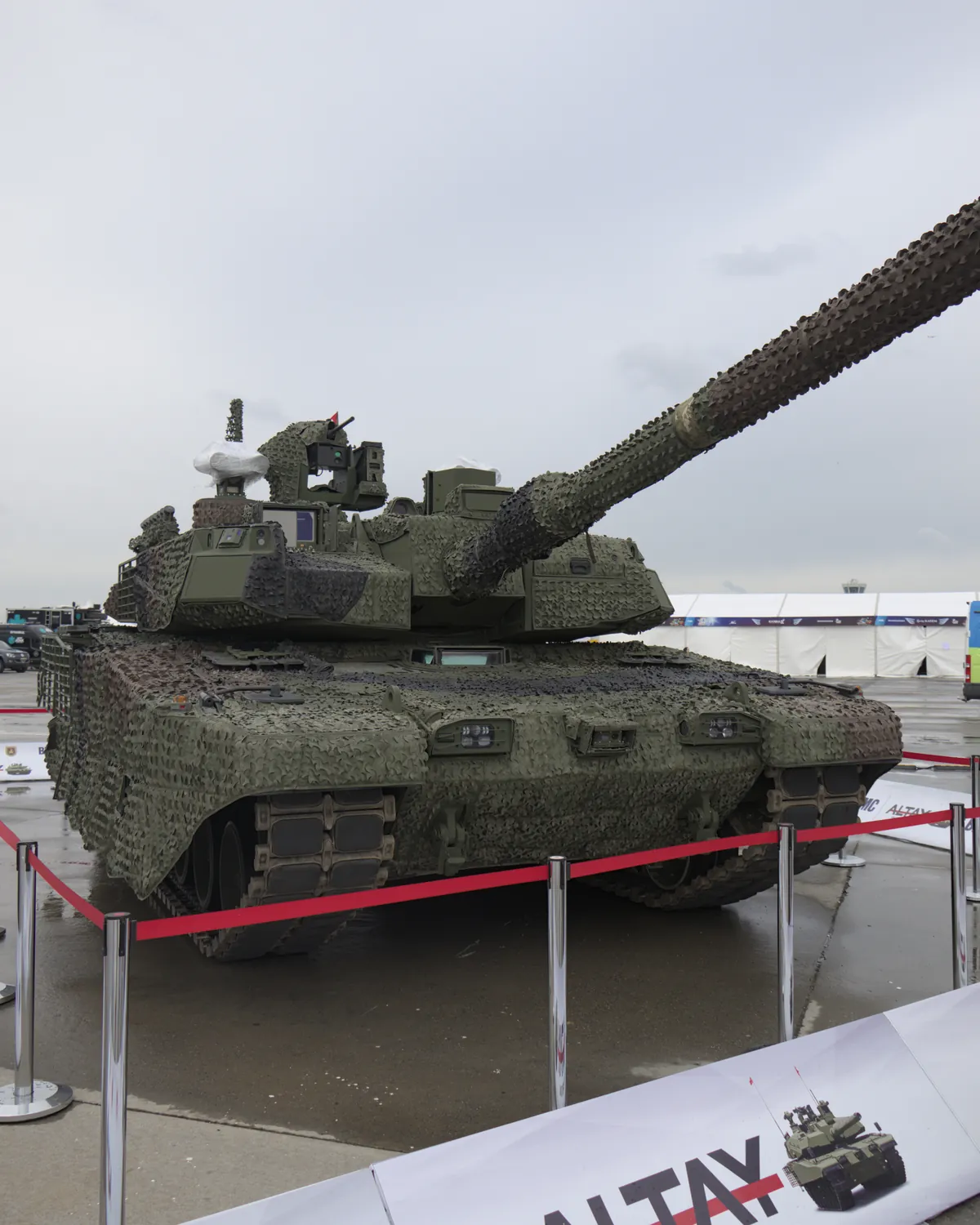
ALTAY is Türkiye’s first indigenous main battle tank (MBT). Designed under Otokar and serially produced by BMC, its first two units were delivered to the Turkish Land Forces on 28 October 2025 at the opening of a new tank plant in Ankara. The project targets a total of 250 tanks (85 T1 + 165 T2).
This dossier compiles ALTAY’s delivery timeline, production plan, engine localization and technical data from open sources and is updated regularly.
28 Oct 2025
First delivery (2 tanks)
250 units
Total plan (85 T1 + 165 T2)
120 mm
55-cal main gun
BATU
Indigenous 1,500 hp engine (T2)
Contents: Tap each heading to expand — what the Altay is, how many, first delivery and serial production, engine localization, timeline, specs, peer comparison, subsystems and FAQ.
What is the Altay?
The Altay is an indigenous MBT combining the firepower, protection and mobility a modern tank requires. Its 120 mm 55-caliber gun, composite armor and ASELSAN AKKOR active protection system are designed against contemporary threats.
It was developed to renew the Turkish Land Forces’ aging tank fleet and reduce dependence in this critical area. With the indigenous engine, the Altay will become a fully national platform.
Which institution operates it, and how many?
The Altay’s sole operator for now is the Turkish Land Forces Command, on a phased delivery plan.
Operator
Units
Status
Turkish Land Forces
250 (85 T1 + 165 T2)
First 2 tanks delivered 28 Oct 2025
Production is planned in two configurations: T1 with an interim imported powerpack and T2 with the indigenous BATU engine. The table below summarises the annual delivery plan.
Year
Delivery
Note
2025
3 (T1)
First batch — first 2 delivered 28 Oct
2026
11 (T1)
Production with imported powerpack
2027
41 (T1)
Production accelerates
2028
30 (T1)
T1 batch completed
2028 onward
165 (T2)
T2 with indigenous BATU powerpack
First delivery and serial production
The first two serial-production Altay tanks were delivered to the Land Forces on 28 October 2025 at a ceremony at the new Ankara tank plant — the start of the Altay’s effective service entry after years of development.
Per the plan, 85 T1 tanks will be delivered over four years (3 in 2025, 11 in 2026, 41 in 2027, 30 in 2028). BMC aims to raise output gradually to dozens of tanks per year.
Engine: from a Korean interim to the indigenous BATU
The Altay’s longest-running technical issue was its powerpack. The first T1 batch is built with a Korean-sourced ~1,500 hp engine and transmission.
Localization: BMC Power developed the indigenous BATU powerpack at its Ankara engine plant. From around 2028, T2 tanks are planned to use the BATU engine, achieving full independence in propulsion too.
Altay main battle tank. Source: Wikimedia Commons (CC BY-SA 3.0).
Delivery and development timeline
Date
Event
Party
Source
2007–2008
Project start (Otokar design)
Otokar / SSB
Open source
2016
First prototype firing & mobility tests
Otokar
Open source
2018
Serial production contract
BMC
Open source
2023–2025
Indigenous BATU engine development + interim Korean engine
BMC Power
Ekonomim
28 Oct 2025
First 2 Altay delivered + new tank plant opened
Land Forces
Türkiye Today / AA
2026
Plan to deliver 11 (T1)
Land Forces
Defence Security Asia
2028 onward
T2 production with indigenous BATU engine (165)
BMC
Euro-SD
Technical specifications
Feature
Value
Type
Main battle tank (MBT)
Weight
~65 t
Crew
4
Main gun
120 mm 55-caliber smoothbore
Engine (interim)
Korean-sourced ~1,500 hp powerpack (T1)
Engine (indigenous, target)
BATU 1,500 hp (BMC Power, T2)
Protection
Composite armor + AKKOR active protection system (ASELSAN)
Fire control
ASELSAN fire control + thermal sights (day/night)
Comparison with global peers
The Altay competes with Germany’s Leopard 2A8, the US M1A2 Abrams, South Korea’s K2 Black Panther and Israel’s Merkava. With a 120 mm 55-caliber gun and active protection, it offers firepower and protection on par with modern peers.
Its real difference is that critical subsystems such as AKKOR active protection and ASELSAN fire control are indigenous, and the final version will use a domestic engine — an advantage for offering flexible export packages.
Subsystems and manufacturer
The Altay was designed under Otokar with technical support from South Korea’s Hyundai Rotem; the serial-production contract went to BMC, which built two major Ankara facilities — one for tanks and one for engines (BMC Power).
The AKKOR active protection system, fire control and electro-optic sights come from ASELSAN. This broad domestic supply chain gives the Altay its ‘national tank’ identity.
Why it matters for Türkiye
The Altay modernizes the Turkish Land Forces’ armored striking power with an indigenous platform. Renewing a fleet long reliant on imported tanks with a national tank is a strategic turning point.
The new tank plant and BMC Power engine facility create an industrial base that will feed not only the Altay but all future heavy-armor projects. With the indigenous engine, the Altay will become a fully independent platform with export potential.
Frequently Asked Questions
When was the Altay first delivered?
The first two serial-production Altay tanks were delivered to the Turkish Land Forces on 28 October 2025 at the opening of a new tank plant in Ankara.
How many Altay will be built?
A total of 250 tanks are planned for the Land Forces: 85 in T1 configuration and 165 in T2.
Is the Altay’s engine indigenous?
The first T1 batch uses a Korean-sourced powerpack. With the move to the ~1,500 hp indigenous BATU engine, T2 production from 2028 will use a fully domestic powerpack.
What is the difference between Altay T1 and T2?
T1 is the first 85 tanks built with an interim imported powerpack. T2 covers 165 tanks with the indigenous BATU engine and updated systems.
Who builds the Altay?
The tank was designed under Otokar; the serial-production contract went to BMC, which built both tank and engine (BMC Power) plants in Ankara.
When will Altay deliveries be completed?
Per the plan, 85 T1 tanks are delivered in 2025–2028, followed by 165 T2 tanks from 2028 with the indigenous engine, with annual output rising gradually.