GÖKBEY Air Ambulance (MEDEVAC): Stretcher Layout, ICU Equipment and Mission Profile

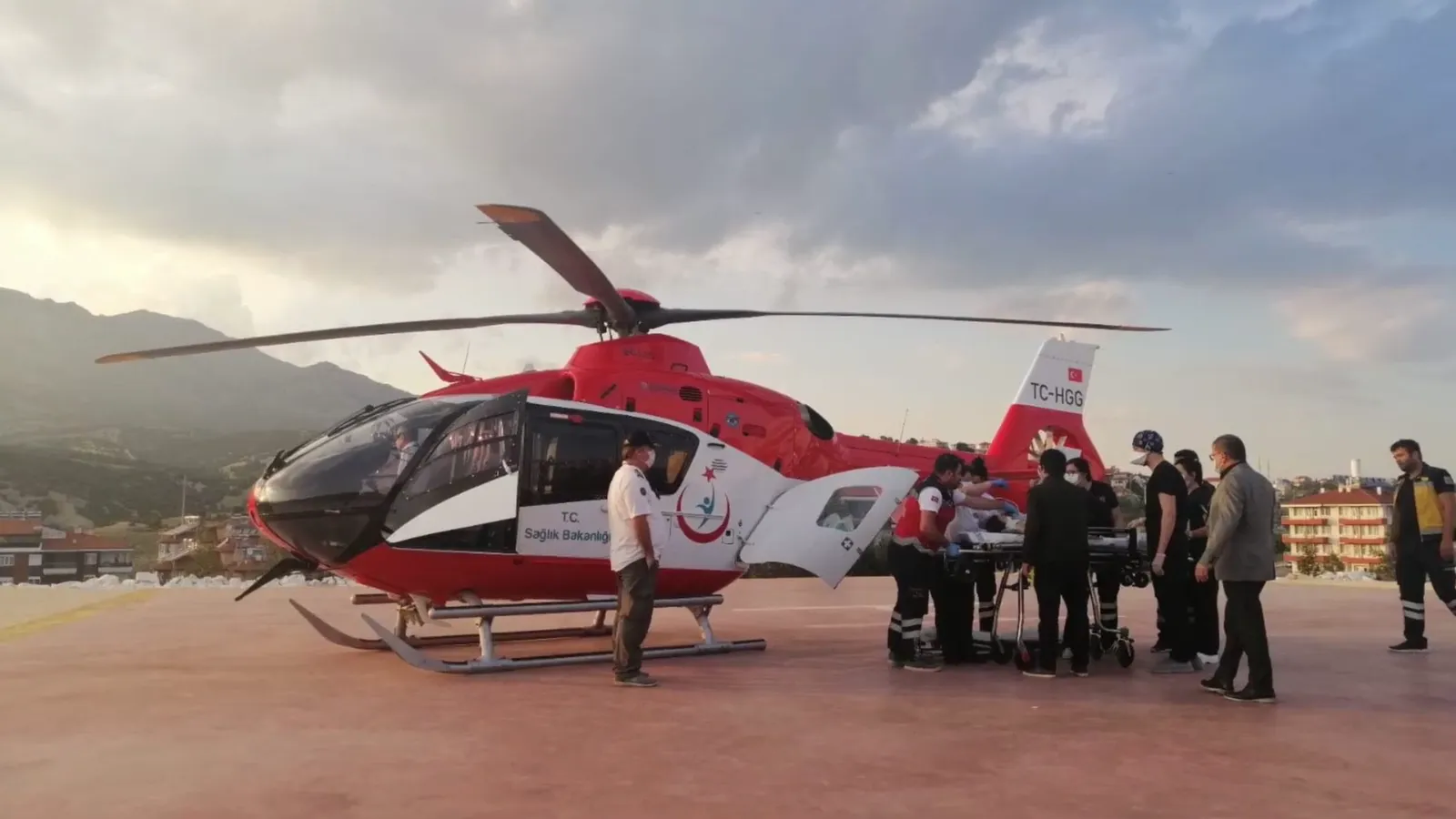
An air ambulance asks three things of a helicopter at once: carry a critical patient and a medical team in a cabin they can actually work in, reach the scene and the hospital as fast as possible, and do both safely at night and in poor weather. Turkish Aerospace (TUSAŞ) lists an air ambulance (MEDEVAC) configuration within the mission set of the GÖKBEY (T625). This article separates what the 6-tonne-class platform brings to the role from the data that has not yet been released.
Why aircraft class matters in air medical work
Helicopter emergency medical services in Türkiye rely largely on light twin-engine helicopters. They land easily on hospital rooftops and small pads and are cheap to operate; the trade-off is a cabin that usually tops out at one stretcher and two medical crew.
The GÖKBEY is a medium utility helicopter with a maximum take-off weight of 6,050 kg. Its standard cabin seats up to 12 passengers behind two pilots, so once it is converted to a stretcher layout it outclasses the light twins in both patient count and working space around the patient. That difference matters most in mass-casualty incidents, disaster evacuation and long-distance intensive-care transfers.
Cabin layout: stretchers and medical crew
The GÖKBEY cabin is designed to be modular. Standardised attachment points and a rail-equipped floor allow seats to be removed and replaced with stretcher units or medical equipment consoles. Wide sliding doors make it easier to load a stretcher from the side without awkward angles.
How the cabin is divided in the ambulance role is set by each customer’s specification. A typical medium-class MEDEVAC cabin carries one or two stretchers, crew seats positioned at the patient’s head and medical equipment fixed to the ceiling and wall rails.
The number of stretchers, medical crew seats and the placement of equipment in the GÖKBEY air ambulance configuration have not been officially released item by item. The equipment list below reflects what is standard in air ambulance helicopters.
Intensive-care equipment: what goes in the cabin
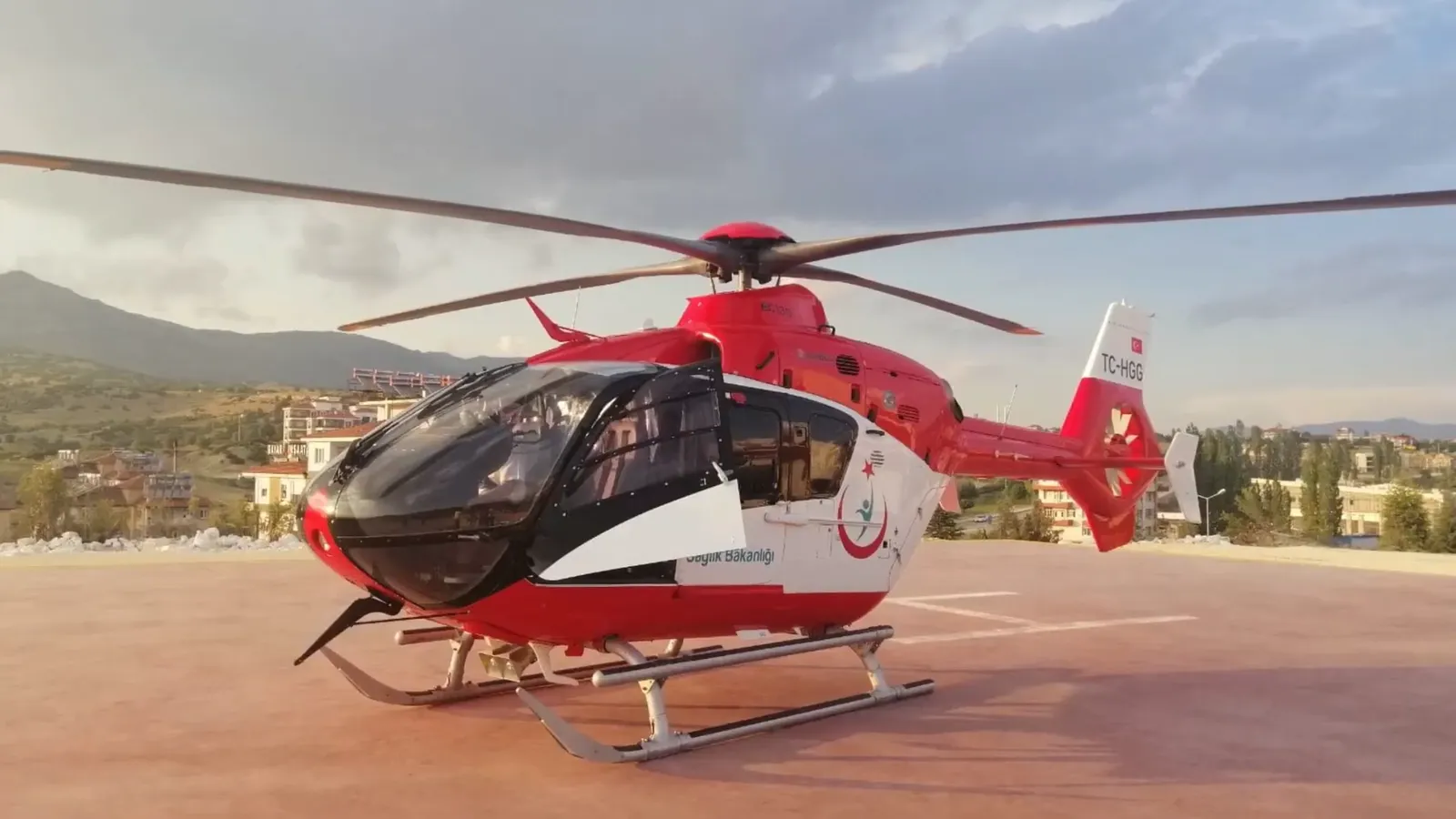
What separates an air ambulance from simple patient transport is the ability to deliver intensive-care-level treatment throughout the flight. Every device installed must be approved for aviation use in terms of vibration and electromagnetic compatibility.
The equipment draws its power from the helicopter’s electrical system. A medium-class platform’s greater generating capacity and mounting space make it possible to run several devices at once.
The golden hour: what speed buys
In emergency medicine the “golden hour” is the critical window for getting a seriously injured patient to definitive care. An air ambulance exists to shorten that window, and the gain grows in mountainous terrain and winter conditions where road access is slow.
A rough calculation based on GÖKBEY’s 297 km/h maximum cruise speed gives the following straight-line flight times:
These are theoretical times that exclude take-off, landing, weather and wind. On a real mission, time on the ground at the pickup point is added on top.
Twin engines, night and bad weather
A large share of air ambulance flying happens at night, over built-up areas or into confined landing sites. The GÖKBEY’s two TEI-TS1400 turboshafts let the surviving engine deliver short-duration high power if the other fails (OEI) — a baseline safety requirement for an aircraft that works over city centres and onto hospital rooftops.
The glass cockpit and 4-axis digital autopilot reduce pilot workload at night and in low visibility; heading and altitude hold free the pilot to concentrate on navigation and landing-site assessment. A 6,096 m service ceiling and a design optimised for hot-and-high conditions provide the margin needed for high-altitude regions in eastern Türkiye.
Light twin versus medium class: the mission difference
The two classes complement each other rather than compete. Light twins excel at rapid urban response; the medium class comes into its own on long-distance ICU transfers, multi-casualty incidents and post-disaster evacuation.
Where it sits in the programme
The air ambulance configuration has been part of the GÖKBEY’s mission set since the type was introduced. However, no separate order from a health authority, delivery schedule or certification status for a MEDEVAC kit has been officially announced.
Reading the numbers properly
Air ambulance performance is directly affected by the weight of installed medical equipment. A stretcher system, ventilator, oxygen supply and medical crew consume a large share of useful load, which can push range and endurance below catalogue values. The flight times in the speed table are theoretical, and differences between prototype and series configuration may also shift final figures.
Frequently asked questions
Is there an air ambulance version of the GÖKBEY? Yes. An air ambulance (MEDEVAC) configuration is part of the mission set TUSAŞ defines for the GÖKBEY. The modular cabin allows seats to be replaced with stretchers and medical equipment.
How many stretchers can the GÖKBEY carry? The stretcher count and medical crew seating have not been officially released. The final layout is determined by customer specification.
What medical equipment does a GÖKBEY air ambulance carry? Standard air ambulance equipment includes a stretcher system, transport ventilator, patient monitor, defibrillator, oxygen system, suction and infusion pumps. A GÖKBEY-specific kit list has not been published item by item.
How long does the GÖKBEY take to fly 100 km? At its 297 km/h maximum cruise speed, a 100 km straight-line flight takes roughly 20 minutes, before take-off, landing and weather are factored in.
Has the Turkish Ministry of Health ordered the GÖKBEY? No GÖKBEY order or delivery for a health authority has been officially announced. Announced deliveries have gone to the Gendarmerie General Command and the Land Forces.