Turkey fields domestically powered SOM-B1T cruise missiles as TÜBİTAK SAGE readies an internal-bay variant for KAAN

Turkey’s Ministry of National Defence used its weekly briefing on 15 October 2026 to confirm that the Air Force has accepted SOM-B1T and SOM-AT air-launched cruise missiles into inventory. Both weapons were developed by TÜBİTAK SAGE, the defence research institute of Turkey’s national science council, with Roketsan as production partner; acceptance took place at Roketsan facilities. No quantities were disclosed. The same briefing noted delivery of Roketsan’s SUNGUR short-range air defence missile to the Land Forces.
Why SOM-B1T matters to NATO planners
The SOM family is Turkey’s first indigenous stand-off cruise missile and has been in service on F-16s and F-4E 2020s for more than a decade. SOM-B1T is the variant that closes the propulsion gap: it is powered by the KTJ-3200 turbojet developed by Kale Jet Engines, replacing the imported engine of earlier blocks. The missile carries an imaging infrared seeker, weighs 620 kg and is credited with a range in excess of 250 km. For an alliance member whose F-16 fleet sits on NATO’s south-eastern flank, a 250 km-class precision weapon with no foreign export-control exposure in the engine is a meaningful change. The ministry had already reported an earlier batch of SOM-B1T deliveries in August 2026; the October statement indicates the flow is continuing.
SOM-M: an internal-carriage weapon for KAAN
SAGE’s next step is SOM-M, first shown at IDEF 2025 and designed to be launched from the internal weapons bay of the KAAN fifth-generation fighter. The institute describes it as a weapon for mobile land and naval targets with data-link mid-course updates. One Turkish outlet has cited a maximum range of 185 km; that figure has not been confirmed by SAGE. Under the KAAN National Munitions Integration Project the institute is also integrating the GÖKDOĞAN active-radar and BOZDOĞAN imaging-infrared air-to-air missiles, the ramjet-powered GÖKHAN and SOM-J, the compact variant originally developed for the F-35.
Progress reports over the past year include completion of variable-flow fuel control tests for GÖKHAN’s liquid-fuel ramjet, a moving-target hit by the GÖZDE precision guidance kit, and continued live-fire testing of the SİPER long-range surface-to-air system, for which SAGE supplies the missile.
The institute
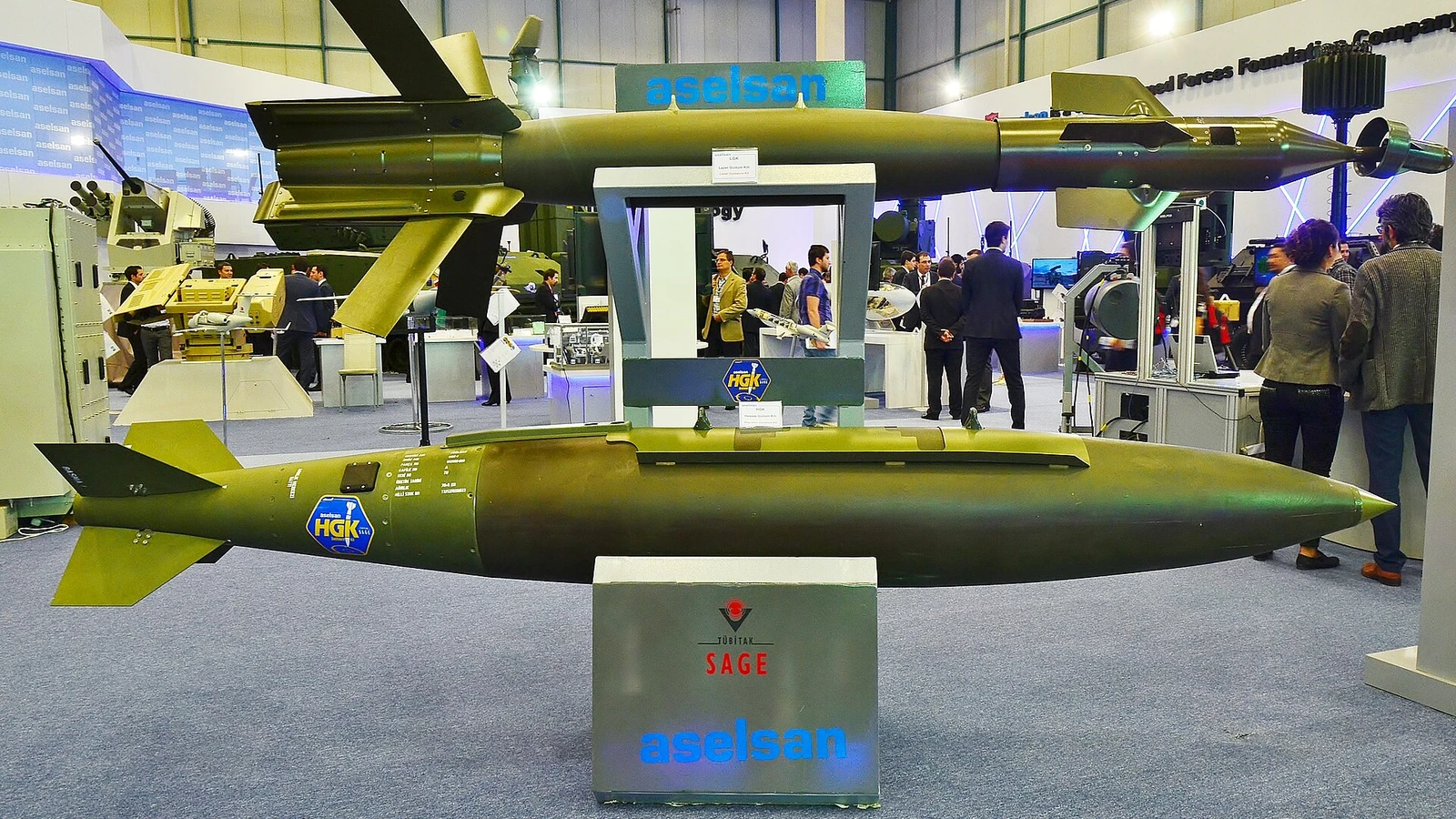
TÜBİTAK SAGE traces its origins to 1972, when it was set up as the Guided Vehicles Technology and Measurement Centre; it took its present name in 1988. It reports directly to the TÜBİTAK presidency and is the council’s largest institute, with roughly a thousand staff across three Ankara sites at Lalahan, Beşevler and the METU campus. Its product lines span cruise missiles, air-to-air missiles, the HGK, KGK and TEBER guidance kits and the NEB penetrator bomb. Unlike Roketsan or Aselsan, SAGE is a state research institute rather than a company, and its weapons reach the field through industrial partners.
A profile is available on the TÜBİTAK SAGE page in our Turkish defence industry directory.
Frequently Asked Questions
What is SOM-B1T?
An air-launched cruise missile developed by TÜBİTAK SAGE and produced with Roketsan, fitted with an imaging infrared seeker and the Turkish KTJ-3200 turbojet; it weighs 620 kg and has a stated range of more than 250 km.
What is SOM-M?
A SOM-family cruise missile designed for internal carriage on the KAAN fighter, unveiled at IDEF 2025 and intended for mobile land and sea targets.
What is TÜBİTAK SAGE?
The defence research and development institute of Turkey’s national science council, founded in 1972 and based in Ankara with about a thousand staff.