The US Navy’s Third Flight III Destroyer Enters Service in October, in Alaska
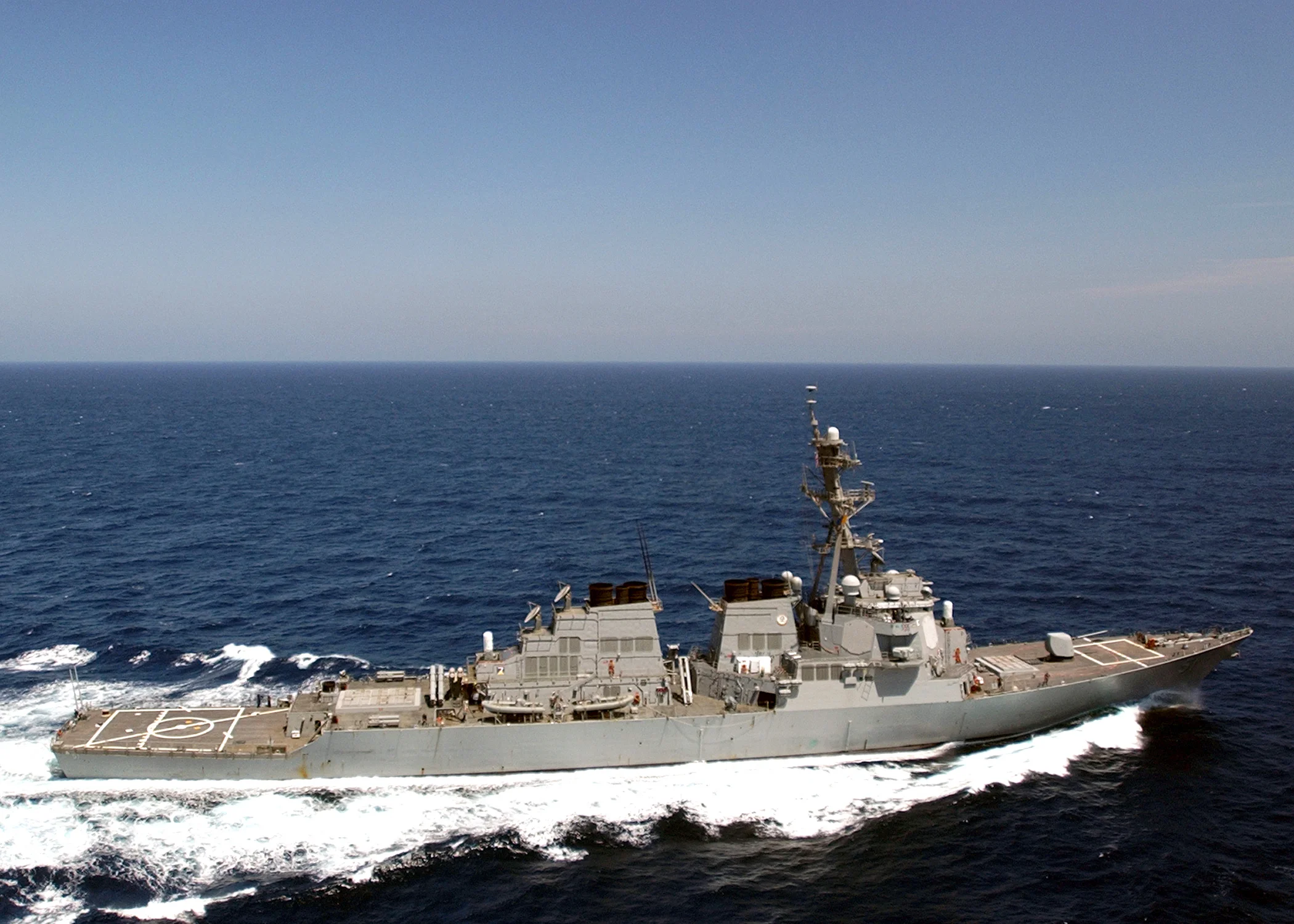
The US Navy will commission USS Ted Stevens (DDG 128), the third ship of the Flight III Arleigh Burke class, on 3 October 2026. The ceremony will take place at Whittier, Alaska.
A ceremony chosen for its geography
The Navy said both the ship and the commissioning site honour the legacy of Ted Stevens, a decorated Second World War Army Air Corps pilot and long-serving senator for Alaska. Commissioning a ship in a port connected to its namesake is established Navy practice.
The destroyer arrived at its Norfolk homeport for the first time on 15 May 2026. It was built at Ingalls Shipbuilding and completed sea trials ahead of delivery.
What Flight III actually changes
The Arleigh Burke class has been in service since 1991 and forms the backbone of the US surface fleet. Across roughly thirty-five years of production it has split into three main blocks: Flight I/II, Flight IIA and Flight III.
The defining difference in Flight III is the radar. The AN/SPY-6(V)1 active electronically scanned array replaces the AN/SPY-1D of earlier ships. SPY-6 is built from gallium nitride radar modular assemblies — 37 per face — in a scalable architecture, and the Navy credits it with detecting substantially smaller targets at substantially greater ranges than SPY-1D.
The radar did not arrive alone. More capable arrays demand more electrical power and more cooling, so Flight III ships received increased generating capacity and redesigned cooling. Engineers have described the result as pushing the hull design close to its limits.
Doing two jobs at once
Flight III was designed so that ballistic missile defence and air defence can run concurrently on the same ship. Earlier Aegis destroyers largely had to choose: radar resources committed to ballistic tracks came at the expense of the air picture.
SPY-6’s capacity is intended to soften that trade-off, and the requirement is not theoretical. Operations in the Red Sea have presented ballistic missiles, cruise missiles and drones arriving together, which demands simultaneous tracking across target classes that behave nothing alike.
The ship carries a 96-cell Mk 41 vertical launching system, a 127mm main gun, Mk 46 gun systems, an anti-submarine warfare suite and two MH-60R helicopters.
An Arctic-facing signal
Holding the ceremony in Alaska carries a reading beyond the symbolic. Arctic waters have grown steadily more prominent as ice retreats, both for commercial routes and military movement. Russia’s basing and icebreaker infrastructure in the region, and allied efforts to build polar capability, are two halves of the same picture.
Canada’s six-icebreaker Coast Guard programme and US Coast Guard polar acquisition are progressing on parallel timelines. Arleigh Burke destroyers are not ice-capable ships — but an Alaska-centred naval event functions as part of the political message directed at the region.
The Turkish comparison
The Turkish Navy’s equivalent is the TF-2000 air defence destroyer, still in development. The programme is built around the CAFRAD multifunction radar family and the Siper long-range air defence system, with the indigenous MIDLAS vertical launcher carrying Turkish munitions.
Comparing SPY-6 with CAFRAD reveals two different industrial positions rather than a simple capability gap. The United States is building a new radar generation on more than thirty years of accumulated Aegis experience. Turkiye is developing the naval radar, the combat management system and the interceptor concurrently, combining them on a single platform for the first time. The maturity ASELSAN has reached with the CAFRAD family and Siper’s progress through firing trials indicate a technical line that is advancing.
Serial production of Istanbul-class frigates and the entry into service of TCG Anadolu have widened the range of classes the Turkish Navy operates. TF-2000 is intended as the top rung of that ladder.
Sources
- US Navy release, “The Future USS Ted Stevens to be Commissioned in October”, 28 August 2026 (navy.mil)
- Naval Surface Force, US Pacific Fleet announcement (surfpac.navy.mil)