BAE Systems Fires New Deck Launcher That Boosts Warship Missile Capacity

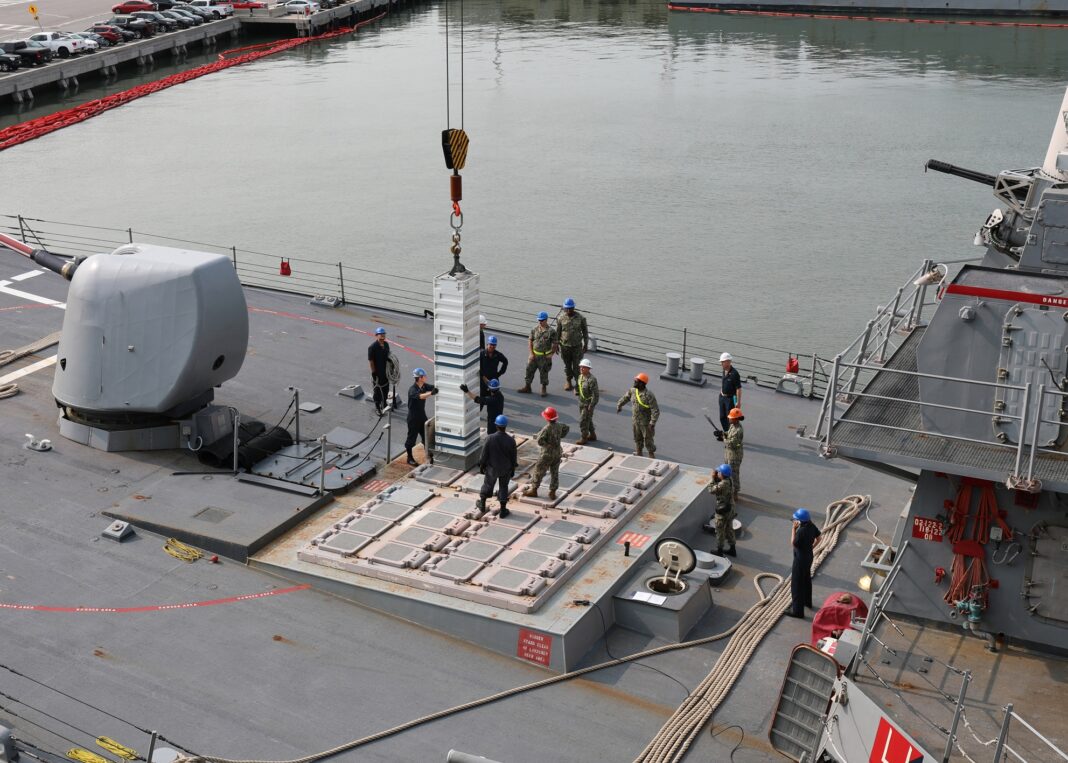
BAE Systems has completed the first live-fire test of its Adaptable Deck Launcher (ADL), a system meant to boost the missile capacity of U.S. Navy warships and let them rearm at sea rather than return to port.
Where the Test Took Place
The trial was conducted on 27 October 2026 at the China Lake test range in California. BAE Systems says this marked the first live-fire demonstration of the deck-mounted ADL concept.
What the System Does
ADL fires from Mk 25 Quad-Pack canisters, each holding four Evolved SeaSparrow Missiles (ESSM). Unlike classic vertical launch systems, which require deep wells cut into a ship’s hull, ADL mounts on the deck itself, reducing the risk of conflicts with machinery spaces and internal compartments.
According to BAE Systems’ own product page, ADL is designed for use on frigates, aircraft carriers, amphibious assault ships, Littoral Combat Ships and medium unmanned surface vessels.
The Real Target: Rearming at Sea
The system’s headline feature is letting ships rearm without sailing back to port. The U.S. Navy’s existing Mk 41 vertical launch cells generally require a return to port for reloading because of the crane infrastructure involved — a constraint that drew repeated attention during the intense missile and drone defence operations in the Red Sea.
BAE Systems stresses that ADL is meant to complement the Mk 41, not replace it. The company’s product material positions it as an add-on that boosts existing vertical-launch capacity rather than a wholesale substitute.
Background
The U.S. Navy had previously awarded BAE Systems a $37 million contract to design the Next Generation Evolved SeaSparrow Missile Launch System (NGELS), a fixed-angle, deck-mounted launcher that draws on the ADL concept. The latest live-fire test is being treated as a step within that broader development track.
Sources indicate the Navy has not yet committed to fielding the system fleet-wide, so a timeline for operational use remains unclear.
What It Could Mean for NATO Navies
The at-sea rearming problem is not unique to the U.S. Navy; most NATO fleets face similar port dependency when reloading vertical launch cells. As the ADL concept matures, it could become a reference point for allied navies weighing a similar deck-mounted answer to the same sustainment gap.
That said, the system remains at the prototype stage, so any talk of international sales or co-production is still premature.
Why the Red Sea Experience Matters Here
The Navy’s intense air-defence operations against Houthi attacks in the Red Sea showed that destroyers can burn through vertical-launch cells within days. Needing weeks to sail back to a port for reloading left temporary gaps in on-station missile defence. The ADL programme gaining momentum in this period suggests the Pentagon converted that operational lesson directly into a design requirement.
What Comes Next
BAE Systems gave no date for the next test phase, saying only that development work will continue. Whether ADL becomes part of a formal Navy programme will depend on whether the service includes it in future budget requests.
Sources
BAE Systems, press release, “BAE Systems Successfully Tests Adaptable Deck Launcher, Advancing Distributed Launch Capability for the U.S. Navy,” 2026, baesystems.com — used as the primary verification of the test.
Army Recognition, “BAE Systems Tests New Adaptable Deck Launcher to Increase U.S. Navy’s Missile Capacity and Allow Reloading at Sea,” 30 October 2026, armyrecognition.com — used for cross-verification and technical detail.