MQ-9B Tracks Fighter Jets and Ships at Once With LoyalEye AEW Radar

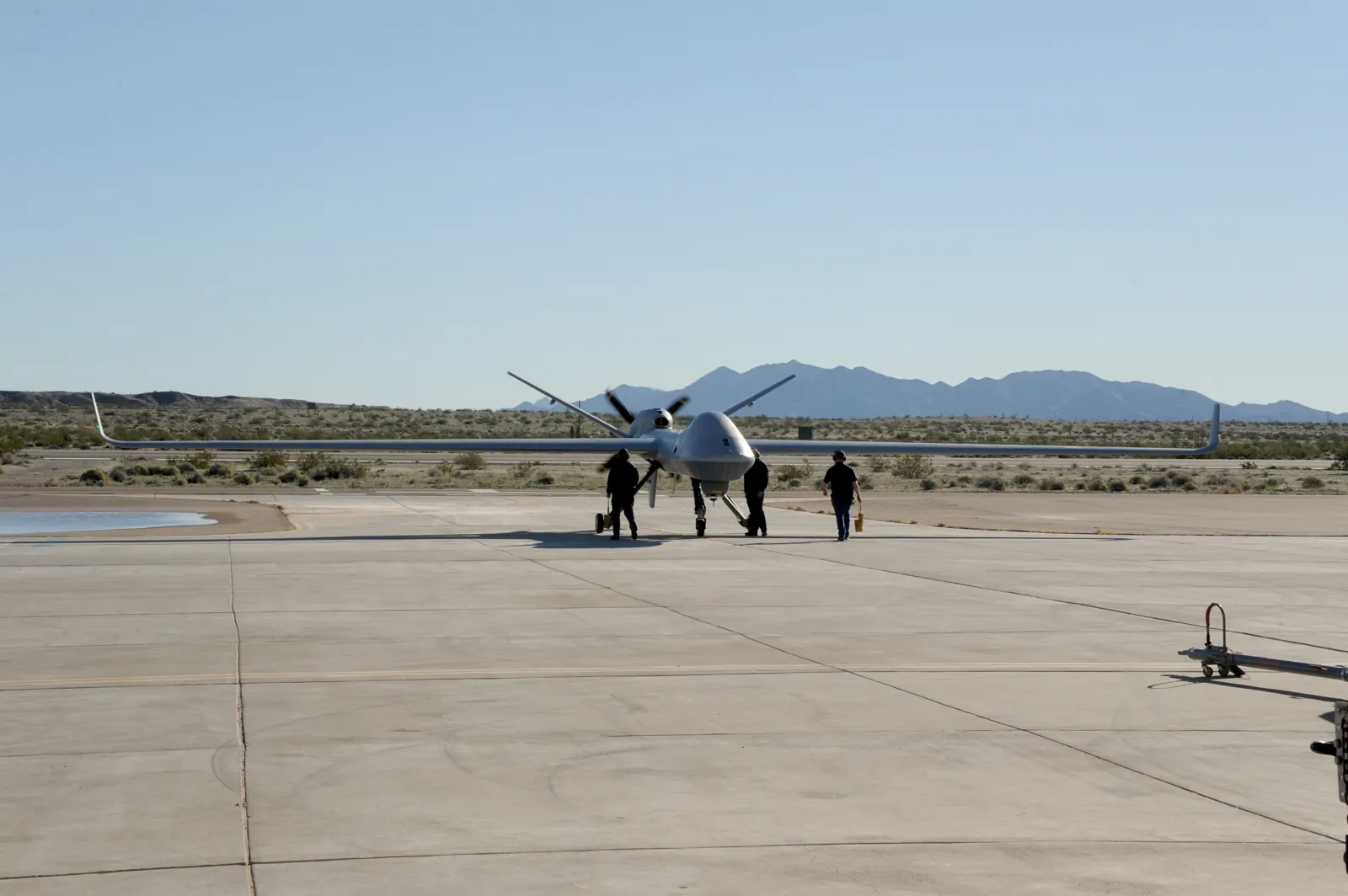
General Atomics Aeronautical Systems (GA-ASI) and Sweden’s Saab have flown an uncrewed MQ-9B carrying the LoyalEye airborne early-warning (AEW) radar in a test that tracked instrumented fighter jets and maritime targets at the same time.
Where the Test Took Place
The flight was conducted at the Desert Horizon facility in Southern California. According to the companies’ joint statement, the radar simultaneously tracked airborne “red” instrumented fighters and surface targets at long range; some civilian aircraft were also among the tracked air targets.
Neither company named the fighter type used. Industry observers point to the instrumented F-5 Advanced Tiger jets that contractor Tactical Air Support regularly flies in GA-ASI testing, though this remains unconfirmed by either firm.
How LoyalEye Is Built
The radar departs from the classic rotodome AEW layout. It instead uses two radar pods mounted under the wings plus a processing pod on the centreline — a configuration designed to preserve most of the MQ-9B’s existing airframe while adding genuine early-warning capability.
The configuration’s first flight took place at the same site on 19 May 2026. This latest test was aimed specifically at proving simultaneous air-and-sea target processing. Some analysts have floated detection ranges beyond 200 kilometres for fighter-sized targets, but that figure is an outside estimate, not a disclosed test result.
Why It Matters
Fitting a real AEW radar to an uncrewed platform matters for navies and air forces looking for alternatives to the limited numbers of crewed early-warning aircraft such as the E-2 Hawkeye or E-3 Sentry. The MQ-9B’s long range and long endurance give it the potential to sustain an early-warning orbit at a lower cost and with fewer gaps in coverage than a small manned fleet can manage.
Saab’s Swedish base adds an alliance dimension: since Sweden’s accession to NATO in 2024, its radar technology has a more direct path into the alliance’s maritime and air surveillance architecture.
What Remains Unclear
GA-ASI and Saab have not disclosed the full test scope, the number of simultaneous targets, or the precise characteristics of what was tracked. A production timeline and any committed military customer remain open questions; the companies say further testing will follow but have given no date for the next milestone.
Even so, the approach is drawing attention across the unmanned-systems market, particularly among countries that already operate MALE-class drones but have a thin crewed AEW fleet, for whom this configuration could become an alternative investment path.
How It Compares to Other Efforts
GA-ASI and Saab are not alone in trying to move the AEW mission onto an uncrewed airframe; Israel’s Elbit Systems and several Chinese firms are pursuing comparable concepts. What sets LoyalEye apart is that it rides on the MQ-9B, an airframe with an already broad operator base, which could make adoption faster for existing MQ-9B customers than starting from a clean-sheet design.
Whether an uncrewed platform can match the processing power, onboard crew judgement and high-altitude endurance of a crewed AEW aircraft remains an open question. Most industry analysts frame LoyalEye as a gap-filler or complement to crewed fleets in the near term, rather than a wholesale replacement.
Relevance Beyond the Test Range
Countries that already fly MALE-class drones but operate only a thin crewed AEW fleet are the most likely early audience for this configuration, since it offers a lower-cost path to persistent airborne surveillance. For NATO members along the Black Sea and eastern Mediterranean, a mature version of this concept could eventually widen maritime and air surveillance coverage without the cost of additional crewed AEW airframes, a point likely to surface in future procurement debates.
Sources
General Atomics Aeronautical Systems (GA-ASI) and Saab, joint press statement, 28 October 2026 — used to verify details of the LoyalEye flight test on the MQ-9B.
The Aviationist, “GA-ASI and Saab Test AEW Payload on MQ-9B,” 28 October 2026, theaviationist.com — used for cross-verification of test details.