Royal Navy Launches First Strike Drones From an Aircraft Carrier

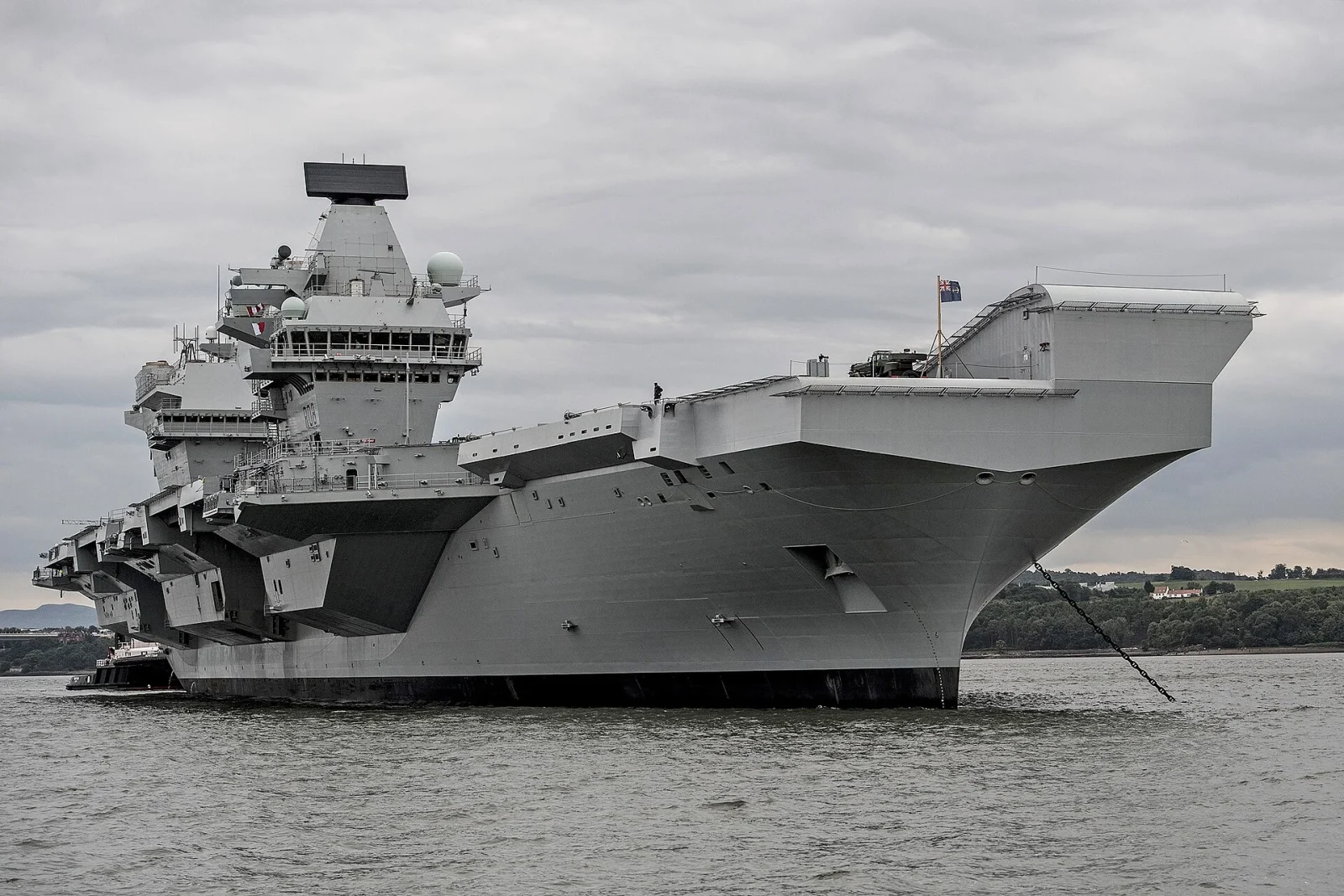
The Royal Navy has confirmed that strike drones were launched from an aircraft carrier for the first time, flying from HMS Queen Elizabeth during North Atlantic trials in mid-October 2026. The update was reported by Naval News on 6 November 2026.
The event is described as the first case of an attack-type drone being launched from a carrier’s flight deck, rather than from a smaller trials vessel. That marks a concrete step in testing the Royal Navy’s “hybrid carrier air wing” concept at sea, rather than only in planning documents.
What happened during the trials
The drone launched was the Nyan one-way strike drone, built in Wiltshire by Callen-Lenz. The Navy flew it from the carrier’s flight deck alongside F-35B jets; it has not disclosed exactly how many flights took place.
In the same set of trials, a fixed-wing AR5 uncrewed aircraft made by Portugal’s Tekever operated from a carrier for the first time. That addition is meant to test how intelligence and reconnaissance drones can work on the same deck as strike systems.
Why this step matters
The Nyan drone’s first at-sea launch took place earlier in 2026 from an experimental vessel, XV Patrick Blackett. Moving the same system onto a Queen Elizabeth-class carrier — the Navy’s largest and most visible platform — is one of the first steps from an experimental trial toward fleet-level use.
Defence Secretary Wes Streeting said “one of the key determinants of military power is now who can innovate fastest.” Lieutenant Commander David Burton, trials sponsor for Navy Capability, said the trials “give us the evidence and confidence to decide how uncrewed systems can work alongside crewed aircraft.”
Where this sits in the investment plan
The UK’s Defence Investment Plan allocates more than £5bn for autonomous systems by 2030, described as the largest drone investment in the department’s history. Within that, about £250m goes to Project Pantheon, which develops autonomous systems for the hybrid carrier air wing, and at least £1.3bn is set aside for a hybrid fleet of crewed and uncrewed ships, with the first large autonomous vessels due by 2030.
At least £210m is earmarked for low-cost, long-range one-way attack drones across the Navy, Army and RAF. Under this plan, Queen Elizabeth-class carriers are meant to support the F-35B force with uncrewed systems rather than operate purely as crewed-aircraft platforms.
A point of comparison
The trial offers a useful contrast with how other navies approach carrier-launched drones. Türkiye’s TCG Anadolu was built around uncrewed aircraft as its primary payload, while the UK’s approach integrates strike drones into an existing CATOBAR/STOVL carrier alongside crewed F-35Bs. The two models respond to the same trend — uncrewed strike capability from a ship’s deck — with different platform architectures.
What remains unconfirmed
- The exact number of Nyan drones launched during the trials
- Technical details of the launch and recovery method used on the carrier
- When the capability will extend to the Navy’s other Queen Elizabeth-class carrier
Sources
- Naval News, “Strike drones launched from British aircraft carrier for the first time,” 6 November 2026 — used for the trial details, the Streeting and Burton statements, and the investment-plan figures: https://www.navalnews.com/naval-news/2026/11/strike-drones-launched-from-british-aircraft-carrier-for-the-first-time/
- The War Zone, coverage of the Royal Navy’s uncrewed systems programme — used for the context of the Nyan drone’s earlier sea launch from XV Patrick Blackett: https://www.twz.com/news-features/royal-navys-sea-launch-of-combat-proven-nyan-kamikaze-drone-points-to-fleets-hybrid-future