German Navy to Field Laser Weapon by 2029 as BAAINBw Orders System from Rheinmetall and MBDA

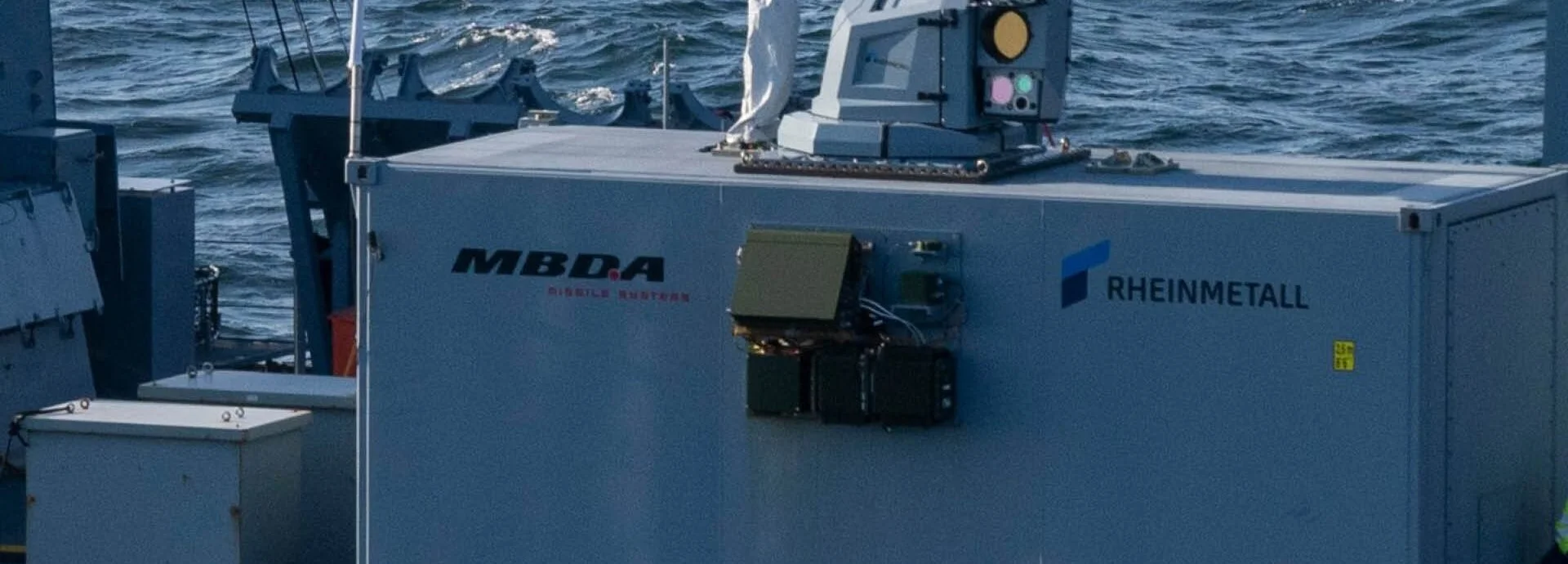
Germany’s procurement office BAAINBw (Federal Office of Bundeswehr Equipment, Information Technology and In-Service Support) has commissioned ARGE HEL, a joint working group formed by MBDA Deutschland and Rheinmetall Waffe Munition, to develop a high-energy laser weapon system. The contract, signed on 9 July 2026, targets operational deployment aboard German Navy vessels by 2029.
Scope of the contract
Valued in the mid three-digit-million-euro range, the contract covers development of a complete naval system spanning the entire operational chain, from reconnaissance and target tracking through engagement. Series production is planned to take place largely in Germany, creating new jobs and training opportunities.
A proven demonstrator
The system builds on a demonstrator that has logged roughly 28,000 nautical miles aboard the frigate Sachsen across the North Sea, Baltic Sea and Mediterranean. Over more than a year of operational testing at the Bundeswehr’s WTD 91 test center, the demonstrator fired more than 1,000 shots at airborne, maritime and land-based targets, proving effective even in adverse weather.
Why a laser weapon
High-energy laser systems offer a near-zero cost-per-shot compared with conventional missiles and ammunition, effectively providing an inexhaustible magazine. That is especially valuable against swarming low-cost drones and small-boat threats, allowing defenders to conserve expensive missiles. The relatively high power-generation capacity of naval platforms is the main reason laser weapons are being integrated on ships first.
Strategic backdrop
Rising uncrewed surface and aerial threats in the Black Sea and Baltic are pushing NATO navies to seek low-cost defensive systems. Germany’s early move to sign a firm contract in this field is part of Berlin’s accelerated naval modernization drive. The Rheinmetall-MBDA venture is seen as one of Europe’s steps to keep pace with the US and Israel in directed-energy weapons.
Other navies racing to field laser weapons
Germany is not alone. The US Navy has spent years testing its HELIOS (High Energy Laser with Integrated Optical-dazzler and Surveillance) system aboard destroyers, while the UK plans to integrate its DragonFire laser weapon onto Royal Navy vessels by 2027. All these programs share a common goal: a low-cost defensive layer, primarily against small uncrewed aerial and surface vehicles. By locking in a firm 2029 target through the Rheinmetall-MBDA venture, Germany moves ahead of the UK in this race and closer to the US.
Which ships will carry it?
The contract text has not named a specific ship class yet, but since the demonstrator was tested aboard the frigate Sachsen, initial integration is likely to occur on the existing frigate fleet or on next-generation vessels under construction. The system’s ultimate goal is to place multiple laser modules per ship to build a 360-degree counter-drone defense dome.
What comes next
As development progresses, the system will need to be permanently integrated onto an actual warship and certified to NATO standards. BAAINBw officials say the 2029 target is realistic, though the decision to move into serial production will depend on a separate budget approval. Germany’s progress in this field is likely to serve as a reference point for other NATO navies pursuing similar directed-energy projects.
Turkiye and regional context
Turkiye is known to be developing directed-energy weapons under ASELSAN; Germany’s signing of a concrete contract with a 2029 target shows that competition in this technology is accelerating across NATO. The entry of ship-based laser weapons into navy inventories signals that one layer of future air-defense architecture may shift toward low-cost, high-repetition systems.
Sources
Rheinmetall press release (9 July 2026); MBDA corporate statement; Naval News.