US Army Ranks and Insignia: A Complete Guide

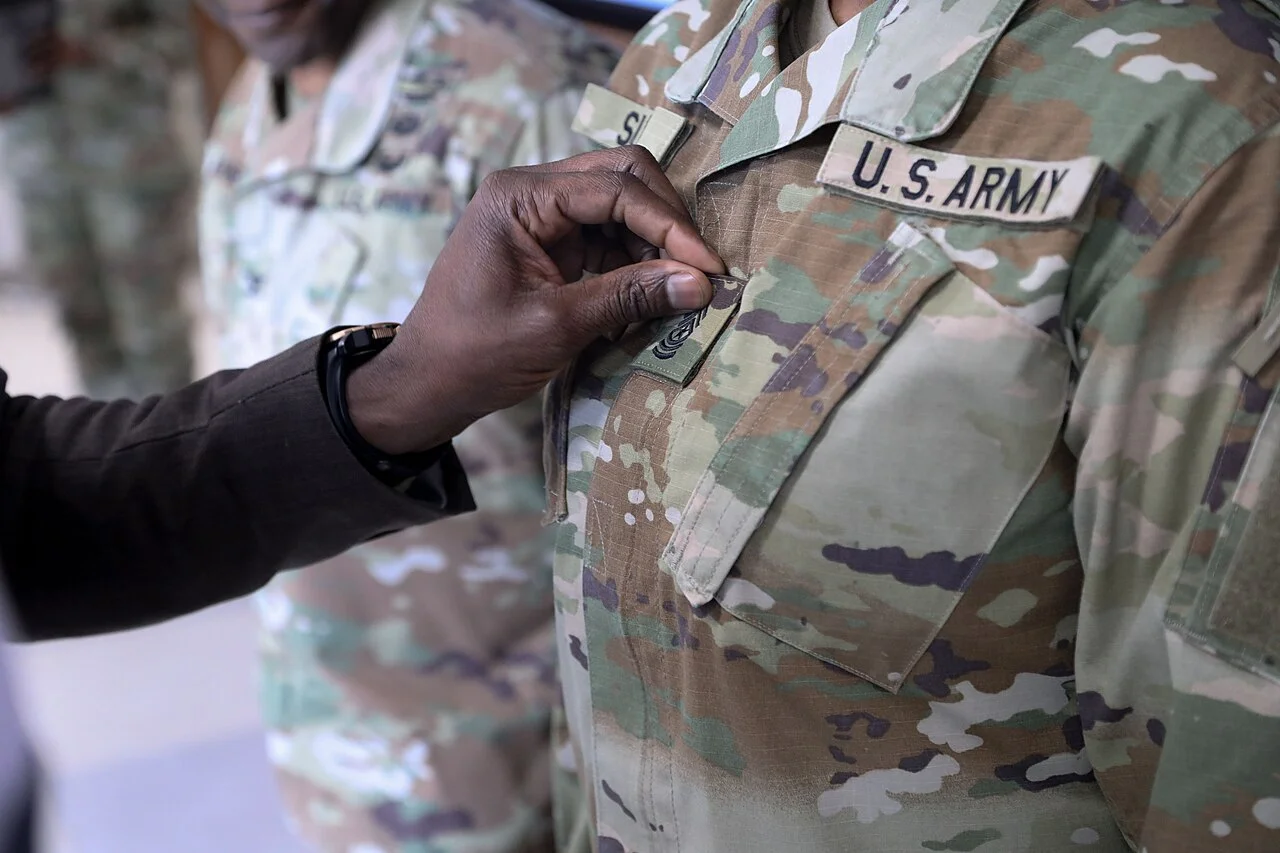
U.S. Army rank is more than a pay grade. The Army’s official ranks page describes rank as a system of leadership that indicates a soldier’s level of expertise, responsibility and authority. Every soldier, the Army says, has a significant role in the total Army mission, regardless of rank.
The official structure is organized in three groups: enlisted soldiers, warrant officers and commissioned officers. This guide follows that official breakdown and the responsibilities the Army itself publishes for each grade. It is not a promotions manual, and time-in-service figures below are the eligibility markers the Army lists, not a guarantee of promotion.
Enlisted ranks
The Army calls enlisted soldiers the backbone of the force: they hold specific specialties, perform defined job functions and carry the knowledge that a unit needs to complete its current mission.
Private (PV1) is the most junior rank, described as a trainee starting Basic Combat Training, whose primary role is to carry out orders. The Army says a PV1 is eligible for promotion to private E-2 (PV2) after six months’ time in service.
Private (PV2) is the second most junior rank and the first at which a soldier wears rank insignia. Eligibility for promotion to private first class is listed as four months’ time in rank and 12 months’ time in service.
Private First Class (PFC) carries out issued orders. Some recruits, the Army notes, may start Basic Combat Training already at this grade if they arrive with experience or prior military training. Eligibility for promotion to specialist is listed as six months’ time in rank and 24 months’ time in service.
Specialist (SPC) can manage enlisted soldiers of lower rank. The Army states that those enlisting with a four-year college degree can enter Basic Combat Training as a specialist. Eligibility for promotion to sergeant is listed as 11 months’ time in rank and 47 months’ time in service.
Corporal (CPL) is described as the base of the noncommissioned officer ranks. Corporals serve as team leaders of the smallest Army units and are responsible for individual training, personal appearance and cleanliness of soldiers.
Sergeant (SGT) typically leads a team or section. The Army calls sergeants first-line leaders who have the most direct impact on soldiers and who oversee daily tasks. Official unit-structure material describes a team as usually four soldiers, typically led by a sergeant.
Staff Sergeant (SSG) leads a squad of 8 to 16 soldiers, often with one or more sergeants under that leadership. The Army says staff sergeants enforce standards and develop soldiers in their military occupational specialty and unit missions.
Sergeant First Class (SFC) is the key assistant and advisor to the platoon leader, responsible for training and caring for soldiers, and is generally described as having 10 to 15 years of Army experience. A platoon is led by a lieutenant, assisted by a platoon sergeant who is a sergeant first class.
Master Sergeant (MSG) is described as the principal NCO at battalion level and often higher. First Sergeant (1SG) is the senior NCO in companies, batteries and troops — the commander’s principal enlisted assistant at company level, which the Army puts at roughly 60 to 200 soldiers.
Sergeant Major (SGM) serves as a senior enlisted adviser to a primary staff officer at battalion or higher, with experience the Army describes as equal to that of a command sergeant major, but in a staff rather than command-enlisted role. Command Sergeant Major (CSM) is the senior NCO of a command at battalion or higher and is the commander’s principal enlisted adviser on performance, training, appearance and conduct. Sergeant Major of the Army is a unique position: only one soldier holds it, serving as senior enlisted advisor and consultant to the chief of staff of the Army.
Warrant officer ranks
The Army describes warrant officers as adaptive technical experts, combat leaders, trainers and advisors who administer, manage, maintain, operate and integrate systems and equipment. Warrant officers, the Army notes, can and do command detachments.
Warrant Officer 1 (WO1) is appointed by warrant from the secretary of the Army and is technically and tactically focused. Chief Warrant Officer 2 (CW2) becomes a commissioned officer as provided by the president and is described as an intermediate-level expert at detachment through battalion levels. CW3, CW4 and CW5 are described, in rising order, as advanced-, senior- and master-level technical and tactical experts, with CW5 supporting brigade, division, corps, echelons above corps and major-command operations and providing mentorship to other warrant officers and branch officers.
Commissioned officer ranks
Commissioned officers are described as the managers, problem solvers, key influencers and planners who lead enlisted soldiers, plan missions, give orders and assign tasks. The Army lists 12 officer ranks.
Second Lieutenant (2LT) is typically the entry-level commissioned rank and leads a platoon-size element of 16 to 44 soldiers with a platoon sergeant. First Lieutenant (1LT) is described as a seasoned lieutenant with 18 to 24 months of service, often selected as a company executive officer. Captain (CPT) commands a company-sized unit of 60 to 200 soldiers with a first sergeant. Major (MAJ) serves as a primary staff officer at brigade and task-force level. Lieutenant Colonel (LTC) typically commands a battalion of 300 to 1,000 soldiers with a command sergeant major. Colonel (COL) typically commands a brigade of 1,500 to 3,200 soldiers.
General officer ranks, as the Army describes them, run from brigadier general (deputy commander to a division commanding general) through major general (typically a division of 10,000 to 16,000 soldiers), lieutenant general (typically a corps of 20,000 to 40,000 soldiers) and general. General of the Army is described as a wartime grade last held in the 1944 version by five officers: George C. Marshall, Douglas MacArthur, Dwight D. Eisenhower, Henry H. Arnold and Omar N. Bradley.
How units line up with rank
Official Army organizational material maps leadership to echelons: a four-soldier team under a sergeant; a squad of two to three teams under a staff sergeant; a platoon of two to four squads under a lieutenant, assisted by a sergeant first class; a company (or troop or battery) of three to five platoons under a captain; a battalion of three to five companies under a lieutenant colonel; a brigade of three or more battalions under a colonel; a division, typically with three brigades, under a major general; and a corps of two to five divisions under a lieutenant general. The Army states that there are three corps in the active force with headquarters in the continental United States: I, III and XVIII Corps.
Those ranges are official planning figures, not a roster of every unit in the force. Specialized organizations use different names — cavalry troops and squadrons, artillery batteries, Special Forces groups, Ranger regiments — but they still sit inside this rank-and-echelon system.
Sources
- U.S. Army, official ranks page, https://www.army.mil/ranks