Replicator and US Drone Swarms: What the Pentagon Has Announced

In a keynote delivered on August 28, 2023, then–Deputy Secretary of Defense Kathleen Hicks announced the Replicator initiative. Official Department of Defense transcripts and follow-on news stories are the basis of this article. A program goal is not the same thing as a completed fielding, and this article treats official statements accordingly.
What official officials said Replicator was for
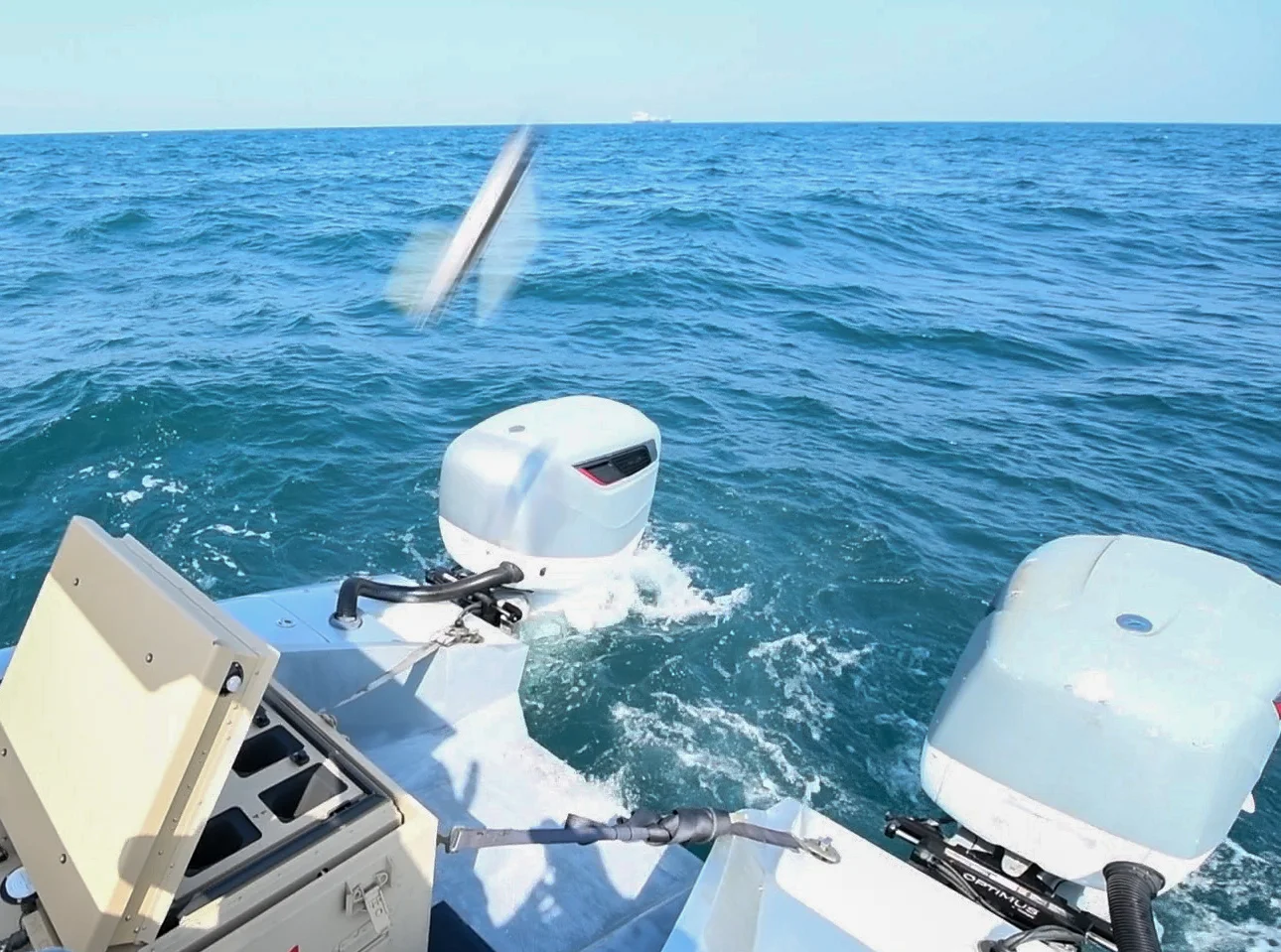
Hicks described Replicator as an effort to field attritable, autonomous systems at a scale of multiple thousands, in multiple domains, within 18 to 24 months. She framed the operational problem as countering mass — more ships, missiles and people — associated with the People’s Republic of China, which official U.S. strategy documents identify as the pacing challenge. The systems were described as less expensive than many legacy platforms, able to put fewer people in the line of fire, and able to be updated with shorter lead times.
In remarks reported by the Department of Defense the following day, Hicks said Replicator was not a new program of record, would not create a new bureaucracy, and would not seek new money in fiscal year 2024. The initiative would use existing funding, programming lines and authorities, she said, and was as much about culture change and repeating a production-and-fielding process as about any single product. Examples cited in those official remarks included self-piloting ships and uncrewed aircraft.
Later official progress statements — and their limits
In an August 7, 2024, keynote, Hicks said that in the period after the announcement the department had selected initial capabilities, developed acquisition strategies, submitted a spend plan and reprogramming requests, and, with Congress’s support, secured needed funding for fiscal year 2024 of about $500 million, with a similar amount budgeted for fiscal year 2025. She also said some all-domain attritable autonomy capabilities had been selected for accelerated fielding in the first tranche, including the Switchblade 600 loitering munition. In a separate speech at the American Dynamism Summit, she said the department was “on-track to meet Replicator’s goals.” Those are official status claims, not an independent inventory of systems already delivered to every theater.
On December 12, 2024, a Defense Innovation Unit official, Aditi Kumar, told an event covered by DOD News that, 16 months after launch, the department was “in good shape” and on track to meet the Replicator 1 goal of fielding thousands of autonomous systems across multiple domains. The same official story said that in September, Hicks had set the direction for Replicator 2, focused on countering small uncrewed aerial systems that threaten warfighters and installations, again with an 18-to-24-month timeline. Kumar said both phases were being executed in parallel. The article also reported that Secretary of Defense Lloyd J. Austin III had signed a classified counter-unmanned-systems strategy the previous week. A classified strategy’s existence can be reported from that official story; its contents cannot be inferred here.
What official remarks said the initiative is not
The day-after official DOD News account of Hicks’s announcement is useful because it records several negative statements as clearly as the fielding goal. Replicator, she said, was not a new program of record, would not create a new bureaucracy, and would not seek new money in fiscal year 2024. Existing funding, programming lines and authorities would be used. Officials also described the work as a process that should be repeatable — a way to produce and field systems more than once — rather than a one-off special project. Those limits matter for readers who treat every named initiative as a new, separately funded weapons program.
The same official materials describe the systems as attritable: designed to be numerous and, if necessary, expendable, rather than as a substitute for every high-end crewed platform. Self-piloting ships and uncrewed aircraft were cited as examples of the kind of capability under discussion. This article does not convert those examples into a complete public inventory, and it does not treat later “on-track” language as a substitute for a published delivery tally.
How to read these announcements
Officials presented Replicator as a way to accelerate fielding and to change how the department scales commercial and departmental innovation. They did not, in the sources cited here, publish a complete public catalog of every system, quantity or delivery date. Where later speakers said the effort was on track, that is a leadership assessment as of those dates. This article does not treat the original 18-to-24-month goal as proof that thousands of systems have been fielded, and it does not invent performance claims for Switchblade 600 or other named systems beyond the official description of their selection for the first tranche.
Sources
- U.S. Department of Defense, Deputy Secretary of Defense Kathleen Hicks, “The Urgency to Innovate,” August 28, 2023, https://www.defense.gov/News/Releases/Release/Article/3507156/…
- DOD News, “Hicks Discusses Replicator Initiative,” https://www.defense.gov/News/News-Stories/Article/article/3518827/…
- Hicks, “Structuring Change to Last,” August 7, 2024, https://www.defense.gov/News/Speeches/Speech/Article/3864270/…
- DOD News, Joseph Clark, “DOD Innovation Official Discusses Progress on Replicator,” December 12, 2024, https://www.defense.gov/News/News-Stories/Article/Article/3999474/…