What is the MQ-9 Reaper? General Atomics’ Long-Endurance Hunter-Killer Drone, Explained

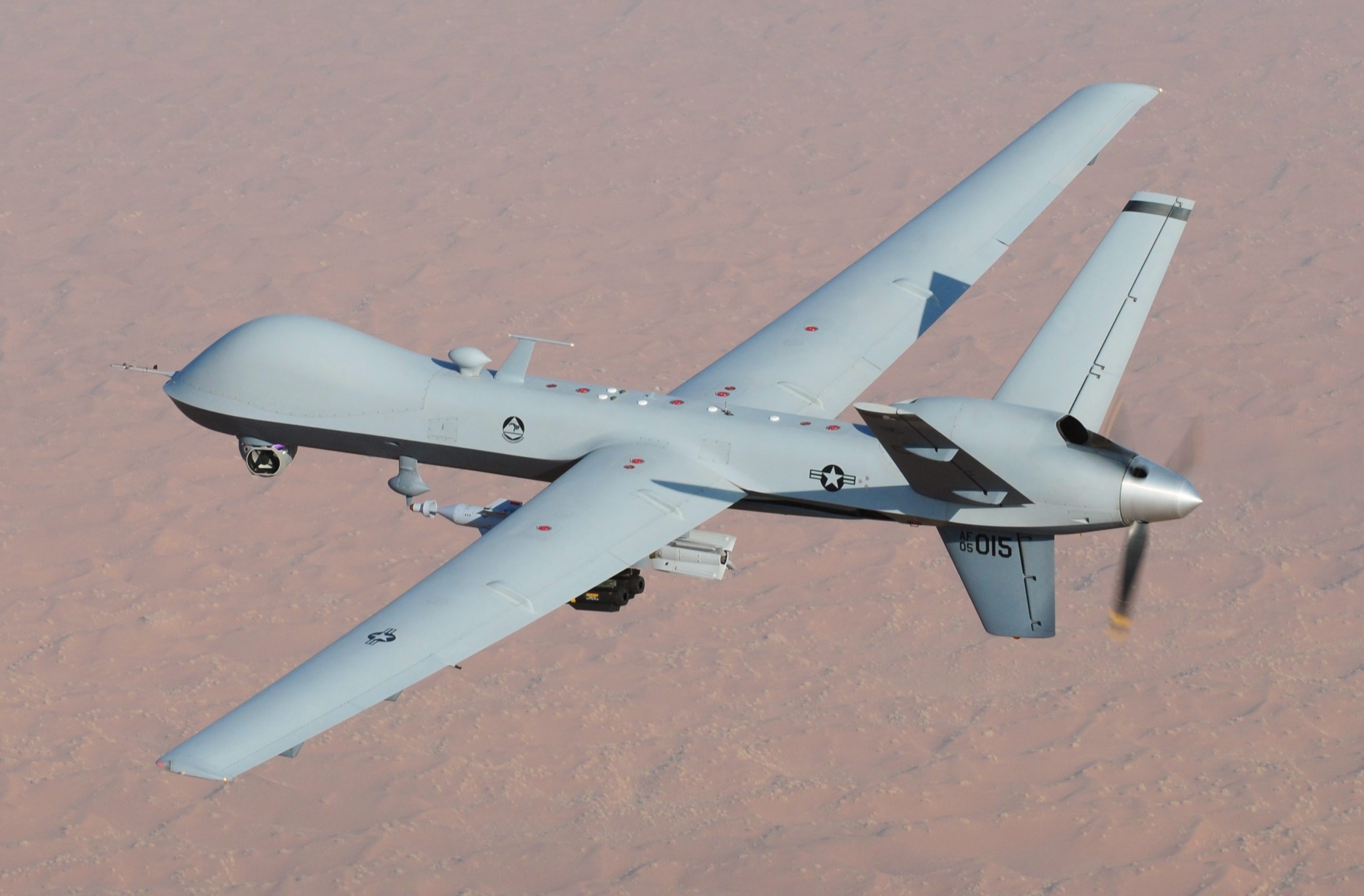
The MQ-9 Reaper is a single-engine, turboprop-powered, long-endurance hunter-killer unmanned aircraft built by General Atomics Aeronautical Systems. Introduced into U.S. Air Force service in 2007 as the successor to the lightly armed MQ-1 Predator, the Reaper transformed armed drones from a tactical surveillance asset into a strategic strike platform. Twenty years after its first combat sortie, more than 340 MQ-9s are in service with 12 air forces, and the platform has logged the highest weapons-released-per-aircraft ratio of any unmanned system in history.

Key facts at a glance
| Attribute | Value |
|---|---|
| Type | Medium-altitude long-endurance hunter-killer UAV |
| Manufacturer | General Atomics Aeronautical Systems |
| First flight | 2 February 2001 (prototype Predator-B) |
| Service entry | 2007 (USAF) |
| Engine | Honeywell TPE331-10 turboprop, 950 hp |
| Length | 11.0 m |
| Wingspan | 20.1 m (24 m Reaper ER) |
| MTOW | 4,760 kg |
| Payload | 1,700 kg total (14 hardpoints) |
| Cruise speed | 313 km/h |
| Service ceiling | 50,000 ft (15,240 m) |
| Endurance | 27 hours (Block 5 baseline); 34 hours (ER) |
| Control | SATCOM + LOS |
| Operators | U.S. Air Force, UK, France, Italy, Spain, Netherlands, Belgium, Germany, Australia, Morocco, Taiwan, India (lease) |
| Unit cost | ~ USD 32 million per airframe; USD 56 million per fully equipped GCS-included system |
From Predator to Predator-B to Reaper
The MQ-9 began as Predator-B, a 2001 General Atomics company-funded enlargement of the MQ-1. The redesign quadrupled payload, increased cruise altitude by 25,000 ft, and replaced the rotary engine with a Honeywell turboprop. The U.S. Air Force ordered the platform in 2002 under the name Reaper, and first combat sortie took place over Afghanistan on 27 October 2007. The platform reached initial operating capability in May 2008.
Weapons and sensors
The Reaper’s fourteen hardpoints — split across the wings and ventral pylons — give it a strike capacity unmatched among medium-altitude unmanned systems. Typical loadouts include:
| Munition | Class | Typical load |
|---|---|---|
| AGM-114 Hellfire | Anti-armor/anti-vehicle | Up to 8 |
| AGM-176 Griffin | Small precision strike | Up to 8 |
| GBU-12 Paveway II | 500-lb laser-guided bomb | Up to 2 |
| GBU-38 JDAM | 500-lb GPS-guided bomb | Up to 4 |
| GBU-39 SDB | 250-lb small-diameter bomb | Up to 16 |
| AIM-9X Sidewinder | Air-to-air (defensive) | Up to 2 |
The primary sensor is the MTS-B / MTS-C multi-spectral targeting system — combined IR camera, daylight HD video, laser rangefinder, laser designator and laser illuminator under the nose. Supporting payloads include a Lynx Synthetic Aperture Radar for ground mapping and moving-target indication.
Combat record
- Afghanistan, 2007–2021. Primary U.S. armed-drone platform.
- Iraq, 2007–2011 and 2014–present. Strikes against insurgents and Islamic State.
- Yemen, 2010–present. AQAP targeted-strike campaign.
- Pakistan tribal areas, 2008–2018. CIA-operated campaign.
- Somalia, 2012–present. al-Shabaab and ISIS-Somalia targets.
- Libya, 2011 / 2014–2019. Coalition and U.S. operations.
- Syria, 2014–present. Multiple deployments.
- Niger / Sahel, 2017–present. French and U.S. counter-terrorism operations.
- 3 January 2020 — Qasem Soleimani strike. Reaper-fired AGM-114s killed the IRGC Quds Force commander at Baghdad International Airport.
- 14 March 2023 — Black Sea incident. A USAF MQ-9 was downed by a Russian Su-27 over international waters.
- 2023–present — Houthi conflict. Yemeni Houthi shore-launched SAMs have downed at least 17 U.S. MQ-9s over the southern Red Sea — the largest sustained loss rate of the Reaper era.
Operators
| Country | Number / variant |
|---|---|
| United States | ~250 (USAF + USMC + DHS Customs) |
| United Kingdom | 16 (Protector RG Mk 1, certified for civil airspace) |
| France | 12 |
| Italy | 6 |
| Spain | 4 |
| Netherlands | 4 |
| Belgium | 4 |
| Germany | 5 (Heron TP and MQ-9B planned) |
| Australia, Morocco, Taiwan, India | Operational or under delivery |
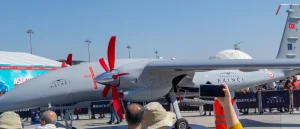
MQ-9 vs. its peers
| MQ-9A Reaper | MQ-9B SkyGuardian | Bayraktar Akıncı | CH-5 (China) | |
|---|---|---|---|---|
| MTOW | 4,760 kg | 5,670 kg | 5,500 kg | 3,300 kg |
| Payload | 1,700 kg | 2,155 kg | 1,350 kg | 1,000 kg |
| Endurance | 27 h | 40 h | 24 h | 40 h |
| Ceiling | 15.2 km | 12.2 km | 12.2 km | 9 km |
| Unit cost | ~ USD 32M | ~ USD 30M | ~ USD 32M | ~ USD 5–10M |
The future: MQ-9B SkyGuardian
General Atomics has shifted production toward MQ-9B SkyGuardian (and its naval variant SeaGuardian), a civil-airspace-certified, automatic-take-off-and-landing-capable Reaper derivative with 40-hour endurance and STANAG 4671 airworthiness. The UK Royal Air Force Protector fleet, Belgium’s NATO contribution, and the Australian Sky Guardian program are all MQ-9B-based. The U.S. Air Force has begun divesting older MQ-9A models, intending to retain a smaller mixed fleet alongside the next-generation classified RQ-180 and the U.S. Army’s MQ-1C Gray Eagle ER.
Why the MQ-9 matters
The Reaper proved that armed unmanned aircraft could conduct sustained, persistent strike at strategic scale — replacing the tactical-only role of earlier drones. It defined the “targeted killing” era of U.S. counter-terrorism, killed senior insurgent and state-aligned leaders across four continents, and set the global benchmark against which the Akıncı, CH-4/CH-5 and other large armed drones are now measured. As losses in the Red Sea have demonstrated, the platform is not invulnerable — but no other Western unmanned strike aircraft has its combat track record.