China’s Tailless J-36 Surfaces in New Prototype: Three-Engine Sixth-Gen Fighter Pulls a Sharp Turn

- Aircraft: Chengdu (CAC) J-36, unofficial designation; sixth-gen candidate
- New footage: July 23, 2026; possible fifth flying prototype
- Design: Tailless, diamond-shaped double-delta wing, three engines
- Innovation: Two-dimensional thrust-vectoring nozzles, reworked DSI intakes
- Size: Estimated MTOW in the 50-55+ tonne range
The tailless agility debate
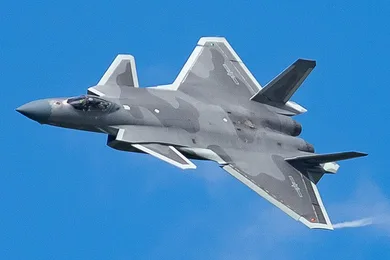
The new clip caught the big three-engine prototype in exactly the maneuver analysts had doubted a tailless airframe could perform—a sharp turn-climb. The J-36 has no vertical tail surfaces; instead, two-dimensional thrust-vectoring nozzles restore much of the pitch and agility authority the missing tailplanes would otherwise provide. That is a signature of sixth-generation thinking: cut aerodynamic surfaces to lower radar signature, then recover the lost control through engine and software.
The prototype also shows reworked DSI (diverterless supersonic inlet) intakes, a new landing-gear arrangement, and changes to the intake-exhaust combination. Each new airframe hints at where the programme is heading, from airflow management to thermal and radar signature.

Why three engines?
The J-36’s most striking feature is its three-engine layout, unlike most contemporary fighters. That choice likely serves the thrust needed for a very large airframe, sustained supersonic cruise at altitude, and a huge internal fuel and weapons volume. With an estimated MTOW above 50-55 tonnes, the J-36 reads less like a classic fighter than a long-range ‘regional dominance’ platform—range and payload being decisive across the Pacific’s vast distances.
China’s willingness to expose the programme this openly shows the sixth-generation race is no longer confined to the U.S. (F-47 NGAD) and Europe (GCAP). Even built on unconfirmed, largely open-source observation, the J-36 is the most concrete clue yet to Beijing’s future air-power doctrine.
J-36 — Known/Estimated Characteristics
| Manufacturer | Chengdu Aircraft Corporation (CAC) |
| Class | Sixth-gen candidate (unofficial designation) |
| Wing | Tailless, diamond-shaped double-delta |
| Engines | Three-engine layout |
| Thrust control | Two-dimensional thrust-vectoring nozzles |
| Intake | Reworked DSI |
| MTOW | ~50-55+ tonnes (estimated) |
| First seen | Late 2024; possible 5th prototype July 23, 2026 |
What sixth generation promises
The sixth-generation concept centers on tailless, very-low-observable airframes, long range, open-architecture mission software, teaming with uncrewed ‘loyal wingman’ drones, and AI-assisted mission management. The J-36’s large body and three engines appear to provide the physical basis for much of that—especially range, payload and onboard power generation.
Turkey’s national fighter KAAN, formally cast as fifth generation, follows a design philosophy whose open architecture and block-based roadmap leave a growth path toward sixth-gen capability. Programs like the J-36 underline how fast this race is accelerating worldwide—and the strategic weight of fielding a sovereign fighter.

Sources
- Army Recognition — “China’s Possible Fifth J-36 Prototype…” (July 23, 2026)
- The Defense Post; 19FortyFive; open-source satellite/photo analysis
- Wikipedia — Chengdu J-36 (context)