MBDA Exocet AM39: How a Sea-Skimming Missile Rewrote Naval Warfare Doctrine

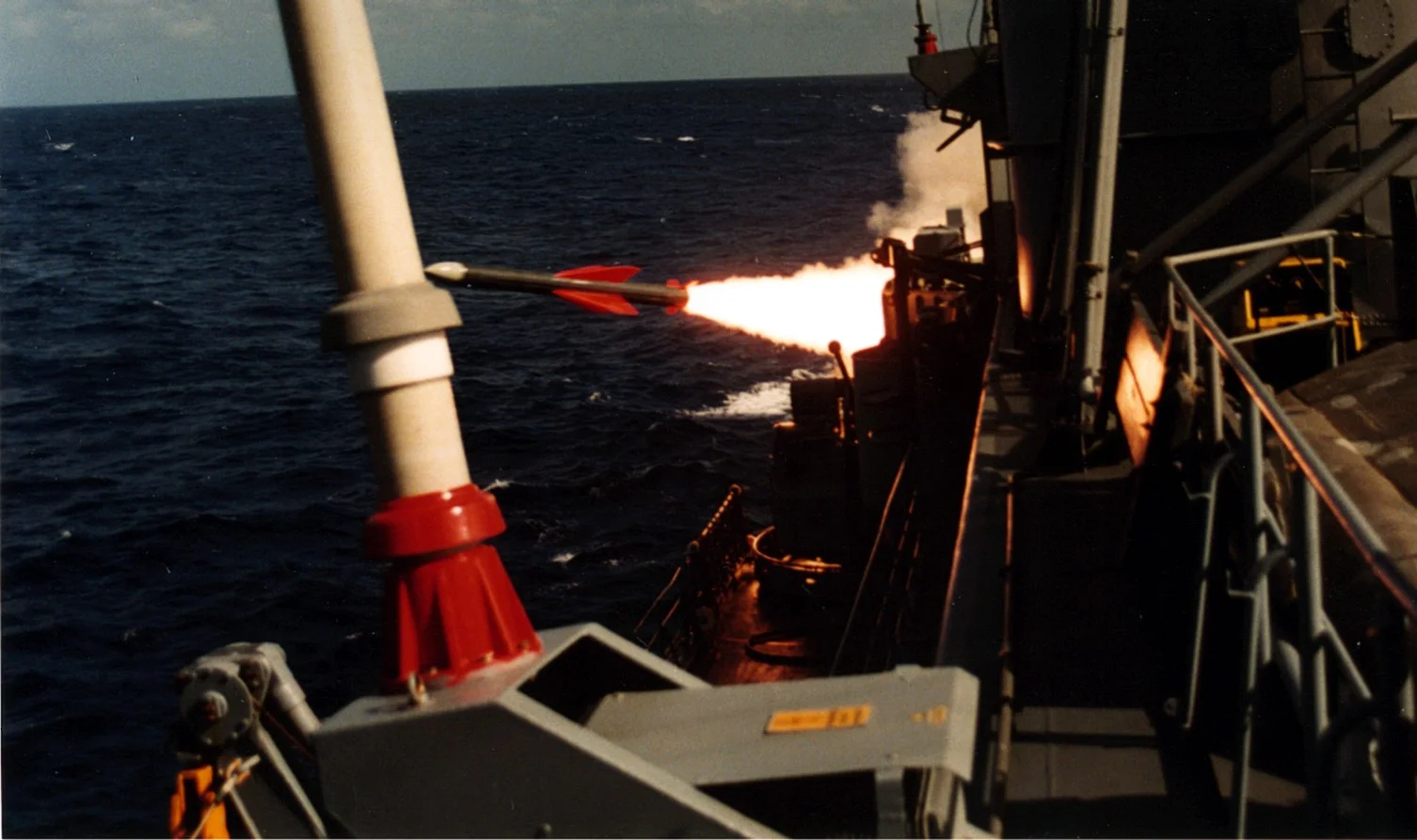
On 4 May 1982, two air-launched Exocet AM39 missiles struck HMS Sheffield. The Type 42 destroyer — commissioned only four years earlier and regarded as a modern, capable warship — was abandoned and eventually sank. The shock was not just tactical. It was doctrinal: a relatively inexpensive, subsonic, sea-skimming missile had destroyed a ship that NATO planning had assumed to be survivable. Every western navy began a crash programme of anti-ship missile countermeasures. The Exocet’s reputation was made.
1. Technical Specifications
| Specification | AM39 Block 2 | AM39 Block 3C |
|---|---|---|
| Length | 4.69 m | 4.69 m |
| Diameter | 348 mm | 348 mm |
| Launch weight | ~655 kg | ~655 kg |
| Speed | Mach 0.93 | Mach 0.93 |
| Range | ~50 km | ~70 km |
| Flight profile | Sea-skimming 2-3 m | Sea-skimming 2-3 m |
| Guidance | INS + active radar (terminal) | INS + GPS + active radar (terminal) |
| Warhead | 165 kg HE blast-fragmentation | 165 kg HE + improved fuze |
2. Falklands: The Combat Record
Argentina’s Exocet inventory in 1982 was limited — five AM39 missiles and a handful of ship-launched MM38. Under combat conditions, against an adversary with no experience countering Exocet, the results were decisive:
- 4 May 1982: HMS Sheffield — AM39 from Super Étendard, 20 killed, ship abandoned
- 25 May 1982: SS Atlantic Conveyor — two AM39 strikes, 12 killed, Chinook helicopters destroyed, critical logistics impact on ground operations
- 8 June 1982: HMS Glamorgan — land-launched MM38, damaged but survived
Argentina’s Exocet operators were improvising under combat pressure — flying below radar, refuelling mid-mission, firing at the outer edge of the engagement envelope. The effectiveness proved that sea-skimming guidance at Mach 0.93 was enough.
3. USS Stark (1987): The Warning
On 17 May 1987, an Iraqi Mirage F1 launched two AM39 missiles at USS Stark (FFG-31) in the Persian Gulf. Both missiles hit; 37 US sailors were killed. The attack was described as accidental. Its strategic effect was to confirm that Exocet’s lethality was not specific to the Falklands — it transferred to any sea environment where an operator had access to the missile and a compatible aircraft.
4. Block 3C Modernisation
- GPS integration: Added to INS + active radar chain — enables engagement of land infrastructure targets as well as ships
- Extended range: ~70 km vs ~50 km in Block 2
- Enhanced ECCM: Terminal radar hardened against modern jamming systems
- Improved fuze: Optimised against armoured vessels and double-hull tankers
5. Operator Nations
| Country | Version | Platform |
|---|---|---|
| France | AM39 + MM40 Block 3 | Rafale, FREMM, Atlantique 2 |
| Qatar | AM39 | Rafale |
| UAE | AM39 | Mirage 2000 |
| Egypt | MM40 Block 2 | FREMM + coastal battery |
| Brazil | AM39 + MM40 | A-4 Skyhawk + frigates |
6. Assessment
Exocet AM39 Block 3C is the version of a famous missile that no longer depends on its 1982 reputation for operational relevance. The GPS integration transforms it from a pure anti-ship weapon into a multi-mission strike platform capable of coastal infrastructure, port, and littoral targets. For nations that fly Rafale — the primary current platform — AM39 is the organic maritime strike component that MICA NG cannot fill. Together, the two create a complete air wing capable of air superiority, beyond-visual range combat, and now maritime strike within the same airframe.