MBDA Sea Venom: The Helicopter Anti-Ship Missile Built for Discriminating Engagement

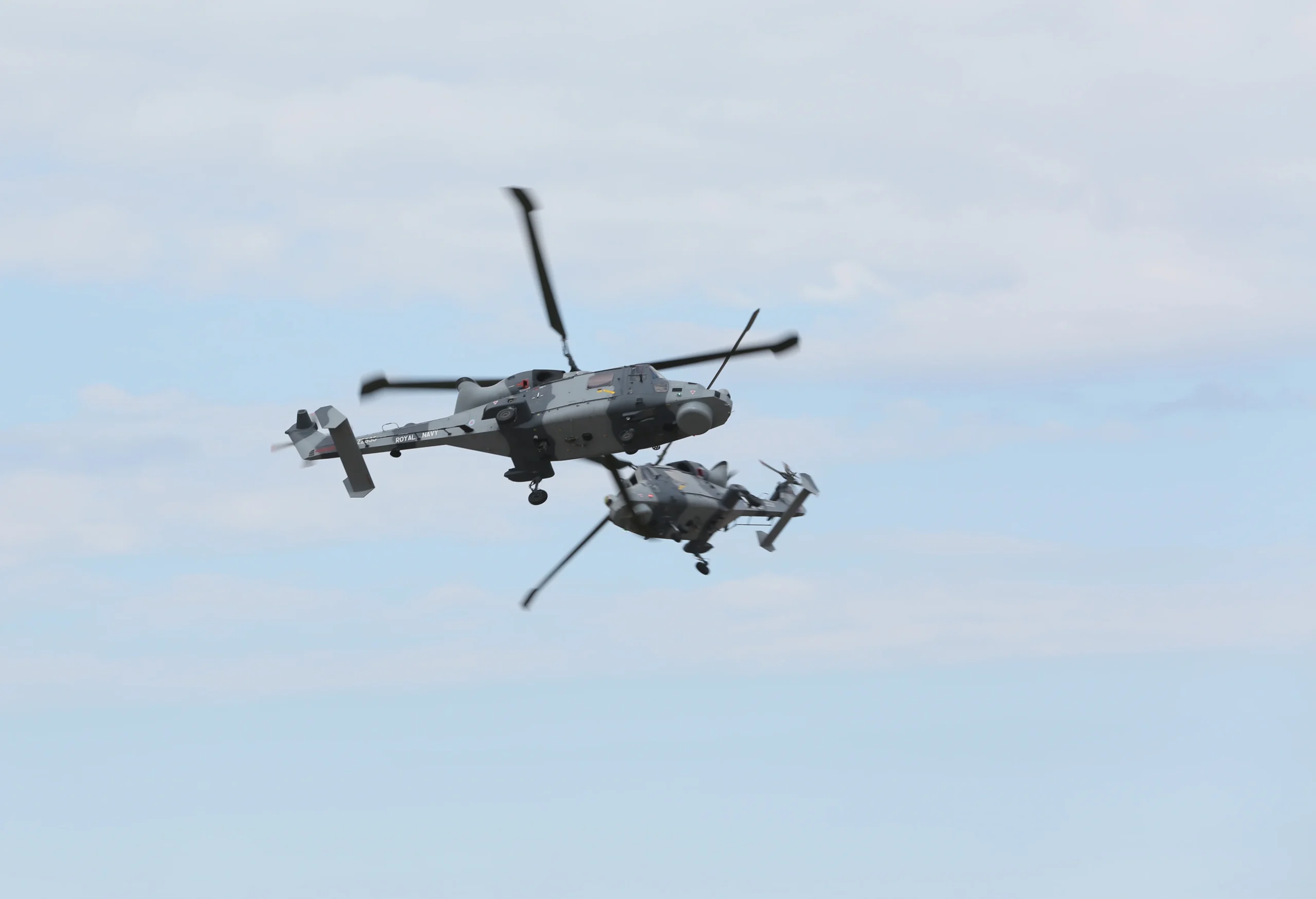
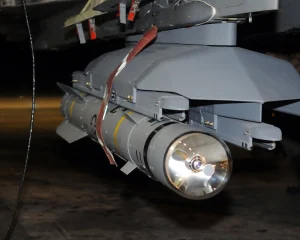
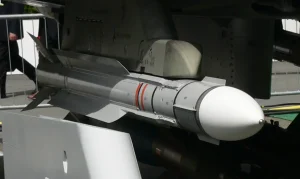
When the UK’s AW159 Wildcat helicopter replaces its inherited Sea Skua, it gains something qualitatively different in Sea Venom: not just a newer seeker, but a man-in-the-loop bidirectional datalink that allows the operator to redirect the missile, discriminate targets, or abort the engagement after launch. Developed jointly with France (where it is designated ANL — Anti-Navire Léger), Sea Venom represents the first generation of helicopter-launched anti-ship missiles designed with legally discriminating engagement as an explicit technical requirement.
1. Technical Specifications
| Specification | Sea Skua | Sea Venom |
|---|---|---|
| Entry | 1982 (Falklands) | 2020s |
| Length | 2.5 m | ~2.5 m |
| Weight | ~147 kg | ~100 kg |
| Speed | Mach 0.9 | Transonic |
| Range | ~15 km | ~20 km+ |
| Guidance | SARH semi-active radar | INS + IIR/TV + man-in-the-loop datalink |
| Target change post-launch | No | Yes |
| Low observable | No | Reduced RCS design |
2. Man-in-the-Loop: The Operational Significance
The bidirectional datalink in Sea Venom serves three distinct operational functions:
- Target identification confirmation: The operator receives live IIR/TV camera imagery from the missile in flight and can confirm the target is the intended military objective before terminal guidance
- Target reselection: In a group of vessels, the missile can be redirected to a higher-priority target that appears after launch — a patrol boat protecting a logistics vessel, for example
- Abort command: If a civilian vessel enters the engagement zone after launch, the operator can transmit an abort command and redirect the missile away from the target
These capabilities are not abstract — they respond to a concrete legal reality: IHL (International Humanitarian Law) places a duty of precaution on the attacking force to discriminate between military and civilian targets throughout the engagement. A fire-and-forget missile cannot satisfy this requirement once launched. Sea Venom can.
3. Platform Integration
| Platform | Country | Designation |
|---|---|---|
| AW159 Wildcat HMA2 | UK | Sea Venom FASGW(H) |
| NH90 NFH | France | ANL (Anti-Navire Léger) |
| Export potential | Multiple | Super Lynx, AW101 compatible platforms |
4. Falklands to Sea Venom: Lineage
The combat debut of helicopter-launched anti-ship missiles was the Falklands War. British Lynx helicopters fired Sea Skua at Argentine vessels — ARA Alferez Sobral and ARA Bahia Buen Suceso were struck. Sea Skua proved the concept; Sea Venom updates it. The 1982 engagement used a semi-active radar system requiring the helicopter to illuminate the target continuously. Sea Venom’s IIR/TV seeker with post-launch datalink eliminates that illumination requirement and adds the targeting discriminant capability that 1982 could not offer.
5. Low Observable Design
Sea Venom’s airframe is designed with reduced radar cross section — a characteristic increasingly important as even small surface combatants acquire short-range point defence missile systems. The combination of sea-skimming profile, reduced RCS and transonic speed creates an engagement geometry that limits the defender’s reaction time to a few seconds at typical engagement ranges.
6. Assessment
Sea Venom defines a new category of helicopter-launched ASM: not just a smarter seeker, but a missile with genuine in-flight human oversight of the target engagement decision. For navies operating in contested littoral environments where civilian shipping, fishing fleets, and military vessels co-exist at close range — which describes most real-world maritime security operations — this capability is not optional. It is the minimum standard for legal engagement in the 21st century. The UK and France’s joint development of Sea Venom/ANL reflects a shared recognition that future maritime combat laws will demand what Sea Venom already delivers.