

Which Institution Does ROKETSAN Belong To? Who Owns It

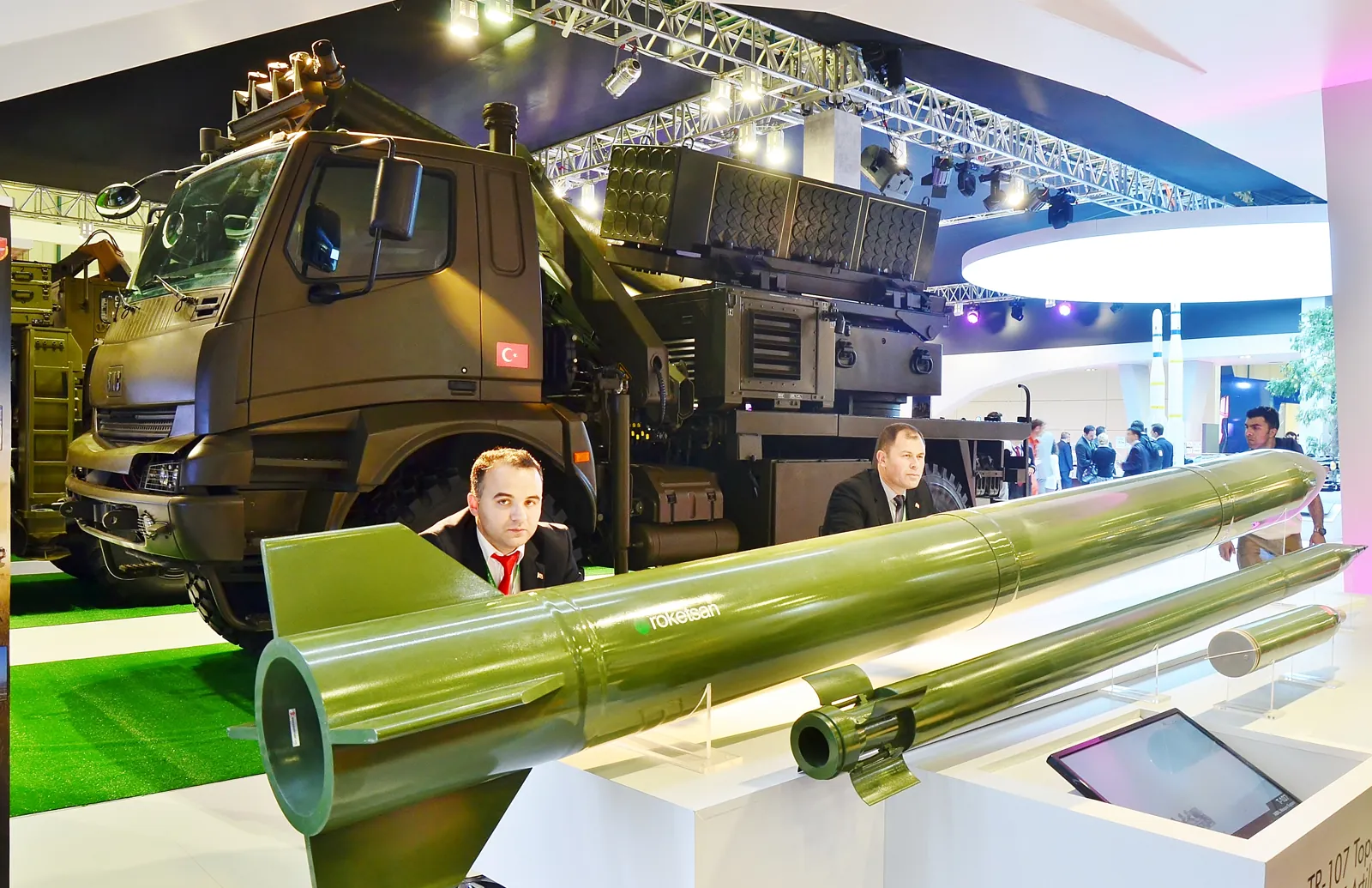
ROKETSAN belongs to the Turkish Armed Forces Foundation (TSKGV), which holds a controlling 55% stake, making the firm officially a TSKGV company. ROKETSAN works closely with the Presidency of Defence Industries (SSB) and the Ministry of National Defence (MSB) as regulator and customer, but in ownership terms it belongs to the foundation, not to those state bodies.
| ROKETSAN — Institutional Belonging | |
|---|---|
| Full name | ROKETSAN Roket Sanayii ve Ticaret A.S. |
| Belongs to | Turkish Armed Forces Foundation (TSKGV) |
| Founded | 14 June 1988, Ankara |
| Headquarters | Ankara (Elmadag; Lalahan, Kirikkale) |
| CEO/GM | Murat Ikinci |
| Regulator / customer | Presidency of Defence Industries (SSB), Ministry of National Defence (MSB) |
| Company type | Joint-stock company — not publicly traded |
| Employees | ~5,000 (~2,000 in R&D) |
Which institution does ROKETSAN belong to?
Institutionally, ROKETSAN belongs to the Turkish Armed Forces Foundation (TSKGV). The foundation holds 55% of the company’s shares, and this controlling stake is why ROKETSAN is described in official documents and in its own literature as a TSKGV company. So the short answer to “whose company is ROKETSAN?” is: the foundation’s.
An important distinction is often blurred here. ROKETSAN is not a government department attached to a ministry, nor a state economic enterprise; legally it is a joint-stock company. But because its controlling stake sits with a public foundation, in practice it is a state-linked entity under public control. Its capital is divided among specific public institutions and a public foundation, so ordinary investors cannot buy ROKETSAN shares on the open market.
Knowing which institution ROKETSAN belongs to is the key to understanding the firm’s identity. The institution behind a missile maker shapes whose priorities its decisions serve, where its earnings are directed, and its overall strategic orientation. In ROKETSAN’s case that link runs not to a private holding focused on distributing profit, but to a public foundation created to strengthen the defence industry.
The company was established in Ankara on 14 June 1988 by a decision of the Defence Industry Executive Committee. TSKGV has sat at the centre of its ownership structure from the start; ROKETSAN was shaped by public will to build Turkiye’s national capability in rockets and missiles. That the parent institution is a foundation is no accident but a deliberate choice: keeping the controlling stake in a non-profit foundation allows earnings to be reinvested largely back into the defence industry.
In short, in terms of ownership and institutional belonging, ROKETSAN belongs to TSKGV. In its day-to-day work, however, it deals intensively with bodies such as SSB and MSB. The two must not be confused: TSKGV is owner and founder; SSB is regulator and principal customer.
TSKGV and Turkiye’s defence institutions
The Turkish Armed Forces Foundation (TSKGV) is a public foundation set up to strengthen the defence capability of the Turkish Armed Forces and to support the growth of the national defence industry. The foundation does not build weapons itself; instead it acts as an umbrella body holding significant stakes in Turkiye’s largest defence companies.
Besides ROKETSAN, TSKGV is a shareholder in many strategic defence firms such as ASELSAN, HAVELSAN and ASPILSAN. Through this structure, earnings from the defence sector are channelled back into developing the companies and technologies in the field. In effect, TSKGV is the central institution that represents public will in Turkiye’s defence industry and holds the ownership of these companies together.
Being a TSKGV company makes ROKETSAN a relative of the other firms under the same umbrella. The intertwined ownership of ROKETSAN and ASELSAN is a concrete expression of that kinship: the two are both tied to the same foundation and are partners in each other. This is a typical example of how Turkiye’s defence firms are organised as a mutually reinforcing ecosystem rather than as rival islands.
Another important feature of the foundation model is the continuity and predictability of ownership. Because the majority of shares sit with a public foundation insulated from stock-market swings, ROKETSAN can plan long-term research and facility investments steadily. Its decades of intensive R&D and its new production sites rest in part on the predictability this stable institutional belonging provides.
The table below summarises which institutions ROKETSAN belongs to and in what proportion:
Its relationship with SSB and the Defence Ministry
Although ROKETSAN’s institutional belonging lies with TSKGV, the bodies it deals with most in daily business are the Presidency of Defence Industries (SSB) and the Ministry of National Defence (MSB). Understanding this relationship clears up the most common confusion about which institution ROKETSAN belongs to.
SSB is the state agency that manages Turkiye’s defence procurement and runs its defence-industry programmes. Most of the missile and rocket systems ROKETSAN develops are produced under programmes SSB opens and contracts it awards. That makes SSB both a regulatory authority and the principal customer for ROKETSAN. But SSB does not own the company; ROKETSAN’s shares are held by TSKGV, not SSB.
MSB, in turn, is the ministry that defines the needs of the Turkish Armed Forces and represents the end-user side. The systems ROKETSAN builds ultimately enter the inventory of forces under MSB. So ROKETSAN has a supplier-user relationship with MSB as well, yet again it does not belong to MSB in ownership terms.
To simplify this triangle: TSKGV is owner and founder (ownership); SSB is regulator and principal customer (contracts and procurement); MSB represents the end-user side (requirements and use). The technical answer to “is ROKETSAN attached to SSB?” is no in ownership terms, even though its activities are largely shaped by SSB. This distinction lets the firm operate like an autonomous joint-stock company while remaining bound to national defence priorities.
What the ASELSAN and MKE partnership means
The presence of two major defence institutions among ROKETSAN’s shareholders, ASELSAN and MKE (Mechanical and Chemical Industry), adds another dimension to the firm’s institutional belonging. Each holds 15% of ROKETSAN’s shares, together forming a significant 30% block.
The meaning of this partnership is that ROKETSAN is not a lone island in Turkiye’s defence industry. ASELSAN is a long-established leader in electronics and electro-optical systems; MKE in ammunition, weapons and explosive technologies. ROKETSAN’s missile and rocket systems are often completed by ASELSAN’s guidance and sensor technologies and MKE’s munitions capabilities. The ownership structure turns this natural technological cooperation into an institutional bond.
That ASELSAN, like ROKETSAN, is also a TSKGV company strengthens the tie between the two further. The result is a structure linked at both the ownership and partnership levels. These cross-holdings illustrate a model in which Turkiye’s large defence firms contribute to one another’s development and in which knowledge and capability circulate within the ecosystem.
Because ASELSAN is listed on Borsa Istanbul, people sometimes ask “is ROKETSAN on the stock exchange too?” But a partner being publicly traded does not make ROKETSAN public. ROKETSAN itself is not traded on any exchange and has no publicly offered shares.
In short, ROKETSAN belongs to TSKGV through its controlling stake; it is institutionally tied to the other flagships of Turkiye’s defence industry through the ASELSAN and MKE partnership; and it works with SSB and MSB in a regulator-and-customer relationship. Its institutional belonging is defined not in a single body but within a predominantly public structure.
ROKETSAN’s institutional belonging and ownership percentages rest on official and public sources. As the company is not publicly traded, detailed and audited capital data are not public; details not officially disclosed are noted as such.
Frequently Asked Questions
Which institution does ROKETSAN belong to?
ROKETSAN belongs to the Turkish Armed Forces Foundation (TSKGV), which holds 55% of its shares, and it is officially a TSKGV company. Its institutional belonging rests with this foundation.
What is TSKGV?
The Turkish Armed Forces Foundation is a public foundation created to support the strength of the Turkish Armed Forces and the national defence industry. It holds stakes in strategic defence firms such as ROKETSAN, ASELSAN, HAVELSAN and ASPILSAN.
Is ROKETSAN attached to SSB?
Not in ownership terms. The Presidency of Defence Industries (SSB) is ROKETSAN’s regulatory authority and principal customer, running its projects through contracts. But ROKETSAN’s shares are held by TSKGV, not SSB.
What is ROKETSAN’s relationship with the Ministry of National Defence (MSB)?
ROKETSAN ultimately supplies its systems to the inventory of the Turkish Armed Forces, so it has a supplier-user relationship with MSB. In ownership terms, however, it does not belong to MSB.
What role do ASELSAN and MKE play in ROKETSAN?
ASELSAN and MKE each hold 15% of ROKETSAN’s shares. ASELSAN is also a TSKGV company; this partnership ties ROKETSAN institutionally to the other large firms of Turkiye’s defence industry.
Is ROKETSAN a private company?
ROKETSAN is legally a joint-stock company, but because its controlling stake sits with a public foundation (TSKGV) it is in practice a state-linked entity under public control. It is not traded on any stock exchange.
Sources
- ROKETSAN official — roketsan.com.tr
- Turkish Armed Forces Foundation (TSKGV) — tskgv.org.tr
- Presidency of Defence Industries (SSB) — ssb.gov.tr
- Defense News Top 100, 2025 edition
- Wikipedia (English) — ROKETSAN