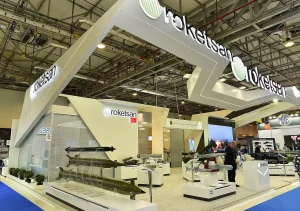
What Does ROKETSAN Do? Turkey’s Missile Maker Explained

ROKETSAN is Turkey’s principal designer and manufacturer of missiles and rockets. Founded in 1988 and based in Ankara, the company develops anti-ship and cruise missiles, ballistic missiles, air-defence systems, anti-tank missiles, guided rockets and precision munitions, along with rocket propulsion, warhead and space technologies for both the Turkish Armed Forces and export customers.
| ROKETSAN — At a Glance | |
|---|---|
| Full name | ROKETSAN Roket Sanayii ve Ticaret A.Ş. |
| Founded | 14 June 1988, Ankara |
| Headquarters | Ankara (Elmadağ; Lalahan, Kırıkkale) |
| CEO/GM | Murat İkinci |
| Core business | Missiles, rockets, air defence, guided munitions |
| Employees | ~5,000 (~2,000 in R&D) |
| Platforms served | Land, air, naval and space systems |
| Ownership | Foundation-controlled — not publicly traded |
What does ROKETSAN do?
ROKETSAN is the lead company in Turkey’s rocket and missile sector. It was established on 14 June 1988 by a decision of the Defence Industry Executive Committee, with the specific mandate of designing, developing and producing rockets and missiles domestically. At the time, Turkey depended heavily on imported guided weapons; the company was created to build a sovereign capability in a field that few countries master. Today it operates across the full weapon-system lifecycle: research and development, propulsion and warhead design, guidance and control, systems integration, testing and serial production.
The company’s work is not limited to building complete missiles. It also produces the subsystems that make guided weapons possible — solid-fuel and composite rocket motors, warheads, seekers and guidance electronics — and integrates its munitions onto aircraft, drones, helicopters, naval vessels and ground launchers. This vertical depth is unusual: relatively few manufacturers combine propellant chemistry, warhead design, guidance software and final assembly under one roof, and it is what allows ROKETSAN to tailor a weapon to a specific platform and mission rather than adapting an off-the-shelf design.
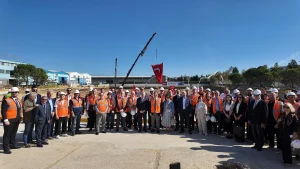
In practice, ROKETSAN supplies precision-strike and air-defence capability to nearly every branch of the Turkish Armed Forces, while a growing share of output is directed at export markets. Its main campus and test ranges are at Elmadağ, east of Ankara. Two new facilities at Lalahan (missile integration) and Kırıkkale (propellant production), inaugurated in April 2026 with total investment exceeding $1 billion, are intended to raise missile production capacity by roughly five times — a signal of how quickly demand for its systems has grown.
Main areas of activity
ROKETSAN’s portfolio is organised around several capability areas that together cover strike, defence and munitions roles:
- Anti-ship and cruise missiles — surface-launched and land-based strike weapons for naval and standoff targets.
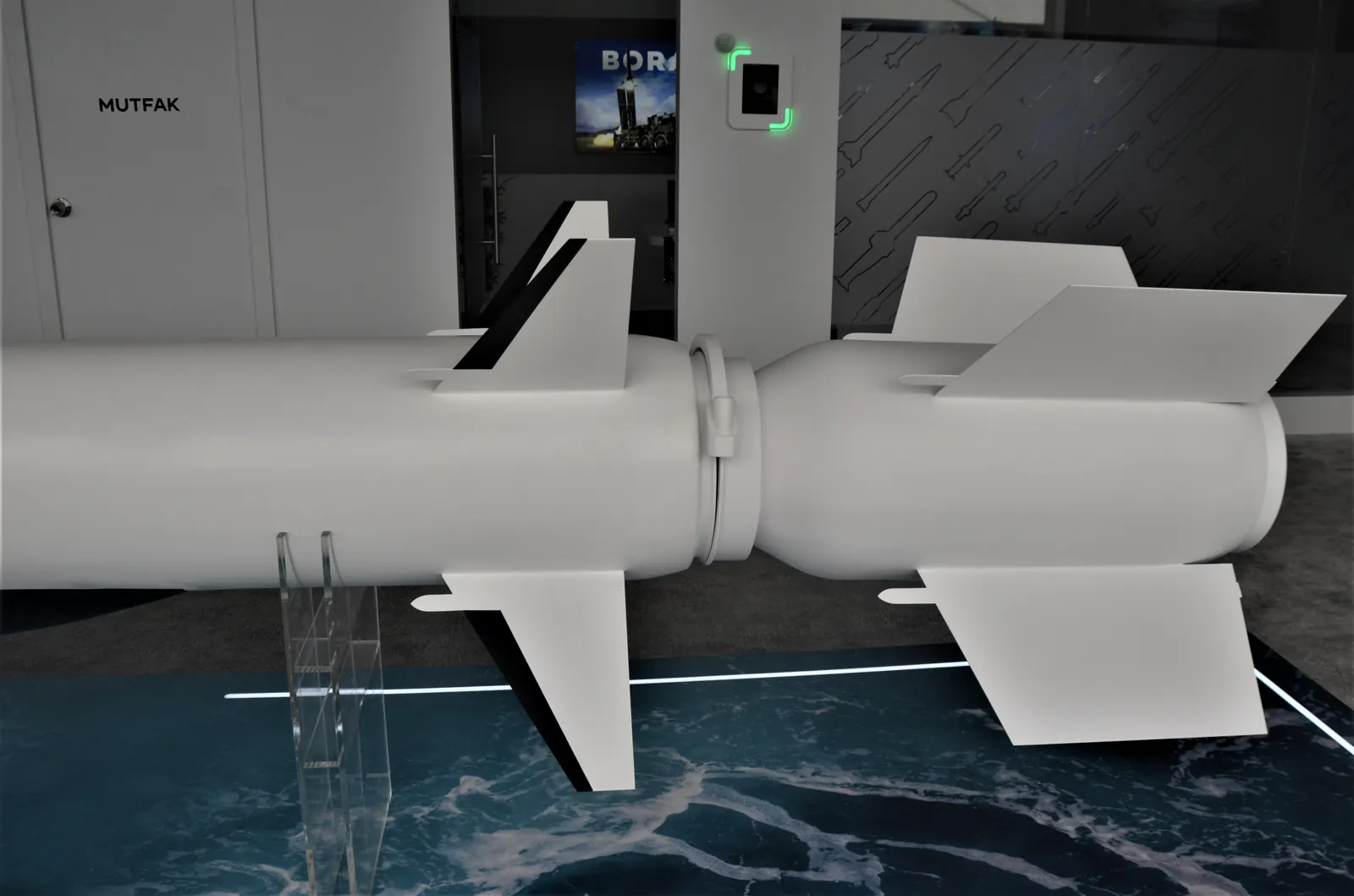
- Ballistic missiles — surface-to-surface systems for longer-range precision strike.
- Air-defence systems — interceptors covering short, medium and long-range engagements.
- Anti-tank missiles — long-range, medium-range and shoulder-launched systems against armour.
- Guided rockets and precision munitions — laser-guided rockets and smart micro-munitions carried by drones and helicopters.
- Naval weapons — heavyweight torpedoes and torpedo countermeasures.
- Directed-energy and space work — laser weapon research, sounding rockets, micro-satellite launch studies and propulsion technologies.
A closer look at the product families
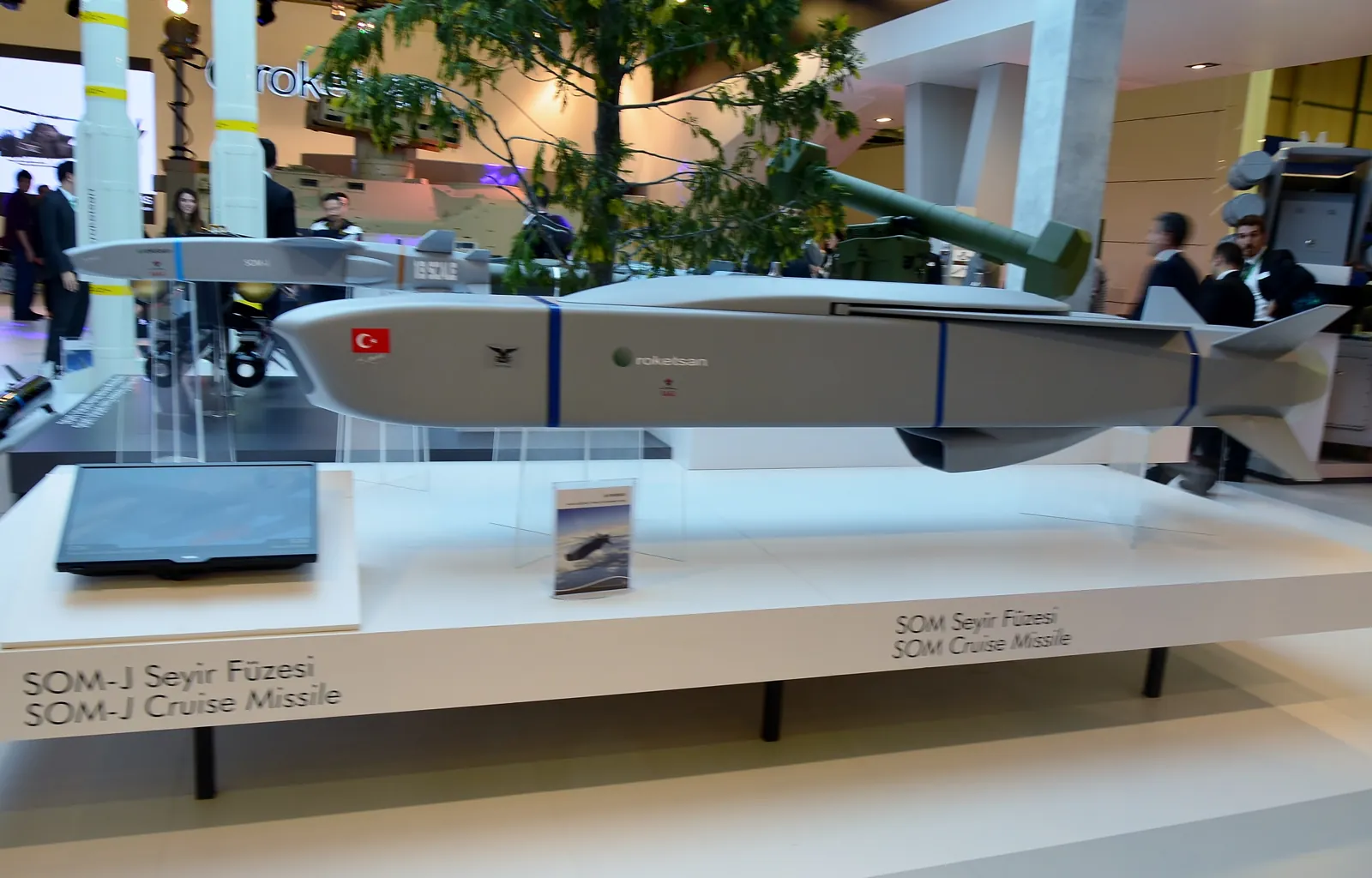
ROKETSAN’s best-known export product is ATMACA, an anti-ship missile fielded by the Turkish Navy and offered abroad, alongside the ÇAKIR cruise missile and the air-launched SOM family. These give the Turkish fleet and air force a domestically produced standoff-strike option in place of imported alternatives. In the surface-to-surface category, the company has moved from earlier artillery-rocket systems such as the TRG series toward larger ballistic missiles including BORA and TAYFUN, extending the range and precision of Turkey’s land-based strike inventory.
Air defence has become a central pillar. The HİSAR family covers low- and medium-altitude threats, SİPER addresses long-range interception, and SUNGUR provides a man-portable (MANPADS) option, while LEVENT is configured for naval platforms. Together these interceptors are the backbone of Turkey’s layered, home-grown air-defence architecture. On the tactical side, the CİRİT laser-guided rocket and the UMTAS, OMTAS and KARAOK anti-tank missiles are widely integrated onto helicopters, drones and armoured vehicles, giving ground and rotary-wing forces precision anti-armour reach at varying distances.
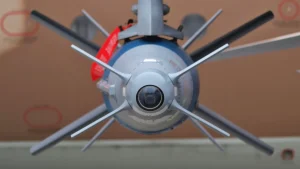
The MAM family of smart micro-munitions — MAM-L, MAM-C and MAM-T — has become a signature payload for Turkish unmanned aircraft, pairing light weight with guided accuracy for the drones that have shaped much of the country’s recent combat experience. Beyond conventional weapons, ROKETSAN also works on the AKYA heavyweight torpedo and AKATA torpedo countermeasure for naval use, the ALKA directed-energy weapon, and longer-horizon space and propulsion projects including sounding rockets and micro-satellite launch studies. Precise range and performance figures for many of these systems have not been officially disclosed.
Place in Turkey’s defence industry
ROKETSAN is one of the pillars of Turkey’s defence-industrial base and the country’s centre of gravity for missile and rocket technology. In the Defense News Top 100 for 2025 (based on 2024 figures), it recorded defence revenue of roughly $1.55 billion and ranked 71st worldwide — one of five Turkish companies on the list. Management has stated that turnover exceeded $2 billion in 2025.
The company works closely with other national players: it draws on ASELSAN for electronics and sensors and supplies munitions that arm platforms built by manufacturers such as TUSAŞ/TAI and Baykar. This division of labour — sensors and avionics from one house, airframes from another, and effects from ROKETSAN — is a defining feature of how Turkey has scaled its defence sector over the past two decades. This positions ROKETSAN as the weapons-and-effects layer of that wider push toward defence self-sufficiency. It derives essentially all of its revenue from defence sales, and management has set a target of lifting exports above 50% of turnover, reflecting a strategic shift from serving primarily domestic demand to competing for international contracts. With combined order intake reported to have pushed its total business volume toward roughly $10 billion, the company enters the second half of the decade as one of the most closely watched missile manufacturers outside the traditional major powers.
Technical values such as ranges and payloads are given only where officially released. Where the manufacturer has not published a figure, it is marked “not officially disclosed” rather than estimated. The 2025 turnover figure is based on a statement by the CEO and will be updated when an audited annual report is published.
Frequently Asked Questions
What does ROKETSAN produce?
ROKETSAN produces missiles and rockets — including anti-ship and cruise missiles, ballistic missiles, air-defence interceptors, anti-tank missiles, laser-guided rockets and smart munitions — as well as rocket motors, warheads and guidance subsystems.
What fields does ROKETSAN work in?
It covers strike weapons (anti-ship, cruise and ballistic missiles), air defence, anti-tank systems, guided rockets and munitions, naval torpedoes, directed-energy weapons and space/propulsion technologies.
Which platforms does ROKETSAN arm?
Its munitions are integrated onto land launchers, fighter aircraft, helicopters, drones and naval vessels, supplying precision-strike and air-defence capability across all branches of the Turkish Armed Forces.
Does ROKETSAN only make missiles?
No. Alongside complete missiles it develops rocket motors, warheads, seekers and guidance electronics, and it conducts directed-energy, sounding-rocket and micro-satellite launch research.
Does ROKETSAN export its products?
Yes. Systems such as the ATMACA anti-ship missile and MAM smart munitions are offered internationally, and the company aims to raise exports above 50% of turnover.
How large is ROKETSAN?
The company employs around 5,000 people, roughly 2,000 of them in R&D, and reported defence revenue of about $1.55 billion for 2024 (Defense News Top 100 2025), ranking 71st worldwide.
Sources
- ROKETSAN official — roketsan.com.tr
- Turkish Armed Forces Foundation (TSKGV) — tskgv.org.tr
- Defense News — Top 100 Defense Companies 2025
- Anadolu Agency and Daily Sabah reporting (2026)