



Why Turkish Armed Drones Sell Worldwide: Access, Package, Catalogue (2014–2026)

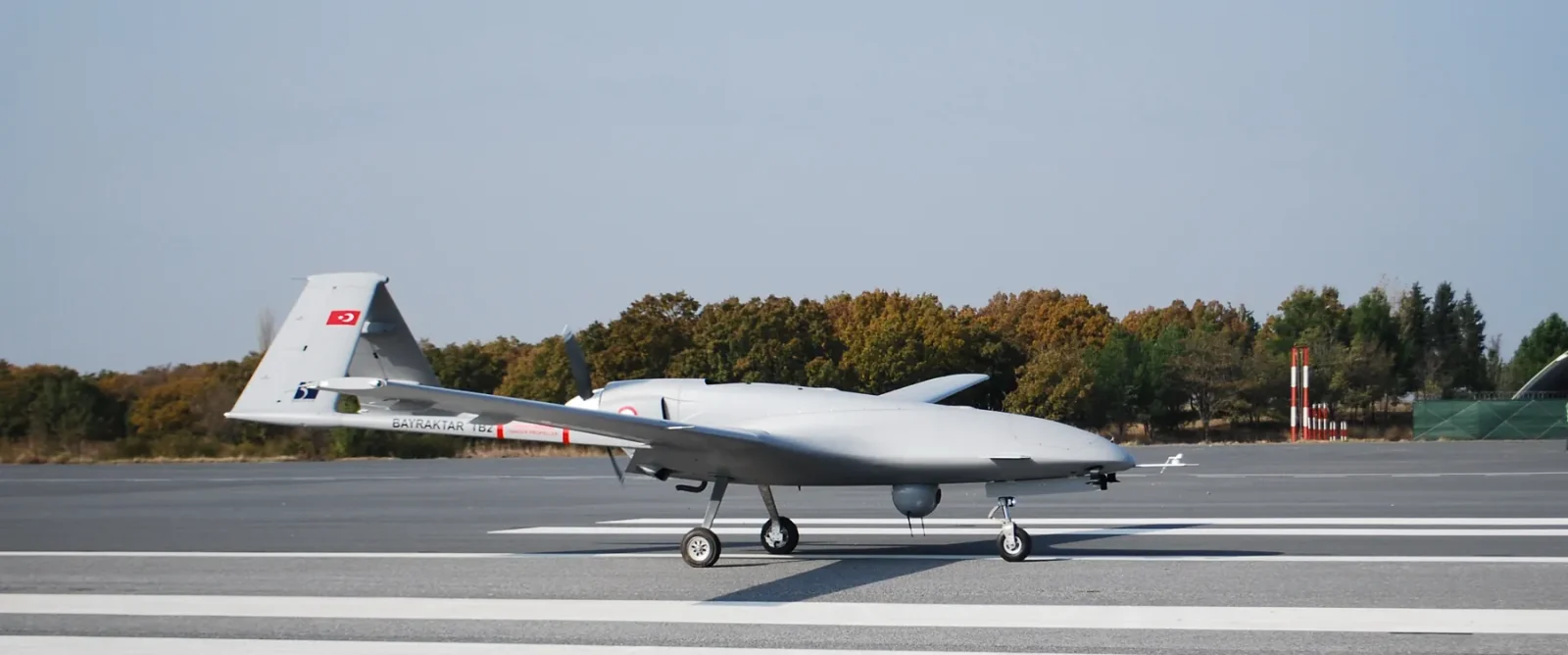
In 2018 Türkiye’s tactical armed drone had been sold to two countries; by the end of 2025 the maker had signed contracts for the same platform with 36. In the same seven years the heavy-class AKINCI went to five buyers, the ship-based TB3 and the jet-powered KIZILELMA found their first export customer, and Turkish Aerospace’s ANKA reached six countries from Central to Southeast Asia. This file reads the armed-drone line as a product line, not country by country, and names the three clusters that drive exports: access, package, catalogue.
This is the series’ twenty-fifth file and its second thematic one. The data in the Poland, Saudi Arabia, Qatar, Gulf, Balkans, Central Asia, Indonesia and Malaysia files is linked, not repeated; the Ukraine and Azerbaijan files are in Turkish. The pattern of the armoured-vehicle file applies unchanged: contract, donation, press figure and report are written apart; rival lines are separate layers; no superiority claim; no loss or combat narrative. The Turkish original is here.
Short answer: access × package × catalogue
With nineteen verified buyers the armed-drone line is the widest product line in the series, and unlike the armoured-vehicle line most of its buyers sit on the direct-purchase rung. Three clusters sit behind that width. Access: export permission from one capital, munitions in the same contract, a system in service since 2014. Package: ground control station, simulator, training and logistics in one contract; published prices on most big purchases; six to seventeen months to delivery; packages scaling from three aircraft to sixty. Catalogue: from TB2 to AKINCI, TB3 and KIZILELMA; Turkish Aerospace’s ANKA and Aksungur; a local-production share for buyers that want one. In one sentence: the buyer takes delivery within a year, with munitions, at a published price and without waiting for a licence — then can move up a class with the same maker. The component this file adds to the Turkish package is access × package × catalogue.
| Buyer | Platform | Quantity · value | Date | Delivery / status |
|---|---|---|---|---|
| Poland | TB2 | 24 (4 sets) · $270m | 24 May 2021 | Complete 16 May 2024; NSPA support Oct 2024; NATO mission at İncirlik 2025 |
| Romania | TB2 | 18 · ~$321m | Apr 2023 | First system Jun 2024; rest Sep 2024 – Jan 2025 |
| Croatia | TB2 | 6 · €67.01m | 21 Nov 2024 | First aircraft Aug 2025 |
| Albania | TB2 | 3 · undisclosed | 20 Dec 2022 | Delivered Feb 2024; Kuçova NATO base |
| Kosovo | TB2 | 5 · undisclosed | late 2022 | Delivered Jul 2023 (~6 months) |
| Bosnia and Herzegovina | TB2 | 2 | Apr 2025 (decision) | Donation; delivered 29 Jun 2025 |
| Ukraine | TB2 | quantity undisclosed | 2019 | First European buyer; $100m plant (Oct 2023), construction Feb 2024; Ivchenko engines = two-way flow |
| Azerbaijan | TB2 + AKINCI | 20 TB2; AKINCI undisclosed | 2020; 2022 | TB2 complete (SIPRI 2023); AKINCI operators Oct 2022; production MoU Apr 2023 |
| Qatar | TB2 | 6 + 3 GCS + simulator | Mar 2018 (DIMDEX) | Delivered 2019; first foreign customer |
| Kuwait | TB2 | 18 + 3 GCS · ~$367m | Jun 2023 | First batch 17 Jul 2025 |
| UAE | TB2 + AKINCI | no official quantity | 2022–2024 | First 20 TB2 Sep 2022 (press); at least 2 AKINCI 2024 (Baykar) |
| Saudi Arabia | AKINCI; Karayel-SU | undisclosed (~$3bn press); Karayel 40 (Intra) | 18 Jul 2023; licence Nov 2017 | AKINCI local-production share; operators 13 Oct 2025; Karayel production Mar 2021 |
| Kyrgyzstan | TB2 + AKINCI + Aksungur + ANKA | undisclosed | 2021–2023 | TB2 since Dec 2021; AKINCI and Aksungur Nov 2023; full catalogue |
| Kazakhstan | ANKA | 3 | late 2021 | Delivered 2023; co-production initiative 14 May 2026 |
| Uzbekistan | TB2 + ANKA | at least 4 TB2; ANKA undisclosed | 2023; Jan 2025 | TB2 in service; ANKA contract |
| Turkmenistan | TB2 | at least 3 | 2021 | Parade 27 Sep 2021 |
| Indonesia | ANKA; TB3; AKINCI; KIZILELMA | 12 (~$300m press); 60; 9; 12 | Feb 2023; 12 Feb 2025; 6 May 2026 | First ANKA Oct 2025; 6 assembled at PTDI; Republikorp JV; TB3 and KIZILELMA first exports |
| Malaysia | ANKA | 3 + GCS · $91.6m | 25 May 2023 | First delivery Jun 2025; first flight 3 Apr 2026 |
| Africa and South Asia | TB2 (open-source list) | no quantities | 2021→ | EM TB2 country list; no official quantities |
Three things the table says. Width: nineteen verified buyers on four continents, from NATO members to Central Asia. Layers: thirteen buyers took only TB2, six added a second platform; Kyrgyzstan took four at once, Indonesia four different classes. Status: of nineteen rows fifteen are contracts, one a donation, three carry press or undisclosed quantities. The file assigns no numbers to buyers that publish none; the Africa row is limited to an open-source list.
First cluster: access
A single-capital licence, munitions in the package
The Gulf file’s first row was “the closed door”: the UAE’s MQ-9B request was suspended in 2021 and an access problem became a product problem. The Central Asia file wrote the same component for inventories squeezed between the Russian and Chinese lines: neither Moscow’s nor Beijing’s consent; export permission from Ankara alone. The second step is munitions: MAM-L and MAM-C come in the same contract; they were part of the Polish package and there was no separate licence process in the Gulf purchases. Both components concern the contract structure, not the product; the file does not write political context as the main cause but counts these as contract features under the access heading.
Proven in service
TB2 entered the Turkish Armed Forces inventory in 2014; the first export contracts followed four years later. The global fleet passed 1 million flight hours on 10 December 2024. The chronology of TB2’s transformation into an export product writes this as the first threshold: entering your own army’s inventory. It is the drone-line equivalent of the “user reference” component in the armour file: the buyer purchases a system in service with a running line, not a test report.
| Line | Platform | Export licence | Munitions | Buyer decision documented in the series |
|---|---|---|---|---|
| US | MQ-9A/B | Congress + control regime | Separate licence | UAE request suspended (2021); Poland’s MQ-9A lease (Oct 2022) alongside TB2 |
| China | CH-4, Wing Loong II | Open | Same line | Saudi CH-4 (2014), UAE Wing Loong II (2017), Kazakhstan Wing Loong (2016); stayed in inventory, a second source added beside it |
| Israel | Heron family | By country | Separate | No buyer decision verified in the series |
| Russia | Orlan-10 | Sanctions regime | — | In Kazakh and Kyrgyz inventories; no armed export |
| Türkiye | TB2, AKINCI, TB3, KIZILELMA; ANKA, Aksungur | Single capital | Same contract | Nineteen verified buyers |
The table gives rival lines as separate layers; no superiority claim. The common finding: Saudi Arabia, the UAE, Kazakhstan and Uzbekistan kept the Chinese line in inventory and added the Turkish line as a second source; Poland leased the MQ-9A while buying TB2. Turkish and Chinese drones in Africa reads the same dual-sourcing pattern on another continent.

Second cluster: package
Whole package, published price, speed
The Polish contract set the measure of the package: 24 aircraft, SAR radar, simulator, training, spares, logistics and technology transfer for depot-level maintenance in one contract, $270 million. Qatar’s 2018 package was 6 TB2 + 3 ground stations + simulator; Kuwait’s 18 + 3 stations. Prices are public on five big contracts; the file computes no unit price. Speed exceeds the armour line: Kosovo about six months, Croatia nine, Albania and Romania fourteen, Poland seventeen. The maker’s capacity is about 250 aircraft a year.
| Buyer | Platform · qty | Contract | First delivery | Interval | Value |
|---|---|---|---|---|---|
| Kosovo | TB2 · 5 | late 2022 | Jul 2023 | ≈6 months | Undisclosed |
| Croatia | TB2 · 6 | 21 Nov 2024 | Aug 2025 | ≈9 months | €67.01m (ex VAT) |
| Albania | TB2 · 3 | 20 Dec 2022 | Feb 2024 | ≈14 months | Undisclosed |
| Romania | TB2 · 18 | Apr 2023 | Jun 2024 | ≈14 months | ≈$321m |
| Poland | TB2 · 24 | 24 May 2021 | Oct 2022 | ≈17 months (all 36) | $270m |
| Kuwait | TB2 · 18 | Jun 2023 | 17 Jul 2025 | ≈25 months | ≈$367m |
| Malaysia | ANKA · 3 | 25 May 2023 | Jun 2025 | ≈25 months | $91.6m |
| Indonesia | ANKA · 12 | Feb 2023 | Oct 2025 | ≈32 months (6 assembled locally) | ≈$300m (press) |
| Saudi Arabia | AKINCI · undisclosed | 18 Jul 2023 | Operators Oct 2025; local assembly 2026 | — | ≈$3bn (press) |
Two patterns in the table. In the tactical class, direct purchase delivers in six to seventeen months; for the MALE-class ANKA and packages with local assembly the calendar passes two years; in the heavy-class AKINCI the local-production share carries the calendar into 2026. The armour file’s finding holds here: as industrial share rises, delivery lengthens, and the buyer chooses which it wants.
A scalable package
The same platform sells as a three-aircraft package (Albania) and as four sets of twenty-four (Poland). The Balkans file called this “small army, small package”: the buyer purchases a capability, not a fleet. Indonesia’s 60 TB3 is the other end of the scale. That flexibility is why the line finds buyers across budgets as different as Bosnia’s and Kuwait’s.
Third cluster: catalogue
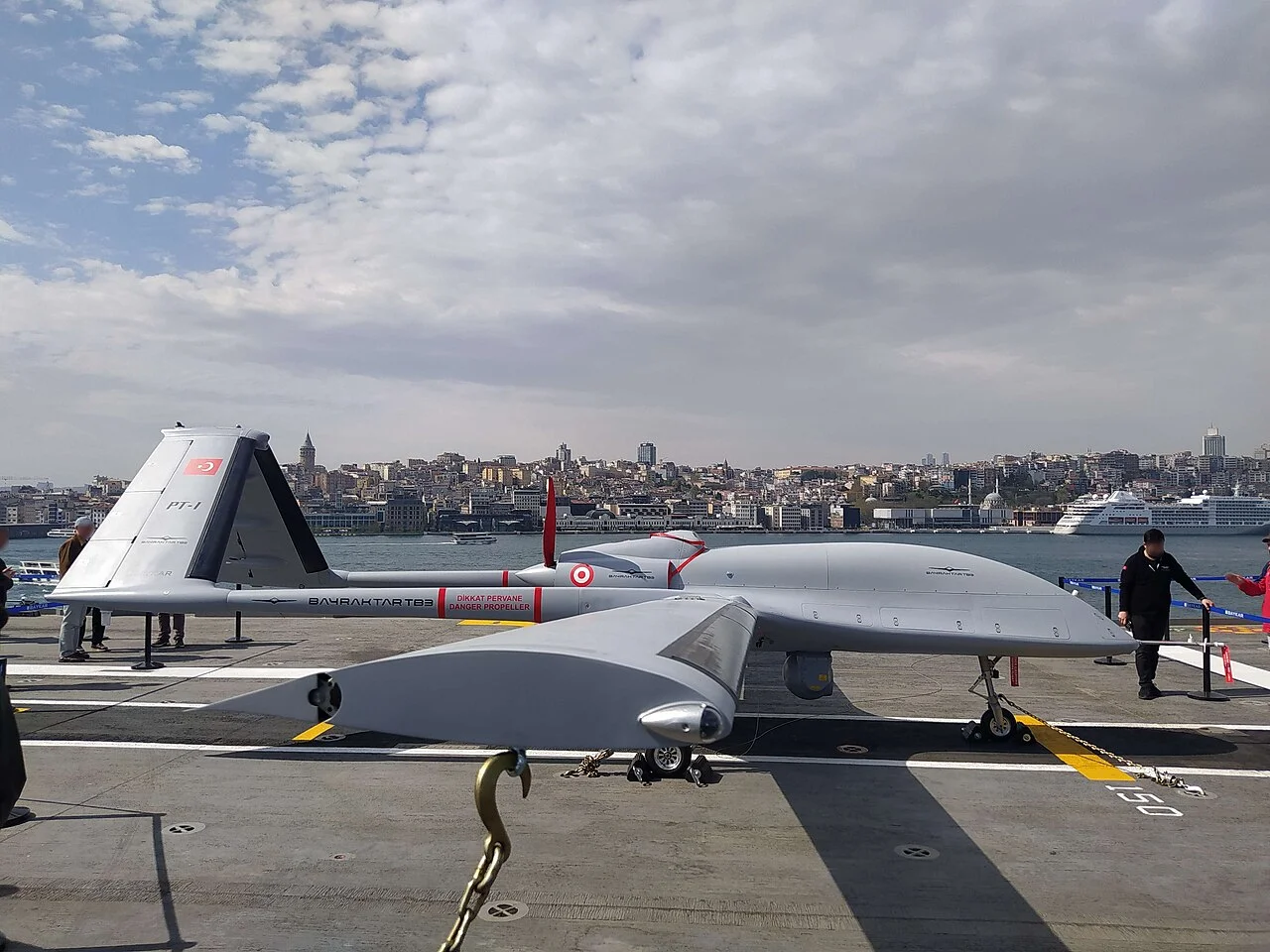
In 2018 the catalogue held one platform. In 2026 it holds TB2, AKINCI, TB3 and KIZILELMA on the Baykar line, ANKA and Aksungur on the Turkish Aerospace line. For the buyer this means moving up a class with the same maker after a first purchase. Azerbaijan went from TB2 to AKINCI, the UAE from TB2 to AKINCI, Indonesia from ANKA to TB3, AKINCI and KIZILELMA; Kyrgyzstan took four platforms at once. The AKINCI–MQ-9B comparison shows where the heavy class sits.
| Class | Platform | Maker | Verified export buyers | First export |
|---|---|---|---|---|
| Tactical armed UAV | Bayraktar TB2 | Baykar | Poland, Romania, Croatia, Albania, Kosovo, Ukraine, Azerbaijan, Qatar, Kuwait, UAE, Kyrgyzstan, Uzbekistan, Turkmenistan; Bosnia (donation); open-source list | 2018 (Qatar) |
| Heavy-class armed UAV | Bayraktar AKINCI | Baykar | Saudi Arabia, UAE, Azerbaijan, Kyrgyzstan, Indonesia | 2023 (Saudi contract) |
| Ship-based armed UAV | Bayraktar TB3 | Baykar | Indonesia (60) | 2025 |
| Jet unmanned combat aircraft | Bayraktar KIZILELMA | Baykar | Indonesia (12) | 2026 |
| MALE UAV | ANKA | Turkish Aerospace | Kazakhstan, Kyrgyzstan, Uzbekistan, Indonesia, Malaysia; EM inventory: Tunisia, Chad, Algeria | 2021 (Kazakh contract) |
| Twin-engine MALE | Aksungur | Turkish Aerospace | Kyrgyzstan | 2023 |
| Tactical (licence) | Karayel-SU | Vestel Defence / Intra | Saudi Arabia (local production) | 2017 licence |
The industrial-share option
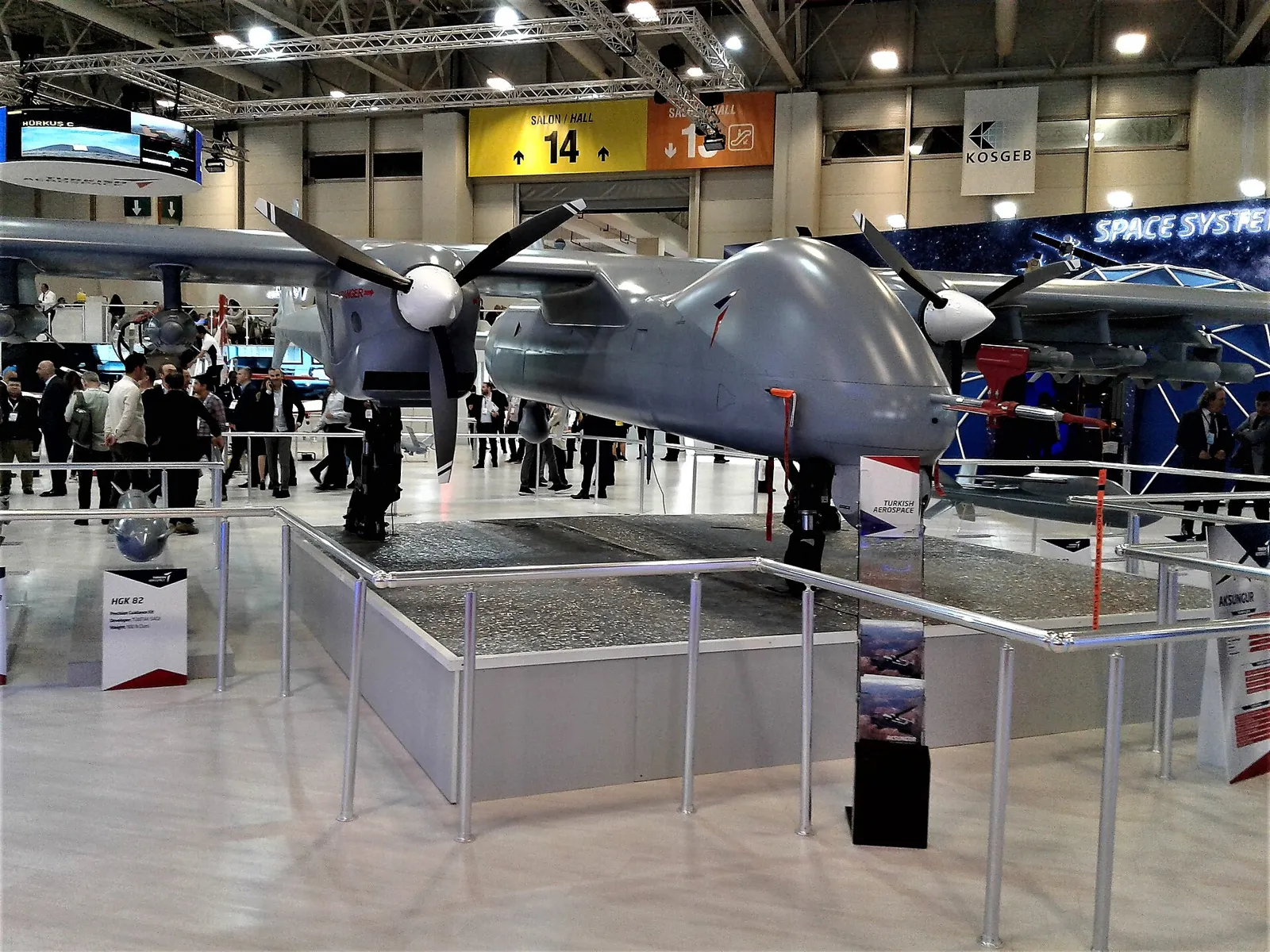
Most buyers on the drone line sit on the direct-purchase rung, but higher rungs are open to those who want them. Saudi Arabia will build part of the AKINCI airframe, wiring and avionics in the Kingdom and trained about 300 engineers in Türkiye; in Ukraine a $100 million Baykar plant is under construction and Ivchenko-Progress engines enter Turkish programmes — the series’ only two-way drone line; in Indonesia six of twelve ANKA are assembled at PTDI and a Baykar–Republikorp joint venture was founded; in Kazakhstan an ANKA co-production initiative was announced in May 2026. Poland holds depot-level maintenance rights. On the six-rung scale the drone line fills rungs one, two and three; there is no verified drone example on the equity or co-development rungs. Turkish Aerospace in Africa lists the line’s confirmed operators on that continent.
| Rung | What happens | Drone example | Where built |
|---|---|---|---|
| 1. Direct purchase | Product is bought | Balkans, Qatar, Kuwait, UAE, Central Asia, Malaysia, Azerbaijan TB2 | Türkiye |
| 2. Maintenance rights | Buyer does defined maintenance | Poland: technology transfer for engine, ground control and EO/IR maintenance; NSPA contract | Türkiye + Poland |
| 3. Co-/local production | A line in the buyer’s country | Saudi AKINCI local share; Karayel-SU in Saudi; Ukraine plant (construction); Indonesian PTDI assembly + Republikorp JV; Kazakh ANKA (initiative) | Buyer’s country |
| 4. Equity joint venture | Shared company | No verified drone example (armour: UAE Al Jasoor) | — |
| 5. Design transfer | Design knowledge handed over | No verified drone example (naval: MİLGEM) | — |
| 6. Co-development | Product designed together | No verified drone example (armour: KAPLAN MT) | — |
What changed in twelve years?
The timeline shows three phases: 2014–2019 inventory entry and the first two exports (Qatar, Ukraine); 2020–2023 a NATO buyer (Poland), the opening to the Gulf and Central Asia, the heavy class entering export (Saudi AKINCI); 2024–2026 catalogue depth (Indonesia’s TB3, AKINCI, KIZILELMA) and the Turkish Aerospace line moving to local production (Kazakhstan). The turning point is 2021: the Polish contract established the in-alliance reference, and the suspension of the UAE’s MQ-9B request the same year made the access component visible.
What is official and what is a press figure
| Item | Source | Status | Note |
|---|---|---|---|
| Poland 24 TB2, $270m | Polish MoD, Baykar | Official contract | Delivery complete 16 May 2024 |
| Romania 18, Croatia 6, Albania 3, Kosovo 5 | Ministries, Baykar | Official contract | Values: Romania ~$321m, Croatia €67.01m; others undisclosed |
| Bosnia 2 TB2 | Turkish MoD | Donation | Delivered 29 Jun 2025 |
| Qatar 6, Kuwait 18 | DIMDEX 2018; Kuwaiti announcement | Official contract | Kuwait ~$367m; first batch 17 Jul 2025 |
| UAE TB2 and AKINCI | Press (Sep 2022); Baykar (2024) | Press / maker quantity | No official quantity |
| Saudi AKINCI | Baykar – Saudi MoD | Official contract | Quantity and value undisclosed; ~$3bn press |
| Azerbaijan 20 TB2 + AKINCI | SIPRI; Azerbaijani MoD | Contract / record | AKINCI quantity undisclosed |
| Ukraine TB2 and plant | Baykar, Ukrainian government | Contract; plant under construction | Quantity undisclosed; production start uncertain |
| Central Asia (4 countries) | Presidential statements, Turkish Aerospace | Contract / imagery | Kyrgyz and Uzbek quantities undisclosed; Tajikistan unverified |
| Indonesia 12 ANKA, 60 TB3, 9 AKINCI, 12 KIZILELMA | Turkish Aerospace, Baykar, HLSCC | Official contract / agreement | ANKA value press; TB3-AKINCI value undisclosed |
| Malaysia 3 ANKA, $91.6m | Turkish Aerospace, RMAF | Official contract | First delivery Jun 2025 |
| 36 countries; 1 million flight hours; $2.2bn exports | Baykar statements | Maker data | Country list not fully published by the maker |
| African and South Asian buyers | Open source | List | No quantities or values |
The blanks mark the next rung: if the Ukraine plant starts production and the Kazakh initiative becomes a line, the drone line gains two new local-production cases; there is no drone example on the equity or co-development rungs today.
EM-PFI assessment
Here the score measures the whole product line, not one buyer. Country and regional scores in the series are spread: Poland 79, Ukraine 79, Saudi Arabia 82, Balkan line 82, Gulf line 83. The line score is a weighted reading of that spread and does not replace them.
| Criterion | Weight | Score | Rationale |
|---|---|---|---|
| Operational need | 20 | 18 | Border and maritime surveillance, precision strike; MALE endurance |
| Technical fit | 15 | 13 | Tactical, heavy, ship-based, jet; the buyer picks the class |
| Geography and climate | 10 | 9 | Baltic, Balkans, Gulf, Central Asian mountains, tropical islands |
| Inventory compatibility | 10 | 8 | A new layer for most buyers; second source beside Chinese and Western lines |
| Logistics | 10 | 8 | Simulator, training, on-site technicians; NSPA and depot maintenance in Poland |
| Cost-effectiveness | 10 | 9 | Five big values public; no unit price in the heavy class |
| Delivery and production | 10 | 9 | 6–17 months in the tactical class; ~250 aircraft/year |
| Technology transfer | 5 | 3 | Saudi, Ukraine, Indonesia, Polish maintenance; none for most buyers |
| Local production | 5 | 3 | Saudi local share; Karayel-SU; Ukraine plant under construction; PTDI assembly |
| Modernisation path | 5 | 4 | A path from TB2 to AKINCI, TB3 and KIZILELMA |
| Total | 100 | 84 | Strong preference |
The breakdown follows the series’ backbone with one difference: delivery and cost-effectiveness score above the armour and naval lines, while the industrial-share criteria sit in the same band. The armour line scores 80, the naval line 84; the drone line ties the naval line at 84 but is the widest, with nineteen buyers.
Risks and limits
This section exists not to weaken the Turkish product but to make the file usable.
| Item | Status | What it means |
|---|---|---|
| Durability of the access edge | If Western lines open to the buyer | The access component may narrow — assessment |
| Engine sourcing | Imported engine options on TB2; domestic PD-170 on ANKA | Exposure in the supply chain — assessment |
| Undisclosed quantities | UAE, Saudi, Kyrgyzstan, Uzbekistan, Ukraine | The line cannot be measured; the file invents no numbers |
| Local-production calendars | Ukraine plant tied to the course of the war; Saudi local assembly 2026 | Delivery score falls on higher rungs |
| African purchases | Open-source list; financing and depot maintenance | Contract status cannot be verified |
| Higher rungs | No drone example on equity or co-development | The line stays on three rungs |
| Maker data | 36 countries, 1 million hours, $2.2bn | Country list not fully published; marked as maker data |
Where is this line going?
Back to the opening definition: access, package, catalogue. The Turkish armed-drone line gave nineteen buyers a system without waiting for a licence, with munitions, at a published price and within a year, then offered the same buyer a higher class. Poland’s 2021 contract established the in-alliance reference, the Gulf and Central Asia made the access component visible, Indonesia showed catalogue depth in a single package. No product line in the series is this wide; the armour line is further in industrial share and the naval line in design transfer, but neither reaches nineteen buyers. Twelve years, two makers, six platforms, nineteen verified buyers and the maker’s count of 36 contract countries: that is the line’s measure.
The next rung depends on three items: Indonesia’s TB3 and KIZILELMA deliveries, the first locally assembled AKINCI in Saudi Arabia, and the Ukraine plant starting production. If all three happen, the line carries two new classes into export and two new local-production cases into the field by 2028; if not, it stays as it is — access, package, catalogue — and that is an upper rung in the series. This file wrote only what was signed or delivered; press reports of talks were left out.
Reading the line beside General Atomics, AVIC and IAI
For a reader who follows the American, Chinese and Israeli lines, the Turkish line is neither a replacement nor a rival. General Atomics holds the MQ-9 fleet of the US and its closest allies; AVIC’s Wing Loong and CASC’s CH-4 sit in Saudi, Emirati and Kazakh inventories; IAI’s Heron family serves buyers the series did not document. The Turkish line entered where the buyer wrote licence time, package completeness or delivery speed as its criterion, and it did so as a second source beside the existing line in most Gulf and Central Asian inventories. Several lines coexist in one market, each in its segment, and the file claims no superiority. The one sentence to take away: the Turkish armed-drone line is the only product line in the series that reached nineteen verified buyers in twelve years, and it did so on access, package and catalogue rather than on any single aircraft.
Frequently asked questions
Which countries operate Turkish armed drones?
Buyers verified in the series: Poland (24 TB2), Romania (18), Croatia (6), Albania (3), Kosovo (5), Bosnia and Herzegovina (2, donation), Ukraine, Azerbaijan (20 TB2 + AKINCI), Qatar (6), Kuwait (18), the UAE (TB2 + AKINCI), Saudi Arabia (AKINCI + Karayel-SU), Kyrgyzstan (TB2, AKINCI, Aksungur, ANKA), Kazakhstan (3 ANKA), Uzbekistan (TB2 + ANKA), Turkmenistan (TB2), Indonesia (12 ANKA, 60 TB3, 9 AKINCI, 12 KIZILELMA) and Malaysia (3 ANKA). By the maker’s end-2025 statement, 36 countries had signed TB2 contracts; other buyers in Africa and South Asia appear on an open-source list without quantities.
Why did Turkish drones sell to so many countries?
The file builds three clusters. Access: export permission comes from one capital and munitions come in the same contract, whereas Western systems such as the MQ-9B run through Congress and control regimes that lengthen the decision. Package: a complete package (ground station, simulator, training, logistics), published prices, six to seventeen months to delivery. Catalogue: from TB2 to AKINCI, ship-based TB3 and jet KIZILELMA; Turkish Aerospace’s ANKA and Aksungur line. Not one reason but the product of three.
What is the largest Turkish drone export contract?
By quantity, Indonesia’s 60 TB3 + 9 AKINCI package (12 February 2025; value undisclosed). Among published values, Kuwait (18 TB2, ~$367 million), Romania (18 TB2, ~$321 million) and Poland (24 TB2, $270 million). The Saudi AKINCI contract’s quantity and value were not officially disclosed; the press wrote about $3 billion and the file keeps that as a press figure.
How long does delivery take?
Intervals measured in the series: Kosovo about six months, Croatia nine, Albania and Romania fourteen, Poland seventeen (all four sets in 36 months). The source of the speed is the maker’s capacity of about 250 aircraft a year and TB2’s serial production for the Turkish Armed Forces since 2014. In the heavy class the calendar lengthens: Saudi AKINCI’s local-production share and training ran from 2023 into 2025.
Are the prices public?
Five big contracts are: Poland $270 million (defence ministry announcement), Kuwait about $367 million, Romania about $321 million, Croatia €67.01 million excluding VAT, Malaysia’s ANKA $91.6 million. Saudi AKINCI, UAE and Indonesian values are undisclosed or press figures. No contract disclosed a per-aircraft price; the file computes none.
Is there technology transfer?
It varies by buyer: in Saudi Arabia part of the AKINCI airframe, wiring and avionics will be built in the Kingdom and about 300 engineers were trained in Türkiye; in Ukraine a $100 million Baykar plant is under construction and Ivchenko-Progress engines enter Turkish programmes; in Indonesia six of twelve ANKA are assembled at PTDI and a Baykar–Republikorp joint venture was founded; in Kazakhstan an ANKA co-production initiative was announced in May 2026. Poland holds depot-level maintenance rights; most Balkan and Gulf purchases carry no production share.
Which alternatives did buyers weigh?
In the Gulf, the MQ-9B (US; the UAE’s request was suspended in 2021), CH-4 and Wing Loong II (China; Saudi 2014, UAE 2017); in Central Asia, Orlan-10 (Russia) and Wing Loong (China; Kazakhstan 2016); Poland leased MQ-9A (October 2022, $70.6 million) alongside its TB2 purchase; in Indonesia and Malaysia the Chinese and US lines were on the table. The file writes these as separate layers, not rivals, and claims no superiority; in many inventories the Turkish line was added as a second source beside the existing one.
Why is the single-capital licence so decisive?
The common finding of the Gulf and Central Asia files: when the purchase does not depend on a third capital’s approval, the decision is shorter. Because MAM-L and MAM-C come in the same contract, no separate export licence is needed either. This component concerns the contract structure, not the product; the file groups it under ‘access’ and does not write political context as the main cause.
What is the difference between TB2 and AKINCI?
TB2 is tactical class at about 700 kg maximum take-off weight; AKINCI is heavy class at 6,000 kg with satellite link, 1,500 kg payload and a 40,000 ft ceiling, a different mission set. In exports TB2 is the backbone with nineteen verified buyers; AKINCI is the second layer with Saudi Arabia, the UAE, Azerbaijan, Kyrgyzstan and Indonesia. TB3 is ship-based and KIZILELMA jet-powered; Indonesia is the first export customer for both.
Where does the Turkish Aerospace line stand?
ANKA’s verified export buyers are Kazakhstan (3), Indonesia (12), Malaysia (3), Kyrgyzstan and Uzbekistan; the Envanter Medya inventory file also counts Tunisia, Chad and Algeria. Aksungur’s only verified export buyer is Kyrgyzstan. The Kazakh co-production initiative (14 May 2026) is the line’s first local-production step. Baykar and Turkish Aerospace can sit side by side in one buyer: Kyrgyzstan took four platforms, Indonesia and Malaysia took ANKA alongside Baykar products.
What are the risks?
The file’s risk table: engine sourcing (imported engine options on TB2; the domestic PD-170 on ANKA), narrowing of the access edge if Western lines open (assessment), undisclosed quantities (UAE, Saudi, Uzbekistan), local-production calendars (the Ukraine plant depends on the course of the war), financing and depot maintenance in African purchases. These limit what the file can measure, not the product.
What does the EM-PFI score measure here?
The whole product line, not one country: the Turkish armed-drone export line scores 84/100, ‘Strong preference’ band, the highest among the series’ product-line scores. Country scores differ: Poland 79, Ukraine 79, Saudi Arabia 82, Balkan line 82, Gulf line 83. The line score is a weighted reading and does not replace them; it is Envanter Medya’s editorial assessment.
Do donated drones count as exports?
No; the file keeps donations in a separate status. The 2 TB2 to Bosnia and Herzegovina (delivered 29 June 2025) are a donation, not a contract. The Balkans file read donations together with the in-alliance reference component.
How does it differ from the Chinese line?
Envanter Medya’s comparison of the Turkish and Chinese export models separates two roads: the Chinese line advances with state credit and a low entry price, the Turkish line with munitions-inclusive packages, fast delivery and NATO-member references. Saudi Arabia, the UAE, Kazakhstan and Uzbekistan keep both lines in inventory; the file writes neither as superior.
What comes next?
On the verified calendar: Indonesia’s TB3 and KIZILELMA deliveries, the first locally assembled AKINCI in Saudi Arabia, completion of the Ukraine plant, Kazakh ANKA co-production and continuing Kuwaiti deliveries. The file wrote only what was signed or delivered; talks reported in the press were left out.
Other files in the series
The “Why They Chose the Turkish Defence Industry” series goes beyond individual export headlines to examine the buyer’s need, the alternatives on the table and the contract structure. The drone files this one rests on:
- Why did Poland buy the Bayraktar TB2?
- Why do Gulf states choose Turkish drones?
- Why is the Turkish defence industry growing in the Balkans?
- Why are Central Asian states turning to Turkish drones?
- Saudi Arabia–Türkiye defence industry relations
- Qatar–Türkiye defence industry relations
- Indonesia–Türkiye defence industry relations
- Malaysia–Türkiye defence industry relations
- Pakistan–Türkiye defence industry relations
- Why Turkish armoured vehicles sell abroad
- How the Bayraktar TB2 became a global export product
The full series and regional breakdowns are on the Türkiye defence exports hub (Turkish).
Sources and method
- Polish Ministry of National Defence and Baykar — TB2 contract (24 May 2021), deliveries (October 2022 – 16 May 2024), NSPA (October 2024)
- Baykar statements — Saudi AKINCI contract (18 July 2023), operator graduation (13 October 2025); UAE AKINCI (2024); 1 million flight hours (10 December 2024); 36 contract countries and 2025 export revenue
- Kuwaiti Ministry of Defence and Baykar — 18 TB2 (June 2023), first batch (17 July 2025)
- Romanian, Croatian, Albanian and Kosovar defence ministries — TB2 contract and delivery statements (2022–2025)
- Turkish Ministry of National Defence — TB2 donation to Bosnia and Herzegovina (29 June 2025)
- Presidential statements of Kyrgyzstan, Uzbekistan and Turkmenistan; Turkish Aerospace — ANKA, Aksungur, AKINCI deliveries (2021–2025); Kazakh co-production initiative (14 May 2026)
- Turkish Aerospace, Indonesian and Malaysian air forces — ANKA contracts (February 2023; 25 May 2023) and deliveries
- Indonesian HLSCC and Baykar — 60 TB3 + 9 AKINCI + Republikorp (12 February 2025); 12 KIZILELMA (6 May 2026)
- SIPRI arms transfers database — Azerbaijani TB2 deliveries
- Envanter Medya inventory files — TB2 export chronology, TB2 country list, TB2 and ANKA delivery inventories; series files 1, 2, 6, 7, 8, 15, 16, 17, 20–23
Method note. This file produced no new country data; it re-read items verified in the series’ country files at product-line level. Every item carries its status — contract, donation, press figure, maker data, open source; no numbers were assigned to buyers that publish none; no unit price was computed. Combat and loss narratives were left out; “proven in service” is limited to inventory entry and flight hours. Rival lines (MQ-9, Wing Loong, CH-4, Heron, Orlan) are given as separate layers; no superiority claim. Access is written as a contract feature; political context is not written as the main cause. EM-PFI for the whole line is Envanter Medya’s editorial assessment and does not replace the country scores.