HAVELSAN GENESIS: Turkey’s First Homegrown Naval Combat Management System, Explained

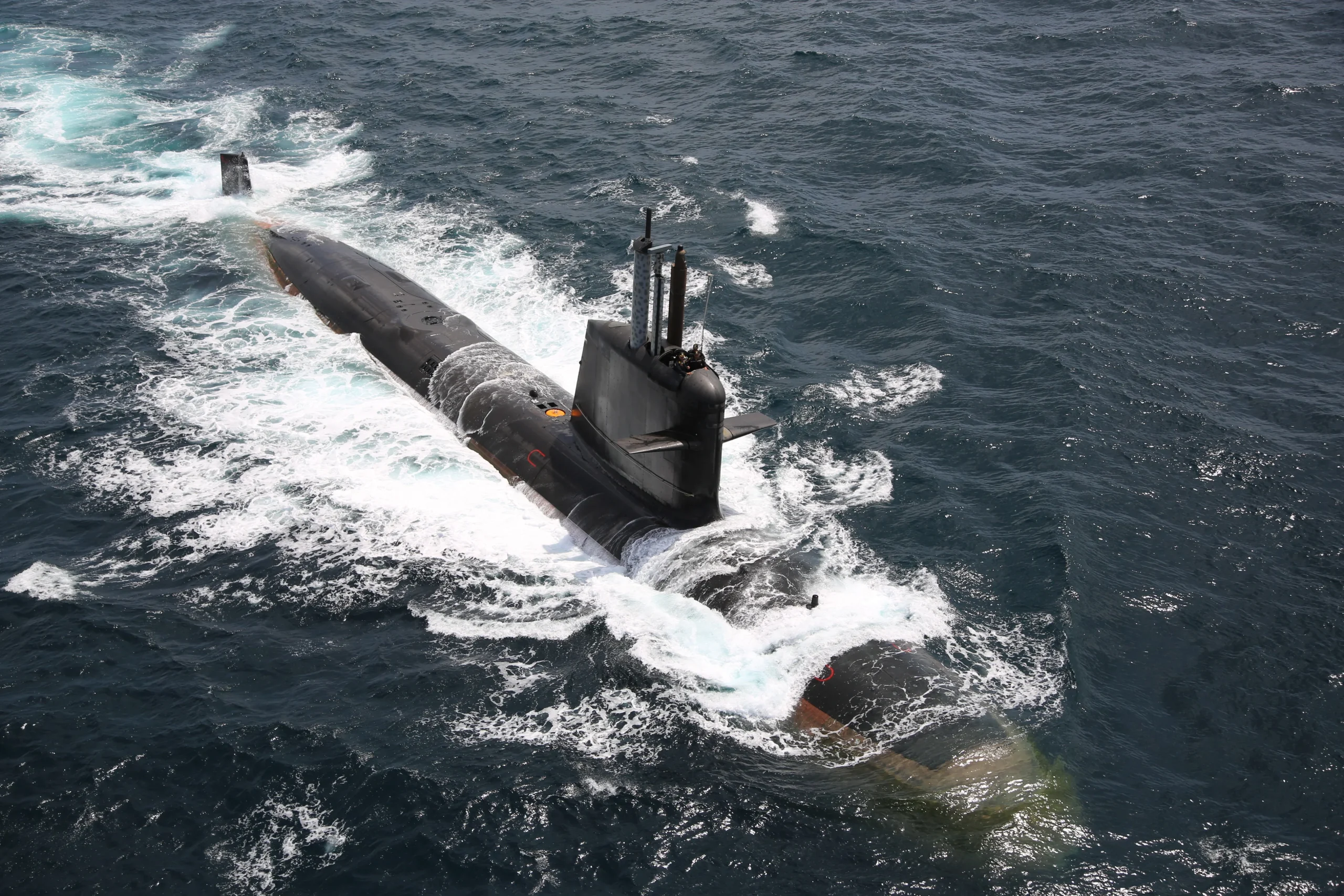
Image: TCG Turgutreis (F-241), a Yavuz-class frigate modernised with HAVELSAN GENESIS — U.S. Navy photo by MC2 Amanda S. Kitchner, public domain (Wikimedia Commons).
Before the Turkish Navy could fight with software it had written itself, it had to write that software for the first time. That programme — quietly launched at the turn of the 2000s, long before most readers had heard the names MİLGEM or ADVENT — was called GENESIS. It is the combat management system that ended Turkey’s dependence on foreign-supplied warship brains, and it is still on duty today.
GENESIS, an acronym for Gemi Entegre Savunma Sistemi (“Integrated Ship Defence System”), is the combat management system HAVELSAN built to replace the British, Dutch and American CMS packages that had been bolted into Turkish ships for decades. A combat management system is the layer of software that fuses every radar, sonar, electronic-warfare receiver, weapon, radio, IFF transponder and helicopter feed on board into one decision picture on the operator’s screen. When that software belongs to a foreign supplier, every patch, every new weapon integration, and every export deal goes through someone else’s veto. GENESIS was the project that broke that loop.
It was first installed during the modernisation of the Yavuz- and Barbaros-class frigates, then chosen as the standard CMS for the Ada-class corvettes of the first MİLGEM cohort, and finally exported with the Babur-class corvettes sold to the Pakistan Navy. By the time HAVELSAN’s newer ADVENT system arrived a decade later, the engineering team had already spent ten years writing naval combat software at home — and that is the real legacy of GENESIS, even more than the lines of code on any single ship.
At a Glance
What GENESIS Actually Does on Board
Picture a frigate at sea. Its long-range air-search radar is sweeping the horizon. A second surface-search radar is watching for fast attack craft. The sonar dome under the hull is listening for diesel-electric submarines. The electronic-warfare suite is sampling the air for hostile radar emissions. Two helicopters and a flock of allied aircraft are sending position reports over a data link. The watch officer in the combat information centre has roughly three seconds to decide what to do about any one of those tracks.
GENESIS is what lets that decision happen in three seconds instead of three minutes. It correlates every sensor track and merges duplicates — if the same enemy contact appears on the radar and the electronic-warfare feed, it shows up as one icon on the tactical display, not two competing tracks. It tells the operator which weapon on board can reach the contact, hands the firing solution to the gun, missile launcher or torpedo tube, and shares the full picture with allied ships and aircraft over NATO’s Link-11 and Link-16 tactical data networks.
Mission Profiles
Specifications
| Specification | Value |
|---|---|
| Type | Naval combat management system, first-generation indigenous |
| Developer | HAVELSAN |
| Sensor Integration | SMART-S, AN/SPS-49, hull sonar, electronic-support measures, IFF |
| Weapons Integrated | Oto Melara 76/62, RIM-7 Sea Sparrow, Phalanx CIWS, Harpoon, Mk 32 torpedoes |
| Operator Consoles | Multi-station — bridge, combat information centre, weapon positions |
| Automation | Track correlation, threat prioritisation, weapon recommendation |
| Data Links | Link-11, Link-16 (NATO interoperable) |
| Successor | HAVELSAN ADVENT (İstif-class frigates, TCG Anadolu, TF-2000) |
Where It Sails
- Ada-class corvettes (MİLGEM) — TCG Heybeliada, Büyükada, Burgazada and Kınalıada were delivered with GENESIS as their standard combat management system.
- Yavuz-class frigates — four MEKO 200-derived ships modernised with GENESIS to extend their operational life.
- Barbaros-class frigates — four further MEKO 200 hulls, also reworked around the GENESIS combat suite.
- Babur-class corvettes (Pakistan Navy) — Turkey’s first warship export, sold with GENESIS as part of the package. The first time a Turkish-written CMS sailed under a foreign flag.
How GENESIS Compares Internationally
| System | Developer | Typical Platforms |
|---|---|---|
| GENESIS | HAVELSAN — Türkiye | MİLGEM, modernised frigates |
| 9LV | Saab — Sweden | Visby class, Hobart class |
| TACTICOS | Thales — Netherlands | Sigma-class frigates and corvettes |
| SSCS | BAE Systems — UK | Type 23 Duke-class frigates |
| SETIS | Naval Group — France | FREMM frigates |
Why It Matters for Turkey
The GENESIS programme is at least as much an industrial story as a technical one. To deliver it, HAVELSAN trained a generation of naval software engineers, built a long-term test infrastructure, and accumulated the kind of operational tacit knowledge that does not survive a procurement contract — only an in-house build. None of that would have been worth much for a one-off product, but it is exactly the base that ADVENT was built on later in the decade.
Equally important, GENESIS turned the Turkish defence industry’s MİLGEM offer to foreign customers into a complete package: a ship and the software that runs it, with no third-country export sign-off in the way. That is precisely why Pakistan picked the Babur-class corvette over alternatives — and it is the model Turkey now repeats with ADVENT on the new generation of exports.
Summary
| What does it do? | Fuses the sensors and weapons of a warship into a single command picture. |
|---|---|
| Why is it important? | First-ever Turkish-built CMS — broke a generation of foreign software dependence. |
| Where is it deployed? | MİLGEM Ada corvettes, Yavuz/Barbaros frigates, Pakistan Navy Babur-class. |
| What it means for Turkey | Software sovereignty for the navy and the engineering bench that made ADVENT possible. |
Sources: