What is the AH-64E Apache Guardian? Boeing’s Heavyweight Attack Helicopter, Explained
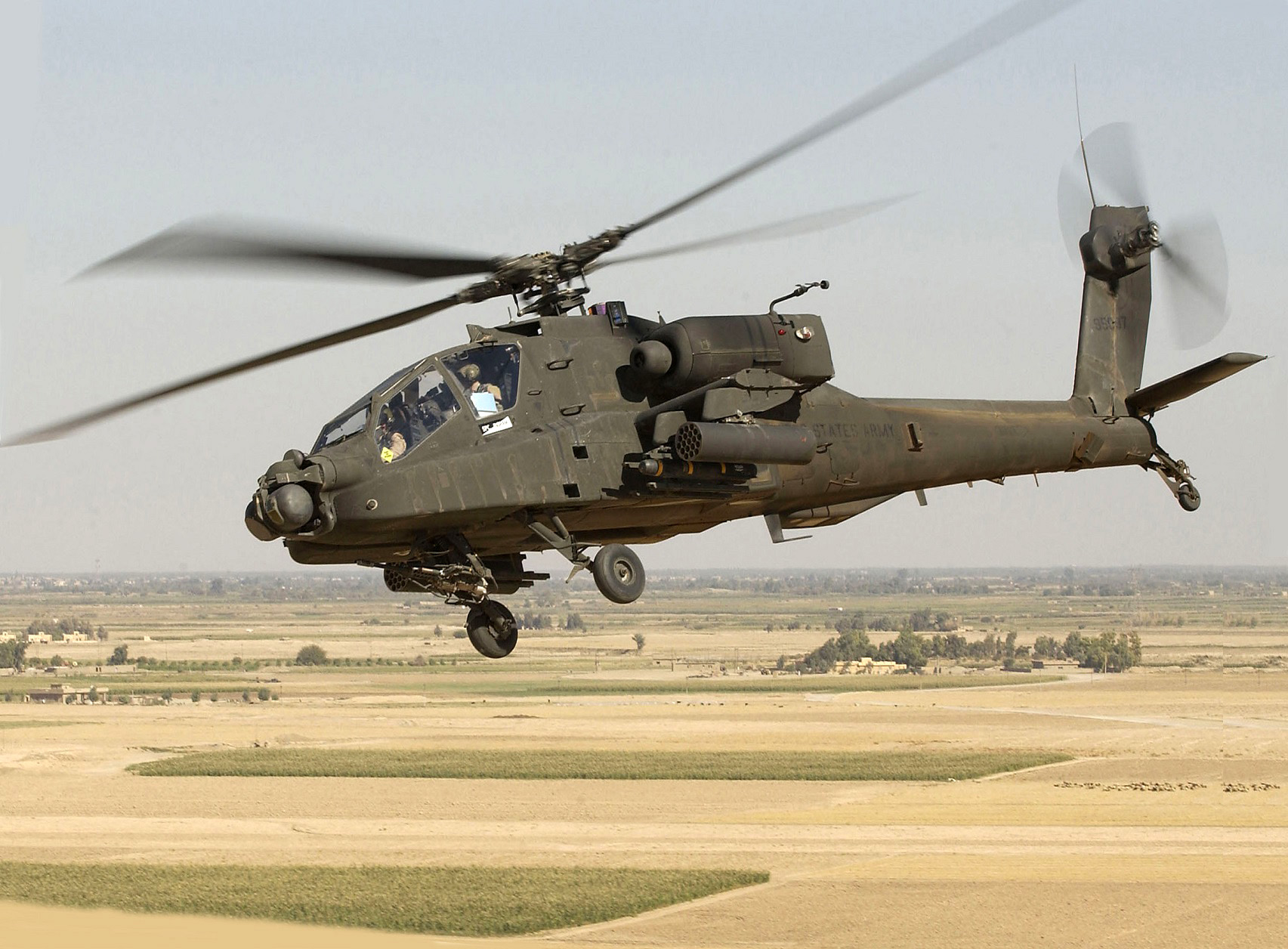
The AH-64E Apache Guardian is the U.S. Army’s frontline attack helicopter, built by Boeing at Mesa, Arizona. Forty years after the AH-64A entered service in 1986, the Apache remains the most-exported Western attack helicopter, with more than 2,800 airframes produced and 17 international operators. The current Echo model — also marketed as Apache Guardian — features improved engines, composite rotor blades, manned-unmanned teaming with the U.S. Army’s Gray Eagle drones, and integration with the new Israel Aerospace Industries Spike NLOS long-range anti-armor missile.
Key facts at a glance
| Attribute | Value |
|---|---|
| Type | Twin-engine attack helicopter |
| Manufacturer | Boeing Defense, Space & Security |
| First flight | 30 September 1975 (YAH-64 prototype); current AH-64E in 2010 |
| Service entry | 1986 (AH-64A); 2013 (AH-64E) |
| Crew | 2 (pilot + co-pilot/gunner) |
| Engines | 2× GE T700-GE-701D turboshaft, 2,000 hp each |
| Length | 17.7 m (rotors turning) |
| Rotor diameter | 14.6 m |
| Empty weight | 5,165 kg |
| MTOW | 10,432 kg |
| Max speed | 365 km/h |
| Cruise speed | 265 km/h |
| Range | 483 km |
| Service ceiling | 6,400 m |
| Armament | 30 mm M230 chain gun + 16 AGM-114 Hellfire / Spike NLOS / 76 70 mm rockets |
| Operators | U.S., UK, Egypt, Greece, India, Indonesia, Israel, Japan, South Korea, Kuwait, Morocco, Netherlands, Qatar, Saudi Arabia, Singapore, Taiwan, UAE |
| Unit cost (AH-64E) | ~ USD 35 million (export); USD 53 million (FMS with simulators, spares, training) |
Variants from A to E
| Variant | Year | Key change |
|---|---|---|
| AH-64A | 1986 | Initial production; TADS/PNVS optics |
| AH-64B / AH-64C | Cancelled | Intermediate upgrade studies (not produced) |
| AH-64D Longbow | 1997 | Mast-mounted Longbow millimeter-wave radar; fire-and-forget AGM-114L |
| AH-64D Block II | 2003 | Improved data link, faster fire control |
| AH-64D Block III / AH-64E Guardian | 2013 | New T700-GE-701D engines, composite rotor blades, MUM-T with Gray Eagle, IDM data link |
| AH-64E v6.5 | 2022+ | Integrated open architecture, Spike NLOS integration, improved EW suite |
| Apache Block 2 Compound (future) | 2030+ | Compound rotor for 400+ km/h cruise (concept) |
Combat record
- 1989 — Panama. First combat use (Operation Just Cause).
- 1991 — Desert Storm. Apache strikes opened the air campaign by destroying Iraqi early-warning radars on the night of 17 January. Some 277 Iraqi armored vehicles were destroyed by Apaches in the war’s 100 hours.
- 1999 — Kosovo. Task Force Hawk deployed Apaches but did not conduct combat sorties — a politically embarrassing episode.
- 2001–2021 — Afghanistan. Primary U.S. and UK / Netherlands close-air-support platform.
- 2003–2011 — Iraq. Multiple combat tours; one Apache (Lima 27) was shot down and the crew captured during the March 2003 Karbala raid.
- 2014–present — Iraq / Syria. Anti-Islamic State operations.
- 2009–present — Yemen / Saudi Arabia border. Saudi AH-64 operations.
- 2023 — Israel. Israeli AH-64 Saraf squadrons saw heavy combat use during operations in Gaza and southern Lebanon from 7 October 2023.
- 2024 — Red Sea. U.S. Marine AH-1Z and Army AH-64E operations against Houthi launchers from amphibious ships.
The Longbow radar and Hellfire
The mast-mounted Northrop Grumman AN/APG-78 Longbow millimeter-wave radar is the Apache’s distinguishing feature. The radar simultaneously classifies up to 256 ground targets, prioritizes them, and shares the picture with other Apaches in the formation via the IDM data link. The Longbow’s fire-and-forget AGM-114L Hellfire allows the helicopter to fire from defilade and reposition before the missile impacts.
Spike NLOS integration
In 2024 the U.S. Army accepted operational integration of the Israeli Rafael Spike NLOS (Non-Line-of-Sight) missile on the AH-64E. With a range of 32 km and a man-in-the-loop fiber-optic link, Spike NLOS extends the Apache’s reach far beyond Hellfire’s 11 km, allowing engagement from outside the threat envelope of modern point-defense SAMs like Tor-M2 or Pantsir-S1. The U.S. Army purchased 600+ Spike NLOS rounds in 2024.
How AH-64E compares
| AH-64E Guardian | Mi-28NM Havoc | Ka-52M Alligator | Tiger HAD | |
|---|---|---|---|---|
| Origin | U.S. | Russia | Russia | France/Germany |
| Max speed | 365 km/h | 300 km/h | 310 km/h | 290 km/h |
| Armament | 30 mm + 16 Hellfire / Spike NLOS | 30 mm + Ataka/Vikhr | 30 mm + Vikhr | 30 mm + HOT-3 / Spike-ER |
| Radar | Longbow MMW | NO25 Krylo | Arbalet-52 | None (planned) |
| Combat record | Heavy | Ukraine (limited) | Ukraine (heavy) | Mali, Afghanistan |
Production today
Boeing’s Mesa line is producing Apaches at the highest rate in fifteen years, driven by foreign orders. Recent contracts include Poland (96 AH-64E), Australia (29), the UK upgrade to AH-64E Mk 1 (50), and a USD 1.95 billion U.S. Army re-manufacture program through 2030. Cumulative Apache production crossed 2,800 units in 2024.
Why the Apache matters
The Apache turned the rotary-wing battlefield in 1991 and has never relinquished its leadership. With the Spike NLOS integration restoring stand-off engagement against modern SAMs, the manned-unmanned teaming with Gray Eagle, and the 17-nation operator base, the AH-64E remains the global benchmark for the heavyweight attack helicopter. The Russian Mi-28NM and Ka-52M can claim more recent combat experience in Ukraine, but no rotary-wing strike platform outside U.S. service is as widely fielded or as densely integrated into Western joint operations.