The Southeast Asian Military Divide: One Nation Fields 15x the Air Power of Its Neighbor

The Southeast Asian Military Divide: One Nation Fields 15x the Air Power of Its Neighbor
Cambodia and Thailand share a border and a region but their militaries occupy entirely different universes. Ranked #83 and #24 globally by GlobalFirepower, the two nations reveal how dramatically military investment and strategic ambition can diverge within ASEAN.
Comprehensive Analysis: The ASEAN Power Asymmetry
The Cambodia-Thailand military comparison is a case study in sustained defense investment versus a force shaped by constraint and post-conflict reconstruction. Thailand position at GFP #24 is the product of six decades of institutional military development, U.S. security partnerships, and regional leadership ambitions.
Thailand wins every single metric without exception. Margins range from modest — 744 Thai tanks versus 520 Cambodian, a 43 percent advantage — to overwhelming: 496 aircraft against 24, a 1,967 percent lead. The 8-to-1 defense budget ratio is the anchor for all other disparities.
Cambodia strategic response has been to deepen its security partnership with China rather than pursue a futile conventional arms race. The Ream Naval Base expansion and PLA-N joint exercises represent asymmetric alignment: Cambodia imports deterrence through great-power association rather than building it conventionally.
Within ASEAN, Cambodia sits closer to Myanmar and Laos in capability terms; Thailand clusters with Vietnam, Indonesia, and Singapore as the bloc true military pillars. This stratification shapes collective defense planning and individual states bargaining leverage in great-power competition between Washington and Beijing.
The verdict is unambiguous: Thailand is the dominant military power in this comparison, outperforming Cambodia across every measurable category. Cambodia strategic calculation — maximize diplomatic flexibility and focus limited resources on internal stability — is rational given its constraints, but cannot disguise the scale of the gap.
Full Comparison Table — Cambodia vs Thailand 2026
| Metric | Cambodia (#83) | Thailand (#24) | Winner |
|---|---|---|---|
| GFP Global Rank | #83 | #24 | Thailand |
| Active Personnel | 124,300 | 360,850 | Thailand |
| Defense Budget | $750M | $6.007B | Thailand |
| Total Aircraft | 24 | 496 | Thailand |
| Tanks | 520 | 744 | Thailand |
| Naval Vessels | 20 | 304 | Thailand |
| Railway Network | 642 km | 4,127 km | Thailand |
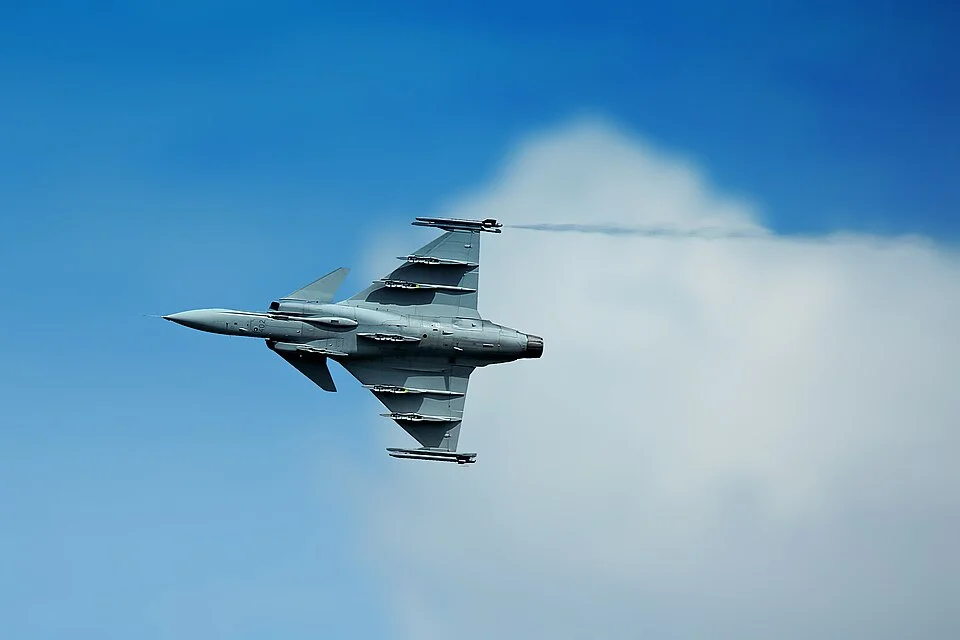
| Key Fighter | None operational | Gripen C/D, F-16A/B | Thailand |
| Primary MBT | T-54/55, Type 59 | VT-4, M60T | Thailand |
| Naval Flagship | Patrol craft | HTMS Chakri Naruebet | Thailand |
Thailand dominates every metric. With 8x the defense budget, 15x the aircraft, and 6x the naval vessels, Bangkok operates in a fundamentally different military league. Cambodia strategic response is alignment with China rather than competition with Thailand.
Explore More Military Power Rankings
Compare over 145 nations across 60+ military metrics — updated for 2026.
Frequently Asked Questions
Is Cambodia military growing?
Yes, Cambodia has roughly doubled its defense budget over the past decade from around $350 million to $750 million annually. However, much of this growth funds personnel costs and basic sustainment. China remains the primary supplier of military hardware through grants and concessional deals.
Why does Cambodia have so few aircraft?
Cambodia Royal Khmer Air Force never fully reconstituted after the Khmer Rouge era and years of civil conflict. Rebuilding a credible air arm requires not just aircraft purchases but years of trained pilot development, maintenance infrastructure, and command-and-control integration.
What is Thailand most advanced military asset?
The Gripen C/D multirole fighter acquired from Sweden represents Thailand most technically sophisticated platform. It carries the Meteor beyond-visual-range air-to-air missile and integrates with the TIDLS datalink, giving the Royal Thai Air Force a network-centric capability no ASEAN member can currently match at equivalent scale.
Does China involvement at Ream Naval Base change the strategic balance?
If PLA-N vessels gain regular access or basing rights at Ream, it would extend Chinese naval reach into the Gulf of Thailand — within operational range of Vietnam southern coastline and Thailand eastern maritime zones. Cambodia officially denies exclusive Chinese access but satellite imagery has kept the question open.
Could Cambodia close the military gap with Thailand?
Not through conventional means within any realistic timeframe. Closing a $5.25 billion annual budget gap while meeting development obligations is arithmetically implausible. Cambodia realistic options are political: deepening great-power partnerships, maintaining ASEAN non-aggression norms, and focusing resources on border surveillance rather than power projection.
Source: GlobalFirepower.com — 2026 Military Strength Rankings. Data reflects publicly available estimates.