The World’s Largest Torpedo Manufacturers

The world’s largest torpedo manufacturers build naval warfare’s oldest weapon and still its deadliest. The surest way to sink a ship is not to hit it from above but from below: a warhead detonating underwater forms a gas bubble beneath the keel and can break the hull in two. Which is why, in the missile age, the torpedo never left the inventory — it went quieter, got smarter, and learned to be steered down a fibre-optic wire. But very few countries can build one, because the hard part is not the explosive; it is the acoustic seeker that finds a target underwater. Following our file on simulator manufacturers, Envanter Medya compared torpedo and underwater munitions makers on programme scale, guidance independence, segment coverage and exports.
Editorial note: This ranking is editorial research prepared by Envanter Medya using publicly available data. It is not an official international ranking. Sources and methodology are set out in the “How this research was done” section below.
The research at a glance
“Largest” by which measure?
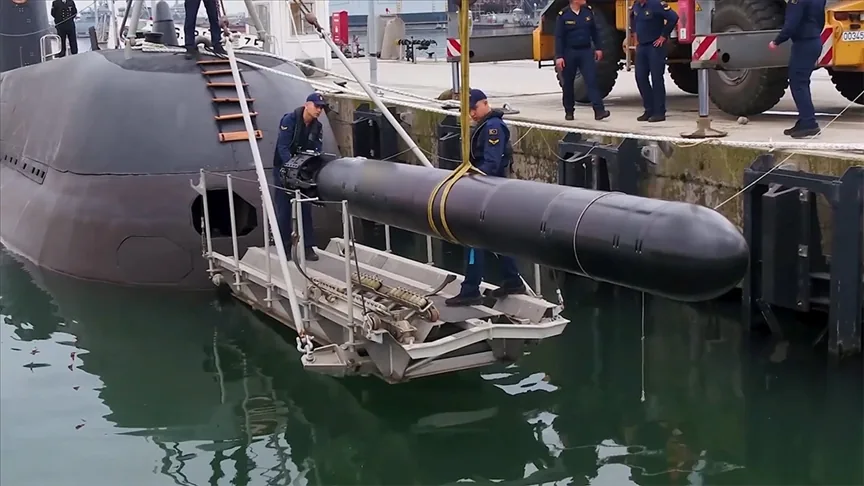
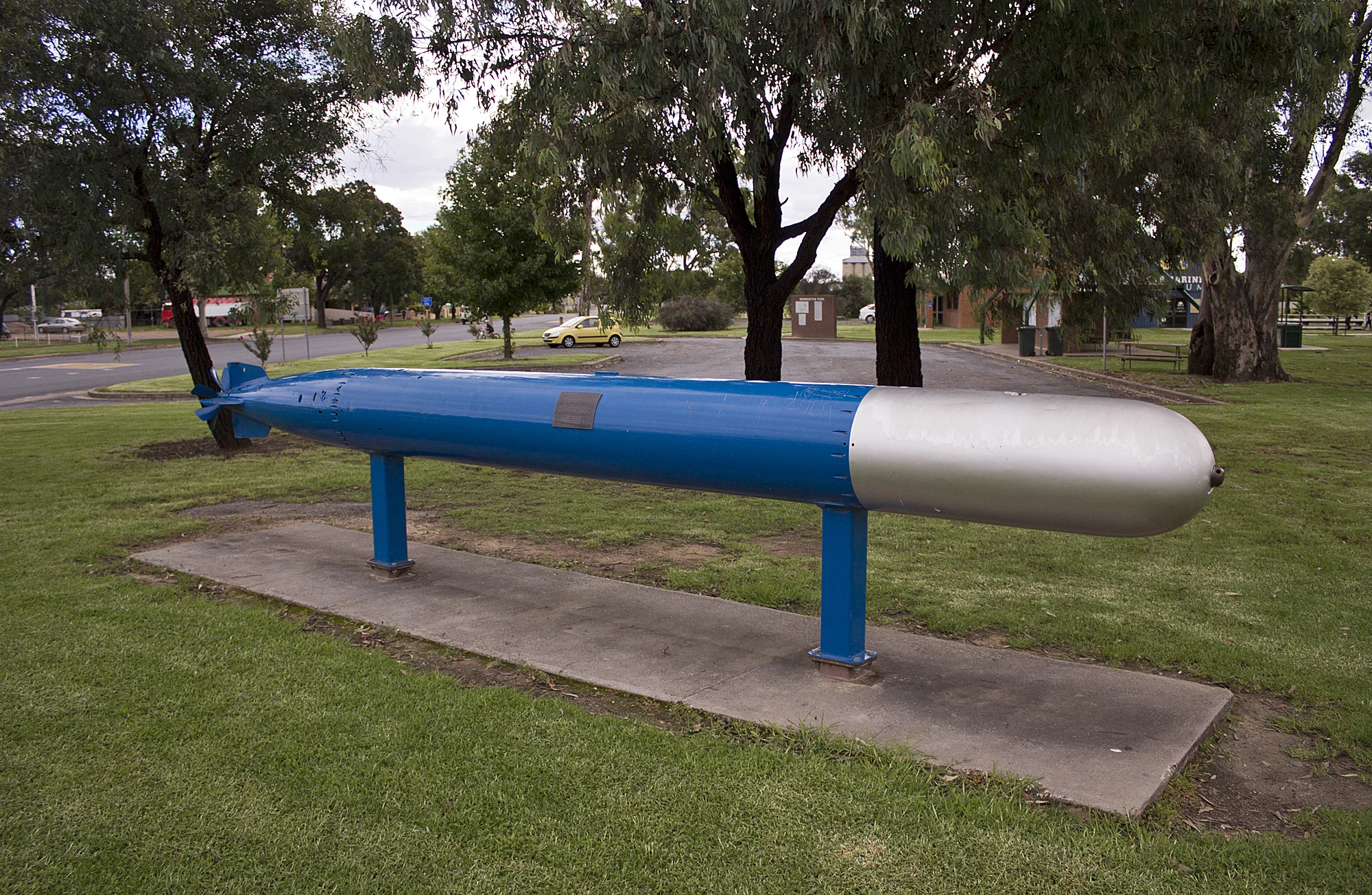
The torpedo market splits in two, and the halves have little in common. A heavyweight torpedo is launched from a submarine, measures 533 millimetres across, carries hundreds of kilos of warhead and can engage both submarines and surface ships. A lightweight torpedo is launched from a surface ship, a helicopter or a maritime patrol aircraft, measures 324 millimetres and exists solely to hunt submarines. Heavyweight is the far narrower club, because it presumes a submarine fleet; lightweight, built to NATO standards, opens onto a wider market. This file treated the two separately and declared no single winner.
How does a torpedo sink a ship? A modern heavyweight torpedo prefers not to strike the hull but to detonate directly beneath the keel. The blast first produces a rising gas bubble and a column of water; the ship hangs for an instant unsupported amidships, and when the bubble collapses the keel folds under the vessel’s own weight. What decides the outcome, therefore, is less the warhead than the guidance and acoustic sensing that place the weapon beneath the target.
In the heavyweight class: Mk 48, DM2A4, F21 and Spearfish
The heavyweight torpedo is a product only four or five national industries carry to the end. On the American side the prime contractors for the Mk 48 family are Lockheed Martin and SAIC; in July 2025 Lockheed Martin delivered its 250th guidance system for the Mk 48. That number also sums up where the real work in a torpedo lies: not in the body or the propulsion, but in the guidance.
In Germany the DM2A4 Seehecht — SeaHake mod 4 for export — was developed by Atlas Elektronik and is the principal underwater weapon of the German Navy’s Type 212 submarines. In France the F21 heavyweight is a dual-purpose weapon replacing the F17 mod2 across the French Navy’s submarine fleet. In the United Kingdom, BAE Systems’ Spearfish remains the Royal Navy’s heavyweight torpedo. In Italy, Leonardo carries products in both classes through the WASS inheritance.
The difference in diameter is not only a measurement but a difference in use: 533 mm is the standard of the submarine torpedo tube, 324 mm that of shipboard and airborne launchers. Data type: T (assessed).
In the lightweight class: a new generation and the supply chain
Lightweight is the high-volume side of submarine hunting, and here too the United States is moving to a new generation. Northrop Grumman will manufacture an advanced lightweight torpedo for the US Navy, with a contract worth $233 million for the proof of manufacturing and qualification phases. Another face of the sector shows up in the supply chain: Graham Corporation received a follow-on order worth roughly $25.5 million to produce hardware for the US Navy’s heavyweight torpedo programme. Read together, the two figures show how the torpedo industry works — behind every prime contractor stand dozens of specialist subcontractors the public never hears of.
The two contracts are different in kind: one a prime contractor’s programme, the other component supply. Showing them on one axis makes the industry’s layers visible. Data type: S (contract record).
The guidance system is a torpedo’s most critical component; the number of guidance systems a manufacturer has delivered shows a programme’s real serial production tempo better than a count of bodies. Data type: R (reported).
Verified manufacturer table
| Manufacturer | Country | Main product | Verified headline data | Grade |
|---|---|---|---|---|
| Lockheed Martin (with SAIC) | USA | Mk 48 heavyweight | 250th Mk 48 guidance system delivered July 2025; US Navy prime contractor | A |
| Atlas Elektronik (TKMS) | Germany | DM2A4 Seehecht / SeaHake mod 4 | Principal underwater weapon of the German Navy’s Type 212 submarines; export version available | A |
| Naval Group | France | F21 heavyweight | Dual-purpose torpedo replacing the F17 mod2 across the French Navy’s submarine fleet | A |
| BAE Systems | UK | Spearfish heavyweight | The Royal Navy’s heavyweight torpedo | A |
| Leonardo | Italy | Heavy and lightweight (WASS inheritance) | Among the few European manufacturers carrying products in both classes | B |
| Northrop Grumman | USA | Advanced lightweight torpedo | $233m proof of manufacturing and qualification contract for the US Navy | A |
| Roketsan 🇹🇷 | Türkiye | AKYA heavyweight, ORKA lightweight | AKYA entered serial production and deliveries to submarines began; war shot from TCG Preveze in the Eastern Mediterranean on 27 December 2023; ORKA national lightweight programme; cooperation with Altınay Savunma on AKYA | A |
| Saab | Sweden | Light and heavyweight | Among the European manufacturers developing and building torpedoes for the Swedish Navy | B |
| Graham Corporation | USA | Heavyweight torpedo hardware | ~$25.5m follow-on order for the US Navy’s heavyweight torpedo programme (component supplier) | A |
| CSSC / Russian manufacturers | China / Russia | Heavy and lightweight | No verifiable production or export data | D — unscored |
Data reliability notes. A: published directly by the manufacturer or a government source, with a date and a figure. B: consistent across multiple open sources but not fixed by a single official figure. D: unverifiable due to insufficient transparency. Data types: R reported, T assessed, S contract record, D unverifiable. Graham Corporation is a component supplier rather than a prime contractor and is therefore not included in the index.
EM-GDPI: how the composite index was built
The index was adapted here too. The revenue criterion (15 points) was removed, because no company reports torpedo revenue separately; in groups such as Lockheed Martin, BAE Systems and Leonardo the line sits inside far larger business units. In its place came “guidance and acoustic seeker independence” (15 points): whether a company builds its own seeker head, signal processing software and fibre-optic guidance chain. Body and propulsion are largely solved engineering problems in a torpedo; the real distinction lies in the head that finds a target underwater and tells it apart from countermeasures. The remaining criteria: production/delivery volume 25, exports 15, user navies 10, class breadth 10, serial production capacity 10, order backlog 5, technology maturity 5, growth 5.
The index is editorial and its weightings were set by Envanter Medya. Chinese and Russian manufacturers are unscored for lack of verifiable data. Data type: T (assessed).
Where does Türkiye stand?
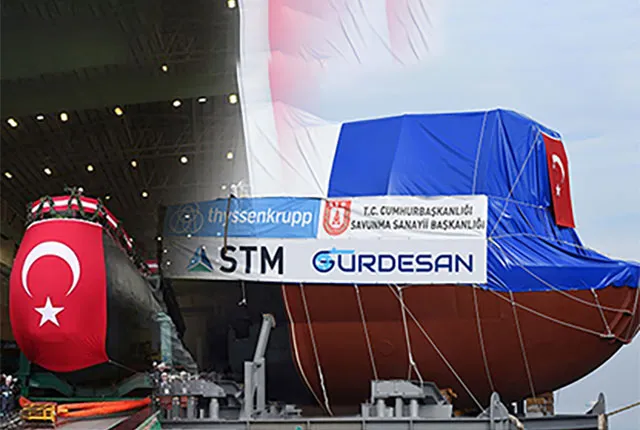
The torpedo is one of the last gaps Türkiye’s defence industry closed, and one of the most completely closed. What stands there is not a prototype or a display model but a weapon that has entered service, fired a war shot and gone into serial production.
AKYA is the national answer in the heavyweight class. The next-generation heavyweight torpedo developed by Roketsan is launched from a submarine and can engage both submarine and surface targets; it offers high speed, long range, active and passive sonar guidance, and both internal and fibre-optic wire guidance. The programme’s turning point came on 27 December 2023: in a war shot from the submarine TCG Preveze in the Eastern Mediterranean, the torpedo demonstrated its strike and destruction capability. The Ministry of National Defence announced that serial production of the AKYA heavyweight war torpedo had begun and that deliveries to submarines had started. Roketsan also established a cooperation with Altınay Savunma Teknolojileri on the programme.
ORKA is the lightweight counterpart. The national lightweight torpedo programme launched by the Presidency of Defence Industries envisages a fully indigenous torpedo launched from surface platforms and aircraft against submarine targets. Together the two programmes aim to close both the heavy and light classes of underwater munitions through domestic means.
What makes the picture more meaningful is how it joins the underwater acoustics capability examined in the previous file: the country that builds the torpedo also builds the system that defeats it — ASELSAN’s HIZIR and ZOKA families. The number of countries with verifiable products across all four sub-headings of underwater munitions is very small.
The Türkiye row combines two companies’ portfolios; it is not one company’s coverage. Coverage was counted from manufacturers’ public product pages, and presence in a segment does not imply leadership in it. Data type: T (assessed).
Where does Türkiye fall short?
The AKYA and ORKA picture is strong. But a torpedo programme does not end when the weapon enters service, and Türkiye faces three concrete limits.
First, an export record. Atlas Elektronik’s SeaHake mod 4 has been sold in its export version to more than one navy; the Mk 48 is the shared weapon of America’s allies. AKYA is still in the early stage of delivery to its own navy, with no publicly disclosed export contract. In torpedoes an export is not just a sale but a validation: it means another navy entrusting its own submarine to your weapon.
Second, cumulative production and accumulated data. Lockheed Martin’s delivery of a 250th guidance system for the Mk 48 means decades of serial production and field data. Every shot, every test, every recorded acoustic profile is a data set that improves the guidance software. A new programme cannot close that gap quickly — it takes time and it takes shots.
Third, user diversity. A torpedo matures as it is used across different seas, different salinity and temperature profiles, and different classes of submarine. The Mk 48 and DM2A4 have been in multiple navies’ inventories for decades; AKYA is for now proven in the waters of a single navy.
Reading it in balance: These three limits do not place Türkiye behind in torpedoes. The number of countries that have designed their own heavyweight torpedo, taken it into serial production and validated it with a war shot does not run past one hand — and Türkiye is running the heavy and light classes at once while also building the countermeasure side itself. Competitors carry their own constraints: BAE Systems is strong in heavyweight but not of the same weight in lightweight; Northrop Grumman is only now entering the lightweight class; Naval Group’s F21 is directed principally at its own navy. Here too, no manufacturer leads all four sub-headings.
Where is the sector heading?
Three trends stand out. First, the guidance chain is lengthening: a fibre-optic wire-guided torpedo remains under the submarine’s control even after launch and can be redirected as the target manoeuvres to escape. Second, the race with countermeasures: every new acoustic decoy stresses the torpedo’s target discrimination algorithm, which makes developing torpedo and countermeasure in the same country strategically valuable. Third, the arrival of unmanned platforms: as unmanned underwater vehicles become both torpedo carriers and torpedo targets, underwater munitions will be redefined over the coming decade.
How this research was done
This file was built from manufacturers’ own product pages and press releases together with official institutional announcements. Every figure was traced back to the source that first disclosed it. Data concerning Türkiye was drawn only from the Ministry of National Defence, the Presidency of Defence Industries and the manufacturer’s own statements; the war shot date and serial production status rest on official announcements. Technical values such as range, speed and warhead weight were deliberately omitted: most countries keep these classified, and the figures circulating in open sources are not verifiable. Chinese and Russian manufacturers publish no verifiable production or export data and were graded D and left outside the index. Segment coverage counts are an editorial assessment.
Frequently asked questions
Who is the world’s largest torpedo manufacturer?
Lockheed Martin ranks first in this file’s composite index; with SAIC it is the prime contractor for the US Navy’s Mk 48 heavyweight torpedo and delivered its 250th guidance system in July 2025. But it is worth reading segment by segment: in Europe, Atlas Elektronik, Naval Group and BAE Systems each build their own navy’s heavyweight torpedo.
What is the difference between a heavyweight and a lightweight torpedo?
A heavyweight torpedo is launched from a submarine, measures 533 millimetres across and engages both submarine and surface targets. A lightweight torpedo is launched from a surface ship, a helicopter or a maritime patrol aircraft, measures 324 millimetres and exists solely to hunt submarines.
How does a torpedo sink a ship?
A modern heavyweight torpedo prefers to detonate beneath the keel rather than strike the hull. The resulting gas bubble and water column leave the ship unsupported amidships; when the bubble collapses, the keel folds under the vessel’s own weight.
What is AKYA?
Roketsan’s next-generation national heavyweight torpedo. Launched from a submarine, it can engage submarine and surface targets, with active and passive sonar guidance and both internal and fibre-optic wire guidance.
Has AKYA entered service?
Yes. The Ministry of National Defence announced that serial production of the AKYA heavyweight war torpedo had begun and that deliveries to submarines had started. The weapon demonstrated its strike and destruction capability in a war shot from the submarine TCG Preveze in the Eastern Mediterranean on 27 December 2023.
What is ORKA?
The national lightweight torpedo programme launched by the Presidency of Defence Industries. It envisages a fully indigenous torpedo launched from surface platforms and aircraft against submarine targets.
What does fibre-optic wire guidance do?
It keeps the torpedo connected to the submarine even after launch, so the weapon can be redirected as the target manoeuvres and human judgement can intervene against deceptive countermeasures.
What is the hardest part of a torpedo?
The guidance and the acoustic seeker head. Body and propulsion are largely solved engineering problems; the real distinction lies in the head that finds a target underwater, discriminates it from countermeasures and positions the weapon beneath it. That Lockheed Martin reports its guidance system deliveries separately says as much.
How many countries can build their own heavyweight torpedo?
Very few. The heavyweight manufacturers appearing in this file with verifiable data are from the United States, Germany, France, the United Kingdom, Italy and Türkiye. Because it presumes a submarine fleet, the heavyweight class is a far narrower club.
What is a torpedo countermeasure?
Systems that detect an incoming torpedo, classify it and divert it with acoustic decoys or jammers. Türkiye builds this side too: ASELSAN’s HIZIR torpedo countermeasure system and ZOKA acoustic decoys form that family.
Why are there no range and speed figures in this file?
Because most countries keep them classified and the numbers circulating in open sources are not verifiable. Under the principle applied throughout the series, no figure that cannot be traced to its source was used.
How will unmanned underwater vehicles change the torpedo?
In two directions: such vehicles can become torpedo carriers, and they become torpedo targets themselves. Spreading small, cheap vehicles in large numbers through the water column will redefine underwater munitions over the coming decade.
Sources and methodology
- Roketsan — AKYA — next-generation heavy-class torpedo capabilities
- Roketsan — ORKA — next-generation light-class torpedo
- Presidency of Defence Industries — AKYA and ORKA projects — programme scope
- Anadolu Agency — AKYA entering serial production and deliveries to submarines beginning
- Anadolu Agency — launch of the ORKA project
- Anadolu Agency — Roketsan and Altınay Savunma Teknolojileri cooperation on AKYA
- Northrop Grumman — US Navy advanced lightweight torpedo contract ($233m)
- BAE Systems — Spearfish — the Royal Navy’s heavyweight torpedo
- Graham Corporation — ~$25.5m follow-on order for the US Navy heavyweight torpedo programme
- ASELSAN — HIZIR — torpedo countermeasure system for surface ships
Last updated: 22 September 2026. This page is living research and will be updated as new contracts and deliveries are announced. This file closes the series’ fourth wave. For the full series, see the 2026 Global Defence Industry Report.