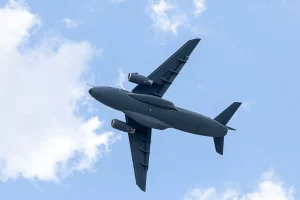
The World’s Largest Simulator Manufacturers

The world’s largest simulator manufacturers work the one part of defence that never fires a shot and shapes every shot fired. An hour in a fighter jet costs tens of thousands of dollars; the same sortie in a full flight simulator costs a fraction of it. More than that, a simulator allows what an aircraft cannot: engine fire, hydraulic failure, a landing in the middle of hostile air defence. Modern air forces therefore spend an ever larger share of pilot training on the ground — turning the training device from a by-product into a defence industry sector of its own. Following our file on body armour manufacturers, Envanter Medya compared military simulator and training makers on installed base, exports, service network and production capacity.
Editorial note: This ranking is editorial research prepared by Envanter Medya using publicly available data. It is not an official international ranking. Sources and methodology are set out in the “How this research was done” section below.
The research at a glance
“Largest” by which measure?
The answer depends on what business a company is actually in. Some sell the device: they build a full flight simulator and hand it over. Others sell the training: they run their own centres, train the pilots and keep the device in house. These are very different models. Selling a device earns revenue once; selling training builds a relationship measured in decades. That is precisely where the sector’s leader, CAE, draws its strength — anchoring service-intensive relationships through sustained contracts with NATO air forces. This file measured both models separately.
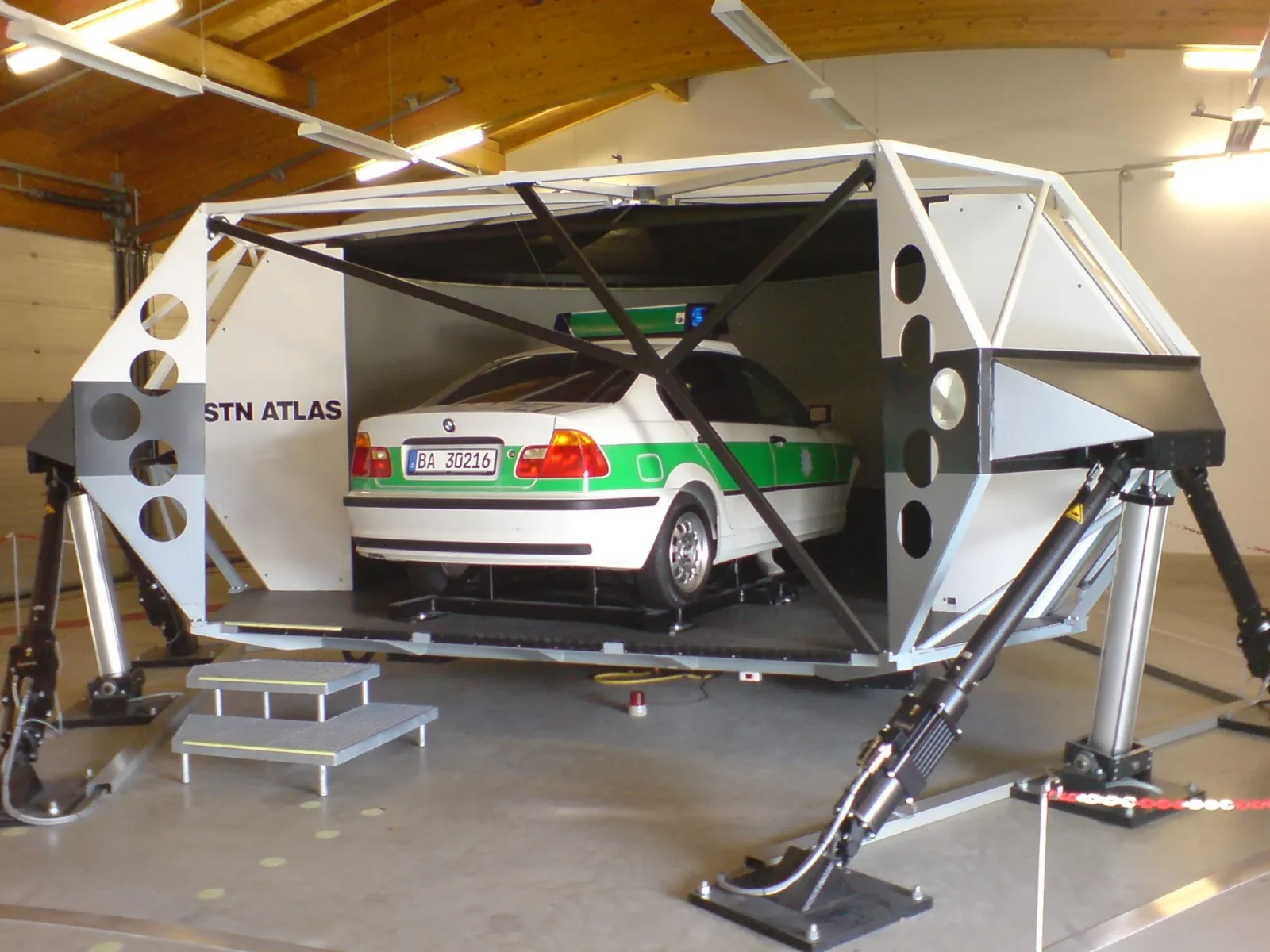
What is the difference between a full flight simulator (FFS) and a flight training device (FTD)? A full flight simulator sits on a motion platform, replicates the cockpit exactly and, with its visual system, delivers the feel of real flight; aviation authorities accept certain training conducted in it in place of the aircraft. A flight training device has no motion platform and focuses more on procedures and systems. The economics of a training centre rest on mixing the two in the right proportion.
The shape of the sector: a semi-consolidated market
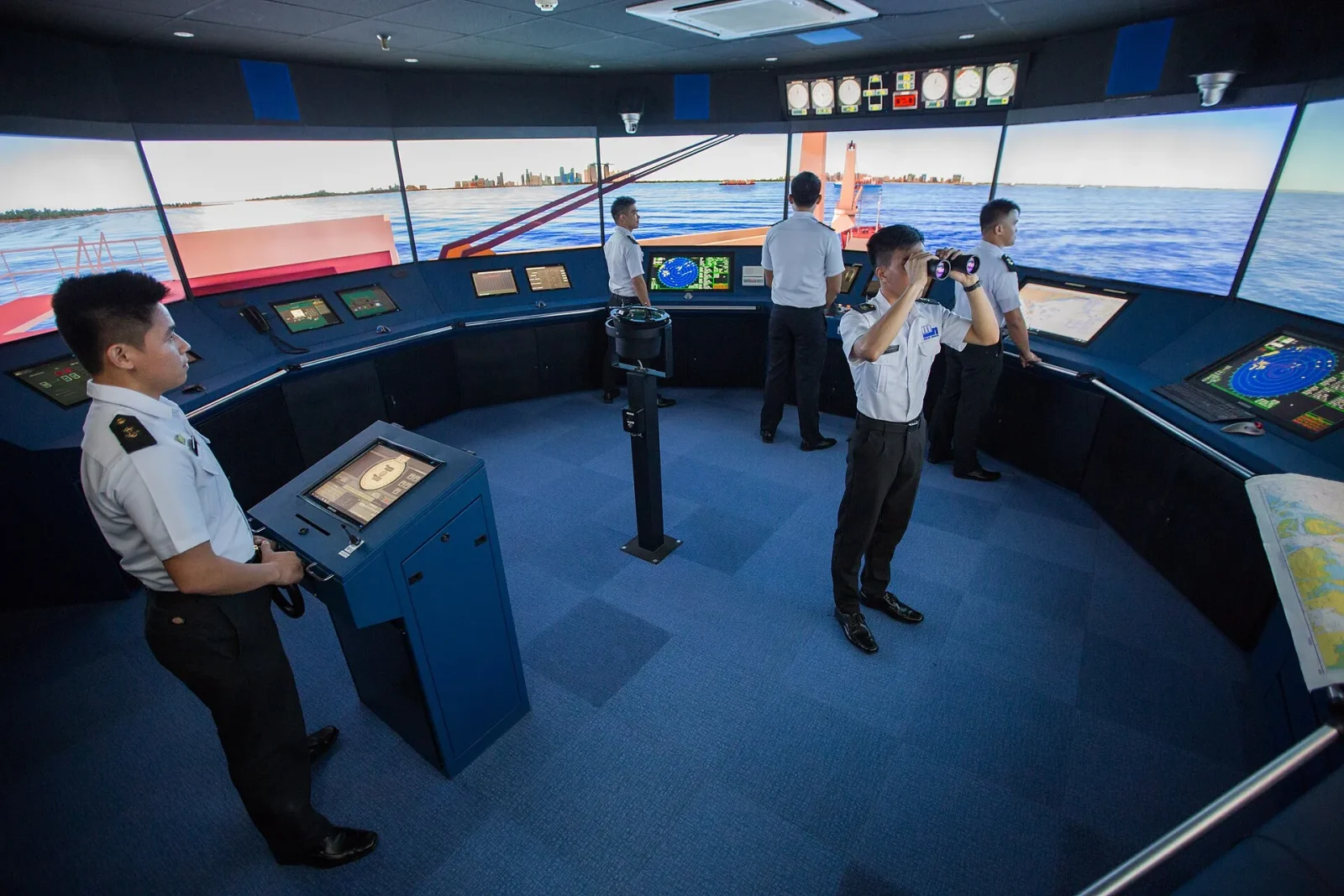
Market research describes military simulation and training as “semi-consolidated” — neither a duopoly nor a fragmented field. The market is dominated by Collins Aerospace (RTX), CAE, Rheinmetall, FlightSafety International and Thales. In the flight simulator sub-segment the leading names are CAE, L3Harris Technologies, FlightSafety International and Thales. That the two lists differ is not accidental: flight simulation is one specialism, land and naval training systems another.
The sector’s largest structural move of the past decade came from CAE, which acquired L3Harris Technologies’ military training business for $1.05 billion in March 2021. One simulator manufacturer absorbing another major player’s training unit outright measurably raised concentration in the sector. Rheinmetall, meanwhile, holds the specialised European ground-based training segment; Thales and L3Harris sit strong in avionics and communications emulation.
The two markets overlap but are not the same: the flight simulator market includes civil aviation and grows faster. These are market research projections. Data type: R (reported).
Where the technology is going: LVC and artificial intelligence
The real transformation of recent years lies not in the device but in how devices connect. Live, virtual and constructive (LVC) training brings a pilot in a real aircraft, another pilot in a simulator and hundreds of computer-generated targets into the same scenario. An air combat exercise of a size that could never be assembled in reality becomes possible with most participants sitting on the ground. Layered on top come virtual and augmented reality and AI-driven scenario generation: the system can harden the scenario in real time against the trainee’s weak points.
Verified manufacturer table
| Manufacturer | Country | Strongest area | Verified headline data | Grade |
|---|---|---|---|---|
| CAE | Canada | Flight simulators, training services | Acquired L3Harris’s military training business for $1.05bn, March 2021; sustained service contracts with NATO air forces | A |
| Collins Aerospace (RTX) | USA | Military simulation and training | Among the players dominating the market | A |
| Thales | France | Avionics and communications emulation | A leading player on both the military simulation and flight simulator lists | A |
| FlightSafety International | USA | Flight simulators, training centres | A leading player on both market lists | A |
| Rheinmetall | Germany | Ground-based training | Representative of the specialised European ground training segment | A |
| Lockheed Martin | USA | Platform-integrated training | Among the companies profiled in the military simulation and training market | B |
| BAE Systems | UK | Military training systems | Among the companies profiled in the military simulation and training market | B |
| HAVELSAN 🇹🇷 | Türkiye | Full flight and full mission simulators | HÜRJET full mission and flight training simulator to be exported to Spain (2028); 12 new simulators for Turkish Airlines (8 FFS + 4 FTD); 6 active devices in THY training centres; first civil FFS export to India; first product delivered to the Qatar Air Force | A |
| Saab | Sweden | Combat training systems | Among the companies profiled in the military simulation and training market | B |
| Indra | Spain | Simulation and training | Active in the European simulation market | B |
| ST Engineering | Singapore | Simulation software and integration | Active in the Asia-Pacific simulation market | B |
Data reliability notes. A: disclosed by the manufacturer, a government source, or market research giving a named figure. B: consistent across multiple open sources but not fixed by a single official figure. Data types: R reported, T company disclosure, S contract record, D unverifiable. FFS: full flight simulator. FTD: flight training device. LVC: live, virtual, constructive.
EM-GDPI: how the composite index was built
The index was adapted here too. The revenue criterion (15 points) was removed, because most companies do not report simulator and training revenue separately; in groups such as Collins Aerospace, Thales and Lockheed Martin the line sits inside far broader business units. In its place came “training service and centre operation capability” (15 points): whether a company only sells devices, or runs its own training centres and builds long-term service relationships. That is the criterion separating the sector’s two business models, and it largely determines the top of the ranking. The remaining criteria: installed base/production 25, exports 15, user countries 10, platform breadth 10, production capacity 10, order backlog 5, technology maturity 5, growth 5.
The index is editorial and its weightings were set by Envanter Medya. Data type: T (assessed).
Where does Türkiye stand?
Simulation is one of the areas where Türkiye’s defence industry has quietly advanced furthest — and the concrete evidence is no longer the domestic market but exports.
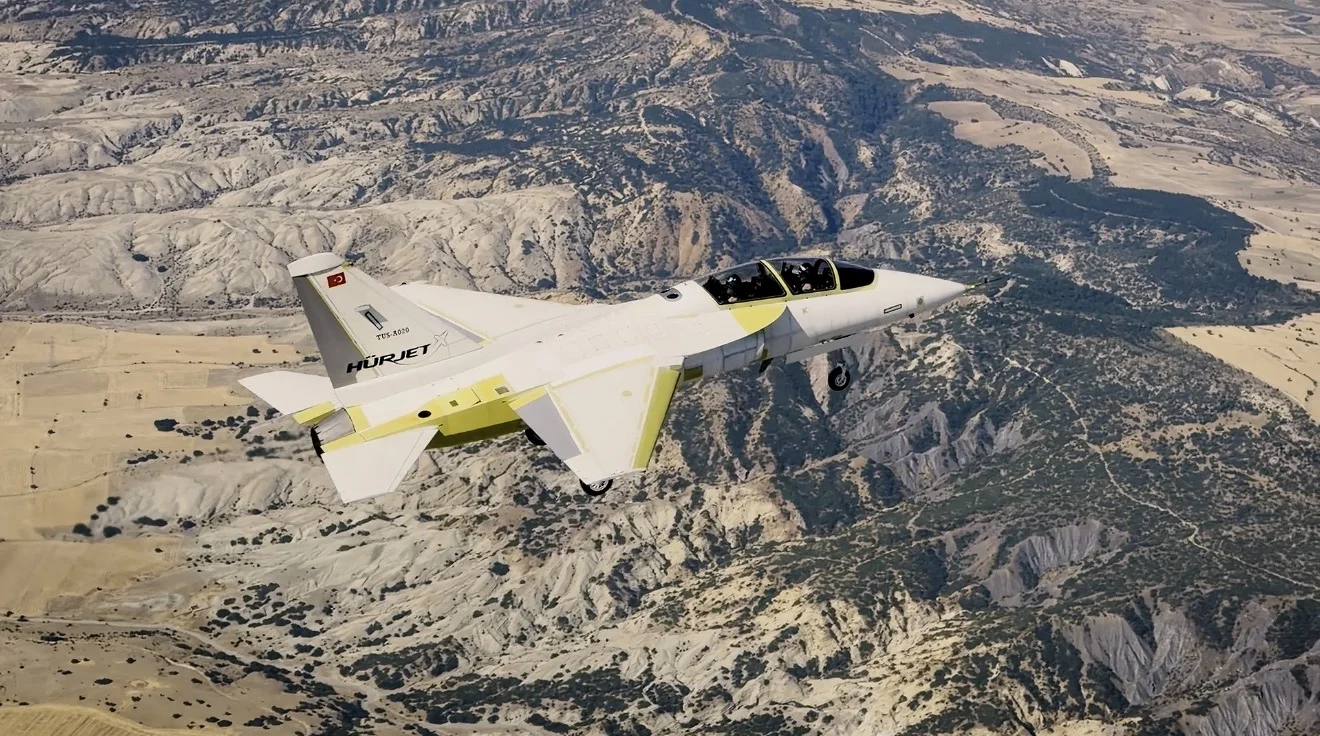
The most striking item is the HÜRJET simulator. The full mission and flight training simulator HAVELSAN developed for the HÜRJET will be exported to Spain. The device is to be delivered to the Turkish Air Force in the final quarter of 2026 and to Spain in 2028; the HÜRJET enters service in Türkiye in 2027 and in Spain in 2028. As HAVELSAN general manager Mehmet Akif Nacar put it, every country TUSAŞ sells a HÜRJET to becomes an opportunity to supply the simulator as well. That is an unusual lever in defence exports: the platform sale pulls the training system along behind it.
There has been a first on the civil side too. HAVELSAN completed its first civil aviation simulator export; the A320neo device built for India will be used at Simaero’s training facility in New Delhi and will join the group’s global fleet of more than 30 active full flight simulators. A first product was also delivered to the Qatar Air Force.
At home the scale is growing. In July 2026 Turkish Airlines and HAVELSAN signed an agreement for 12 flight simulators: 8 full flight simulators and 4 flight training devices, for narrow and wide-body aircraft, all built in Türkiye. Six HAVELSAN devices are already active in THY’s training centres — three Airbus A320NEO/CEO, two Boeing 737MAX and one Boeing 737NG. The foundation of the new training centre was laid in January 2026, with the first phase due in 2027 and completion in 2028. When the Ankara facility planned to open in 2027 is finished, HAVELSAN is expected to be able to build more than 30 flight simulators a year.
The three rows are different in kind: one a capacity target, one an order, one an existing installed base. Showing them on one axis compares scale; it does not imply equivalence. Data type: R (reported) / T (company disclosure).
Where does Türkiye fall short?
The picture is strong. But in simulation the money sits less in the device than in the service around it, and that is exactly where Türkiye’s limit lies.
First, the service network. CAE’s advantage comes less from building devices than from operating its own training centres worldwide and sustaining decade-long service contracts with NATO air forces. That model turns a customer from a one-time buyer into a continuing subscriber. HAVELSAN has built a strong position in manufacture and export; it is not yet at that scale in terms of a network of its own training centres operated abroad.
Second, visual systems and critical sub-components. One of the most expensive and decisive parts of a full flight simulator is its visual system: high-resolution projection, a spherical screen and a real-time image generation engine. Few suppliers exist worldwide for these components, and dependence along the chain from motion platform hydraulics to image processors is a constraint shared by most manufacturers, not Türkiye alone.
Third, access to foreign platform data. Building an aircraft’s simulator requires access to its flight data and avionics software, and the aircraft’s manufacturer controls that data. The Boeing and Airbus simulators HAVELSAN built for THY show such access can be obtained — but for military platforms, particularly US-origin fighters, it is far more tightly controlled and rests on the terms the purchasing country is granted.
Reading it in balance: These three limits do not place Türkiye behind. Building the simulator for your own trainer aircraft and exporting it to the European country that bought the aircraft is a hard rung of maturity to reach in defence; and the number of countries able to build and export an EASA-certified full flight simulator in civil aviation does not run past one hand. Competitors carry their own constraints: Rheinmetall is strong in ground training but not of the same weight in flight simulation; FlightSafety runs deep in civil work but does not match CAE’s breadth of military platforms. Here too, no manufacturer leads everywhere.
Where is the market heading?
The military simulation and training market is projected to grow from $14.29 billion in 2026 to $18.17 billion in 2031, an average of 4.93 per cent a year. The flight simulator market moves faster: from $6.65 billion in 2026 to $9.77 billion in 2031, growing at 8 per cent a year. The gap is largely civil aviation — fleet growth and the pilot shortage keep demand for training capacity above the military side. Turkish Airlines’ plan to operate more than 800 aircraft by 2033 and to build one of Europe’s largest flight training centres across three campuses is a concrete instance of that trend.
Compound annual growth rates. The flight simulator market grows faster because it includes civil aviation. Data type: R (reported).
One transaction in which a simulator manufacturer absorbed another major player’s military training business outright — the most consequential consolidation in the sector in a decade. Data type: S (contract record).
How this research was done
This file was built from manufacturers’ own announcements, official institutional statements and independent market research reports. Every figure was traced back to the source that first disclosed it. Data concerning Türkiye was drawn only from official institutional sources and the manufacturer’s own statements; delivery dates and device counts are given with the date of the announcement, because schedules in this field can change. Market size and growth rates are projections belonging to independent research firms and carry no commitment of realisation. Positioning such as “among the players dominating the market” is the market research reports’ own assessment; because those lines cannot be fixed to a figure they are graded B.
Frequently asked questions
Who is the world’s largest simulator manufacturer?
CAE ranks first in this file’s composite index. Its advantage comes not only from building devices but from operating its own training centres and sustaining long-term service contracts with NATO air forces. The other players dominating the market are Collins Aerospace (RTX), Rheinmetall, FlightSafety International and Thales.
What is the difference between a full flight simulator and a flight training device?
A full flight simulator sits on a motion platform, replicates the cockpit exactly and delivers the feel of real flight through its visual system; certain training in it is accepted in place of the aircraft. A flight training device has no motion platform and focuses on procedures and systems.
What does LVC training mean?
Live, virtual and constructive training: an approach that brings a pilot in a real aircraft, another in a simulator and computer-generated virtual targets into one scenario. It makes exercises of a size that could never be assembled in reality possible with most participants on the ground.
Does Türkiye export simulators?
Yes. The full mission and flight training simulator HAVELSAN developed for the HÜRJET will be exported to Spain, with delivery planned for 2028. The company also completed its first civil aviation simulator export, to India, and delivered its first product to the Qatar Air Force.
When will the HÜRJET simulator be delivered?
To the Turkish Air Force in the final quarter of 2026 and to Spain in 2028. The HÜRJET enters service in Türkiye in 2027 and in Spain in 2028.
How large is Turkish Airlines’ HAVELSAN order?
The agreement signed in July 2026 covers 12 devices: 8 full flight simulators and 4 flight training devices, for narrow and wide-body aircraft, all built in Türkiye. Six HAVELSAN devices are already active in THY’s training centres.
What will Türkiye’s simulator production capacity be?
When the Ankara facility planned to open in 2027 is complete, HAVELSAN is expected to be able to build more than 30 flight simulators a year.
Can simulator training replace real flight?
Not entirely, but for certain training aviation authorities accept work done in a full flight simulator in place of the aircraft. Emergencies such as engine fire or hydraulic failure, which cannot be attempted in a real aircraft, can only be practised in a simulator.
Why does CAE’s acquisition of L3Harris matter?
CAE acquired L3Harris Technologies’ military training business for $1.05 billion in March 2021. One simulator manufacturer absorbing another major player’s training unit outright measurably raised concentration in the sector.
How large is the simulator market?
The military simulation and training market was worth $14.29 billion in 2026 and is expected to reach $18.17 billion by 2031. The flight simulator market stood at $6.65 billion in 2026, with $9.77 billion expected by 2031.
Why does the flight simulator market grow faster?
Because it includes civil aviation. Fleet growth and the pilot shortage keep demand for training capacity above the military side; Turkish Airlines’ plan to operate more than 800 aircraft by 2033 is a concrete instance.
What does it take to build a simulator for an aircraft?
Access to that aircraft’s flight data and avionics software, which the aircraft’s manufacturer controls. Which platforms a simulator maker can build for therefore depends on those access permissions as much as on technical competence.
Sources and methodology
- Anadolu Agency — export of the HÜRJET full mission simulator to Spain and the delivery schedule
- Anadolu Agency (21 July 2026) — the THY-HAVELSAN 12-simulator agreement and existing inventory
- Anadolu Agency — HAVELSAN’s first civil aviation simulator export
- Anadolu Agency — the new Ankara simulator plant and its annual capacity target
- HAVELSAN — first product delivered to the Qatar Air Force
- Anadolu Agency — EASA certification of the B737MAX full flight simulator
- Mordor Intelligence — military simulation and training market size, growth rate and leading players
- MarketsandMarkets — flight simulator market and leading companies
- Military & Simulation Training Market report — company profiles for BAE Systems, CAE, Lockheed Martin, Rheinmetall, Saab and Thales
Last updated: 21 September 2026. This page is living research and will be updated as new contracts and deliveries are announced. For the full series, see the 2026 Global Defence Industry Report.