Gas-Operated or Inertia? How Semi-Auto Shotguns Actually Cycle

Pull the trigger on a semi-automatic shotgun and something has to happen in the split second after the shot: the spent shell has to eject, and a fresh one has to feed into the chamber, with no pump stroke from the shooter. Two competing engineering solutions handle that job, and which one sits inside a given shotgun shapes how it feels in the hands almost as much as its stock or barrel length does.
A gas-operated action taps a small amount of propellant gas from the barrel itself and uses that pressure to drive a piston that cycles the action. An inertia-driven action uses no gas at all — it relies on the shotgun’s own recoil impulse to compress a spring-loaded bolt assembly, which then springs back to complete the cycle.
This page compares how the two systems work, what each trades off, and where shooters tend to notice the difference. It is a different question from pump-action versus semi-automatic in general — that comparison lives on a separate Envanter Medya page — this one looks only at what happens inside a semi-auto action itself.
Last updated: September 20, 2026 · Envanter Medya editorial team
- Gas-operated: bleeds off a portion of firing gas to drive the cycling piston
- Inertia-driven: uses the recoil impulse itself, no gas tapped from the barrel
- Gas systems typically feel softer in recoil, since some energy is diverted to cycling
- Inertia systems typically stay cleaner inside and need less frequent stripping
- Both run reliably with regular maintenance and shells matched to the manufacturer’s spec
- Benelli popularized inertia under its own name; Beretta and Remington are long associated with gas systems
How a gas-operated action works
A gas-operated shotgun has a small port drilled into the barrel at a fixed point. As the shot charge passes that point, a portion of the propellant gas is bled off into a gas chamber, where it pushes a piston or operating rod rearward. That rearward push drives the bolt back, ejecting the spent shell, and the return spring then strips a fresh shell from the magazine into the chamber.
The advantage is felt recoil: because some of the energy that would otherwise hit the shooter’s shoulder gets diverted into cycling the action, gas guns tend to feel noticeably softer, shot after shot. The tradeoff is fouling — the gas system runs propellant residue through its own moving parts, which means it typically needs more frequent, more careful cleaning than an inertia gun.
How an inertia-driven action works
An inertia gun has no gas port at all. Instead, the shotgun’s own rearward recoil, at the instant of firing, compresses a spring against a moving mass inside the bolt group — often a short travel of just a few millimeters. Once that spring compresses fully, it releases, and that stored energy drives the bolt open and closed, ejecting the spent shell and chambering the next.
Because no propellant gas ever enters the action, the internals stay noticeably cleaner, which is why inertia guns have a reputation for going longer between cleanings. The tradeoff runs the other way on felt recoil — since the recoil impulse itself is what drives the mechanism, the shooter feels a slightly sharper kick than on an equivalent gas gun. Very light target loads can also be a problem: if there isn’t enough recoil energy to fully compress the inertia spring, the action may not cycle reliably.
Side by side
| Feature | Gas-Operated | Inertia-Driven |
|---|---|---|
| Operating principle | Bled gas drives a piston/rod | Recoil compresses a spring-loaded mass |
| Felt recoil | Generally softer | Generally slightly sharper |
| Cleaning frequency | Higher, due to gas fouling | Lower, cleaner internals |
| Behavior with light loads | Usually tunable/adjustable | Can be sensitive on some models |
| Parts and complexity | Extra piston/gas chamber parts | Fewer moving parts overall |
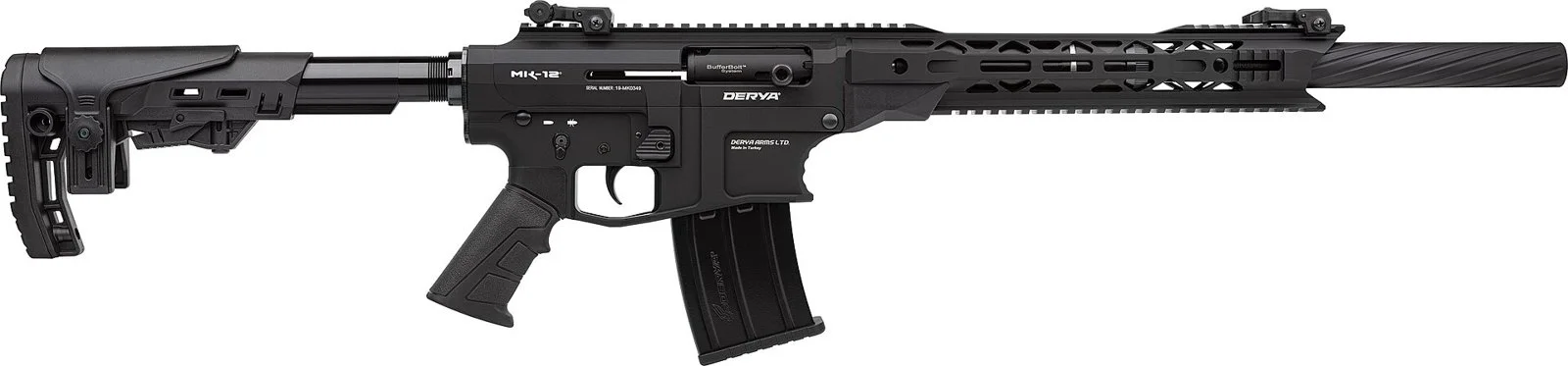
| Known for | Beretta, Remington, Derya Arms MK-12 | Benelli (Inertia Driven system) |
Which one fits which situation
Shooters putting hundreds of rounds through a gun in a single day of clay targets — trap or skeet, for example — often notice the softer recoil of a gas gun over that volume of shooting. Hunters working in mud, dust, or heavy field conditions, where cleaning access is limited, sometimes prefer the inertia gun precisely because it tolerates neglect better. In both cases, using shells within the manufacturer’s stated power range and keeping up with basic maintenance is what actually keeps either system reliable.
- Before cleaning any action, confirm the shotgun is unloaded and the chamber is clear.
- Using shells outside the power range specified by the manufacturer can cause a malfunction or a safety risk.
Frequently Asked Questions
What’s the main difference between gas-operated and inertia shotguns?
A gas-operated action taps propellant gas from the barrel to drive its cycling piston, while an inertia-driven action uses no gas at all — it relies on the shotgun’s own recoil impulse to compress a spring that then cycles the bolt.
Which system needs less maintenance?
Inertia systems generally need less frequent cleaning because propellant gas never enters the action; both systems still need regular maintenance to run reliably.
Will an inertia shotgun cycle every shell?
An inertia action needs enough recoil energy to fully compress its internal spring, so very light target loads can occasionally cause cycling issues on some models. Staying within the shells the manufacturer recommends avoids this.
Why is Benelli associated with inertia systems?
Benelli commercialized and popularized the inertia principle under its own Inertia Driven name, though the underlying mechanism has since been used by other manufacturers as well.
How do you clean the gas system on a gas-operated shotgun?
Following the manufacturer’s disassembly instructions, the piston and gas chamber are cleared of propellant residue with the recommended gun oil and brush; see Envanter Medya’s barrel maintenance guide for more detail.
Is this the same as pump-action versus semi-automatic?
No — the pump-versus-semi-auto comparison is covered on a separate Envanter Medya page. This page compares only the two mechanisms used inside semi-automatic shotguns.
Which system should a beginner choose?
This isn’t a purchase recommendation; the right choice depends on shooting frequency, climate conditions, and personal preference. Either system runs reliably with the maintenance and shells the manufacturer specifies.
Editorial note: This is technical journalism, not purchase or maintenance advice; always follow your manufacturer’s owner’s manual and an authorized service technician.
Bu içeriğin orijinal Türkçe versiyonu için: Türkçe sayfayı okuyun.