





SPICE 250 and SPICE 1000: Elbit’s GPS-Independent Precision Bomb Kits – How Scene Matching Works and Why It Matters

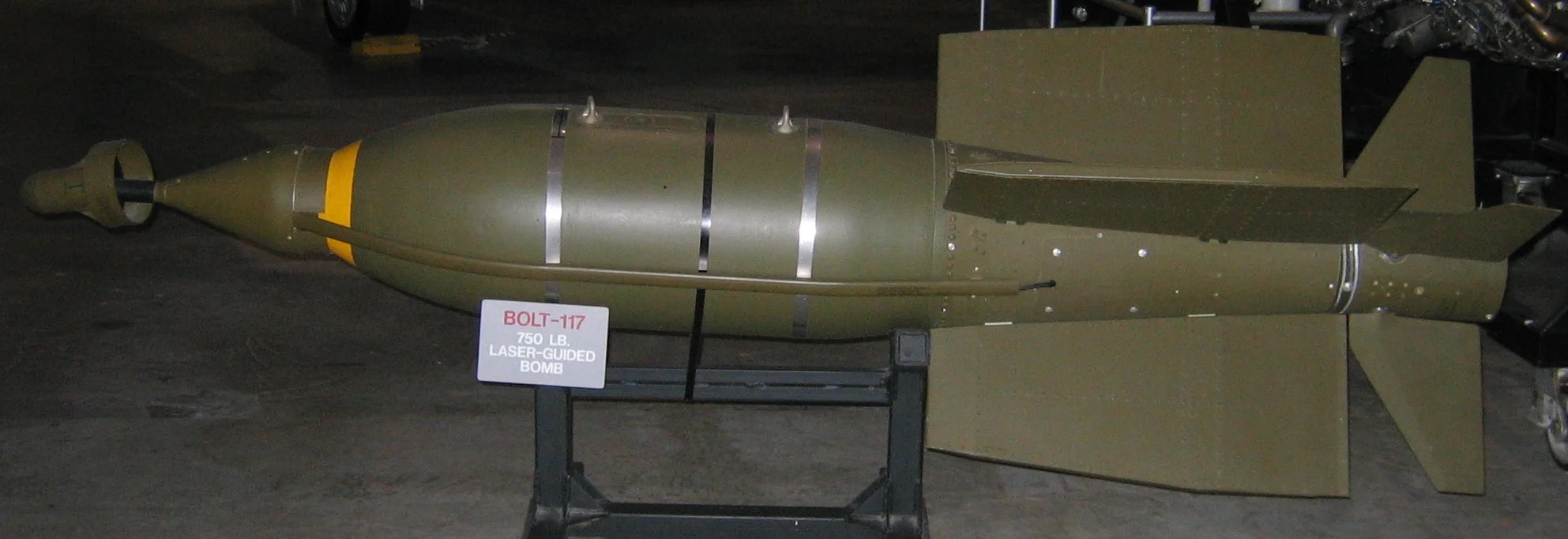
SPICE (Smart, Precise Impact, Cost-Effective) is a family of bolt-on guidance and control kits that convert unguided “dumb” bombs into precision-guided munitions. Developed by Elbit Systems and in operational service with the Israel Air Force since the early 2000s, SPICE’s defining technical feature is its GPS-independent scene matching capability: an onboard electro-optical seeker compares a real-time image of the target area against a reference scene loaded before the mission, correcting the bomb’s trajectory in the terminal phase without any reliance on GPS signals. The result is sub-3-metre circular error probable (CEP) even in environments where GPS is jammed or unavailable.
The Problem SPICE Solves
Precision-guided munitions fall broadly into three categories: laser-guided (accurate but requires continuous laser designation, fails in cloud or smoke), GPS-guided (accurate in clear signal environments but vulnerable to jamming and spoofing), and scene-matching optically guided (accurate regardless of signal environment). SPICE occupies the third category, combining all three guidance modes for maximum redundancy:
- GPS/INS (primary): Standard GPS and inertial navigation for open-sky conditions.
- Scene matching: The EO/IR seeker locks onto the pre-loaded reference image of the target in the terminal phase, correcting for GPS drift or denial.
- Manual target update: The operator can re-designate the target during flight if mission parameters change.
Russia’s extensive deployment of GPS jamming systems in Ukraine — degrading JDAM accuracy across wide areas — has turned the GPS-independence argument from a theoretical concern into an operational reality. SPICE’s scene matching positions it as a structurally resilient weapon in that environment.
System Variants
SPICE 250
Designed for 250 lb (~113 kg) bomb bodies, SPICE 250 is the most compact and operationally flexible variant. Its small size allows multiple kits to be carried simultaneously on multi-rack pylons, enabling a single aircraft sortie to prosecute several targets. Effective range exceeds 100 km from high altitude, keeping the releasing aircraft outside the engagement envelopes of most short-to-medium range air defence systems.
SPICE 1000
Designed for 1,000 lb (~450 kg) bomb bodies, SPICE 1000 applies the same GPS-independent guidance suite to a heavier warhead optimised against hardened structures, reinforced bunkers and large infrastructure targets. The additional kinetic energy allows penetration of surface layers before detonation — important against targets that are partly buried or structurally reinforced.
SPICE 2000
The largest variant, for 2,000 lb (~900 kg) bomb bodies. Targets deeply buried command facilities, underground bunkers and major bridge structures. Technical details in open sources are limited.
Technical Specifications
| Parameter | SPICE 250 | SPICE 1000 |
|---|---|---|
| Bomb class | 250 lb / ~113 kg | 1,000 lb / ~450 kg |
| Range | 100+ km (from high altitude) | 100+ km |
| CEP (GPS-aided) | <3 m | <3 m |
| CEP (GPS-denied / scene matching) | <3 m | <3 m |
| Guidance | EO/IR seeker + GPS/INS + scene matching | EO/IR seeker + GPS/INS + scene matching |
| Compatible aircraft | F-16, F-15, F/A-18, Eurofighter, Gripen, Kfir | F-16, F-15, F/A-18 |
| Mission planning | Pre-mission data load | Pre-mission data load |
| GPS-independent operation | Yes | Yes |
| Target type | Fixed point targets, light structures | Hardened structures, bunkers |
Operational Use
Israel – IDF Air Force
The IDF Air Force has operated SPICE across multiple campaigns. The system is associated — though not officially confirmed in all cases — with several high-profile strikes. The 2007 Operation Orchard strike against a suspected Syrian nuclear facility construction site is one frequently cited example; SPICE’s GPS-independent guidance and 100 km standoff range would have suited the mission profile. Since the early 2010s, SPICE has been a standard element of IAF strike loadouts.
India – Balakot Strike (2019)
India signed a contract for 100 SPICE 2000 kits in 2019. The purchase followed the February 2019 Balakot airstrikes, in which the Indian Air Force claimed to have struck a Jaish-e-Mohammed training camp in Pakistan-administered Kashmir using SPICE 2000-equipped Mirage 2000 aircraft. Pakistan disputed the effectiveness of the strike. The operational record from Balakot remains contested in the open-source community; what is not in dispute is that India assigned sufficient confidence to SPICE to sign a 100-unit follow-on contract.
Competing Systems
| System | Developer | Country | Range | GPS-independent |
|---|---|---|---|---|
| JDAM-ER | Boeing | USA | ~60–80 km | No (GPS required) |
| SDB II (GBU-53/B) | Raytheon | USA | ~110 km | Partial (mmW radar seeker) |
| Hammer (AASM) | Safran | France | ~60 km | Limited |
| Paveway IV | Raytheon UK | UK | ~15 km | No (laser + GPS) |
| HGK-84 | ROKETSAN/TÜBİTAK | Turkey | ~100 km | Under development |
Turkish Counterpart – HGK Family
Turkey’s equivalent in this segment is the HGK (Hassas Güdüm Kiti – Precision Guidance Kit) family, developed by ROKETSAN and TÜBİTAK. The HGK-82 and HGK-84 kits are in operational service on Turkish Air Force F-16s and have been used in cross-border operations against PKK targets. The guidance suite uses GPS/INS and optionally a laser seeker — giving it comparable performance to SPICE in GPS-available environments.
| Feature | SPICE 250 | HGK-84 |
|---|---|---|
| Guidance | EO/IR scene matching + GPS/INS | GPS/INS + laser (optional) |
| Range | 100+ km | ~100 km (high altitude) |
| GPS-independent | Yes (scene matching) | Under development |
| Compatible aircraft | F-16, F-15, Eurofighter etc. | F-16 (TAF fleet) |
| Combat record | India use (Balakot, disputed) | TAF border operations |
| Exports | Israel, India, Singapore, Greece | None (to date) |
The most strategically significant gap between SPICE and the HGK family is the GPS-independent scene matching capability. As GPS denial becomes standard in peer-level conflicts — demonstrated unambiguously in Ukraine — this technical distinction matters operationally. Turkey’s SOM cruise missile programme has developed terminal guidance technologies that could potentially be adapted to the HGK family, and ROKETSAN is known to be working on GPS-independent terminal guidance. Closing this gap is a priority for Turkish precision munitions competitiveness.
Advantages
- GPS-independent precision: Scene matching achieves sub-3-metre CEP in denied GPS environments.
- Long standoff range: 100+ km keeps the launch aircraft outside most medium-range SAM envelopes.
- Retrofit compatibility: Converts existing unguided bombs in inventory — no need to procure new weapons.
- Multi-target sortie: SPICE 250’s compact size enables multiple kits per aircraft per sortie.
- Cost-effectiveness: Significantly cheaper than cruise missiles for the same target category.
Disadvantages
- Fixed target limitation: Scene matching requires a static reference image; ineffective against manoeuvring or highly mobile targets.
- Pre-mission planning dependency: Each target requires a pre-loaded scene; time-sensitive emerging targets cannot always be programmed quickly.
- Export restrictions: Israeli government licensing constrains the customer base.
- Contested combat record: The Balakot effectiveness dispute means the system’s combat validation is not as clear-cut as some other Elbit products.
Inventory Media Assessment
SPICE’s GPS-independent scene matching is not a novelty — it is an operationally validated differentiator in the current threat environment. Russia’s GPS denial operations in Ukraine have made this capability relevant to almost every air force that operates in proximity to a peer adversary. For any customer considering precision strike capability against a GPS-jamming opponent, SPICE’s terminal guidance resilience is a compelling argument.
Turkey’s HGK family is technically strong but faces the same GPS-dependency limitation that has handicapped JDAM in Ukraine. Bridging that gap — ideally by leveraging the SOM programme’s terminal guidance work — would position Turkey’s precision munitions industry to compete with SPICE in third-country markets. The technical ingredients are present; the integration work remains.