The World’s 10 Largest Air Forces by Aircraft (2026)


Counting fighter jets is the easy way to rank an air force. It is also the misleading one. Modern air campaigns are not won by fast jets alone: without tankers, fighter radius collapses; without airlifters, nothing deploys; without airborne early warning, the radar picture goes dark; without trainers, the pilot pipeline dries up.
That is why GlobalFirepower’s total aircraft inventory is the broader measure. It captures every military aviation platform a country operates — fighters, attack aircraft, transports, tankers, trainers, maritime patrol types and helicopters — including those flown by armies and navies rather than air forces.
So which ten countries field the largest military air inventories in 2026? Who sits in the top three, how many European air forces made the cut, and where exactly does Türkiye land? The countdown starts at ten.
The ranking below uses GlobalFirepower’s 2026 dataset. The figures count airframes on strength; they say nothing about availability rates, airframe age or technology generation. That distinction matters: 500 modern aircraft can do more work than 900 ageing ones.
#10France
Total aircraft · Europe
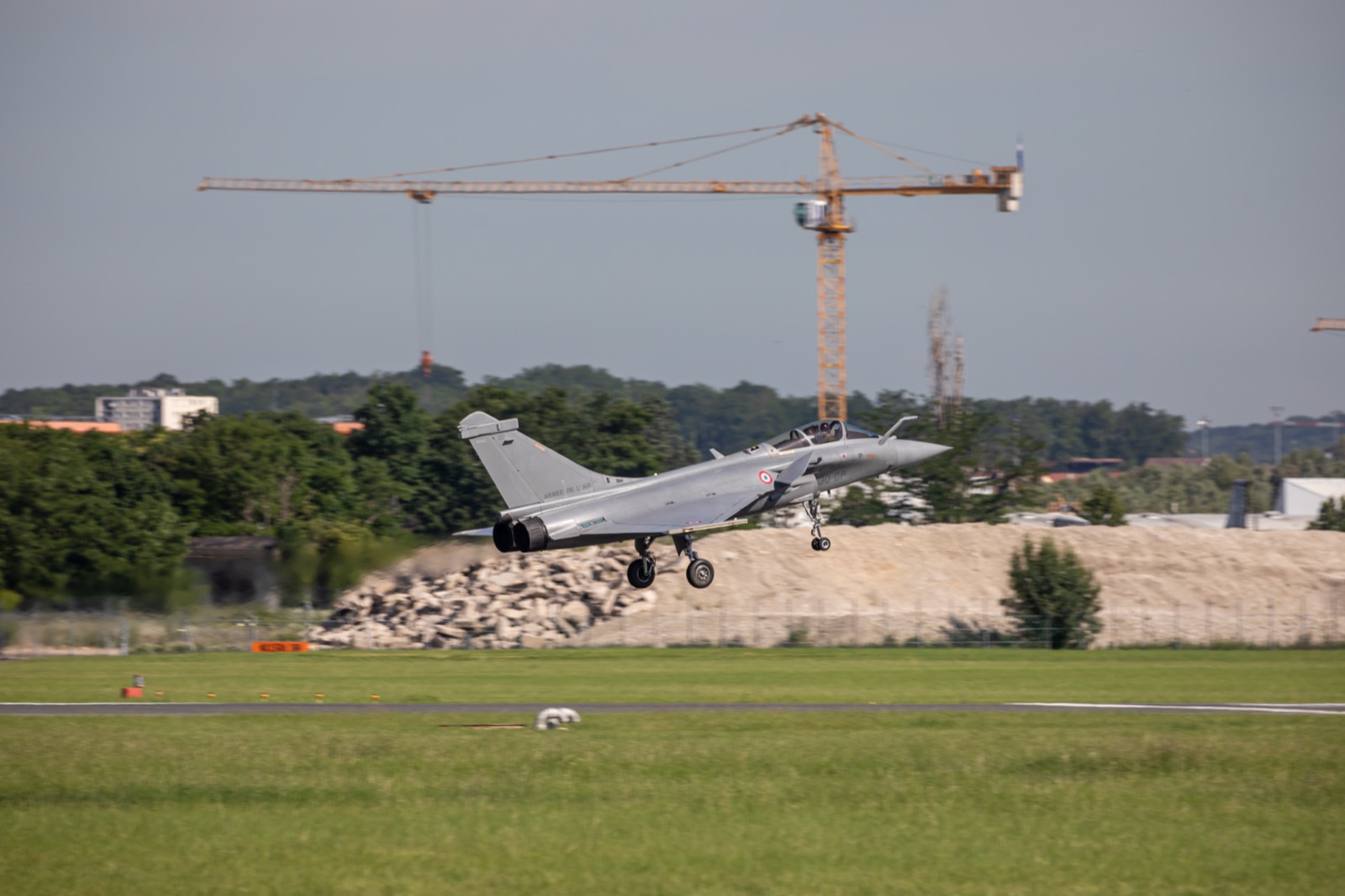
France is the only Western European country on this list, and it earns the place through composition rather than raw numbers. Of 974 aircraft, 223 are fighters; the rest is transport, tanker, maritime patrol and rotary-wing capacity. What sets French air power apart is that almost all of it is built at home.
The Rafale is the reason. One airframe covers air superiority, deep strike and, uniquely in Europe, the airborne leg of a nuclear deterrent — the ASMP-A missile is carried by no other aircraft. Add A330 MRTT tankers, carrier Rafales aboard the Charles de Gaulle and A400M airlifters, and Paris can generate sorties from the Sahel to the Indo-Pacific.
French doctrine is built on strategic autonomy: operating inside NATO without depending on Washington to do it. Years of expeditionary work in the Sahel were that doctrine in practice. For the sixth generation, France is committed to FCAS alongside Germany and Spain, though workshare disputes keep slipping the timetable to the right.
At 974 aircraft, France operates Europe’s largest air inventory — comfortably ahead of the United Kingdom (625) and Germany (569).
| Capability | Total |
|---|---|
| Total aircraft | 974 |
| Fighters | 223 |
| Helicopters | 452 |
| Active personnel | 264,000 |
| Defence budget | $67.23 bn |
The next country sustains a bigger inventory on a fraction of that budget.
#9Egypt
Total aircraft · North Africa
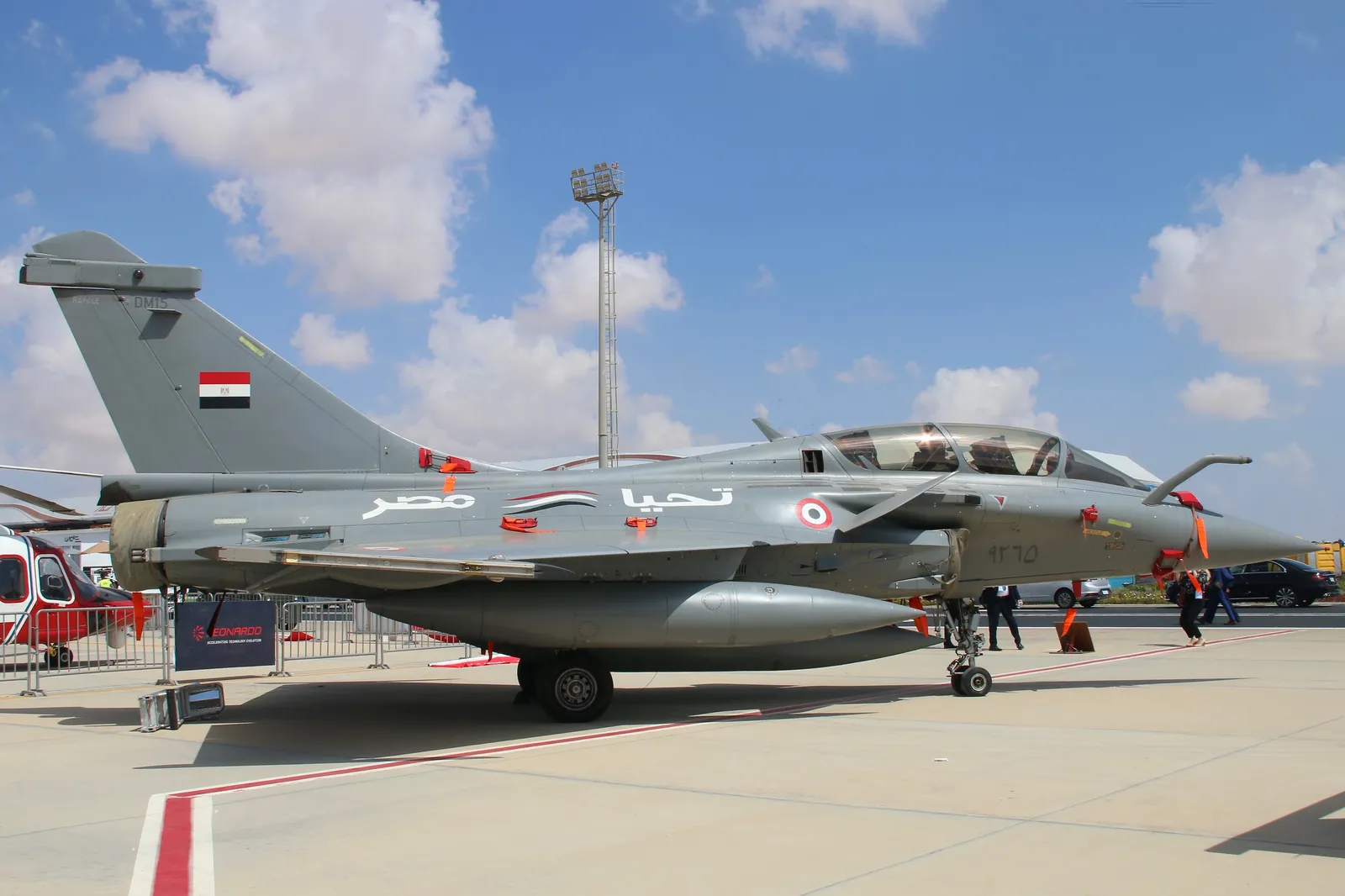
Egypt fields the largest air inventory in Africa and the Arab world. Of 1,088 aircraft, 242 are fighters — a combat fleet larger than France’s. The defining feature of Egyptian air power, though, is variety: F-16s, Rafales, MiG-29Ms, Mirage 2000s and Chinese-sourced types all fly under the same roundel.
That diversity buys Cairo procurement leverage, and it costs something in return. Each supplier brings its own munitions, ground support equipment and maintenance chain. Common datalinks are hard to establish across such a mixed fleet, so interoperability lags well behind what the headline number implies.
Three concerns drive the spending: instability on the Libyan border, spillover from the war in Sudan, and the long-running Nile dam dispute. Egypt is also expanding naval aviation to fill out its Mistral-class amphibious ships. Against all that, a declared defence budget of $5.19 billion shows how much of the inventory rests on grants and long-term credit lines rather than annual allocations.
Egypt spends roughly one-thirteenth of what France does, yet operates 114 more aircraft — most of them previous-generation types.
| Capability | Total |
|---|---|
| Total aircraft | 1,088 |
| Fighters | 242 |
| Helicopters | 348 |
| Active personnel | 438,500 |
| Defence budget | $5.19 bn |
One place higher sits a country that rebuilt its inventory with its own industry.
#8Türkiye
Total aircraft · NATO
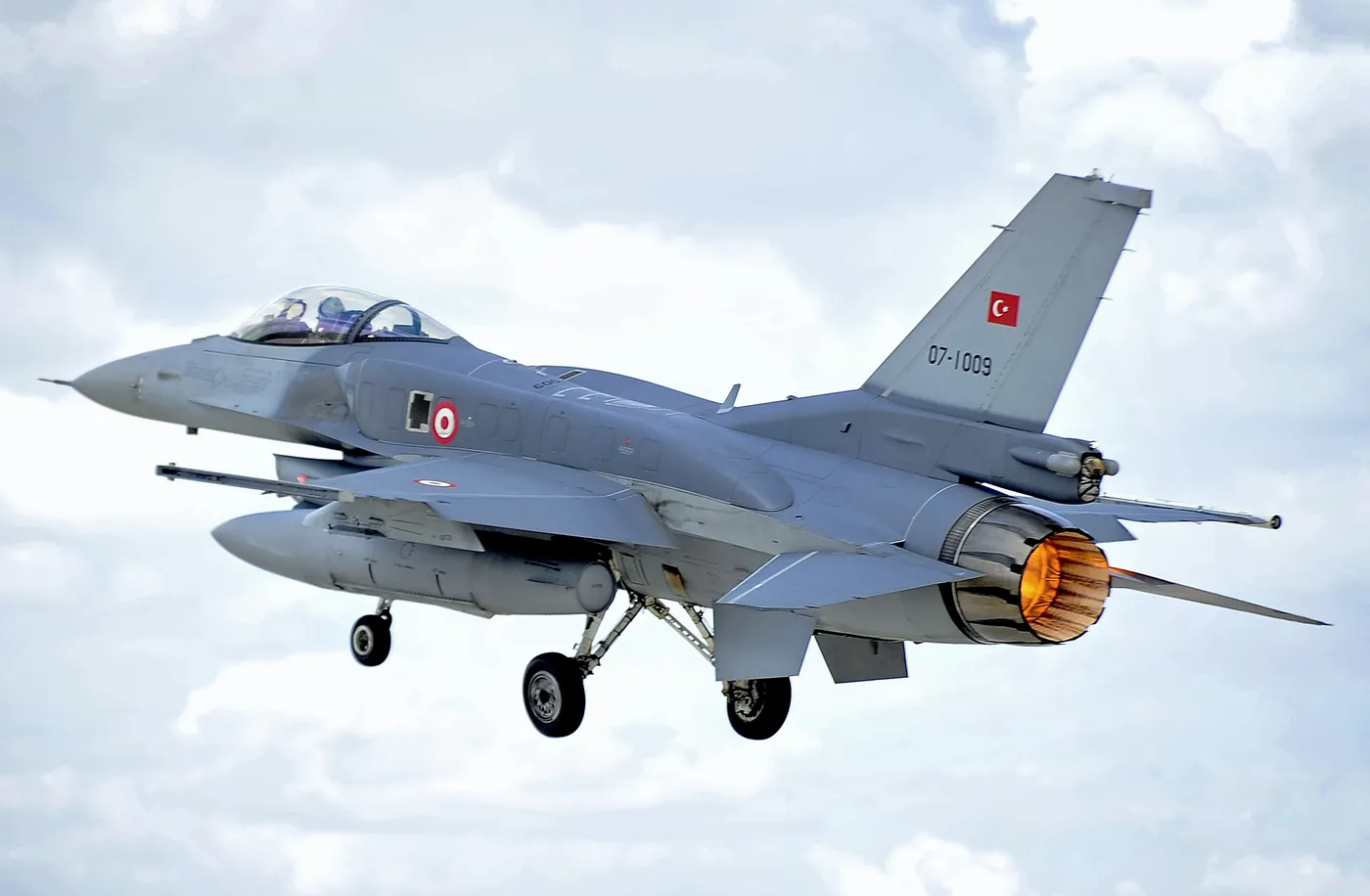
Türkiye ranks eighth worldwide with 1,101 aircraft — and second only to the United States within NATO. The inventory includes 201 fighters and 509 helicopters. What makes Turkish air power more interesting than its ranking is how quickly that inventory has changed character.
The F-16 fleet is being reworked under the Özgür programme with Turkish avionics and Turkish weapons, which means SOM cruise missiles and the Gökdoğan and Bozdoğan air-to-air missiles can be integrated without waiting on foreign software releases. A400Ms handle strategic airlift, KC-135Rs provide tanking, and four E-7T Peace Eagle aircraft supply the airborne early warning picture.
The real differentiator is unmanned. Türkiye operates one of the world’s largest armed UAV fleets, and platforms such as the Bayraktar TB2, Akıncı and Aksungur have rewritten how the air force thinks about persistence and cost per sortie. Because GlobalFirepower does not break unmanned systems out separately, Türkiye’s real air effect sits above where this table places it.
Türkiye operates 127 more aircraft than France, 476 more than the United Kingdom and 532 more than Germany.
| Capability | Total |
|---|---|
| Total aircraft | 1,101 |
| Fighters | 201 |
| Helicopters | 509 |
| Active personnel | 481,000 |
| Defence budget | $51.40 bn |
The next entry feeds a larger inventory on a fifth of that budget.
#7Pakistan
Total aircraft · South Asia
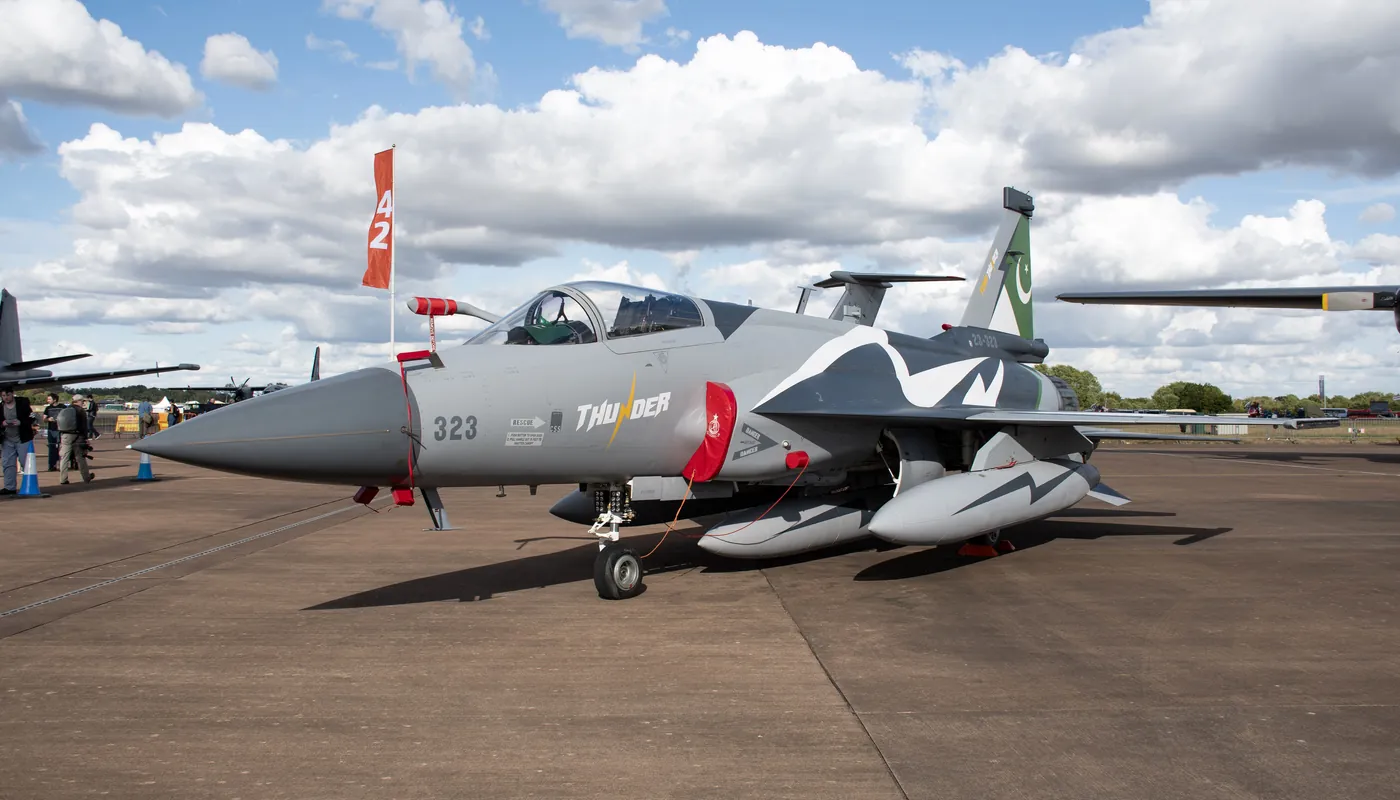
Pakistan is the most striking entry on the list, for one reason: it sustains 1,397 aircraft on a declared defence budget of $9.1 billion. That is less than a fifth of what Türkiye spends, for 296 more airframes.
Co-production is the formula. The JF-17 Thunder, developed with China and assembled largely in Pakistan, freed the air force from Western export controls at a stroke. Alongside it fly F-16s, legacy Mirage III/5s and, more recently, J-10Cs. With 331 fighters, Pakistan actually operates a larger combat fleet than either France or Türkiye.
Doctrine is shaped by a single scenario: offsetting Indian numerical superiority with readiness and situational awareness. Hence the emphasis on airborne early warning — Saab 2000 Erieye and ZDK-03 aircraft — and on integrating ground-based air defence into the same picture. The deepening defence relationship with Beijing will largely determine what the fleet looks like a decade from now.
Pakistan spends about 18 per cent of what Türkiye spends on defence, yet carries 296 more aircraft on strength.
| Capability | Total |
|---|---|
| Total aircraft | 1,397 |
| Fighters | 331 |
| Helicopters | 379 |
| Active personnel | 660,000 |
| Defence budget | $9.10 bn |
Into the top six, where almost every airframe is built domestically.
#6Japan
Total aircraft · East Asia
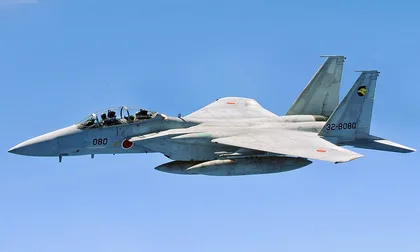
Japan’s 1,429 aircraft are a direct product of geography. An archipelago of thousands of islands can only be defended from the air and the sea, which is why maritime patrol types, airborne early warning platforms and helicopters dominate the inventory. With 583 helicopters, Japan runs one of the largest rotary fleets on earth.
In the fighter force, Japan is one of the few operators of both the F-35A and the F-35B. The F-15J fleet is being upgraded while the indigenous F-2 approaches the end of its service life. Converting the Izumo-class helicopter destroyers to operate F-35Bs gave Japan fixed-wing naval air power for the first time since 1945.
Two threats drive the planning: Chinese activity in the East China Sea and North Korean missile development. Tokyo’s answer for the next generation is GCAP, developed with the United Kingdom and Italy. Mitsubishi, Kawasaki and Subaru give Japan an industrial base that spans airframes, radars and engines.
Japan flies 328 more aircraft than Türkiye with barely half the active personnel — 251,500 against 481,000.
| Capability | Total |
|---|---|
| Total aircraft | 1,429 |
| Fighters | 217 |
| Helicopters | 583 |
| Active personnel | 251,500 |
| Defence budget | $58.00 bn |
The next country packs an even denser fleet into a far smaller space.
#5South Korea
Total aircraft · East Asia
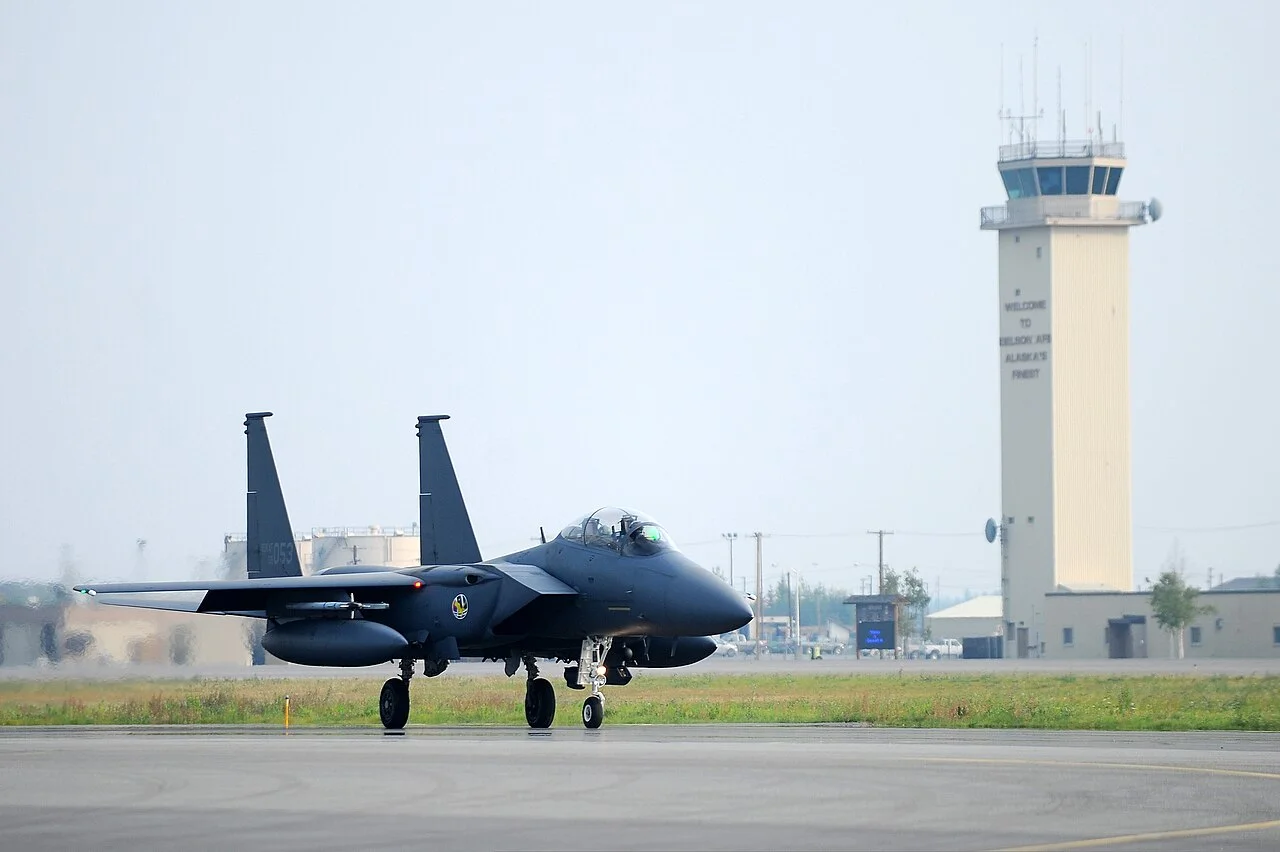
South Korea occupies about an eighth of Türkiye’s land area and operates 1,540 aircraft. The explanation sits 50 kilometres north of Seoul, where the world’s fourth-largest standing army is deployed.
Helicopters account for 827 of that total, the second-largest rotary fleet in Asia. The fighter force combines F-35As, F-15Ks and KF-16s. The decisive development, though, is the KF-21 Boramae entering serial production — putting South Korea in the small group of states that design and build their own combat aircraft.
Korean defence industry has turned into an export powerhouse over the past decade. The FA-50 light combat aircraft has been sold to Poland, Malaysia and the Philippines, and firms such as KAI and Hanwha now compete directly in European tenders. Those exports keep production lines warm and unit costs down for the domestic fleet.
South Korea operates 111 more aircraft and 244 more helicopters than Japan — on a defence budget $13 billion smaller.
| Capability | Total |
|---|---|
| Total aircraft | 1,540 |
| Fighters | 242 |
| Helicopters | 827 |
| Active personnel | 450,000 |
| Defence budget | $44.80 bn |
From the top four onward, every entry is a nuclear power.
#4India
Total aircraft · South Asia
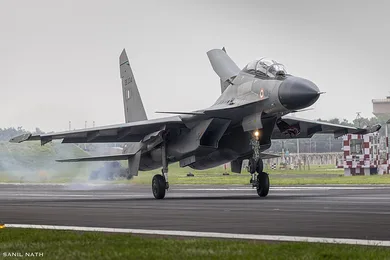
India holds fourth place with 2,183 aircraft, sized against a two-front problem: China along the Himalayan frontier and Pakistan to the west. New Delhi has to be ready on both at once, and that requirement drives everything from fleet size to basing.
With 476 fighters, India runs the third-largest combat fleet in the world after the United States and China. Su-30MKIs form the backbone, Rafales hold the high end and the indigenous Tejas fills the light segment. A large share of the inventory is still Russian in origin, which has turned spare parts supply into a genuine vulnerability.
The Atmanirbhar Bharat self-reliance policy is the response. Tejas Mk1A orders have been expanded, with Mk2 and the AMCA fifth-generation programme behind it. Even so, the Indian Air Force operates below its authorised squadron strength; replacing retired MiG-21 and Jaguar fleets will take years.
India’s 476 fighters outnumber the entire combat fleet of every country ranked fifth to tenth on this list.
| Capability | Total |
|---|---|
| Total aircraft | 2,183 |
| Fighters | 476 |
| Helicopters | 594 |
| Active personnel | 1,431,000 |
| Defence budget | $109.00 bn |
Into the top three — and the next fleet is still growing every year.
#3China
Total aircraft · East Asia
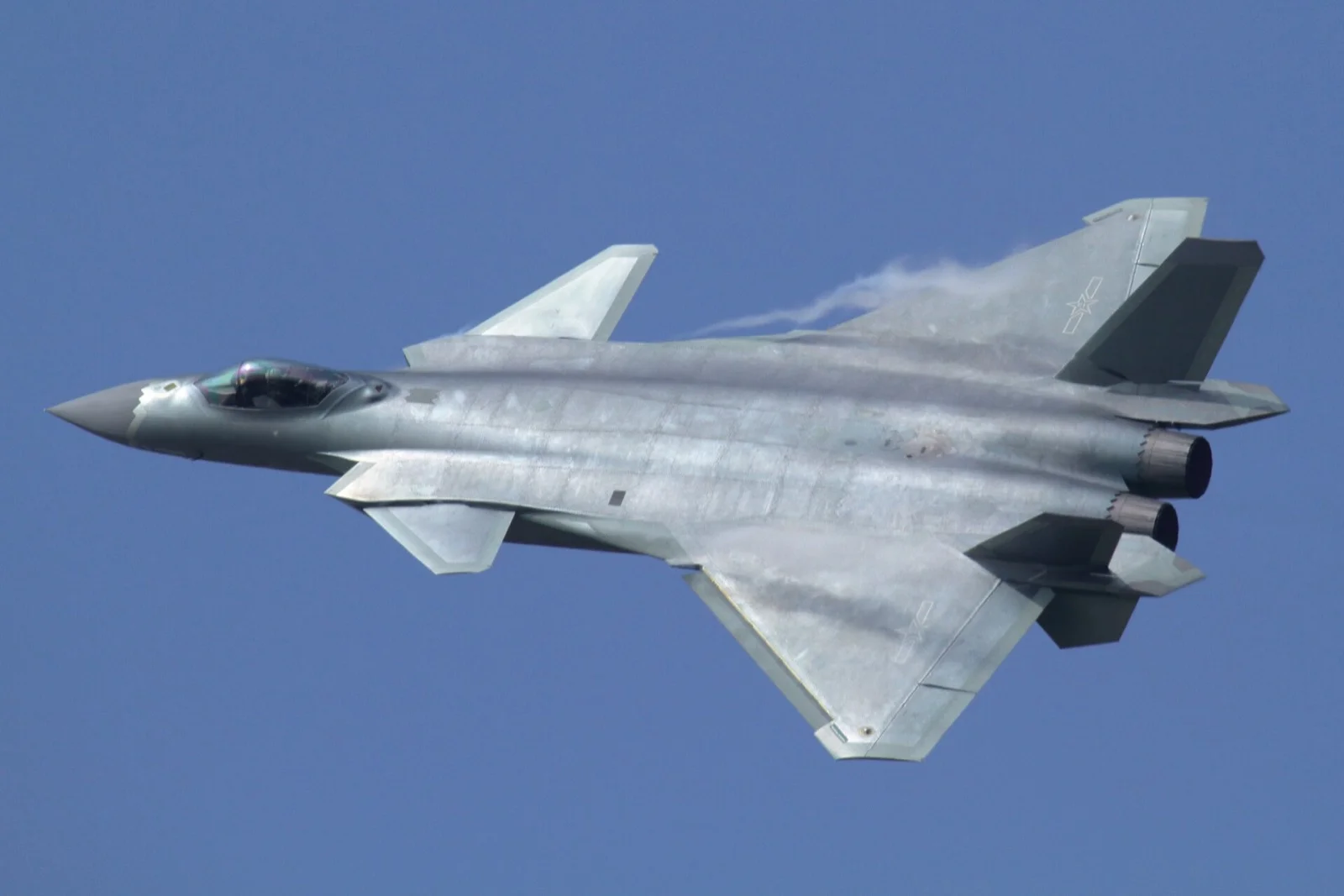
China’s 3,529 aircraft represent the fastest-growing air arm in the world. With 1,443 fighters, the PLA fields the second-largest combat fleet anywhere. The number matters less than what has happened to its composition over fifteen years.
Beijing has steadily retired J-7 and J-8 legacy types and replaced them with J-10Cs, J-16s and the fifth-generation J-20 — the first stealth fighter outside the United States to reach serial production. The Y-20 strategic airlifter and the YY-20 tanker derived from it are giving China, for the first time, the ability to project air power beyond its own periphery.
Naval aviation is expanding just as fast. J-15 regiments are growing alongside the carriers Liaoning, Shandong and Fujian, the last of which carries electromagnetic catapults — technology only one other navy has fielded. The Taiwan Strait, the South China Sea and the Indian Ocean set the direction of travel. Engines remain the weakest link, which is what the WS-10 and WS-15 programmes are meant to fix.
China’s fighter fleet alone (1,443) is larger than the entire aircraft inventory of seven of the other nine countries on this list.
| Capability | Total |
|---|---|
| Total aircraft | 3,529 |
| Fighters | 1,443 |
| Helicopters | 1,007 |
| Active personnel | 2,035,000 |
| Defence budget | $303.00 bn |
Second place belongs to a fleet largely inherited from another era.
#2Russia
Total aircraft · Eurasia
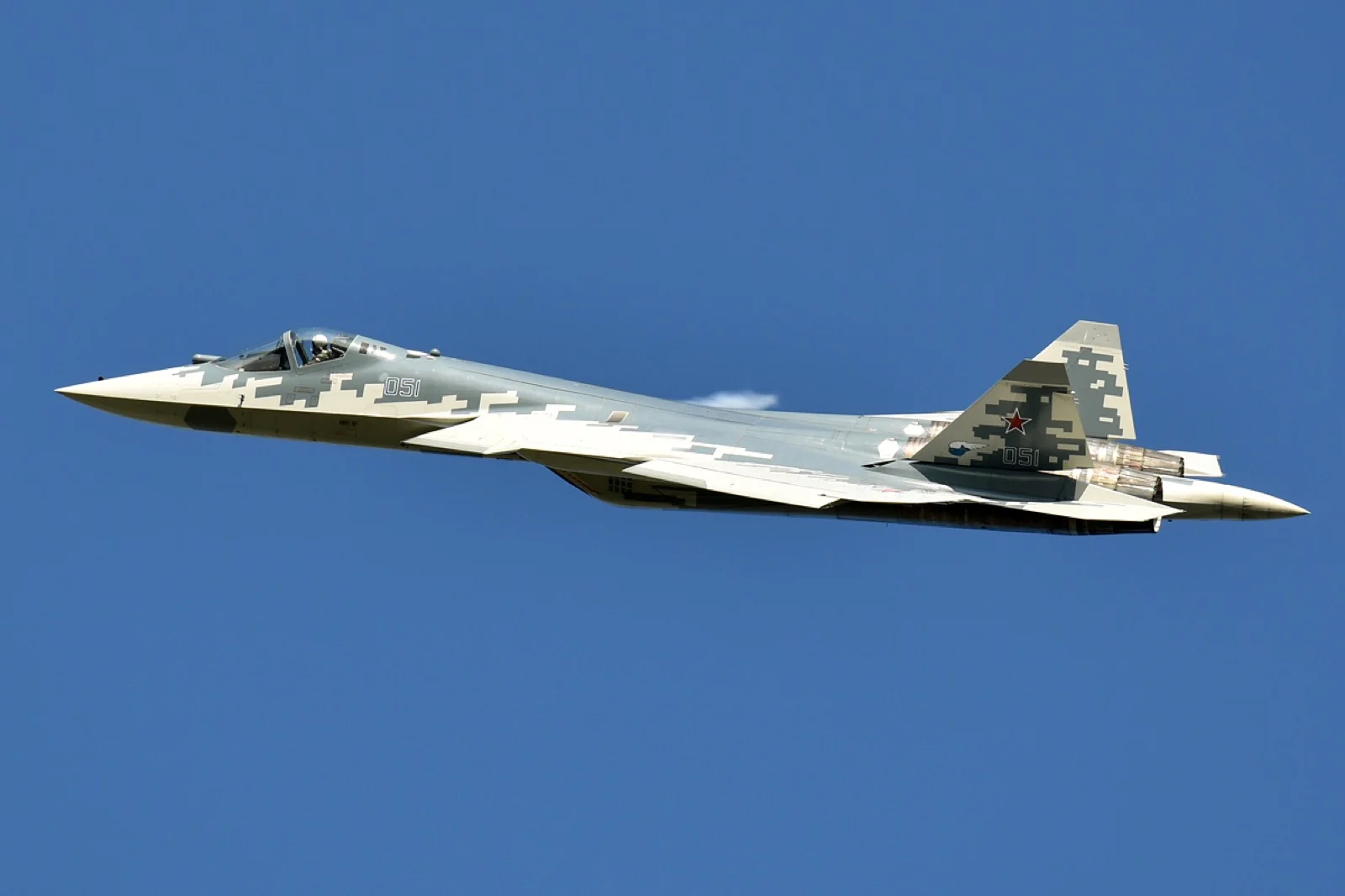
Russia holds second place with 4,237 aircraft, including 861 fighters and 1,643 helicopters. Much of that mass is inherited Soviet industrial capacity. Derivatives of the Su-27 — the Su-30, Su-34 and Su-35 — form the backbone of the combat fleet.
The war in Ukraine tested most assumptions about Russian air power. Despite the size of the inventory, Moscow never established the air superiority many expected in the opening phase; modern ground-based air defences forced aircraft to operate well back from the line of contact. Doctrine shifted accordingly toward long-range cruise missiles and UMPK glide bombs.
The Su-57 programme has not delivered at the promised pace, and the number of airframes in service remains modest. What Russia does retain is a rotary fleet of 1,643 helicopters, a scale of close support capacity no country outside the United States can match. Sanctions pressure on microelectronics supply will be the main constraint on modernisation in the years ahead.
Russia operates 708 more aircraft than China but 582 fewer fighters — the weight of its inventory sits in helicopters and support types.
| Capability | Total |
|---|---|
| Total aircraft | 4,237 |
| Fighters | 861 |
| Helicopters | 1,643 |
| Active personnel | 1,320,000 |
| Defence budget | $212.64 bn |
And at the top, a fleet larger than the rest of this list combined.
#1United States
Total aircraft · North America
The United States operates 13,032 military aircraft — more than the other nine countries on this list put together. With 1,791 fighters and 5,913 helicopters, it leads every sub-category of air power by a wide margin.
The reason is structural: America runs four separate air arms. The Air Force, Marine Corps aviation, Naval aviation and Army aviation each field their own fleets, and the Army’s helicopter inventory alone exceeds the total aircraft strength of most countries. Eleven nuclear-powered carriers act as floating airfields, each capable of embarking roughly 70 aircraft.
Technologically, the United States is the only country operating two fifth-generation programmes simultaneously in the F-22 and F-35. The B-21 Raider is in flight test, while the NGAD effort points toward a crewed aircraft working alongside uncrewed collaborative platforms. KC-46 tankers and a global basing network are what turn this inventory into worldwide reach.
The counterweight is age and cost. B-52s have been flying for more than sixty years, and large parts of the F-15 and F-16 fleets are past mid-life. A significant share of the $831.5 billion defence budget goes simply to keeping this inventory airworthy.
The US helicopter fleet alone (5,913) is more than double the combined rotary strength of Russia and China (2,650).
| Capability | Total |
|---|---|
| Total aircraft | 13,032 |
| Fighters | 1,791 |
| Helicopters | 5,913 |
| Active personnel | 1,333,030 |
| Defence budget | $831.50 bn |
What the 2026 air power table actually shows
The first conclusion is that air power remains unipolar. The American inventory is more than three times the size of second-placed Russia’s. But that lead is getting more expensive to hold: average airframe age keeps climbing, and recapitalisation programmes absorb an ever larger share of the budget.
The second is that the centre of gravity has moved to Asia. Six of the top ten are Asian air arms — China, India, South Korea, Japan, Pakistan and Türkiye. What they share is not spending power but industrial ambition: KF-21, Tejas, JF-17 and KAAN are the same logic expressed in four different countries.
The third is Europe’s slide. France is the only European entry; Germany (569) and the United Kingdom (625) are nowhere near the cut. European budgets are rising fast, but fleets are not growing at the same rate, because a budget can be increased in a year and a production line cannot. FCAS and GCAP are bets on closing that gap by the 2040s.
The fourth is that headcount is a blunt instrument. Egypt flies more aircraft than France with far weaker interoperability. Pakistan flies more than Türkiye with an older fleet mix. Availability rates, pilot flying hours, munitions stockpiles, tanker capacity and datalink architecture decide outcomes at least as much as the number of airframes.
The fifth conclusion, and the one most likely to rewrite this table, is unmanned. Armed UAVs, collaborative combat aircraft and loitering munitions generate air effect that a fleet count simply does not capture. Türkiye is among the leaders here, with the Bayraktar TB2 and Akıncı holding strong positions both in service and on the export market. As KAAN, KIZILELMA and HÜRJET reach production, Türkiye’s place on this list will hold while the quality of what sits behind the number rises sharply. The question for the next decade is not who owns the most aircraft, but who can fly crewed and uncrewed systems inside one architecture.
Comparison table: the ten largest air inventories (2026)
| # | Country | Total aircraft | Fighters | Helicopters | Active personnel | Defence budget |
|---|---|---|---|---|---|---|
| 1 | United States | 13,032 | 1,791 | 5,913 | 1,333,030 | $831.50 bn |
| 2 | Russia | 4,237 | 861 | 1,643 | 1,320,000 | $212.64 bn |
| 3 | China | 3,529 | 1,443 | 1,007 | 2,035,000 | $303.00 bn |
| 4 | India | 2,183 | 476 | 594 | 1,431,000 | $109.00 bn |
| 5 | South Korea | 1,540 | 242 | 827 | 450,000 | $44.80 bn |
| 6 | Japan | 1,429 | 217 | 583 | 251,500 | $58.00 bn |
| 7 | Pakistan | 1,397 | 331 | 379 | 660,000 | $9.10 bn |
| 8 | Türkiye | 1,101 | 201 | 509 | 481,000 | $51.40 bn |
| 9 | Egypt | 1,088 | 242 | 348 | 438,500 | $5.19 bn |
| 10 | France | 974 | 223 | 452 | 264,000 | $67.23 bn |
A new ranking tomorrow
Coming next: Europe’s largest defence budgets, Asia’s biggest helicopter fleets and Africa’s largest standing armies.
Frequently Asked Questions
Which country has the largest air inventory in the world?
The United States, with 13,032 military aircraft in 2026 — more than the other nine countries in the top ten combined.
Where does Türkiye rank by total aircraft?
Eighth globally with 1,101 aircraft, and second within NATO behind the United States.
What does total aircraft inventory include?
Every military aviation platform on strength: fighters, attack aircraft, transports, tankers, trainers, maritime patrol types and helicopters, including army and navy aviation.
Does a larger fleet always mean a stronger air force?
No. Availability rates, airframe age, pilot flying hours, munitions stocks, tanker capacity and datalink architecture matter as much as headcount. Egypt flies more aircraft than France, but the composition tells a different story.
Are unmanned aircraft counted here?
GlobalFirepower’s total aircraft figure does not break unmanned systems out as a separate category, so countries with large armed UAV fleets generate more air effect than this ranking alone suggests.
Sources
- GlobalFirepower 2026 total aircraft strength ranking
- NATO air force structure reports
- IISS The Military Balance
- SIPRI Arms Transfers Database
- National defence ministry and air force statements
- Source: https://www.globalfirepower.com/