




GCAP Sixth-Generation Fighter Advances With $6.1 Billion Engineering Contract

The GCAP sixth-generation fighter program run by the United Kingdom, Italy and Japan has moved into its engineering phase under a £4.6 billion ($6.14 billion) contract.
- The contract was signed on 3 July 2026 and is worth £4.6 billion ($6.14 billion).
- The program is run jointly by the United Kingdom, Italy and Japan.
- The prime contractor is Edgewing, an equal joint venture of BAE Systems, Leonardo and JAIEC.
- The contract funds the concept and detailed engineering phase before prototype manufacture.
- The aircraft is targeted to enter service in 2035.
A contract to fund the engineering phase
The Global Combat Air Programme (GCAP) has moved to its next stage under a £4.6 billion (about $6.14 billion) contract signed on 3 July. Expected to run for around 18 months, through early 2028, the deal covers completing the concept definition, freezing the aircraft’s principal configuration, validating the structural architecture and integrating the propulsion system.
Awarded through the trilateral GCAP agency, the contract went to Edgewing, the joint venture in which the UK’s BAE Systems, Italy’s Leonardo and Japan’s JAIEC each hold 33.3 percent. Avionics and sensors will be handled by the G2E consortium, while propulsion is being developed by a team of Rolls-Royce, Avio Aero and IHI.
Design and timeline
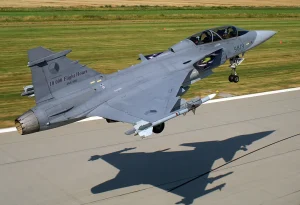
GCAP is being designed as a sixth-generation combat air system. According to disclosed details, the aircraft will be three to four meters longer than the Eurofighter Typhoon, with a tailless delta-wing configuration and increased electrical power generation for advanced sensors and AI systems. The platform is intended to act as a command-and-control node within a wider combat air system.
The targeted in-service date is 2035. The UK has also announced £8.6 billion ($11.4 billion) over four years for the program under its Defence Investment Plan. Japan’s participation is seen as a notable departure from its traditional stance on defense-industrial cooperation.
Why It Matters
GCAP shows how the global race for fifth- and sixth-generation fighters is accelerating alongside programs such as Turkey’s KAAN. Three major industrial nations sharing cost and technology risk offers a reference point for how national aircraft programs approach international partnership and export.
Japan joining European partners on a sixth-generation fighter also signals the growing overlap between Asia-Pacific and European defense industries, framing the competitive environment in which future combat aircraft programs will develop.
Frequently Asked Questions
Which countries run GCAP?
How much is the contract worth?
Who is the prime contractor?
When will the aircraft enter service?
Sources
- Army Recognition — GCAP moves into full engineering phase after $6.14 billion contract
- Breaking Defense — European next-gen GCAP fighter program pushes ahead with $6.1 billion contract
- Defense News — Multibillion-dollar contract secures ‘major step forward’ for GCAP