Spain and Poland Commit €5.4 Billion to a Joint A330 MRTT Tanker Buy

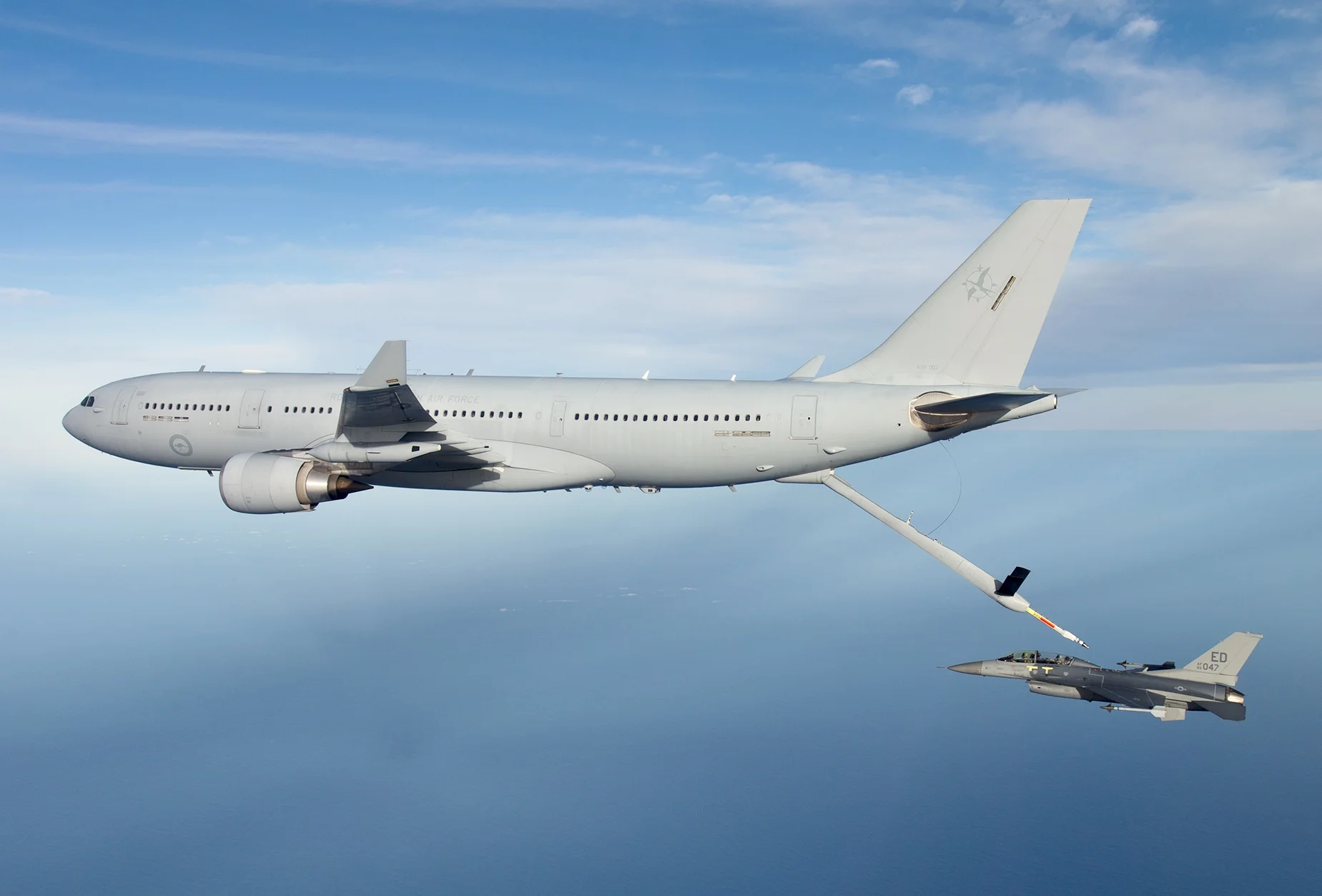
Spain’s Council of Ministers has approved a seven-year framework agreement for the joint acquisition of at least seven Airbus A330 Multi Role Tanker Transport aircraft together with Poland. The decision, taken on 25 August 2026, carries an estimated value of €5.4 billion — about $6.3 billion — covering both the aircraft and the logistics support needed to bring them into service.
How the fleet splits
Three aircraft are earmarked for the Spanish Air and Space Force and four for the Polish Air Force, with Polish deliveries planned by 2030. Poland joins through an addendum to the Spanish framework and will finance its share under the European Union’s Security Action for Europe instrument. Airbus has said negotiations towards a joint contract will begin shortly; the framework is a budget authorisation rather than a firm order.
The logic of buying together
Tankers are expensive and bought in small numbers, which is exactly the combination that punishes a solo buyer. A country ordering four aircraft on its own pays full freight for production slots, training, simulators and through-life support. Merging two orders into one contract spreads those fixed costs and improves the buyer’s position in the delivery queue — a live concern given how long the A330 MRTT backlog has grown.
Europe has used pooling before. The Multinational MRTT Fleet, led by the Netherlands, operates a shared fleet under NATO arrangements. The Spanish-Polish deal takes a different route: the aircraft go into national inventories and the partnership stops at procurement.
Europe’s tanker gap
Air-to-air refuelling remains one of the capabilities in which European air forces depend most heavily on the United States. The 2011 Libya campaign made the shortfall impossible to ignore, and the European Defence Agency has listed it as a priority gap ever since.
The A330 MRTT has become Europe’s default answer. It carries its fuel in existing wing and fuselage tanks rather than added cells, leaving the cabin free, so a single airframe can refuel fighters while moving passengers and cargo on the same sortie. A boom under the tail serves US-pattern receivers while wing pods with hose-and-drogue units serve European and naval types — useful when one tanker has to support a coalition package.
For Poland, the purchase marks a shift in emphasis. After years of large-volume orders in land systems and air defence, Warsaw is now buying the combat support that long-range air operations require and that has so far had to be borrowed from allies.
What still has to happen
Approval of the framework does not place an order. Negotiations with Airbus must conclude, the bilateral addendum must be signed, and Polish financing under SAFE must be finalised. Each of those steps can move the timeline.
Sources
- Spanish Council of Ministers decision, 25 August 2026
- Airbus Defence and Space statements