Airbus Flies Eurofighter-Nosed A320 to Test Spain’s Future Fighter Radar

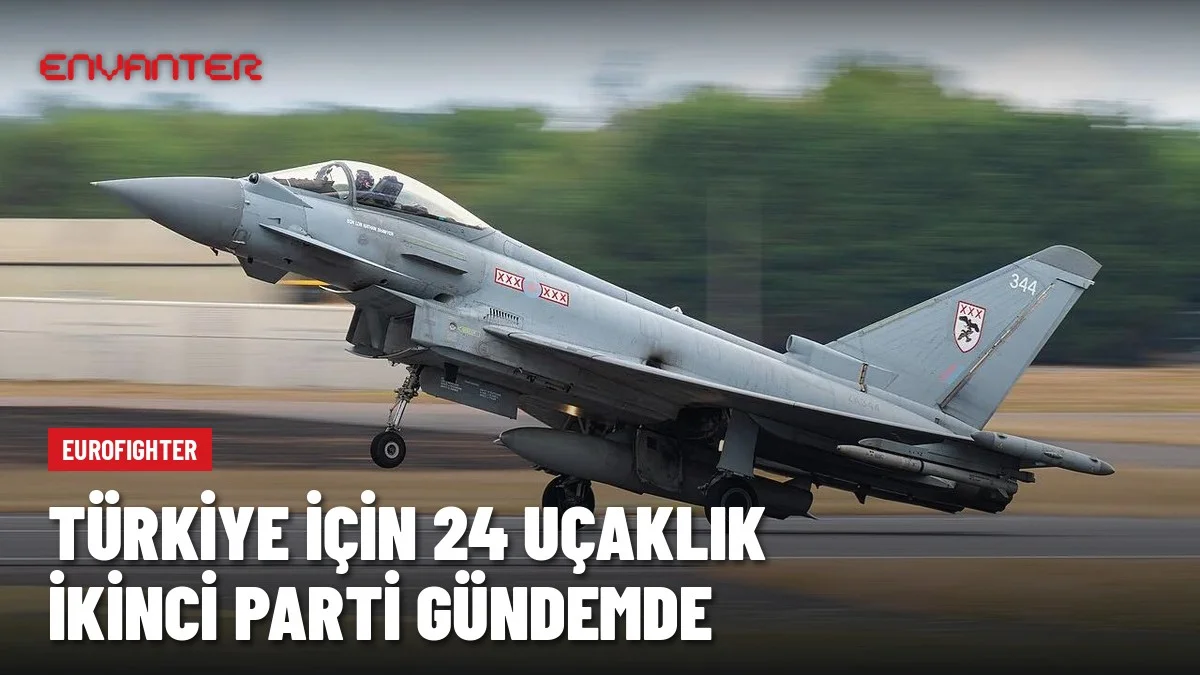
Airbus has put into service an A320 testbed fitted with a Eurofighter nose cone to trial the next-generation radar being developed for the future Eurofighter fleets of Spain and Germany. The aircraft is based at Airbus’s facility in Manching, Germany, where it will fly the radar’s development campaign.
According to Spanish defense outlet Infodefensa, the platform is the A320 ATRA (Advanced Technology Research Aircraft), owned by the German Aerospace Center (DLR). Airbus reinforced the aircraft’s forward fuselage to carry the Eurofighter radome, ran hundreds of meters of data cabling, and installed liquid and air cooling systems to keep the radar at a suitable operating temperature during flight trials. Cabin workstations let engineers monitor sensor data in real time, including the view the pilot would see and activity below the nose.
The system under test is the Eurofighter Common Radar System Mk1, an active electronically scanned array (AESA) radar also referred to as E-Scan. The program supports Germany’s Quadriga and Tranche 5 projects as well as Spain’s Halcón program; Airbus is also studying whether the radar could be retrofitted to Eurofighters already in service.
Under the development timeline, the modified aircraft first flew in early 2025 without the active radar fitted, to validate the basic airworthiness of the structural changes. Ground testing of the radar system followed. Airbus says recent entry-into-service flights have confirmed that the aircraft and radar perform adequately in the air, and the company now considers the testbed validated and operational for continued E-Scan Mk1 development.
Sebastian Ritz, head of the A320 testbed program at Airbus Defence and Space, said the data gathered will help accelerate the radar’s maturity. Erik Lorch, the E-Scan Mk1 program lead, said the radar will improve the aircraft’s air-to-air and air-to-ground capabilities.
The report gives no cost figures, radar quantities or delivery dates, but it ties the program directly to the modernization of Spain’s Air and Space Force (Ejército del Aire y del Espacio) fighter fleet. Equipping aircraft under the Quadriga, Tranche 5 and Halcón programs with the new radar is currently the stated priority.
Eurofighter’s current CAPTOR-E radar already uses AESA technology, but it sits on a mechanical repositioner rather than a fixed array, a design that widens the scan angle at the cost of added mechanical complexity. Presenting E-Scan Mk1 as the next step in Eurofighter’s radar development line reflects a broader effort by the European partner nations to extend the jet’s service life and keep it competitive against rival fifth-generation platforms.
Basing the testbed in Germany also reflects how radar development work is divided within Airbus’s multinational Eurofighter consortium. Spain’s Halcón program drawing directly on these test flights suggests Madrid is moving in step with Berlin on the timeline for upgrading its own fleet.
Sources
- Infodefensa, “El sorprendente A320 con el morro de un Eurofighter: Airbus pone en vuelo un avión de pruebas para testar el nuevo radar de los futuros cazas españoles,” Ángel Luis de Santos, November 10, 2026 — original source for technical details and official statements.