Finland’s First F-35As Land at Rovaniemi: A New Chapter for NATO’s Arctic Flank

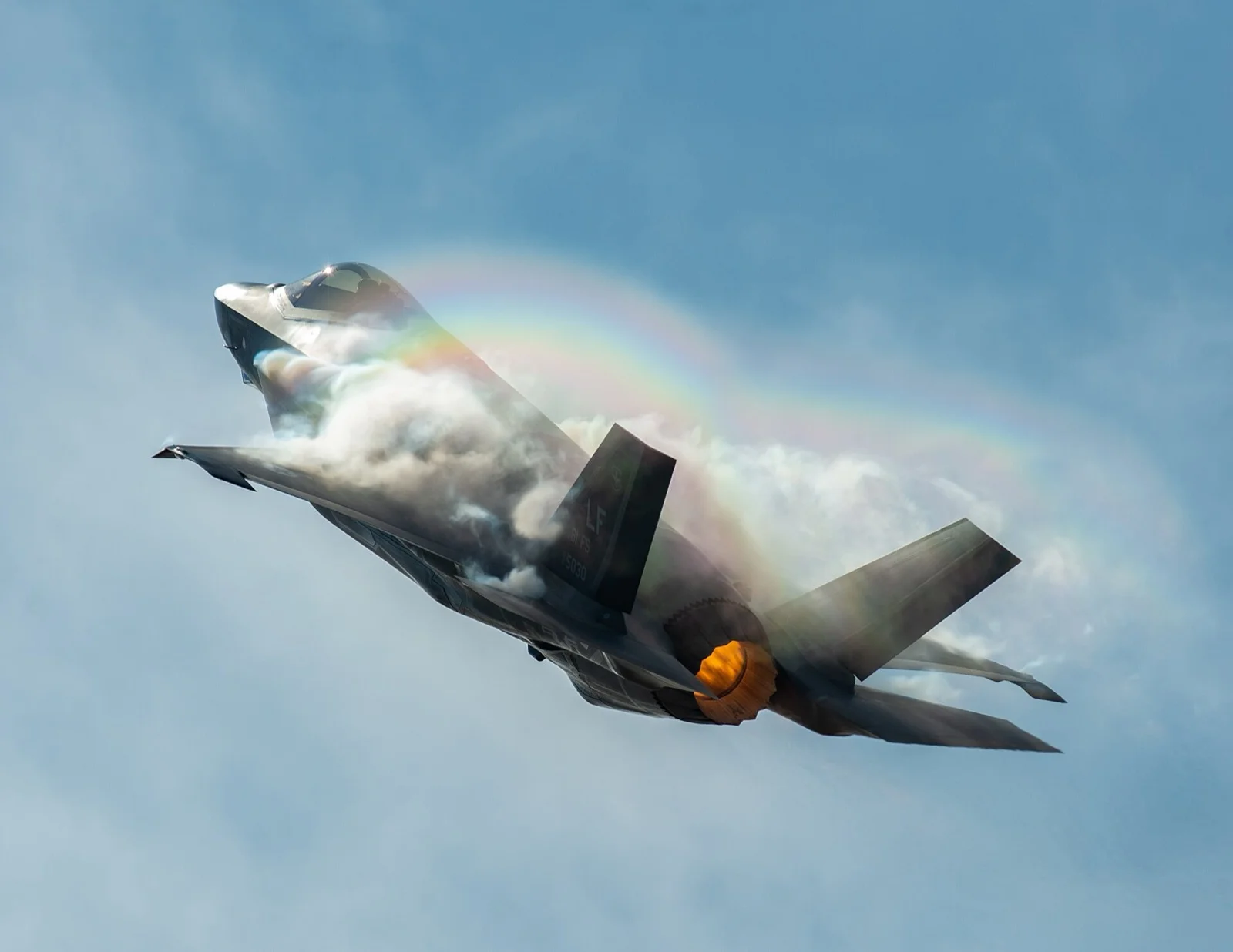
Finland’s first two F-35A Lightning II fighters touched down at Rovaniemi, home of the Lapland Air Wing inside the Arctic Circle, on September 18. The jets, tail-numbered JF-510 and JF-512, flew from Lockheed Martin’s Fort Worth, Texas plant via a refuelling stop at Lajes Field in the Azores.
A formal arrival ceremony followed on October 1, attended by President Alexander Stubb along with the outgoing and incoming commanders of the Lapland Air Wing. A third aircraft, JF-511, was delayed at Lajes after a technical issue during the transatlantic ferry flight and was expected to follow shortly after.
First of 64 Under the HX Program
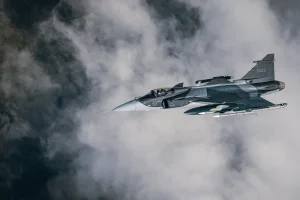
Finland selected the F-35A in 2021 under its HX competition, beating the Eurofighter Typhoon, Saab Gripen E, Dassault Rafale and Boeing Super Hornet to replace its ageing F/A-18 Hornet fleet. The full package of 64 aircraft, weapons, simulators and infrastructure was valued at roughly €9.4 billion.
Deliveries are scheduled to run through 2030. The Lapland Air Wing is expected to become an all-F-35 unit by early 2028, with full operational capability targeted for late 2030; Hornets and F-35As will fly side by side in the interim. Finnish pilots and maintainers are still training in the United States and will rotate home progressively as new jets roll off the line.
Why the Arctic Flank Matters
Rovaniemi sits close to the northern end of Finland’s roughly 1,300-kilometre border with Russia. Finland’s 2023 NATO accession — ratified by the Turkish parliament among the last allies to do so, in March that year — extended the alliance’s northern flank from the Baltic to the Arctic coastline. The F-35A’s low radar cross-section, sensor fusion, electronic-warfare suite and data links give Finland a step-change in air-defence and ISR capability over the Hornet.
Finland’s fleet joins F-35As already fielded by Norway and Denmark, forming a shared Nordic air-defence architecture that gives NATO’s northern air-policing and deterrence missions a tighter degree of coordination. The Finnish rollout also comes as Poland continues receiving its 32 F-35As and Turkey keeps flight-testing its own fifth-generation KAAN, underlining how fifth-generation inventories are expanding across the alliance.
Weapons and Local Industry
The fleet is expected to carry AIM-120 AMRAAM and AIM-9X air-to-air missiles alongside the air-launched Joint Strike Missile, a derivative of Norway’s NSM designed to fit the F-35’s internal weapons bay and strike both naval and land targets. Finnish defence firm Patria is in talks with Lockheed Martin over a regional maintenance role, part of Helsinki’s push to fold its own industrial base into the F-35 support chain.
Finland has steadily raised defence spending since applying for NATO membership in 2022, with the 2026 budget keeping outlays above 2% of GDP; the F-35A program is one of its largest single line items. Finnish units already had a dry run with the type: in June 2026, US F-35As from the 493rd Fighter Squadron operated out of Pirkkala air base during exercise Ramstein Flag 26 alongside Finnish forces, easing the procedural handover now under way.
Sources
– The Aviationist, “Finland’s F-35s Home,” September 19, 2026, https://theaviationist.com/2026/09/19/finlands-f-35s-home/ — used for delivery date, tail numbers and ferry route.
– Army Recognition, “Finland Builds Arctic Air Combat Capability With First Home-Based U.S.-Made F-35A Fighters,” October 3, 2026, armyrecognition.com — used for strategic framing and fleet transition timeline.
– Janes, “First F-35As arrive in Finland,” janes.com — used to confirm ceremony date and attendees.