Ukraine Says Russia Is Building ‘Rassvet’ Satellite Network for Drones

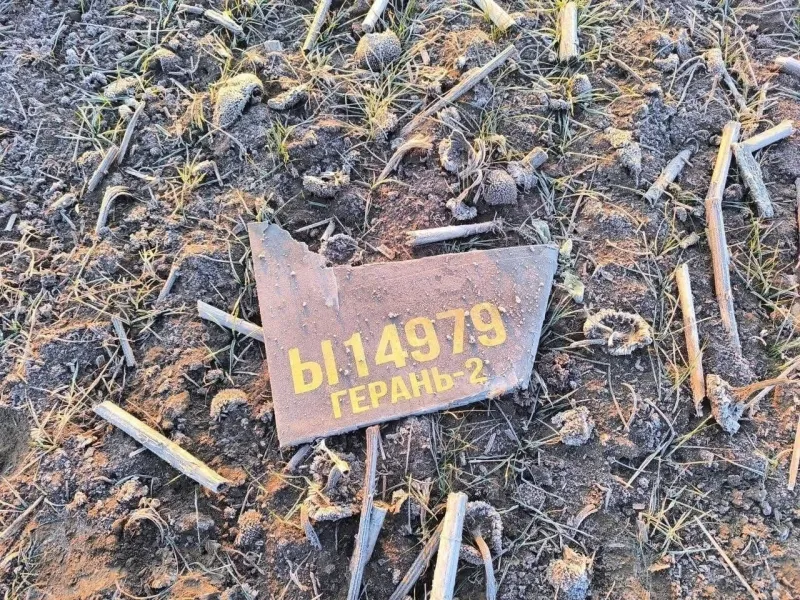
Russia is assembling a Starlink-style satellite constellation called Rassvet to give its attack drones real-time connectivity, according to Ukrainian military intelligence. The satellite figures cannot be independently verified.
At a Glance
- Claim made by Major General Vadym Skibitskyi, deputy head of Ukraine’s GUR
- 16 satellites in orbit as of March 2026, according to the GUR
- Stated targets: 292 satellites by 2027 and 924 by 2035
- System currently works only intermittently during satellite passes
- Program supports turbojet-powered Geran-4 and Geran-5 drones and swarm mesh networking
- No independent verification; Russia’s Defense Ministry has not commented
What Ukrainian intelligence claims
Russia is building its own satellite constellation, named Rassvet, to provide real-time connectivity to attack drones, Major General Vadym Skibitskyi, deputy head of Ukraine’s military intelligence directorate (GUR), has warned, according to a defence-industry.eu report of August 10, 2026. The project is described as a Starlink-style network serving Russia’s strike-capability modernization. The figures rest solely on the GUR’s account: they cannot be independently verified, and Russia’s Defense Ministry has made no statement on the program.
According to the GUR, 16 satellites were in orbit as of March 2026, with stated targets of 292 satellites by 2027 and 924 by 2035. Skibitskyi described the current limitation plainly: “For now, the system can only operate intermittently, while a satellite is passing over our territory.” Until the constellation is filled out, that operational constraint remains.
Why satellite links change drone warfare
Low-latency satellite connectivity enables real-time piloting of drones over long distances and instant sharing of targeting data between dispersed units. Per the GUR, the program is designed to support Russia’s turbojet-powered Geran-4 and Geran-5 drones, including mesh networking for swarm operations. A completed constellation would move attack drones beyond pre-programmed routes toward in-flight retasking.
Ukraine is discussing countermeasures, though no details have been disclosed. Given the stated timeline, meaningful coverage would require a launch cadence sustained over years, which limits the program’s near-term battlefield effect even if the GUR’s account is accurate.
The global drone-satcom race
The claim fits a wider pattern: satellite connectivity has become a defining layer of unmanned warfare, from commercial constellations used in Ukraine to national military satcom programs. States operating long-range drones increasingly treat access to the space segment as a core enabler rather than an accessory.
Turkey illustrates the same trajectory on its own infrastructure, using TURKSAT satellites for military communications and integrating SATCOM on platforms such as the AKINCI and Bayraktar TB3 for beyond-line-of-sight control. The Rassvet claim, if borne out, would place Russia’s one-way attack drones on that same technological axis.
Why It Matters
If accurate, the program signals a shift from pre-programmed one-way attack drones toward in-flight retaskable systems with swarm coordination, complicating air defense planning across Europe. The essential caveat stands: the numbers come from a single intelligence source, with no independent verification and no comment from Moscow.
For observers of unmanned warfare, the claim underscores that the space segment is becoming the decisive layer of drone operations, a race in which commercial constellations, national programs such as Turkey’s TURKSAT-based drone integration, and now allegedly Rassvet are all moving in the same direction.
Frequently Asked Questions
What is Rassvet?
According to Ukraine’s GUR, it is a Starlink-style satellite constellation Russia is building to give attack drones real-time connectivity. Russia’s Defense Ministry has not commented on the program.
How many satellites are in orbit?
The GUR says 16 as of March 2026, with targets of 292 by 2027 and 924 by 2035. These figures cannot be independently verified.
Is the system operational now?
Per Skibitskyi, it works only intermittently while a satellite passes over Ukrainian territory; the constraint persists until the constellation is completed.
Sources
- defence-industry.eu — Rassvet program, satellite figures and Skibitskyi statements; August 10, 2026