US Clears Turkey’s Transfer of M270 Launchers, ATACMS to Ukraine

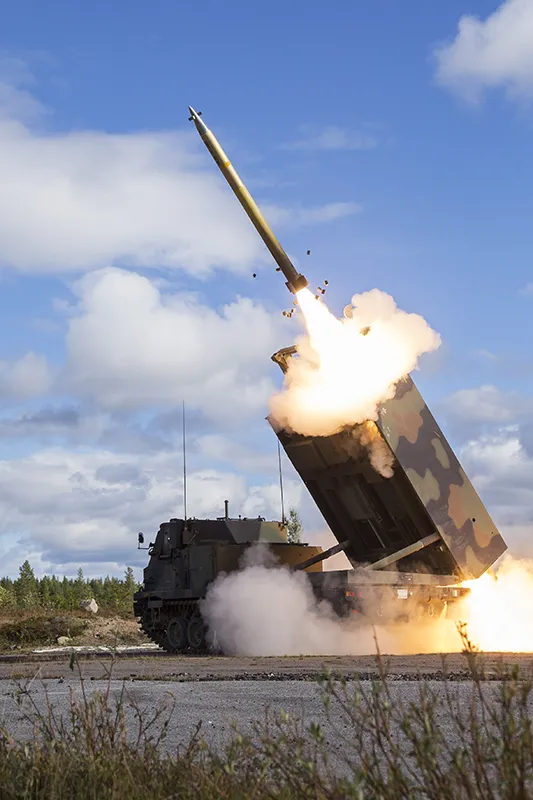
Washington has approved Turkey’s transfer of 12 M270 tracked launchers and 70 M39 ATACMS missiles from its inventory to Ukraine. The congressional notification was filed on August 3.
At a Glance
- 12 M270 tracked multiple launch rocket systems included in the package
- 70 M39 ATACMS missiles with a range of roughly 165 km
- 2,524 unguided M26 227 mm rockets and 47,000 M509A1 203 mm artillery projectiles
- State Department notified Congress on August 3, 2026; 15-day review period underway
- MKE, ASFAT and ARCA Savunma handle the Turkish side of the deal
- First heavy-weapons transfer of this scale announced by Ankara for Ukraine
What the package contains
Turkey has secured US third-party transfer approval to hand over American-origin systems held in its inventory to Ukraine. According to The Defense Post on August 10, 2026, the package comprises 12 M270 tracked multiple launch rocket systems, 70 M39 ATACMS tactical ballistic missiles, 2,524 unguided M26 227 mm rockets and 47,000 M509A1 203 mm howitzer projectiles.
The US State Department sent the required notification to Congress on August 3, 2026. Under US arms export law, lawmakers have 15 calendar days to block the transaction through a joint resolution; absent such a move, the transfer proceeds. Defense Express, in its weekly review published August 9, corroborated that the transfer is in motion.
Systems and their relevance
The M270 can fire both 227 mm rockets and the ATACMS family. The M39 included in the package is the earliest operational ATACMS variant, with a range of about 165 kilometers, while the unguided M26 reaches roughly 32 kilometers. The 203 mm M509A1 rounds are a legacy stock item for heavy howitzers.
For Ukraine, the significance lies in ready-to-use launch platforms and a fresh batch of ATACMS at a time when global stocks of the missile are limited. Kyiv has fielded M270 variants supplied by European partners since 2022, so integration and crew training requirements are minimal.
Who is involved and why now
On the Turkish side, MKE, ASFAT and ARCA Savunma are managing the divestment. Bulgaria’s VTIC International and US contractors Pansophico and Patriot Defense Group are also part of the arrangement covering logistics and delivery to the end user.
Turkey has operated the M270 since the 1990s but has shifted its long-range fires to domestic systems, including Roketsan’s TAYFUN and KHAN ballistic missiles and the TRLG-230 guided rocket. Divesting legacy US-origin systems frees funding for modernization while adding firepower to Ukraine’s arsenal.
Why It Matters
The deal marks the most concrete heavy-weapons transfer Ankara has announced for Ukraine since the start of the war, moving beyond drones and armored vehicles into ballistic missiles and rocket artillery. The use of the formal US re-transfer mechanism signals coordination between Ankara and Washington rather than a unilateral step.
It also illustrates a broader pattern in Turkish procurement: legacy American systems are being retired as the domestic TAYFUN-KHAN-TRLG-230 line matures, with divestment proceeds channeled back into modernization programs.
Frequently Asked Questions
What exactly is Turkey transferring to Ukraine?
Twelve M270 tracked launchers, 70 M39 ATACMS missiles, 2,524 M26 227 mm unguided rockets and 47,000 M509A1 203 mm artillery projectiles.
Why does the transfer need US approval?
The systems are US-origin, so any re-transfer to a third country requires State Department approval and congressional notification, filed on August 3, 2026, with a 15-day review window.
What is the range of the M39 ATACMS?
The M39, the first operational ATACMS variant, has a range of roughly 165 kilometers; the M26 rocket reaches about 32 kilometers.
Sources
- The Defense Post — Package contents, quantities, congressional notification and contractors; August 10, 2026
- Defense Express — Weekly review corroborating the transfer; August 9, 2026