What Is General Atomics? Company Profile of the MQ-9 Reaper Maker
- 10 Oct 2026 10:30
- Updated: 10 Oct 2026

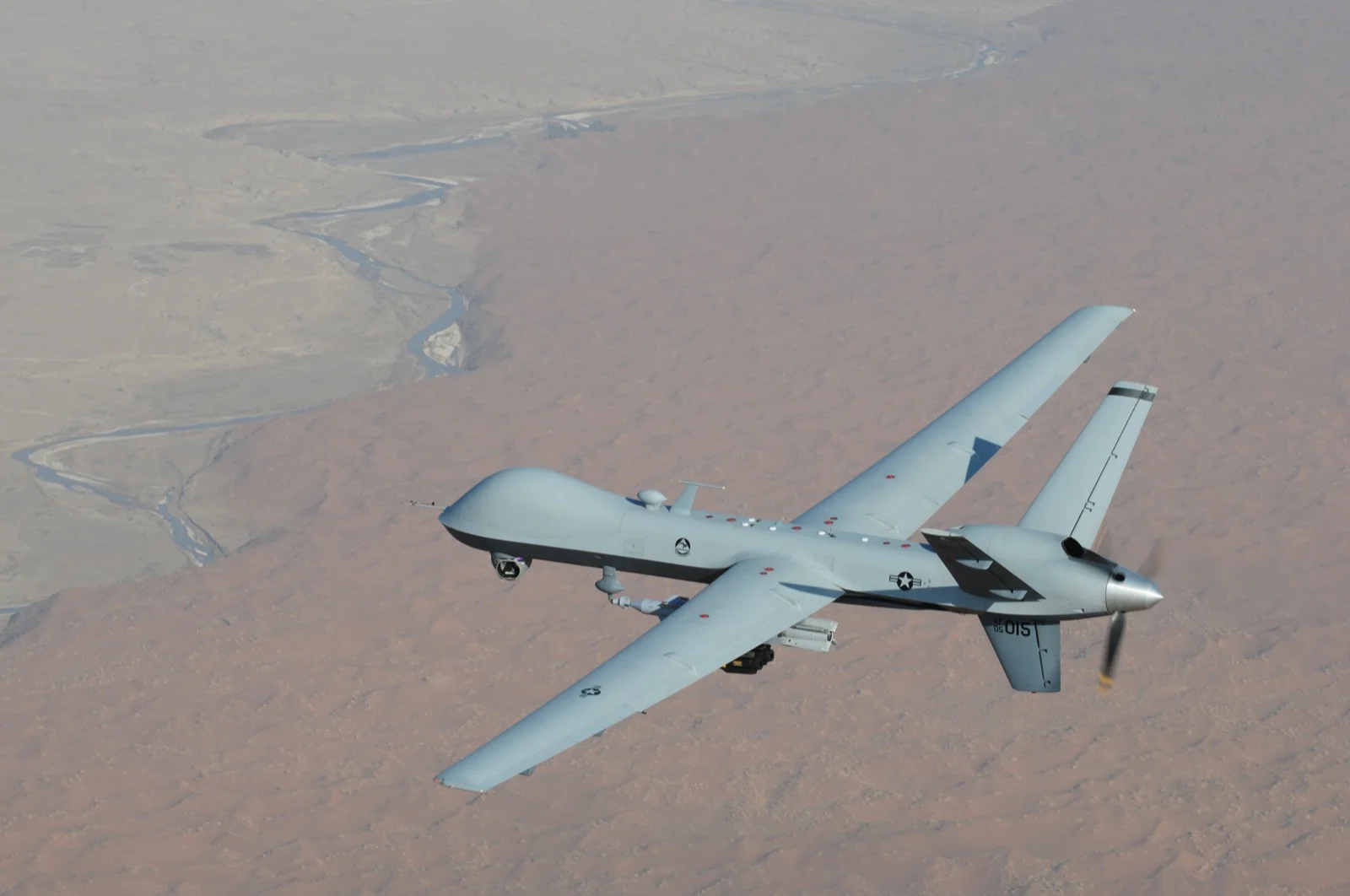
General Atomics is a privately held defense and energy technology group headquartered in San Diego, California. Founded in 1955 as a nuclear research company, it is best known today for its affiliate General Atomics Aeronautical Systems (GA-ASI), maker of the MQ-9 Reaper and MQ-9B SkyGuardian unmanned aircraft. The group also builds the electromagnetic catapults on the US Navy’s Ford-class carriers and operates a fusion research facility for the Department of Energy. Because the company is owned by the Blue family, it does not disclose revenue; this profile relies on publicly available official information.
Overview and History
General Atomics was established in San Diego in 1955 as a division of General Dynamics. Its original purpose was research into peaceful uses of nuclear energy. The company’s best-known early product is the TRIGA research reactor, first operated in 1958 and sold to dozens of universities and research institutes worldwide. TRIGA remains one of the most widely used research reactor designs and anchors the company’s nuclear heritage.
In 1967 General Dynamics sold the division to Gulf Oil. The business operated as Gulf General Atomic and later, in a joint arrangement with Royal Dutch Shell, as GA Technologies. When Chevron acquired Gulf Oil in 1984, General Atomics passed to Chevron. In 1986 Denver-based businessmen Neal Blue and Linden Blue bought the company. The brothers have run it as a private enterprise ever since; Neal Blue serves as chairman and chief executive, Linden Blue as vice chairman.
The unmanned aircraft line began in 1990, when General Atomics acquired the assets of Leading Systems, the company founded by engineer Abraham Karem, including the GNAT-750 design. In 1992 the activity was organized as a separate affiliate, General Atomics Aeronautical Systems. The Predator, derived from the GNAT-750, first flew in 1994 and was used for reconnaissance over the Balkans. The much larger, armed MQ-9 Reaper, which first flew in 2001, made the company one of the world’s most recognized producers of armed drones. See What is the MQ-9 Reaper? for details.
Group Structure and Affiliates
General Atomics is a group of affiliated companies operating in distinct fields. The largest and most visible is GA-ASI, headquartered in Poway, which produces unmanned aircraft, ground control stations and sensors such as the Lynx radar. GA-ASI maintains separate units in Europe and the United Kingdom, and has set up local partnerships in Germany to support Protector and SkyGuardian activities.
General Atomics Electromagnetic Systems (GA-EMS) is the group’s second major defense arm. Its best-known products are the EMALS electromagnetic aircraft launch system and the AAG advanced arresting gear fitted to Ford-class carriers. GA-EMS was also a principal contractor in the US Navy’s electromagnetic railgun effort during the 2000s and 2010s; the Navy wound that program down in 2021. The unit also develops small satellite platforms, laser communication terminals and energy storage systems.
On the energy side, GA Energy Group operates the DIII-D National Fusion Facility in San Diego on behalf of the US Department of Energy. The company manufactured the central solenoid magnet modules for the international ITER experimental fusion reactor under construction in France at its Poway facility. Smaller units within the group work on space and mission systems, electro-optics and information technology, and there are overseas affiliates such as Synopta in Switzerland. Headcount and revenue are not disclosed per unit.
| Affiliate / unit | Field | Notable product or program |
|---|---|---|
| GA Aeronautical Systems (GA-ASI) | Unmanned aircraft, sensors | MQ-9A Reaper, MQ-9B SkyGuardian/SeaGuardian, MQ-1C Gray Eagle, YFQ-42A |
| GA Electromagnetic Systems (GA-EMS) | Electromagnetic systems, space, energy storage | EMALS, AAG, small satellites, former railgun work |
| GA Energy Group | Fusion research, nuclear fuel | DIII-D tokamak operation, ITER magnet modules, TRIGA fuel |
| GA-ASI Europe / GA UK | European market support and production | Protector RG1 support, SkyGuardian certification |
| Other units | Mission systems, electro-optics, IT | Software, image processing, command-and-control components |
Products
GA-ASI’s product family is built on the Predator line. The original MQ-1 Predator was retired by the US Air Force in 2018. Its successor, the MQ-9A Reaper, has a 900-horsepower turboprop, a payload of roughly 1,700 kilograms and an endurance exceeding 27 hours, making it the most widely fielded armed platform in the medium-altitude long-endurance (MALE) class.
The MQ-9B is a redesigned derivative built to fly in civil airspace. It comes in two main versions: the SkyGuardian for overland missions and the SeaGuardian, fitted with a maritime surveillance radar. The MQ-1C Gray Eagle, developed for the US Army, is a separate line providing division-level reconnaissance and strike support. The jet-powered Avenger (Predator C) first flew in 2009 and is today used mainly as a testbed for autonomy and artificial intelligence.
The company is moving in two new directions. The short-takeoff Mojave demonstrator conducted trials from a British aircraft carrier in 2023. The YFQ-42A, developed under the US Air Force’s Collaborative Combat Aircraft (CCA) program, made its first flight in 2025; an Increment 1 production decision is expected in fiscal 2026. See GA details FQ-42A production for the latest.
| Product | Category | Main users |
|---|---|---|
| MQ-1 Predator | MALE UAV (retired 2018) | US Air Force, Italy (formerly) |
| MQ-9A Reaper | Armed MALE UAV | US Air Force, France, Italy, Spain, Netherlands |
| MQ-9B SkyGuardian | Certifiable MALE UAV | United Kingdom (Protector RG1), Belgium, Poland, Canada, India |
| MQ-9B SeaGuardian | Maritime surveillance UAV | Japan Coast Guard, Indian Navy, Taiwan |
| MQ-1C Gray Eagle | Division-level UAV | US Army |
| Avenger (Predator C) | Jet-powered UAV / autonomy testbed | United States (limited), GA-ASI test fleet |
| Mojave | Short-takeoff UAV demonstrator | No orders yet; US and UK trials |
| YFQ-42A | Collaborative Combat Aircraft prototype | US Air Force (development) |
| EMALS / AAG | Carrier launch and recovery systems | US Navy (Ford class); selected by France for its next carrier |
| Lynx radar | Airborne SAR/GMTI radar | GA-ASI platforms, US forces |
Users and Exports
GA-ASI’s largest customer is the US Air Force, whose Reaper fleet numbers in the hundreds. Official fact sheets quote the cost per system, which includes four aircraft, a ground control station and a satellite link. The US Army operates the Gray Eagle, while the Marine Corps and Customs and Border Protection fly Reaper variants. Domestic sales account for the bulk of company revenue, though the share is not disclosed.
In Europe, the United Kingdom fields the MQ-9B as the Protector RG1; the Royal Air Force ordered 16 aircraft and declared initial operating capability in 2025. Italy, France, Spain and the Netherlands operate the MQ-9A Reaper, while Belgium and Poland have ordered the MQ-9B. Canada selected the MQ-9B in 2023. Most of these countries use the aircraft for NATO-related reconnaissance and surveillance.
In the Asia-Pacific, India signed a government-to-government agreement in 2024 for 31 MQ-9B aircraft, at a value reported by various sources at roughly 3.99 billion dollars. Taiwan is acquiring four MQ-9B aircraft, with first tests reported in 2026. The Japan Coast Guard uses the SeaGuardian for maritime surveillance. Türkiye is not a user of General Atomics products; its armed forces operate domestically produced platforms in this class. For a comparison, see AKINCI vs MQ-9B comparison.
Combat Record and Controversies
Predator and Reaper aircraft have been central to US operations in Afghanistan, Iraq, Pakistan, Yemen, Somalia and Libya since 2001. The Reaper is widely identified as the main instrument of US targeted-strike policy. Its long endurance and the ability to control it across continents via satellite are the technical features that made that mode of operation possible.
The same mode of operation has drawn serious criticism. United Nations rapporteurs, Human Rights Watch and several research organizations have published reports documenting civilian casualties from drone strikes in Afghanistan, Pakistan and Yemen. Casualty figures vary widely between sources, and US government counts frequently diverge from those of independent groups. While the criticism is directed at operational decisions rather than the manufacturer, the company’s name is routinely associated with the debate.
From late 2023, Houthi forces announced the downing of numerous Reapers over Yemen and the Red Sea. US officials confirmed in 2024 and 2025 that multiple MQ-9s had been lost; the exact number has not been officially released, and figures cited in press reports vary. With a unit cost commonly reported at around 30 million dollars, these losses have raised questions about the Reaper’s survivability in contested airspace. Because official documents price the system rather than the airframe, per-aircraft figures remain estimates.
Market Position and Outlook
General Atomics held an undisputed lead in the armed MALE market for more than two decades. Competition is now intensifying from several directions. Within the United States, Anduril and Kratos have become direct rivals in CCA and low-cost autonomous platforms; Anduril’s YFQ-44A was selected alongside the YFQ-42A for CCA Increment 1. Boeing’s MQ-28 Ghost Bat, developed with Australia, sits in the same category.
In export markets, Turkish platforms have become prominent. Baykar’s AKINCI and Bayraktar TB3 and TUSAŞ’s ANKA-3 are evaluated as alternatives to the MQ-9 family in parts of Africa, Central Asia, the Gulf and Europe. China’s Wing Loong series also finds buyers in markets that cannot obtain the Reaper because of US export controls. The result is a more crowded field than at any point in the company’s history.
The company’s future is shaped along two axes. The first is autonomy and manned-unmanned teaming, evidenced by the YFQ-42A and Avenger test campaigns. The second is winning new customers in Europe and Asia on the strength of the MQ-9B’s civil airspace certification. Because General Atomics is private, it files no reports with the US Securities and Exchange Commission; revenue, profitability and backlog can only be tracked through the company’s own statements or estimates by organizations such as SIPRI.
- US competitors: Anduril (YFQ-44A), Kratos (XQ-58 Valkyrie), Boeing (MQ-28 Ghost Bat)
- Export-market competitors: Baykar AKINCI and Bayraktar TB3, TUSAŞ ANKA-3, China’s Wing Loong series
- Priority programs: CCA Increment 1 production decision, MQ-9B European certification, Mojave short-field concept
- Transparency limit: private company, no SEC filings, revenue not disclosed
Frequently Asked Questions
Who owns General Atomics?
General Atomics has been owned by brothers Neal Blue and Linden Blue since 1986. It is a private company, not listed on any stock exchange, and does not publish revenue figures. Any financial data circulating about it are estimates.
What is General Atomics best known for?
The company is best known for the MQ-9 Reaper and MQ-9B SkyGuardian/SeaGuardian unmanned aircraft. It also built the EMALS catapult for Ford-class carriers, the TRIGA research reactor and magnet modules for the ITER fusion project.
What is the difference between GA-ASI and General Atomics?
General Atomics is the parent group. GA-ASI, or General Atomics Aeronautical Systems, is the affiliate founded in 1992 that builds unmanned aircraft. GA-ASI is based in Poway, while the group’s headquarters is in San Diego.
Does Türkiye operate General Atomics aircraft?
No. The Turkish Armed Forces operate domestically produced platforms in the MALE class. General Atomics products are not in Turkish inventory, and Turkish manufacturers are counted among the company’s competitors in export markets.
How much does an MQ-9 Reaper cost?
The US Air Force quotes cost per system, which includes four aircraft, a ground station and a satellite link. Per-aircraft figures of roughly 30 million dollars are widely reported, but they vary by configuration and should be treated as estimates.
Sources
- General Atomics official website
- GA-ASI official website
- US Air Force MQ-9 Reaper fact sheet
- SIPRI Arms Industry Database