Angola’s Military Strength: How Many Tanks, Aircraft and Ships Are in the Inventory? (2026)

Angola’s military inventory is the direct legacy of a 27-year civil war and of the supply relationship built with the Soviet Union. The country today holds one of Africa’s largest land inventories; but the defining problem with that inventory is not quantity, it is age and sustainment. Over the past five years Luanda has begun to diversify its sources: the navy is being renewed with corvettes built by a French-Emirati partnership, while the reconnaissance and surveillance gap is to be closed with the AKSUNGUR armed unmanned aerial vehicle bought from the Turkish defence industry.
At a Glance
- Active personnel: ≈ 107,000 active plus ≈ 10,000 paramilitary (Global Firepower 2026)
- Main battle tanks: ≈ 319; an entirely Soviet-Russian generation fleet of T-55, T-62 and T-72M1
- Military aircraft (total): ≈ 278; the combat core is 12 Su-30K
- Attack helicopters: ≈ 14 Mil Mi-24/Mi-35
- Navy: ≈ 32 platforms, all patrol-class; the first BR71 Mk II corvette is due in October 2026
- Defence budget: In the ≈ $1.5-1.9 billion band; directly tied to oil revenue
Note: The inventory figures below are approximate values drawn from open sources such as Global Firepower, the IISS Military Balance and SIPRI.
About the Angola Armed Forces
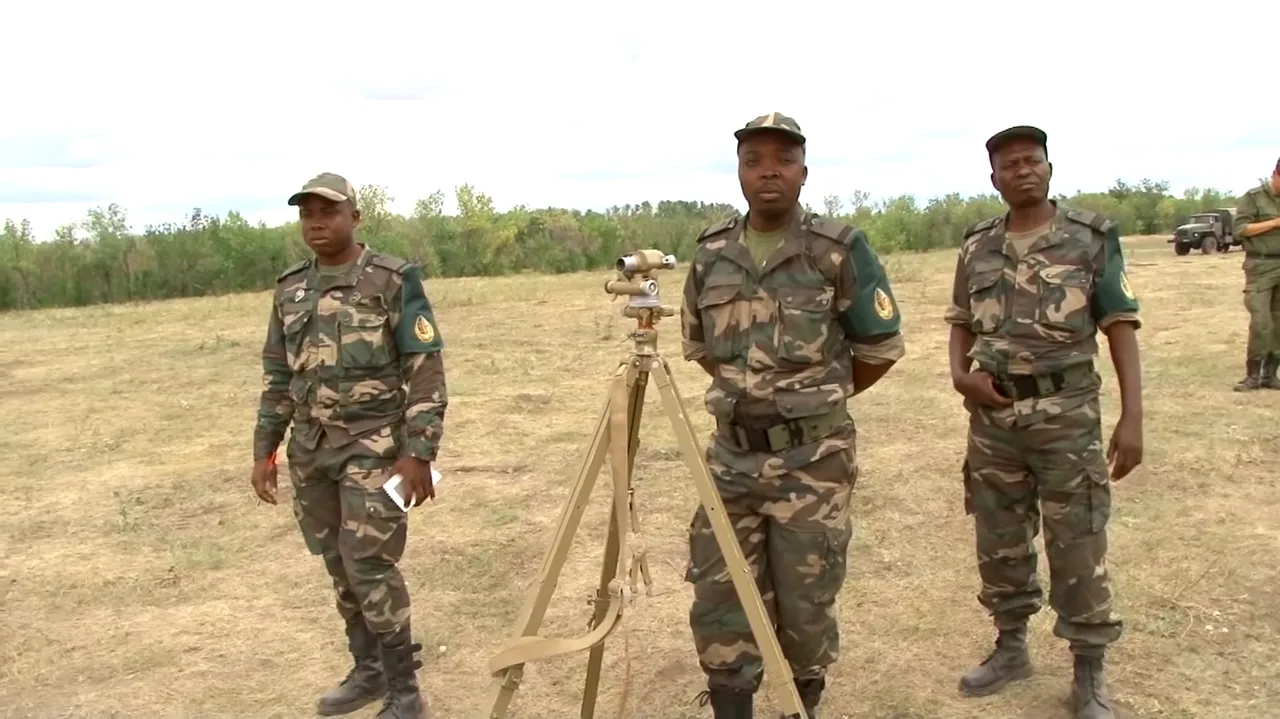
The Angolan Armed Forces (Forças Armadas Angolanas, FAA) comprise three services: the Army, the Air Force and the Navy. Total active personnel stand at roughly 107,000, with paramilitary elements at around 10,000. In Global Firepower’s 2026 assessment the country ranks 59th among 145 militaries — a position only a handful of sub-Saharan African states exceed.
The Army is divided into six military regions: Cabinda, Luanda, Northern, Central, Eastern and Southern. The structure rests on 25 motorised infantry brigades, one tank brigade and one engineering brigade. Cabinda being defined as a separate region is no accident; the exclave that holds a large share of the country’s oil production has also been the setting of a decades-long separatist movement.
To understand the composition of the inventory one has to look at the civil war of 1975-2002. The MPLA government, backed by the Soviet Union and Cuba, was the recipient of one of Africa’s densest arms transfers of that era. The T-55, T-62 and T-72M1 tanks, the BMP-1 and BMP-2 infantry fighting vehicles, the BM-21 Grad rocket launchers and the S-75 and S-125 air-defence batteries in service today form the core inherited from that period.
The most concrete post-war modernisation step was taken in the air force. During Russian Deputy Prime Minister Dmitry Rogozin’s visit to Luanda in October 2013, the procurement of 12 Su-30K aircraft was agreed along with a $1 billion credit package. These airframes had in fact been returned by the Indian Air Force; they were refurbished at the 558th Aircraft Repair Plant in Belarus before being sent on to Angola. The first two arrived in September 2017 and the last two in April 2019. The Su-30Ks are today the de facto combat core of the air force; most of the MiG-21bis, MiG-23ML and Su-22M4 fleets on the books are not airworthy.
Air defence is the oldest layer in the inventory. The S-75 Volkhov, S-125 Pechora, 2K12 Kub and 9K33 Osa batteries belong to the 1960s and 1970s generations, and the ballistic and cruise missile column is empty altogether. Angola was reported to have launched a Su-30 procurement study with Chinese financing in 2024, but no announcement has followed that this study turned into a contract.
The navy is the fastest-changing arm of the inventory. Responsibility for maritime security along roughly 1,600 kilometres of Atlantic coast and the southern edge of the Gulf of Guinea long rested on Soviet-generation boats and Spanish-built Mandume-class fast attack craft. A framework contract worth about one billion euros signed in 2021 is changing that picture: NRA Ekuikui II, the first of three BR71 Mk II corvettes produced by the French CMN yard in partnership with Abu Dhabi-based EDGE Group, was launched on 4 March 2026 and is scheduled for delivery in October 2026. The other two follow during 2027. Two 70-metre landing ships, three patrol boats and two tugs have already been delivered under the same contract, and a maintenance and assembly line was opened at the Lobinave shipyard on 12 January 2026.
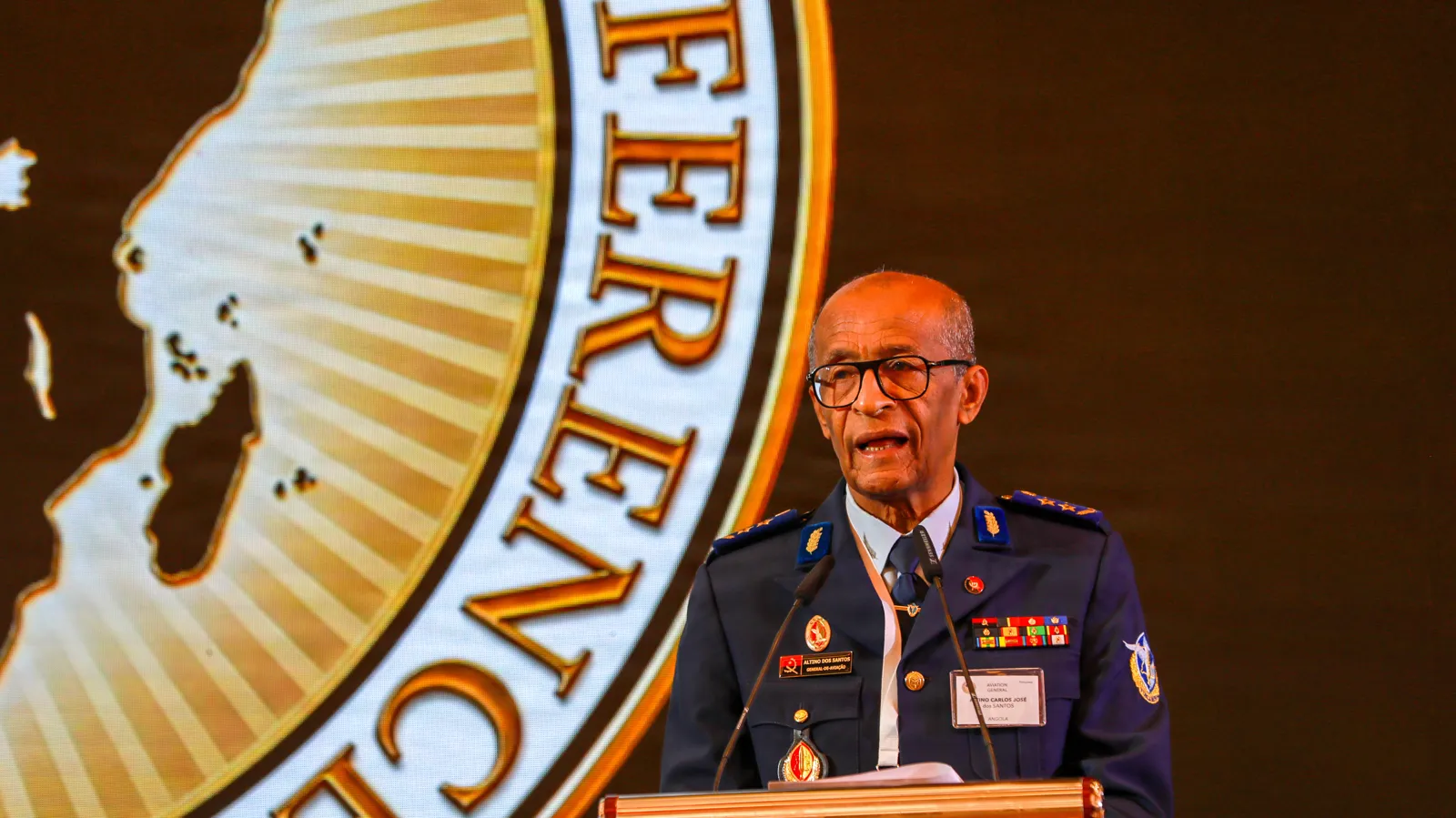
Angola has in recent years worked to stop tying its defence relations to a single capital. The Joint Defence Cooperation Committee established with Washington held its first meeting in June 2024, and an agreement permitting the exchange of logistics goods and services was signed; in September 2024 the country joined the U.S. National Guard’s State Partnership Program. India announced a $200 million defence credit line after the Modi-Lourenço meeting of May 2025. On 30 June 2026 Angolan Chief of the General Staff Gen. Altino dos Santos hosted the African Chiefs of Defense Conference (ACHOD 2026) in Luanda.
The defence budget is directly tied to oil prices, and that is the most fragile element of procurement planning. Independent compilations place it in the $1.5-1.9 billion band. The country’s diplomatic weight, meanwhile, has grown faster than its military weight: President João Lourenço took over the chairmanship of the African Union in February 2025, and Angola ran the Luanda Process that hosted talks between the Democratic Republic of the Congo and Rwanda.
Land Forces Inventory
| System type | Est. quantity |
|---|---|
| Main battle tanks (T-55AM-2, T-62, T-72M1) | ≈ 319 (Global Firepower 2026); open sources give ≈ 50 T-72M1 + ≈ 50 T-62, the rest T-55AM-2 |
| Light/amphibious tank (PT-76) | ≈ 12 |
| Infantry fighting vehicles (BMP-1, BMP-2) | ≈ 250 (≈ 150 BMP-1 + ≈ 100 BMP-2) |
| Armoured scout cars (BRDM-2) | ≈ 195 |
| Armoured personnel carriers (BTR-60PB, EE-11 Urutu, Casspir NG 2000B) | ≈ 130 |
| Self-propelled howitzers (2S1 122 mm, 2S3 152 mm, 2S7 203 mm) | ≈ 25-28 |
| Towed howitzers (D-30 122 mm, M-46 130 mm, D-20 152 mm) | ≈ 330 items identified; Global Firepower 2026 shows ≈ 575 in the towed-artillery column |
| Rocket artillery (BM-21 Grad, RM-70) | ≈ 115 (≈ 75 BM-21 + ≈ 40 RM-70) |
| Mortars (120 mm and 82 mm) | ≈ 750 |
| Total armoured vehicles (GFP 2026, broad definition) | ≈ 2,258 |
Air Force Inventory
| Platform | Est. quantity |
|---|---|
| Total military aircraft | ≈ 278 |
| Multirole fighters (Sukhoi Su-30K) | 12; airframes returned by India, refurbished in Belarus, delivered 2017-2019 |
| Legacy fighters (Su-27/UB, MiG-23ML, MiG-21bis) | ≈ 50 on the books; most are not operational, and Global Firepower shows ≈ 67 in total for fighters |
| Fighter-bombers (Sukhoi Su-22M4) | ≈ 10 |
| Light attack (Embraer EMB 314 Super Tucano) | 6; the only Western-sourced combat platform, from Brazil |
| Transport aircraft (Il-76TD, An-12, An-72, An-32, C295) | ≈ 26-32 |
| Trainer aircraft | ≈ 56 |
| Helicopters (total) | ≈ 115 |
| Attack helicopters (Mi-24 / Mi-35) | ≈ 14; the heaviest firepower in the inventory |
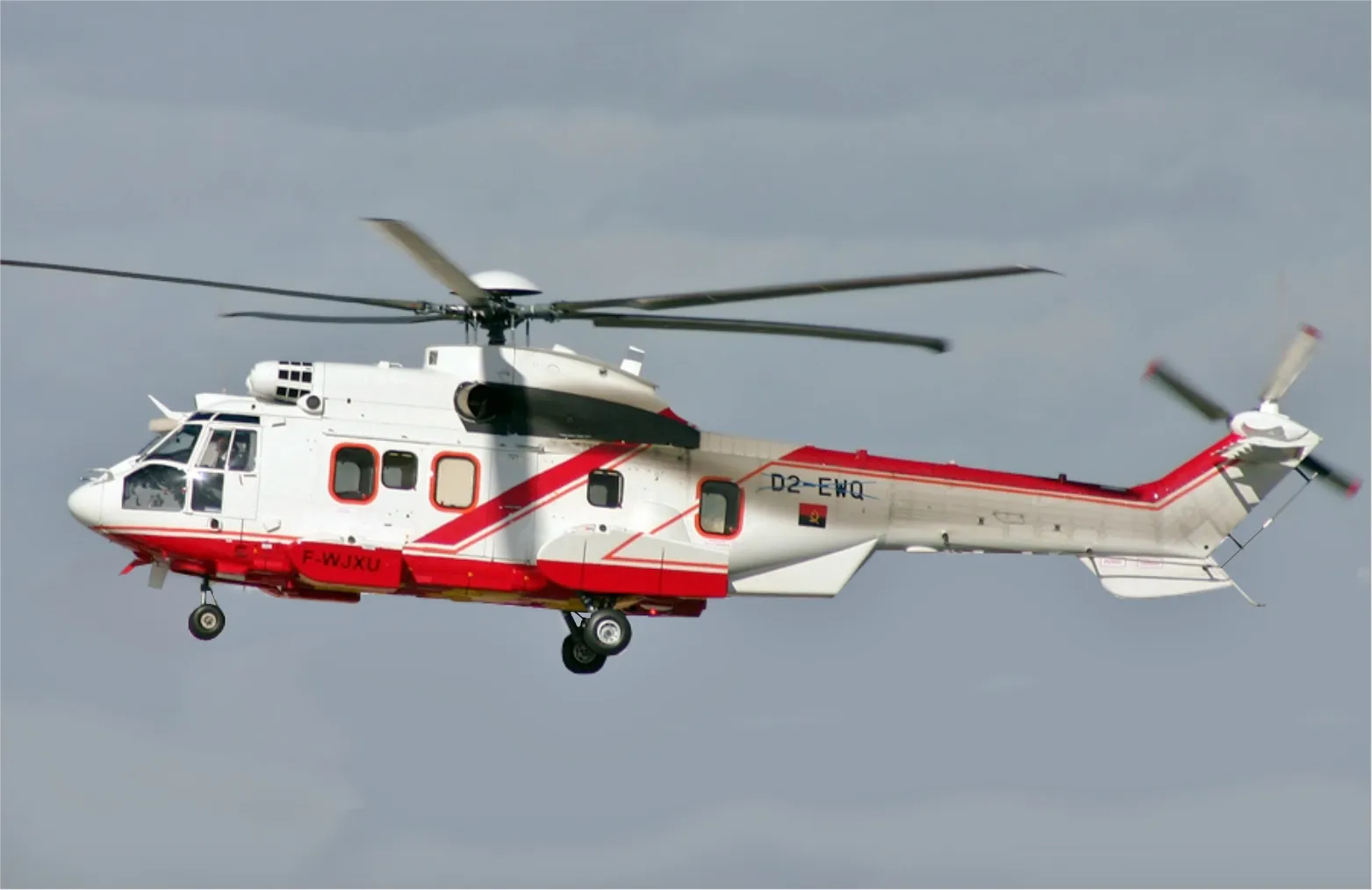
| Utility helicopters (Mi-17, AS332 Super Puma) | ≈ 65 Mi-17 plus a small number of Super Pumas |
| Unmanned aerial vehicles | No operational platform in the inventory; a TUSAŞ AKSUNGUR order was announced in 2023 |
Missile and Air-Defence Systems
| System | Type / Note |
|---|---|
| S-75M Volkhov (SA-2) | ≈ 40 launchers; a 1960s-generation fixed long-range battery |
| S-125 Pechora (SA-3) | ≈ 12 batteries; low-to-medium altitude |
| 2K12 Kub (SA-6) | ≈ 25; the mobile medium-range layer |
| 9K33 Osa (SA-8) | ≈ 15; short-range point defence |
| 9K31 Strela-1 / 9K35 Strela-10 (SA-9 / SA-13) | ≈ 30; assigned to unit protection |
| ZSU-23-4 Shilka anti-aircraft | ≈ 20 |
| Coastal defence missile (4K44 Utyos) | Deployed around Luanda; Soviet generation |
| Ballistic and cruise missiles | None in the inventory |
Naval Power
| Class / Type | Est. quantity |
|---|---|
| Total naval platforms | ≈ 32 (Global Firepower 2026); all patrol-class |
| Corvettes (BR71 Mk II) | 3 on order; the first, NRA Ekuikui II, was launched on 4 March 2026, with deliveries from October 2026 to October 2027 |
| Fast attack craft (Mandume class) | 4; from the Spanish Bazán yard |
| Patrol boats (HSI 32, Super Dvora Mk III, PVC-170, Ocean Eagle 43) | ≈ 13 |
| Landing ships (RA 4 de Abril class, 70 m) | 2; delivered under the 2021 framework contract |
| Submarines | None |
| Personnel | ≈ 1,000 sailors plus ≈ 500 marines |
The Turkey Angle: Turkish Defence Industry
Unlike many countries in this series, Angola has established an actual procurement relationship with the Turkish defence industry. The concrete output of that relationship today is TUSAŞ’s AKSUNGUR armed unmanned aerial vehicle; but how this point was reached also indicates where the relationship opens next.
The diplomatic ground is old. Turkey recognised Angola immediately after its independence in 1975. The Turkish Embassy in Luanda opened on 1 April 2010 and the Angolan Embassy in Ankara on 4 April 2013. The relationship accelerated in 2021: President João Lourenço came to Ankara on 27-28 July 2021, a visa exemption agreement for holders of diplomatic, service and special passports was signed during the visit, and an Angola-Turkey Business Forum was held on 28 July under the auspices of DEİK.
The defence file was opened during that visit. In Ankara, Lourenço requested Turkish-built unmanned aerial vehicles and armed unmanned aerial vehicles. Three months later, on 17-18 October 2021, President Recep Tayyip Erdoğan travelled to Luanda; seven agreements were signed covering education, agriculture, mutual administrative assistance in customs matters, industrial cooperation, the establishment of a Joint Economic and Trade Commission, a tourism memorandum of understanding, and an agreement between TRT and Angola. On the defence request Erdoğan said the two sides were “not conservative on these matters” and that Turkey had stated its readiness to provide every kind of support; armoured personnel carriers also came up in the talks, and it was noted that the subject would be pursued at the level of the two countries’ defence ministers. The same visit set a target of raising annual bilateral trade from $250 million to $500 million in the short term.
The result of that request became visible in 2023. On 17 March 2023 Ömer Yıldız, deputy general manager of TUSAŞ UAV Systems, announced that the AKSUNGUR armed unmanned aerial vehicle had been exported to Kyrgyzstan and Angola, and that deliveries had not yet begun at that date. AKSUNGUR is TUSAŞ’s heaviest platform in the medium-altitude long-endurance class, with a payload capacity of up to 750 kilograms, a service ceiling of 40,000 feet and an endurance reaching 60 hours depending on configuration; it can be armed with MAM-series munitions, the CİRİT missile and TEBER laser guidance kits. Given that Angola had never previously operated an unmanned aerial vehicle, this procurement is not merely the purchase of a platform but the opening of a new class within the force structure.
Political contact continued after 2021. Angolan National Assembly Speaker Carolina Cerqueira visited Turkey on 24-26 October 2024 and the Angolan Interior Minister on 19-21 March 2025. The economic picture has fallen short of the target: bilateral trade came to roughly $125.8 million in 2024, with Turkey’s main export items being food, textiles and white goods. On the education side, 63 Angolan students have benefited from Türkiye Scholarships to date; 43 are continuing their studies and seven have graduated.
The map of gaps in the inventory overlaps strikingly with the areas in which the Turkish defence industry is strong. The whole of air defence consists of 1960s-1970s Soviet batteries, and short-to-medium-range solutions such as HİSAR and KORKUT address that layer directly. The backbone of the armoured vehicle inventory remains in the BTR-60 and BMP-1 generation; the Kirpi, Ejder Yalçın and Pars families answer that requirement. The trainer fleet is old, and HÜRKUŞ sets a precedent in that column. In the attack helicopter arm the entire inventory consists of some 14 Mi-24/Mi-35s, and the T129 ATAK is one of the known alternatives for that gap. The unmanned line opened by AKSUNGUR, meanwhile, is open to expansion with platforms such as ANKA and the Bayraktar TB2.
Three things set Angola apart from many countries in this series. The first is the ability to pay: dependent on oil revenue though it is, a defence budget in the $1.5-1.9 billion band means a customer profile with genuine cash purchasing capacity. The second is the will to diversify supply: over the past five years separate defence relationships have been built with France, the United Arab Emirates, Brazil, the United States and India, which suggests the preference for not depending on a single source is deliberate. The third is that the relationship has already begun: no defence industry framework agreement between Turkey and Angola has been made public, yet the AKSUNGUR procurement shows a product entering the inventory without waiting for such a framework.
In short, for the Turkish defence industry Angola is not a prospective market but an already-won reference. The question from here is whether the first platform stays a single sale or expands into the other gap items — air defence, armoured vehicles and trainer aircraft. Angola’s deliberate choice over the past five years to spread its procurement keeps the door to that expansion open.
Frequently Asked Questions
How many tanks does Angola have? Global Firepower’s 2026 list shows roughly 319 tanks. The fleet is entirely of Soviet and Russian generation: open sources give around 50 T-72M1s, around 50 T-62s and the remainder T-55AM-2s. Some 12 PT-76 amphibious light tanks also appear in the inventory. The armoured vehicle total on the broad definition is about 2,258, including some 250 BMP-1/BMP-2 infantry fighting vehicles and around 195 BRDM-2 scout cars.
What combat aircraft does Angola operate? The combat core of the air force consists of 12 Sukhoi Su-30Ks. These airframes were returned by the Indian Air Force, refurbished in Belarus and delivered to Angola between 2017 and 2019. The books also list Su-27, MiG-23ML, MiG-21bis and Su-22M4 aircraft, but most of these are not operational. The only Western-sourced combat platform is a set of six Brazilian-built Embraer EMB 314 Super Tucanos. The heaviest firepower in the inventory is some 14 Mi-24/Mi-35 attack helicopters.
Does Angola have a navy? Yes. The Angolan Navy, which guards roughly 1,600 kilometres of Atlantic coastline, today consists entirely of patrol-class platforms: around 32 vessels in total, with 1,000 sailors and 500 marines. The biggest change is on its way: NRA Ekuikui II, the first of three BR71 Mk II corvettes produced by the French CMN yard together with EDGE Group, was launched on 4 March 2026. Deliveries begin in October 2026 and conclude in 2027. Angola has no submarines.
What is Angola’s air defence like? Air defence is the oldest layer of the inventory and rests entirely on the Soviet generation: some 40 S-75 Volkhov launchers, 12 S-125 Pechora batteries, around 25 2K12 Kubs, around 15 9K33 Osas and, for unit protection, some 30 Strela-1/Strela-10 systems and about 20 ZSU-23-4 Shilkas. The core of these systems dates to 1960s and 1970s designs. The ballistic and cruise missile column is entirely empty; coastal defence uses the Soviet-generation 4K44 Utyos system.
What has Angola bought from the Turkish defence industry? On 17 March 2023 Ömer Yıldız, deputy general manager of TUSAŞ UAV Systems, announced that the AKSUNGUR armed unmanned aerial vehicle had been exported to Kyrgyzstan and Angola; deliveries had not begun at that date. The process began with the request for unmanned aerial vehicles that President João Lourenço made during his Ankara visit of 27-28 July 2021; during President Erdoğan’s visit to Luanda on 17-18 October 2021 the subject was widened to cover armoured personnel carriers as well. Angola had never previously operated an unmanned aerial vehicle.
Bottom Line
Angola’s inventory presents the picture of an army strong in paper volume but old in its backbone. Some 319 tanks, 278 aircraft and 2,258 armoured vehicles are serious figures at sub-Saharan African scale; yet almost all of that inventory is the residue of the Soviet supply line built during the civil war of 1975-2002, and the sustainment problem shows up in every column. The second defining feature is that modernisation is distributed unevenly across the services. While the navy is making the most concrete leap of the year with the 2021 framework contract and the BR71 Mk II corvettes, air defence still stands on 1960s-generation batteries and no significant renewal programme is visible in the land inventory. The third is that procurement politics have changed: over the past five years Luanda has built parallel lines to France, the United Arab Emirates, Brazil, India, the United States and Turkey in order to break its dependence on Russia. The Turkish defence industry has already taken its chance within this picture: the AKSUNGUR procurement introduced into Angola’s inventory a class it had never previously held, the unmanned aerial vehicle. What will shape this inventory in the coming period is not a new tank or a new fighter but three questions: can a modern missile layer be added to air defence, can the armoured vehicle generation in the land inventory be renewed, and can a budget tied to oil revenue carry these programmes? That all three headings fall in areas where the Turkish defence industry is strong makes an already-started relationship worth watching.