NATO’s 10 Strongest Armies (2026): Where the USA, France and Turkey Stand
Picture the alliance: 32 members, most of the world’s largest defense budgets, nuclear weapons and the ability to project force across oceans. Yet inside this vast military bloc, which army is truly the strongest? Guessing that the United States sits at the top is easy. But second, third and fourth place? That is exactly where the real contest begins.
Where does Turkey rank? And how do Western Europe’s storied armies — France, Britain, Germany, Italy — stack up? How far has Poland’s massive rearmament drive pushed it up the list? Drawing on GlobalFirepower 2026 data, this countdown puts the hard numbers on the table: from active personnel and tank fleets to combat aircraft and submarines.
We start at number 10 and climb toward the summit. The results suggest NATO’s military center of gravity may lie much further east than you would expect. Let’s begin.
#10 · GREECE
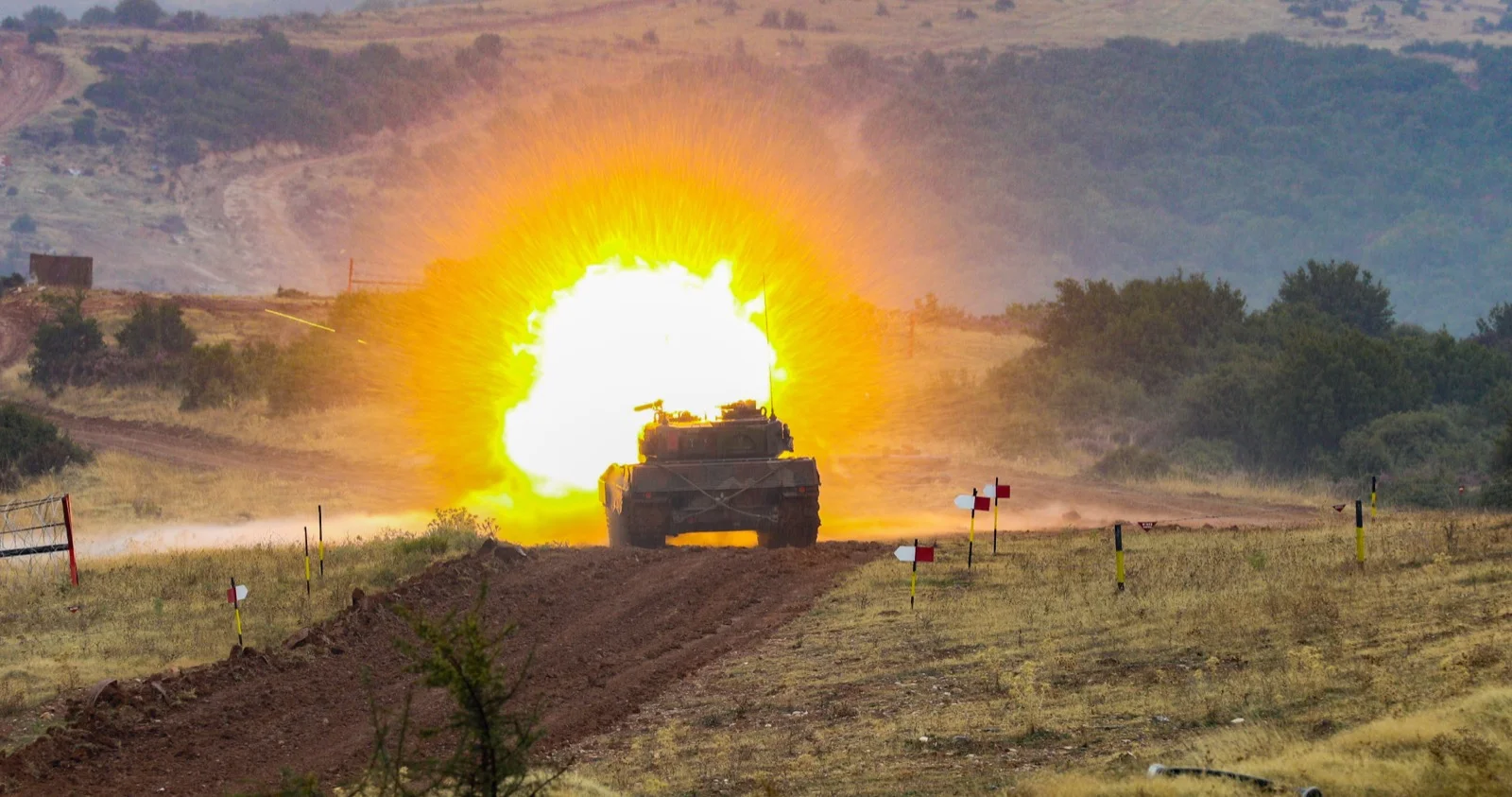
At number ten sits one of the most heavily armed countries in the world relative to its population: Greece. This NATO member on the far shore of the Aegean shapes almost its entire defense spending around a single strategic calculation. With roughly 142,700 active personnel, it may look like a modest army, yet its weapons density is surprisingly high.
Athens’ most notable recent move has been refreshing its air and naval power with French technology. Incoming Rafale fighters and the ordered FDI Belharra frigates show Greece is chasing a qualitative leap. With around 200 combat aircraft (a mix of upgraded F-16 Vipers, Rafales and Mirage 2000s) and roughly 1,344 tanks, it fields an impressive land and air force on paper. Underwater, 11 submarines and 13 frigates give it a serious presence in the Eastern Mediterranean.
Greece’s main constraint is economic scale. Its roughly $8.5 billion defense budget is among the lowest on this list, and much of its inventory relies on aging platforms. Compared with regional rival Turkey, Greece falls clearly behind in personnel, tank variety and, above all, domestic production capacity. Greece is strong, but it is an army with a visible ceiling.
| Power Metric | Figure |
|---|---|
| Active Personnel | 142,700 |
| Combat Aircraft | ~200 |
| Tanks | ~1,344 |
| Submarines | 11 |
| Budget | ~$8.5B |
Greece is a strong opener; but next up, a transatlantic NATO giant awaits.
#9 · CANADA
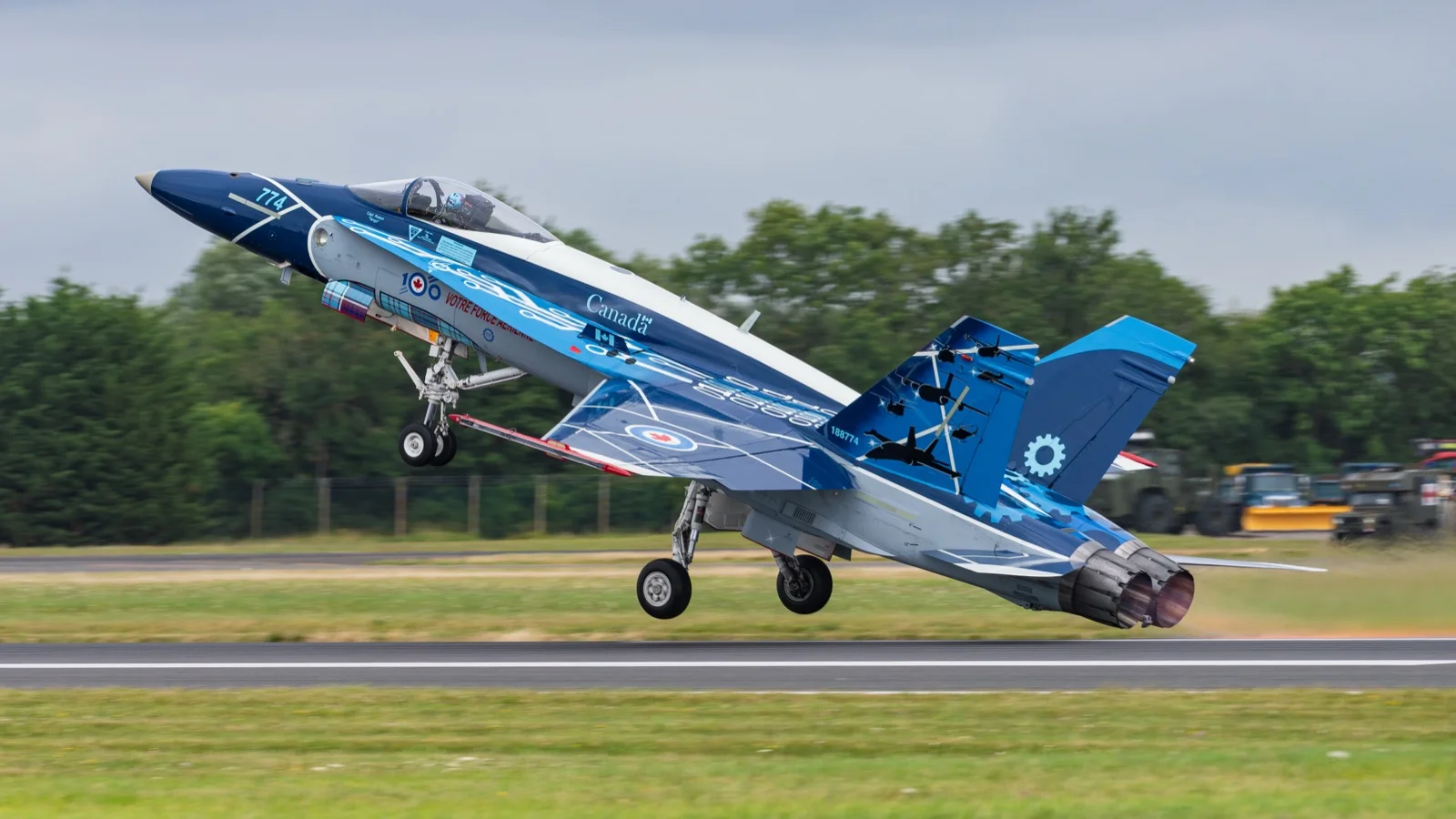
In ninth place is a country with the world’s second-largest territory but a surprisingly small army: Canada. With just 68,000 active personnel, it fields one of the smallest manpower pools on this list. Yet measuring Canada by headcount would be misleading; its real weight comes from its strategic position on NATO’s northern flank and its integrated defense architecture with the United States (NORAD).
Ottawa’s most critical recent decision was launching the replacement of its aging CF-18 fleet with the F-35A. With around 75 combat aircraft, roughly 350 total aircraft and 12 Halifax-class frigates, Canada provides a reliable patrol force in the Atlantic and Arctic. Four Victoria-class submarines give it a limited but symbolic underwater presence.
Land power is Canada’s weakest link: just 82 Leopard 2 tanks, almost token given its enormous territory. Compared with Poland’s fleet of over 1,300 tanks, Canada’s land weight is very light. Even so, a budget of around $30 billion and rising Arctic investment keep Canada indispensable to NATO’s northern security.
| Power Metric | Figure |
|---|---|
| Active Personnel | 68,000 |
| Combat Aircraft | ~75 |
| Tanks | 82 |
| Frigates | 12 |
| Budget | ~$30B |
Canada is strong at sea; but a land power is pushing for the next rung.
#8 · POLAND
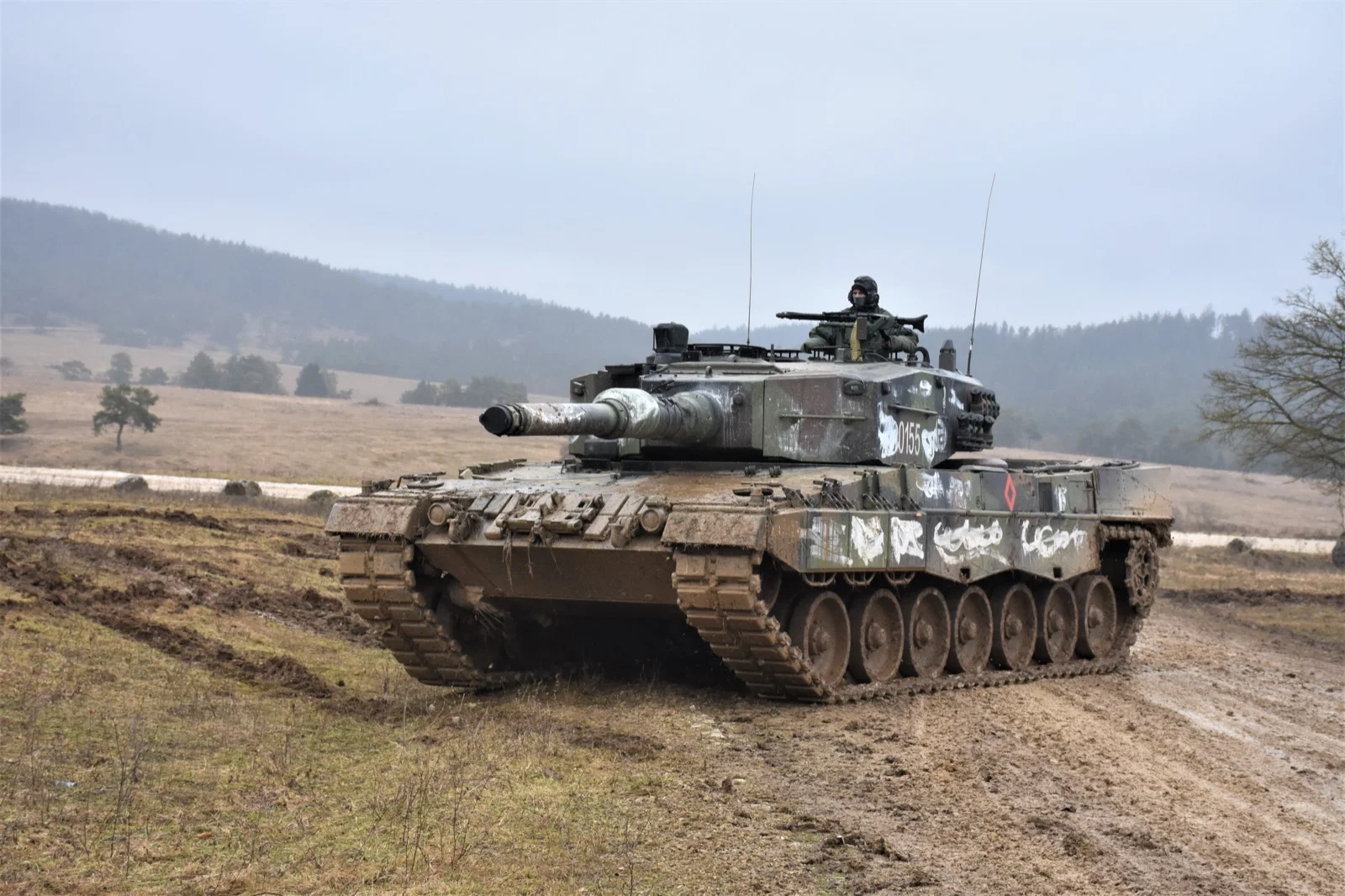
Eighth place goes to NATO’s fastest-growing army in recent years: Poland. Sitting on the front line of the alliance’s eastern flank, Warsaw has pushed defense spending above 4 percent of GDP, becoming the alliance’s biggest spender in proportional terms. With roughly 202,000 active personnel, Poland is well on its way to becoming a land-power heavyweight.
Poland’s modernization program is the most ambitious in post-Cold War Europe. The army has taken German Leopard 2, American M1 Abrams and South Korean K2 Black Panther tanks into service simultaneously, building a fleet of more than 1,300 tanks. In artillery, Korean K9 howitzers and American HIMARS systems form one of Europe’s largest concentrations of firepower. In the air, F-16s, ordered F-35s and Korean FA-50 light fighters are expanding the fleet.
With around 461 aircraft and a growing $35 billion budget, Poland now outstrips many Western European armies in land and artillery power. Compared with Germany’s 296 tanks, Poland’s armored forces are far more overwhelming in number. Its weak spots are the navy and the absence of nuclear deterrence. Even so, this army is the strongest candidate to climb the list over the next decade.
| Power Metric | Figure |
|---|---|
| Active Personnel | 202,000 |
| Combat Aircraft | F-16/F-35/FA-50 |
| Tanks | 1,300+ |
| Artillery | K9 / HIMARS |
| Budget | ~$35B |
Poland is rising on land; but next comes a seasoned Mediterranean naval power.
#7 · SPAIN
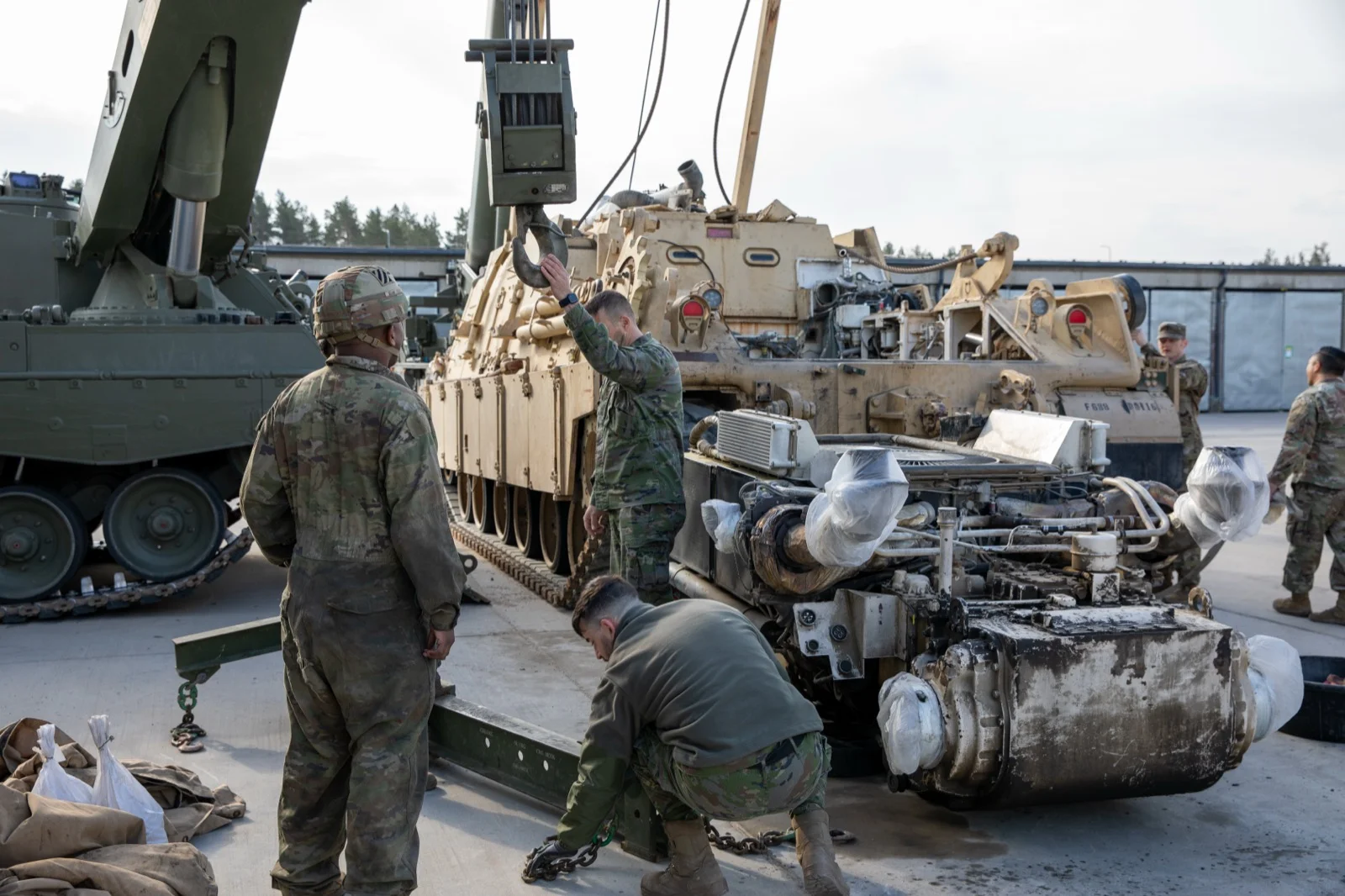
Seventh place belongs to the balancing power of the Western Mediterranean: Spain. With roughly 122,000 active personnel, Madrid maintains a balanced, professional army on NATO’s southwestern flank. Spain’s strength lies not in dramatic numbers but in the quality of its platforms and its sea-air integration.
The flagship of the Spanish navy is the Juan Carlos I landing helicopter dock (LHD), which also doubles as a light carrier. Capable of carrying helicopters and short takeoff/vertical landing aircraft, this platform gives Spain genuine power-projection reach. The air force fields roughly 140 combat aircraft, built around EF-18 Hornets and Eurofighter Typhoons. On land, 327 Leopard 2E tanks provide a solid armored backbone.
Spain’s domestic defense industry is also notable: the new-generation S-80 submarines and Navantia’s shipyard exports make it one of Europe’s key naval platform builders — three S-80s are in service so far. Compared with Italy, Spain’s air fleet is similar, though it trails slightly in submarines and total budget (~$23 billion). Even so, its balanced structure earns it a deserved place in the top 10.
| Power Metric | Figure |
|---|---|
| Active Personnel | 122,000 |
| Combat Aircraft | ~140 |
| Tanks | 327 |
| Submarines | 3 (S-80) |
| Budget | ~$23B |
Spain is balanced; but next up is Europe’s rearming industrial giant.
#6 · GERMANY
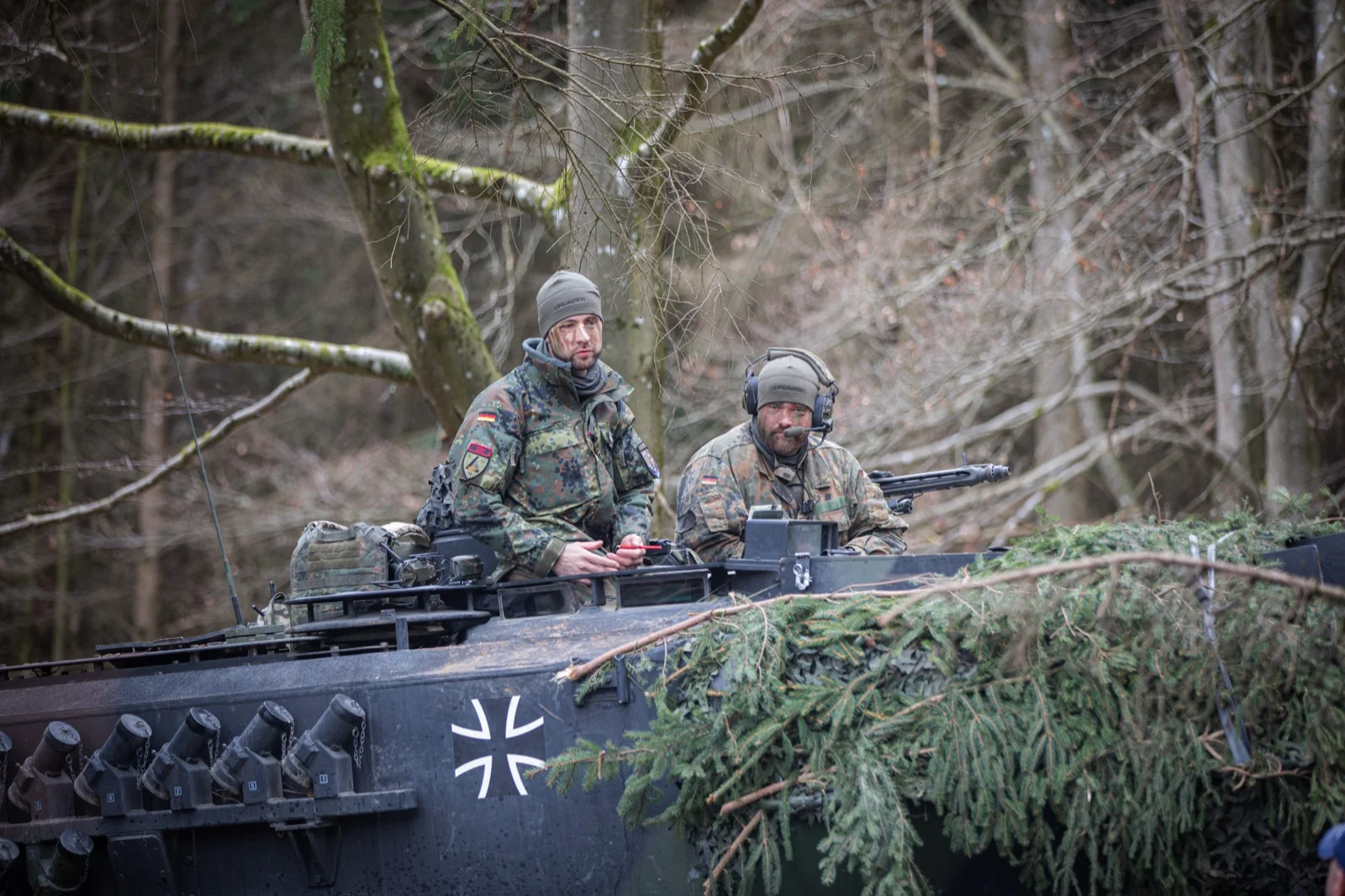
Sixth place goes to Europe’s largest economy and the country undergoing its most dramatic defense transformation in years: Germany. Following the war in Ukraine, Berlin abandoned decades of military restraint with its Zeitenwende (turning point) policy and raised its defense budget to around $86 billion — one of the highest among the European countries on this list.
The German army (Bundeswehr) has roughly 180,000 personnel, with the legendary Leopard 2 main battle tank forming the backbone of its land power — around 296 of them. In the air, a fleet of Eurofighters and Tornados, reinforced by ordered F-35A jets, also strengthens Germany’s nuclear-sharing role; total combat aircraft number around 130. At sea, the quiet but highly capable Type 212A submarines (six of them) provide an important underwater edge in the Baltic.
Germany’s real strength is its industrial capacity: giants like Rheinmetall, KMW and ThyssenKrupp arm not just Germany but all of NATO. Yet the Bundeswehr has long faced criticism over readiness and spare-parts shortages. Despite a budget more than double Turkey’s, Germany’s active personnel and tank inventory trail Turkey’s — a striking reminder that spending alone does not translate into combat power.
| Power Metric | Figure |
|---|---|
| Active Personnel | 180,000 |
| Combat Aircraft | ~130 |
| Tanks | 296 |
| Submarines | 6 (Type 212A) |
| Budget | ~$86B |
Germany dominates in industry; but next is a multi-role Mediterranean sea power.
#5 · ITALY
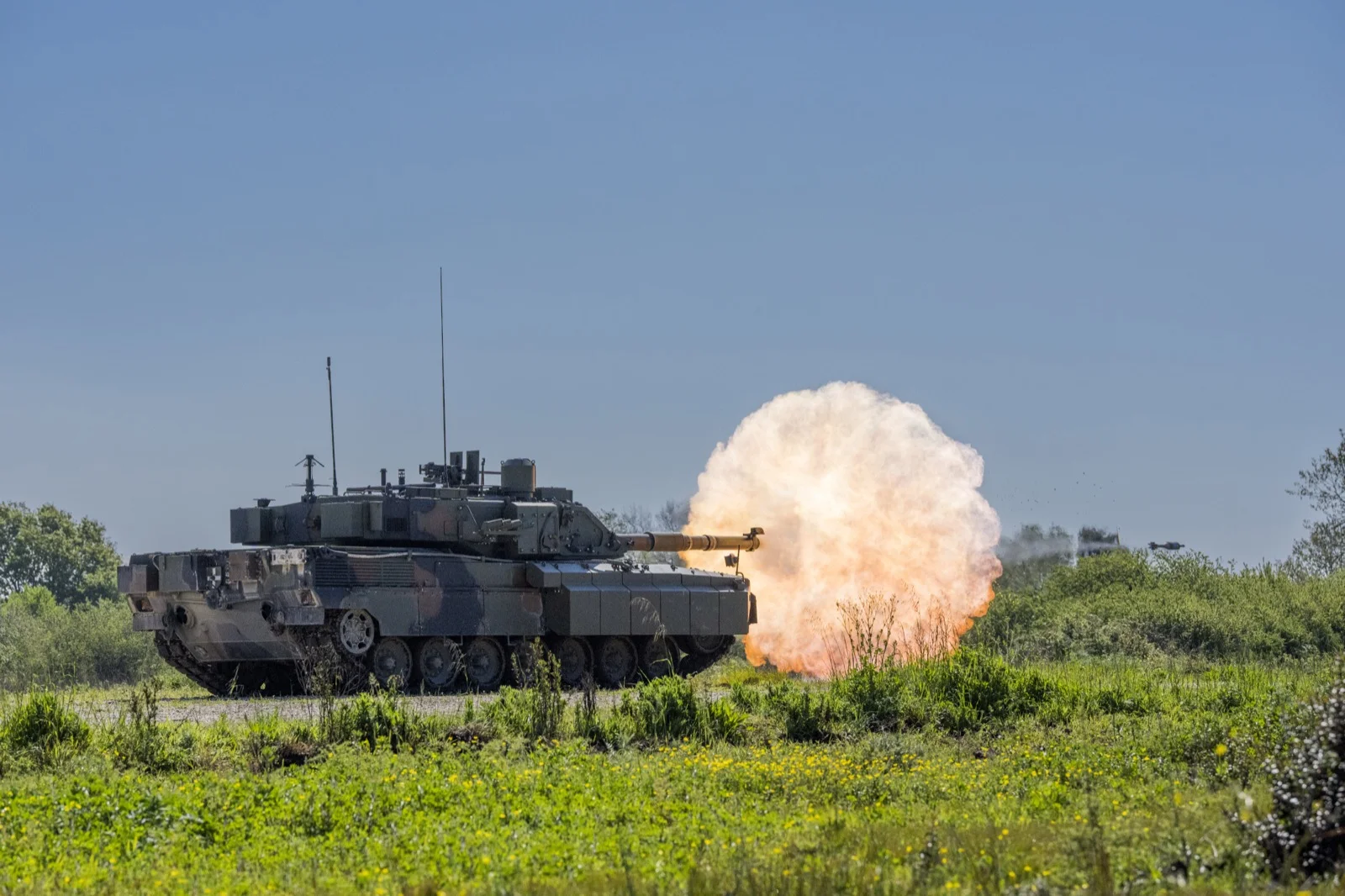
Fifth place goes to Italy, home to one of the most balanced sea-air forces in the Mediterranean. With roughly 165,000 active personnel, Rome fields a versatile military on NATO’s southern flank tasked with both defense and power projection. Italy’s strongest card is its pair of aviation-capable ships: the Cavour aircraft carrier and the new-generation Trieste amphibious assault ship (LHD).
These two platforms give Italy the ability to deploy F-35B short takeoff/vertical landing jets at sea — a capability few NATO members possess. The air force reaches around 90 combat aircraft with a mix of Eurofighters and F-35A/Bs, while the total fleet numbers 729 aircraft. On land, roughly 200 Ariete tanks and, underwater, eight modern submarines round out Italy’s multi-domain structure.
Italy’s strength is fed by a powerful industrial base anchored on world-class defense giants such as Leonardo and Fincantieri. With a budget of around $33 billion, it favors a high-quality but numerically limited force structure. Compared with Germany, Italy trails on land power but is clearly ahead in carrier and naval-projection capability. Rome is a NATO member that has mastered the art of projecting power from the sea.
| Power Metric | Figure |
|---|---|
| Active Personnel | 165,000 |
| Combat Aircraft | ~90 |
| Tanks | 200 |
| Carrier / LHD | 2 (Cavour + Trieste) |
| Budget | ~$33B |
Italy is a master at sea; but next stands NATO’s largest land army after the USA.
#4 · TURKEY
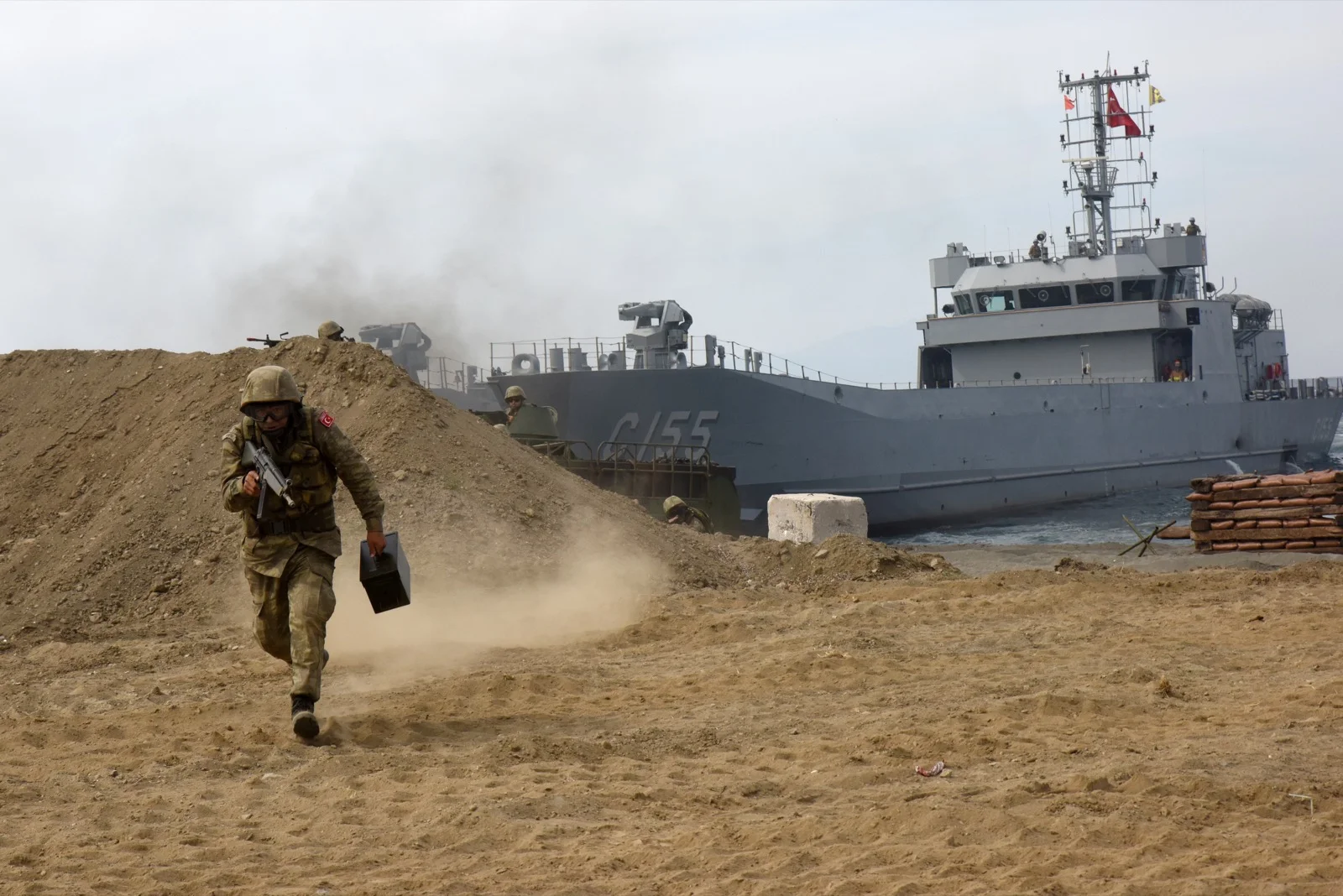
On the fourth rung of the countdown stands NATO’s largest land and personnel force after the United States: Turkey. In the GlobalFirepower 2026 index (PwrIndx 0.1697; lower is stronger), Turkey shares the alliance’s top tier alongside France and Britain. With roughly 355,200 active personnel, the Turkish Armed Forces are among the most numerous and combat-experienced on this list.
The raw figures alone convey Turkey’s weight: 1,083 aircraft, 205 combat aircraft, 2,238 tanks, a navy of 156 vessels and 12 submarines. The flagship of the Turkish navy is TCG Anadolu, an amphibious assault ship (LHD) able to carry TB3 drones and unmanned aircraft — the first platform in the world to effectively realize the drone-carrier concept. With 16 modern frigates, Turkey can project power in the Eastern Mediterranean and the Black Sea at the same time.
But what truly sets Turkey apart on this list is its steadily expanding domestic defense industry. Turkey is one of the rare NATO members building a complete production ecosystem — from tanks and fighter jets to drones and air-defense systems. Compared with regional rival Greece, Turkey holds an overwhelming edge in personnel (355,200 vs. 142,700), tank numbers and, crucially, depth of domestic production. While France’s and Britain’s nuclear deterrent and transoceanic experience keep them ahead on paper, Turkey’s scale, geographic position and industrial momentum make it an undisputed member of the top four — outweighing all of Western Europe’s armies in sheer scale.
Turkey’s real upside in the ranking lies in the domestic projects set to enter service in the coming years. The national fighter KAAN will carry Turkey into the elite club of fifth-generation air power. The unmanned combat aircraft KIZILELMA and the jet trainer HÜRJET are fully localizing the air fleet. On land the next-generation ALTAY tank, at sea the MİLGEM corvette/frigate family and TCG Anadolu, and in air defense the SİPER and HİSAR systems all promise a leap forward. Add the world’s most talked-about drones, TB2 and Akıncı, and Turkey’s chances of climbing into the top three become increasingly tangible.
| Power Metric | Figure |
|---|---|
| Active Personnel | 355,200 |
| Combat Aircraft | 205 |
| Tanks | 2,238 |
| Submarines / Frigates | 12 / 16 |
| Budget | ~$40B |
Turkey is close to the summit; but next stands a nuclear island power.
#3 · UNITED KINGDOM
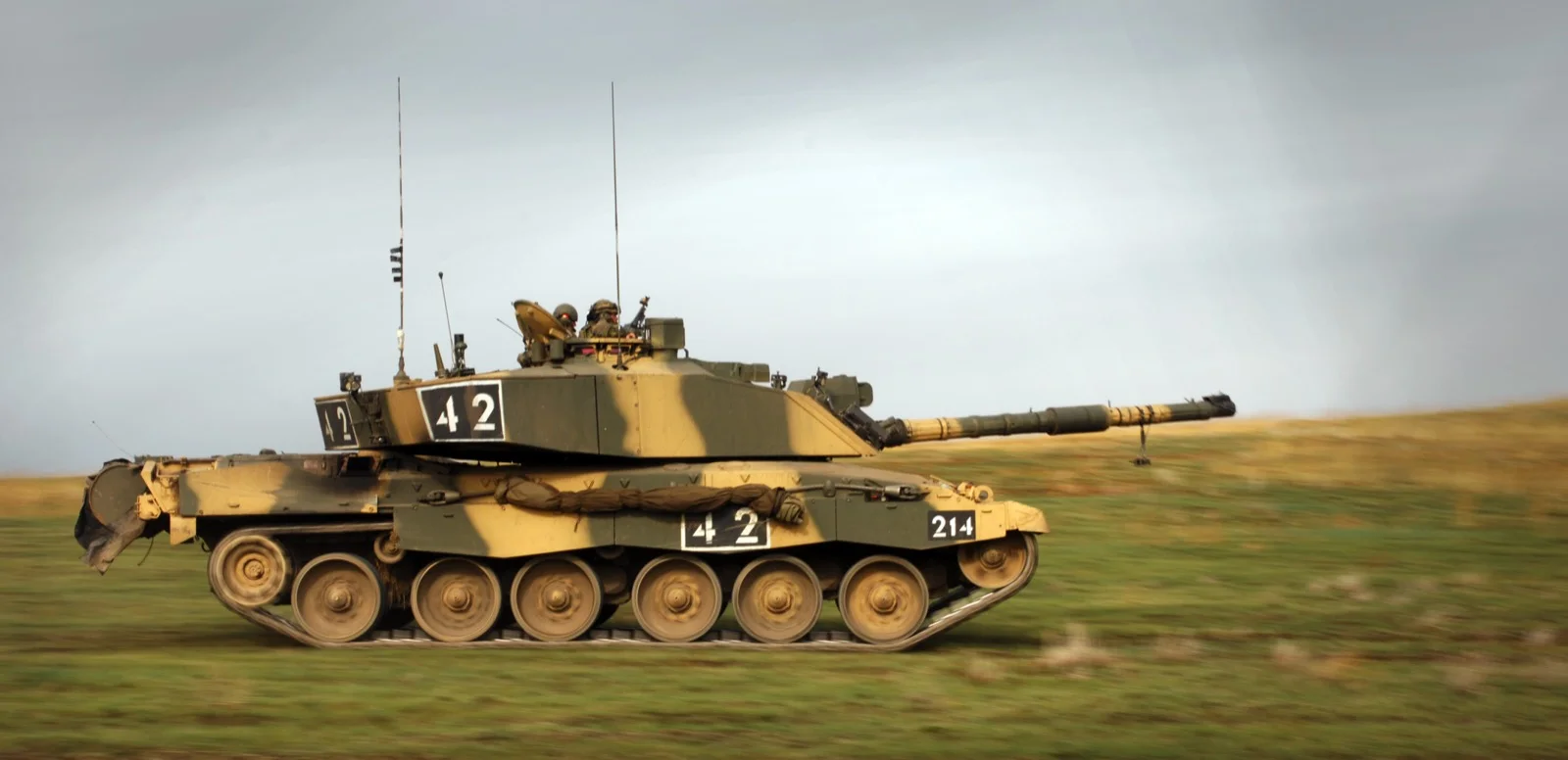
Third place goes to the classic master of the seas and one of NATO’s nuclear pillars: the United Kingdom. With roughly 185,000 active personnel, the British forces are not the largest in numbers, but their qualitative depth, transoceanic operational experience and nuclear deterrence make them one of the most mature militaries on this list.
The symbol of British power is its pair of Queen Elizabeth-class aircraft carriers. These 65,000-ton giants, together with their F-35B air wings, give the UK genuine global power-projection reach. Underwater lies the heart of its nuclear deterrent: four Vanguard-class ballistic missile submarines (SSBNs), plus Astute-class attack submarines — 10 boats in total. The air force fields around 145 combat aircraft with a mix of Eurofighter Typhoons and F-35Bs.
On land the UK is comparatively light: 213 Challenger 2/3 tanks make for an upgraded but numerically limited armored force. Compared with Turkey’s 2,238 tanks, Britain’s land weight is far lower; but at sea and in the nuclear domain, the UK is clearly ahead. With a budget of around $68 billion and strategic partnerships like AUKUS, London builds its power on technology and alliance diplomacy. Britain holds third place through quality rather than scale.
| Power Metric | Figure |
|---|---|
| Active Personnel | 185,000 |
| Combat Aircraft | ~145 |
| Tanks | 213 |
| Carriers / Submarines | 2 / 10 |
| Budget | ~$68B |
Britain is strong at sea and in the nuclear realm; but next is the European closest to number one.
#2 · FRANCE
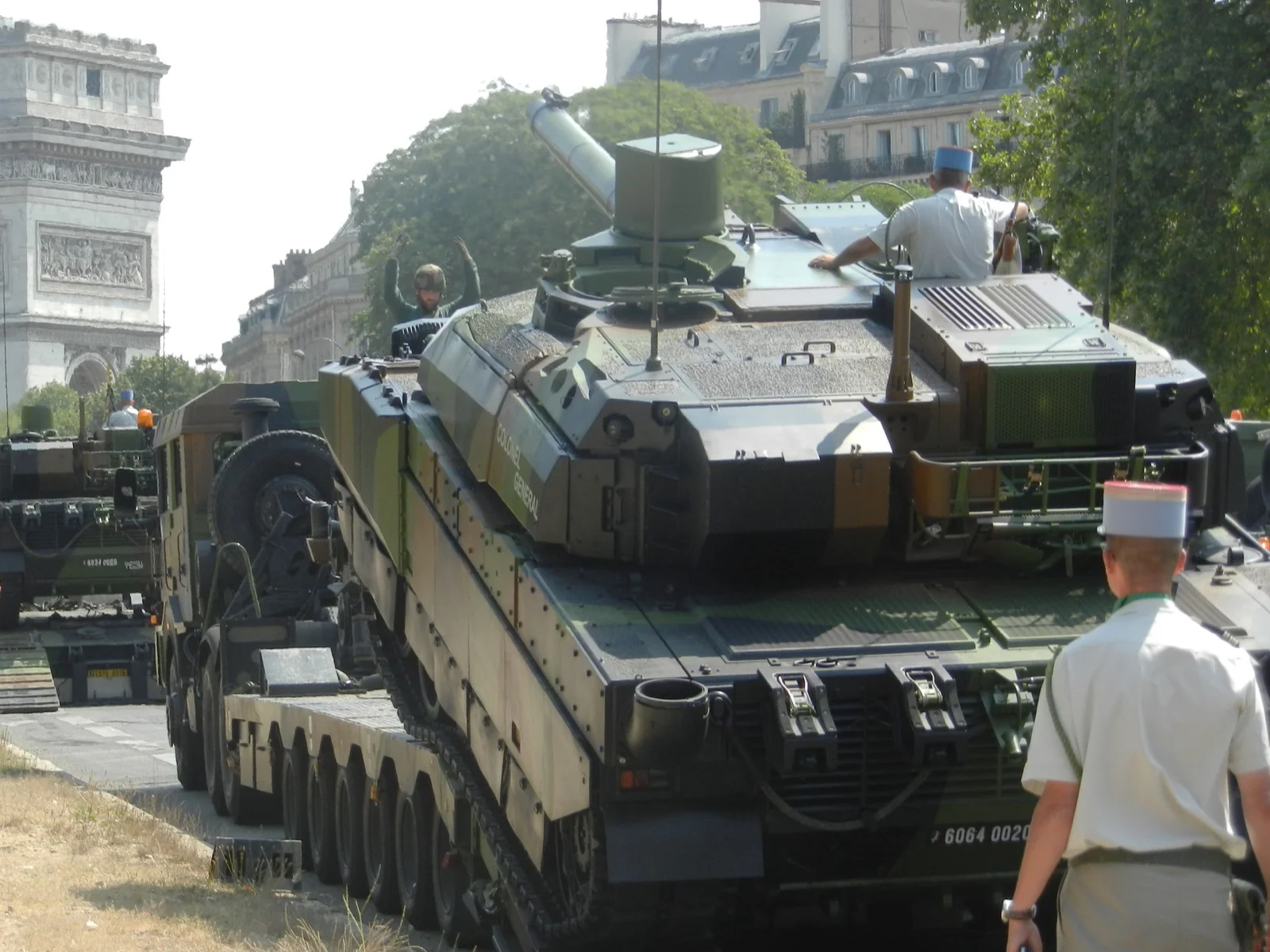
Second place goes to Europe’s most balanced and most independent military power: France. With a PwrIndx of 0.1878 in the GlobalFirepower 2026 index, France stakes a claim as the only European country with a real voice across the land, air, sea and nuclear domains. With roughly 205,000 active personnel, France successfully balances scale and quality.
France’s greatest distinction is the continent’s only nuclear-powered aircraft carrier, the Charles de Gaulle, accompanied by Mistral-class amphibious assault ships (LHDs). The air force fields around 230 combat aircraft — and 972 aircraft in total — built around the Rafale, one of the world’s best-selling fighters, and the Mirage 2000. The backbone of its nuclear deterrent is four ballistic missile submarines (SSBNs), part of a 9-boat submarine fleet.
France’s real strength is its strategic autonomy: with giants like Dassault, Thales, Naval Group and Safran, France can build nearly every platform itself, from fighter jets to submarines. Its land power is comparatively light at 215 Leclerc tanks, and compared with Turkey’s large land army, France trails in numbers — but leads through its nuclear dimension and overseas basing network. With a budget of around $55 billion and full-spectrum capability, France is NATO’s most complete military power after the United States.
| Power Metric | Figure |
|---|---|
| Active Personnel | 205,000 |
| Combat Aircraft | ~230 |
| Tanks | 215 (Leclerc) |
| Carrier / Submarines | 1 nuclear / 9 |
| Budget | ~$55B |
France is nearly complete; but at the summit stands a superpower no one can approach.
#1 · UNITED STATES
And at the summit stands an unrivaled military superpower: the United States. With a PwrIndx of 0.0744 in the GlobalFirepower 2026 index, the US is the strongest army not just in NATO but in the world — and the gap between Washington and second-place France is larger than any other on this list. With 1.32 million active personnel, the US is the only true force able to fight on a global scale.
The numbers belong to another league entirely: 13,043 aircraft, 1,790 combat aircraft, 4,640 tanks, a navy of 472 vessels and 66 submarines. But the real difference emerges with its 11 nuclear aircraft carriers — more than the rest of the world combined. These ships give the US the ability to move an air base to any ocean within hours. Add its global network of bases, satellite intelligence and strategic airlift, and American power projection becomes unmatched.
With a defense budget of around $895 billion (approaching $1 trillion in FY27 projections) and a vast nuclear arsenal, the US combines technology, scale and experience under one roof. Even compared with its closest NATO rival, France, the US has roughly eight times the combat aircraft and eleven times the carriers. This is not the story of a ranking but of a category gap. The US is the steel spine on which NATO rests.
| Power Metric | Figure |
|---|---|
| Active Personnel | 1,320,000 |
| Combat Aircraft | 1,790 |
| Tanks | 4,640 |
| Carriers / Submarines | 11 / 66 |
| Budget | ~$895B |
Conclusion: Where Is NATO’s Military Center of Gravity Shifting?
This countdown reveals that the military balance within NATO is far more layered than it appears. At the summit, the US position is beyond dispute; but the gap between Washington and second-place France is almost a category chasm. The US alone commands a capacity approaching the combined power of the rest of the alliance. This explains why NATO still leans so heavily on American capabilities.
The second tier tells an intriguing story. France and Britain preserve their traditional edge through nuclear deterrence and transoceanic experience. Yet Turkey overtakes even these two storied armies in many categories — in scale, personnel and tank power — to claim fourth place. Turkey standing shoulder to shoulder with this trio in GlobalFirepower’s raw power index is no accident; NATO’s land center of gravity has shifted toward the alliance’s eastern flank, toward Turkey.
Western Europe’s industrial giants — Germany, Italy, Spain — favor high-quality but numerically limited force structures. That Germany fields fewer active personnel and tanks than Turkey despite a budget more than double its size shows spending alone does not translate into combat power. Poland, by contrast, is the strongest candidate to climb the list over the next decade thanks to its aggressive rearmament program. Led by both Turkey and Poland, the eastern flank keeps growing heavier.
Turkey’s chances of breaking into the top three depend largely on its domestic defense industry. As KAAN enters serial production, KIZILELMA and HÜRJET join the fleet, ALTAY and MİLGEM proliferate, and the SİPER air-defense system deploys, Turkey could climb the upper rungs qualitatively too. Turkey’s biggest gap is nuclear deterrence; but outside that domain, the Turkish Armed Forces stand among Europe’s most formidable conventional armies.
Looking at the global picture, NATO’s real challenges come from outside the alliance. China’s rapidly growing navy and Russia’s nuclear arsenal force NATO to stay ready in both the Pacific and Europe at once. This two-front pressure makes the intra-alliance division of labor ever more critical: the US shoulders global power projection, Turkey and Poland anchor the eastern flank’s land defense, while France and Britain carry the independent nuclear pillars. In the years ahead, this balance will be reshaped by rising defense budgets and the race for domestic production. One thing is certain: NATO’s military map in 2026 is more multi-centered than ever.
Comparison Table
| Rank | Country | PwrIndx | Tanks | Combat Aircraft | Personnel | Budget |
|---|---|---|---|---|---|---|
| 1 | USA | 0.0744 | 4,640 | 1,790 | 1,320,000 | ~$895B |
| 2 | France | 0.1878 | 215 | ~230 | 205,000 | ~$55B |
| 3 | United Kingdom | 0.1785 | 213 | ~145 | 185,000 | ~$68B |
| 4 | TURKEY | 0.1697 | 2,238 | 205 | 355,200 | ~$40B |
| 5 | Italy | 0.1863 | 200 | ~90 | 165,000 | ~$33B |
| 6 | Germany | 0.2601 | 296 | ~130 | 180,000 | ~$86B |
| 7 | Spain | — | 327 | ~140 | 122,000 | ~$23B |
| 8 | Poland | — | 1,300+ | F-16/F-35 | 202,000 | ~$35B |
| 9 | Canada | — | 82 | ~75 | 68,000 | ~$30B |
| 10 | Greece | — | ~1,344 | ~200 | 142,700 | ~$8.5B |
Next Military Power Analysis
Coming up: Europe’s 10 strongest armies — Russia and Turkey’s place.
Frequently Asked Questions
Where does Turkey rank in NATO?
According to GlobalFirepower 2026 data, Turkey is regarded as fourth in NATO, after the United States, France and Britain. In the raw power index (PwrIndx 0.1697) Turkey stands shoulder to shoulder with these three, and surpasses many of them in personnel and tank strength.
Which is NATO’s strongest army?
The United States, by a wide margin. With 1.32 million personnel, 11 nuclear carriers, 1,790 combat aircraft and a budget of around $895 billion, the US commands power approaching the combined total of the rest of the alliance. The gap to second-place France is larger than any other on the list.
How do you read the PwrIndx power index?
PwrIndx is GlobalFirepower’s composite score based on dozens of criteria. The lower the number, the stronger the army; 0.0000 represents theoretical perfection. The US value of 0.0744 marks the world’s strongest military.
Will Turkey’s domestic defense industry change the ranking?
Largely yes. As the KAAN fighter, the KIZILELMA unmanned combat aircraft, HÜRJET, the ALTAY tank, MİLGEM ships and the SİPER air-defense system enter serial production, Turkey could climb the upper rungs qualitatively. Its biggest gap remains the absence of a nuclear deterrent.
Why does Germany rank behind Turkey?
Although Germany’s budget is more than double Turkey’s, its active personnel (180,000) and tank inventory (296) fall well short of Turkey’s. Because the GlobalFirepower index measures raw combat capacity, scale, personnel and equipment depth are decisive; a high budget alone is not enough.
Why is Poland rising so fast on the list?
Poland has pushed defense spending above 4 percent of GDP, becoming NATO’s proportional leader. With Leopard 2, M1 Abrams and Korean K2 tanks it has built a fleet of over 1,300, plus a huge artillery force of K9 and HIMARS. At this pace, Poland is a candidate for the upper ranks over the next decade.
Sources
- Source: GlobalFirepower — 2026 power index (PwrIndx), personnel, platform and budget data.
- SIPRI — Stockholm International Peace Research Institute, defense expenditure database.
- IISS Military Balance — global force structure and inventory analysis.
- NATO — member defense spending and capability reports.
- Official data from the relevant defense ministries and Turkey’s Presidency of Defence Industries (SSB).