The US Army wants to shoot at satellites: ‘Why should space be any different?’


At the Space and Missile Defense Symposium in Huntsville, the US Army said out loud what it has circled for years: it wants the ability to engage adversary surveillance satellites. A new acquisition office has been created for the mission, a dedicated space operations branch was finalised in June 2026, and counterspace appears as a budget priority for the first time in fiscal 2027. The emphasis, however, is not on shooting satellites down. It is on lasers, microwaves and jamming.
At a Glance
- Where: 2026 Space and Missile Defense Symposium, Huntsville, Alabama.
- Who: Col. Joe Mroszczyk, director of SMDC’s Transformation Integration Directorate – Space Superiority.
- The line: “It’s not foreign for the Army to shoot a ship at sea. Why should it be any different for the Army to engage a satellite in space?”
- Target set: Adversary ISR satellites collecting targeting data on US forces.
- Means: High-energy lasers, high-power microwave, millimetre-wave systems and jamming of satellite communications receivers.
- Red line: Destructive kinetic anti-satellite attacks are rejected under US national space policy.
- Structure: A Program Executive Office for Counter Command and Control; the Space Operations Branch was finalised in June 2026.
- Budget: Counterspace listed as an FY2027 priority; the five-year plan funds an initial balloon capability.
An Army role in orbit
Space has long been treated as the province of the Space Force and the intelligence community. The Army’s public contribution was framed almost entirely as electronic warfare — jamming satellite communications. In Huntsville that frame widened.
Col. Joe Mroszczyk, who directs the Transformation Integration Directorate – Space Superiority within Space and Missile Defense Command, confirmed the service is pursuing capabilities to target adversary satellites directly, and drew the comparison himself: if nobody finds it odd for the Army to shoot a ship at sea, why should engaging a satellite in space be any different?
The military logic behind that sentence is straightforward. What locates a deployed brigade, fixes the radar signature of an air defence battery or tracks a logistics convoy is more often a satellite in orbit than an aircraft overhead. If the kill chain starts in space, the force that wants to break it has to reach into space.
Debris-free methods: lasers, microwaves, jamming
The character of the capability is what the Army stressed. Mroszczyk noted the effort aligns with US national space policy, which rejects destructive kinetic attacks. When China destroyed one of its own satellites with a missile in 2007, it produced thousands of trackable fragments, some of which are still in orbit. Debris does not discriminate; it threatens friendly satellites too.
What remains are reversible effects: high-energy lasers that temporarily blind an optical sensor, high-power microwave and millimetre-wave systems that upset electronics, and jamming aimed at satellite communications receivers.
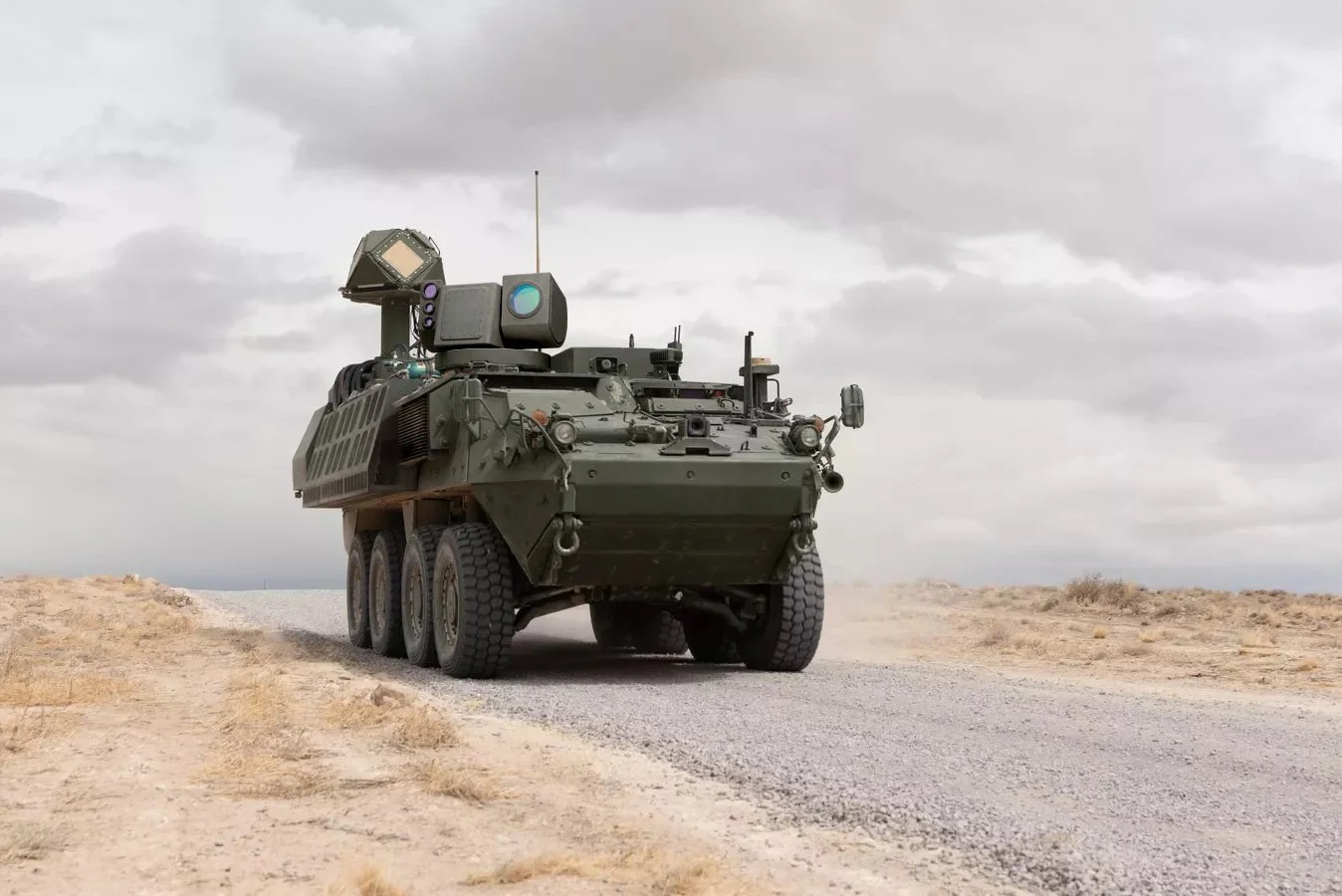
That economics explains the interest of Lt. Gen. Rick Zellmann, deputy commander of US Space Command, in directed energy: cost per shot. A missile is expended once. A laser’s marginal cost collapses toward the price of electricity. Suppressing an adversary satellite on every pass is both cheaper and politically less explosive than destroying it once.
The stratosphere, an altitude band nobody owns
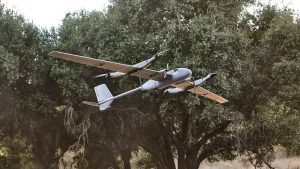
The second thread in Huntsville concerned the air nobody has claimed. The Army plans a persistent presence in the stratosphere using high-altitude balloons and fixed-wing high-altitude aircraft, including releasing and recovering unmanned aircraft from balloons and fielding networks of micro-high-altitude balloons.
The concept was tested at Vanguard 24 in September 2024, when a micro-HAB network demonstrated continuous relay transmission for an aerial intelligence architecture. The FY2027 five-year plan funds fielding an initial balloon capability to a couple of units.

The appeal is economic. A balloon at 20 kilometres delivers a local version of what a satellite sees, at a fraction of the cost, and unlike a satellite it can stay over the same ground for hours rather than waiting for the next orbital pass.
US Army Counterspace Effort — Outline
| Lead organisation | SMDC / TID-SS — Transformation Integration Directorate, Space Superiority |
| New acquisition office | Program Executive Office for Counter Command and Control |
| Personnel structure | Space Operations Branch, finalised June 2026 |
| Targets | Adversary ISR satellites and satellite communications links |
| Methods | High-energy laser, high-power microwave, millimetre wave, EW jamming |
| Excluded | Debris-generating kinetic ASAT attacks |
| Stratospheric layer | High-altitude balloons, fixed-wing high-altitude aircraft, micro-HABs |
| Budget | Counterspace an FY2027 priority; balloon funding in the five-year plan |
| Reference exercise | Vanguard 24, September 2024 — micro-HAB relay network |
The definition nobody has fixed
The weakest link is legal. Policy forbids generating long-lived debris, but the boundary of that phrase remains imprecise. A laser shot that permanently burns out a sensor creates no debris yet leaves the satellite useless — is that reversible in any meaningful sense? Where interference with an object in orbit ends is a question international law has not answered.
Everyone with satellites will face the same question
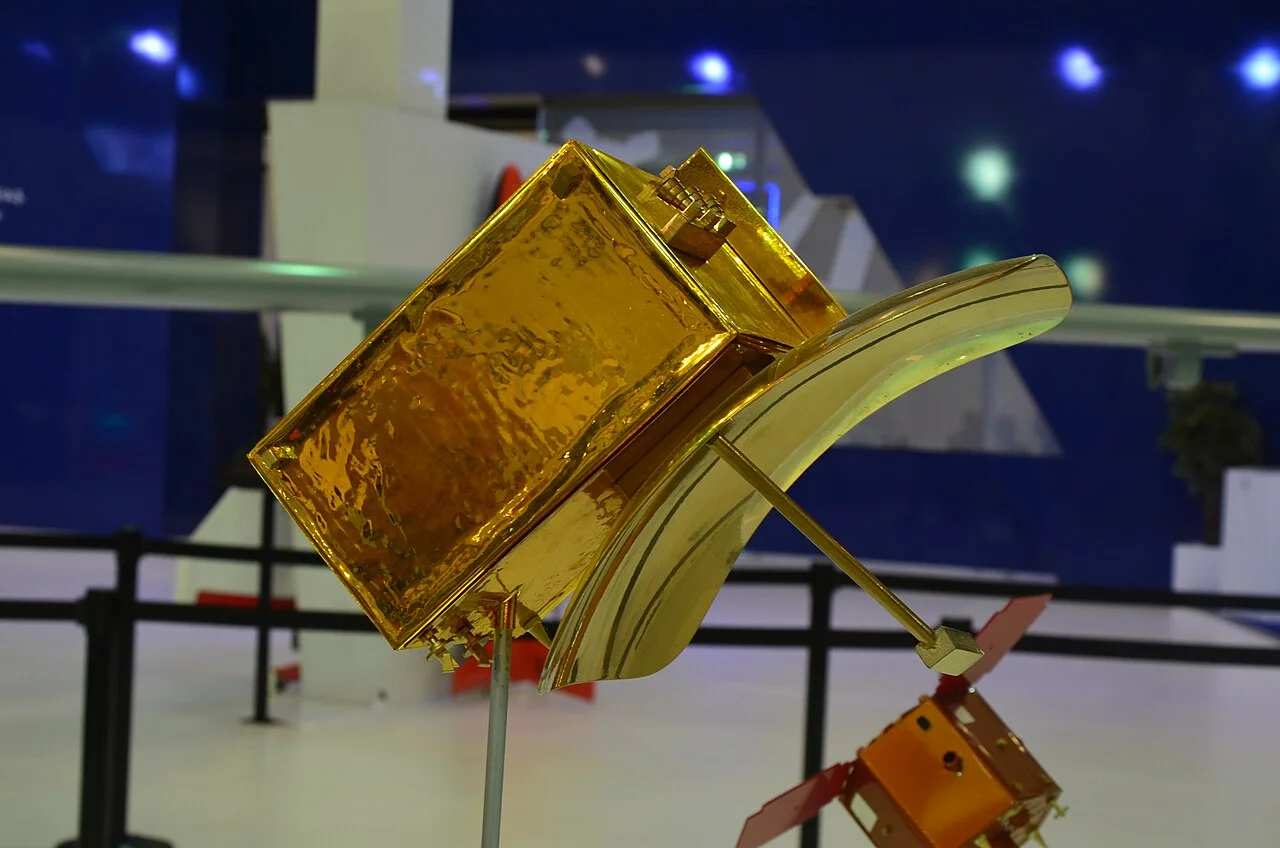
Read from outside Washington, the significance is that orbital capability has become an asset to be defended rather than merely a source of intelligence. The GÖKTÜRK-1 and GÖKTÜRK-2 reconnaissance satellites, and the GÖKTÜRK-3 synthetic aperture radar satellite in development, sit ever closer to the centre of Turkish targeting and situational awareness. ASELSAN’s work in satellite communications and electronic warfare draws on the same need to keep those links from being jammed. The debate now opening in the United States points to a question every satellite-owning military will have to answer this decade: what happens when the eye in orbit goes dark?
Sources
- Breaking Defense — “Army gears up to ‘engage’ enemy surveillance satellites”, 13 August 2026
- 2026 Space and Missile Defense Symposium, Huntsville, Alabama
- Remarks by Col. Joe Mroszczyk (SMDC / TID-SS) and Lt. Gen. Rick Zellmann (SPACECOM)
- US Army fiscal 2027 budget priority statements