PANG: France’s Next-Generation Nuclear Aircraft Carrier and What It Means for Naval Power Projection in 2038

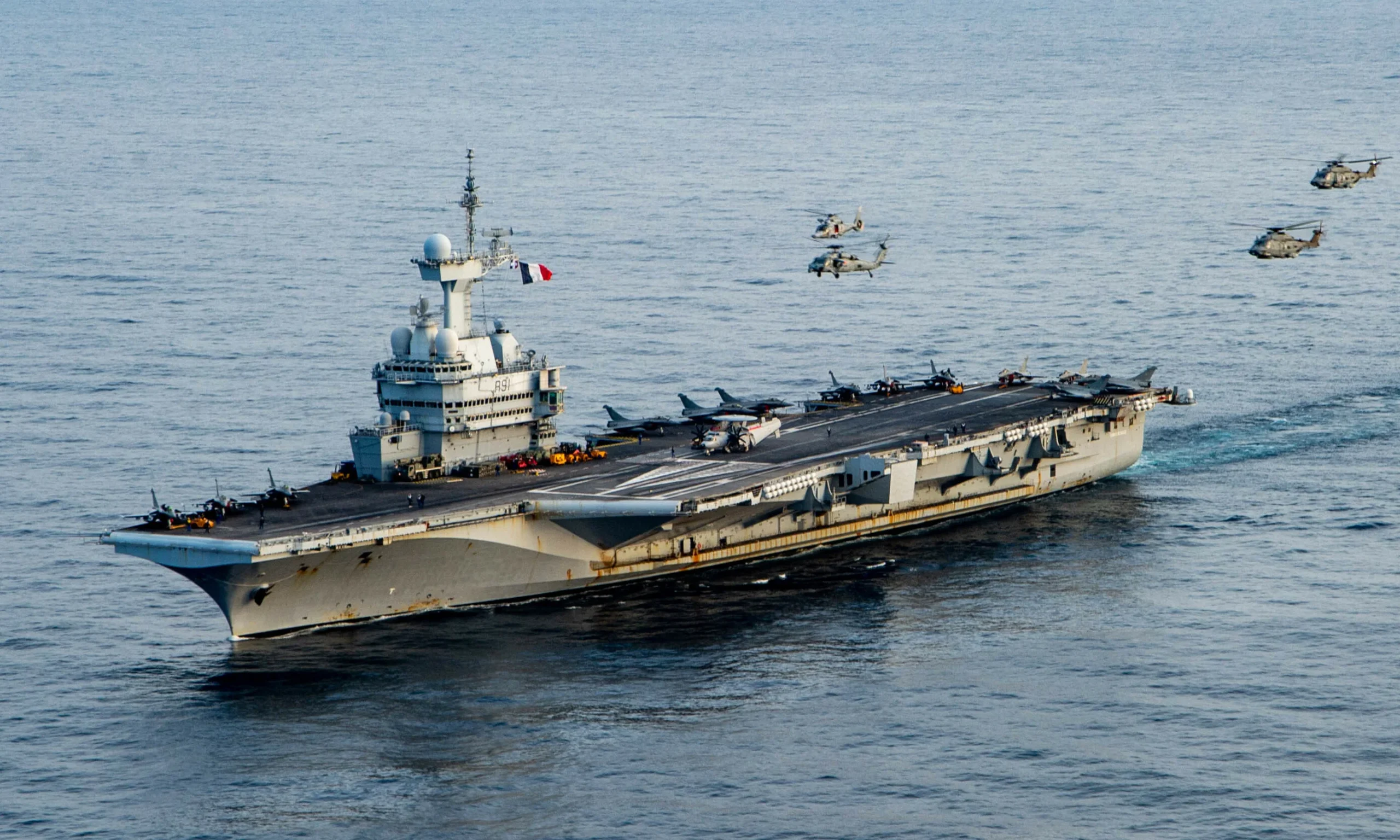
When France awarded Naval Group a €5.5 billion design contract for its next-generation nuclear aircraft carrier in 2022, it formalized a strategic commitment: France would remain one of only two nations capable of deploying a nuclear-powered carrier air wing. The PANG (Porte-Avions de Nouvelle Génération), scheduled for service entry around 2038, will replace the Charles de Gaulle (R91) and represent an almost doubling of Carrier Air Wing capacity — from 40 aircraft to approximately 65, aboard a platform nearly twice the displacement of its predecessor.
Why Nuclear Propulsion for a Carrier?
The case for nuclear propulsion in a carrier is distinct from the SSBN case. For a carrier, nuclear power enables four operational advantages unavailable to conventionally propelled alternatives:
- Unlimited range: The carrier itself never needs fuel replenishment — only aircraft fuel and crew provisions. Strike groups can maintain operational tempo for months without tanker support.
- Maximum speed, always: Conventional carriers must conserve fuel at high speed. A nuclear carrier can sprint at 27+ knots indefinitely — critical for repositioning ahead of a fast-moving crisis.
- Expanded aviation footprint: Space occupied by conventional fuel tanks (~40% of hull volume) becomes available for aircraft stores, maintenance facilities, and crew accommodations.
- Strategic autonomy: No dependence on allied port access for refueling — a significant factor for a nation with France’s independent foreign policy doctrine.
Technical Specifications (Planned)
| Parameter | Value |
|---|---|
| Displacement | ~75,000 tons |
| Length | ~300 m |
| Propulsion | 2 × K22 nuclear reactors |
| Speed | 27+ knots |
| Aircraft capacity | ~65 (Rafale M + potential F-35) |
| Launch system | EMALS (Electromagnetic Aircraft Launch System) |
| Recovery system | AAG (Advanced Arresting Gear) |
| Target commissioning | 2038 |
| Crew | ~2,000 |
EMALS: The Technical Leap That Changes the Aircraft Mix
PANG’s adoption of EMALS — the same electromagnetic launch system used on the Gerald R. Ford class — is consequential for two reasons. First, EMALS imposes approximately 25% less mechanical stress on aircraft airframes than steam catapults, extending aircraft service life and reducing maintenance cycles. Second, it enables a wider range of launch weights, making PANG potentially compatible with next-generation heavy strike aircraft, unmanned carrier aviation systems, and potentially the F-35C. The F-35C question is significant: France has officially stated it will deploy the Rafale NXT (next-generation Rafale) on PANG, but has not ruled out operating the F-35C for interoperability with NATO carrier air wings.
Comparison with Peer Carriers
| Carrier | Country | Displacement | Aircraft | Propulsion | Launch system |
|---|---|---|---|---|---|
| PANG | France | ~75,000 t | ~65 | Nuclear | EMALS |
| Gerald R. Ford | USA | 100,000 t | 90 | Nuclear | EMALS |
| Prince of Wales | UK | 65,000 t | 36 (F-35B) | Conventional | STOVL (ski-jump) |
| Fujian | China | ~80,000 t | ~60 | Conventional | EMALS |
| INS Vikrant | India | 45,000 t | 36 | Conventional | STOBAR (ski-jump) |
PANG and the European Strategic Autonomy Debate
PANG is regularly cited in European defense discourse as Exhibit A for why France can credibly claim a leading role in European security: it is the only European nation that will operate a nuclear carrier from 2038 onward (the UK’s carrier, though capable, uses conventional propulsion and depends partly on US-supplied F-35Bs). President Macron’s invitations to European partners to consider joint operations with the French carrier group — part of his broader European strategic autonomy initiative — gain substance specifically because France will possess this capability when Germany, Italy, Spain, and others do not.
Editorial Assessment — Envanter Media
PANG represents a €12-15 billion wager on the enduring relevance of carrier aviation in a world where some analysts argue that cheap drones and anti-ship missiles have made large surface platforms obsolete. France’s counter-argument, implicit in the investment: a carrier battle group’s value is not just in its strike aircraft, but in the political signal it sends — the ability to deploy an independent, credible, near-peer power projection capability anywhere on Earth within 72 hours. In an era when strategic credibility requires visible military capability, PANG will be Exhibit A for France’s claim to global strategic autonomy.