Python 5 Air-to-Air Missile: 360° LOAL, Dual-Band IIR and Turkish BOZDOGAN Comparison
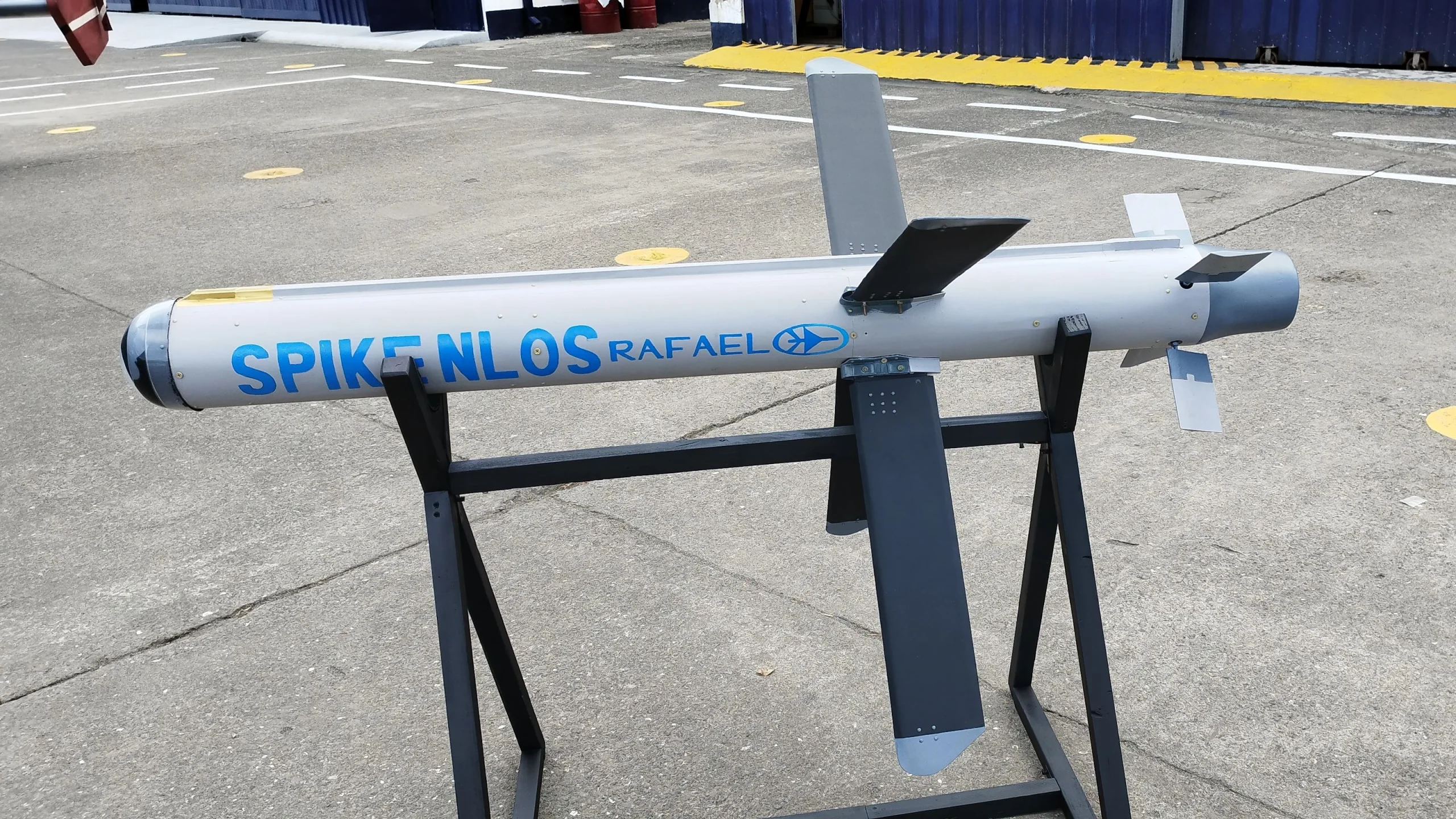
Python 5 is a short-to-medium range air-to-air missile developed by Israel’s Rafael Advanced Defense Systems, combining a wide-angle dual-band infrared (IIR) seeker with a Lock-On After Launch (LOAL) capability across a full 360-degree engagement envelope. Unlike conventional air-to-air missiles that require the pilot to point the aircraft toward the threat before locking on, Python 5 allows the pilot to cue the missile using the DASH helmet-mounted sight and fire toward any direction — including directly behind the aircraft. This combination redefines close-range aerial combat dynamics for the aircraft equipped with it.
Python Family History
| Generation | System | Entry | Key Innovation |
|---|---|---|---|
| 1st gen | Shafrir 1 | ~1963 | First indigenous IR-guided AAM |
| 2nd gen | Shafrir 2 | ~1969 | Combat use 1973 War; improved IR |
| 3rd gen | Python 3 | ~1978 | Enhanced maneuverability; Lebanon 1982 use |
| 4th gen | Python 4 | ~1993 | Wider lock-on angle; improved IRCCM |
| 5th gen | Python 5 | ~2003 | 360° LOAL; dual-band IIR; DASH integration |
360° LOAL and DASH Integration
Python 5’s core tactical advantage is the combination of Lock-On After Launch (LOAL) with the DASH (Display and Sight Helmet) system.
Traditional LOBL (Lock-On Before Launch): The pilot must lock the seeker onto the target before firing. This requires pointing the aircraft (or at minimum, the head) toward the target.
Python 5 LOAL: The missile is fired toward an approximate bearing; the seeker acquires and locks the target in flight. The pilot does not need to be pointing toward the target at the moment of firing.
The operational significance emerges in conjunction with DASH. The DASH system projects a targeting reticle on the pilot’s helmet visor. When the pilot turns their head, that angle is transmitted directly to the missile seeker. A pilot can turn their head toward a threat at 6 o’clock — directly behind the aircraft — and fire Python 5 in that direction without maneuvering the aircraft to point at the threat.
This transforms within-visual-range (WVR) combat: the question shifts from “who can first point their nose at the enemy” to “who can first turn their head.”
Dual-Band IIR Seeker
Python 5 uses a dual-band infrared seeker simultaneously detecting in both mid-wave infrared (MWIR: 3–5 µm) and long-wave infrared (LWIR: 8–12 µm). Two operational advantages:
- Flare resistance: Single-band IR seekers can be defeated by flare countermeasures. A dual-band seeker can discriminate between a real jet engine’s spectral signature (which is distinct across both bands) and a flare (which dominates one band). Replicating the same aircraft engine spectral profile in both bands simultaneously is extremely difficult.
- All-aspect engagement: Consistent lock performance from all target aspects — front, side, rear — in varying atmospheric conditions.
Technical Specifications
| Parameter | Value |
|---|---|
| Developer | Rafael Advanced Defense Systems (Israel) |
| Type | Short-to-medium range air-to-air missile |
| Range | ~20 km (disclosed) |
| Guidance | Dual-band IIR seeker with IRCCM |
| Lock mode | LOBL and LOAL (360° acquisition envelope) |
| Helmet integration | DASH display and sight helmet — full integration |
| Maneuverability | High-g; thrust vectoring |
| Warhead | Proximity + contact fuze; fragmentation |
| Weight | ~105 kg |
| Platforms | F-15I, F-16I (Israel); F/A-18, F-15SG (export) |
| IOC | ~2003 |
Turkish Counterpart: BOZDOGAN and GOKDOGAN
| Attribute | Python 5 | BOZDOGAN | GOKDOGAN |
|---|---|---|---|
| Range | ~20 km | ~20 km | ~100+ km |
| Guidance | Dual-band IIR | IIR (single-band; development) | Active radar seeker |
| LOAL | 360° LOAL | Targeted (in development) | BVR; radar guided |
| Helmet integration | DASH (full) | Turkish helmet system targeted | Not applicable (BVR) |
| Platform | F-15I, F-16I | F-16, KAAN | KAAN (primary), F-16 (planned) |
| Status | Operational since ~2003 | Development / test phase | Development phase |
Competitor Systems
| System | Country | Range | Key Difference |
|---|---|---|---|
| AIM-9X Sidewinder Block II | USA / Raytheon | ~35 km | Helmet-cueing LOAL; wide installed base |
| IRIS-T | Germany / Diehl | ~25 km | High maneuverability; NATO standard; 180° seeker |
| ASRAAM | UK / MBDA | ~25 km | High speed; IIR; RAF standard |
| MICA IR | France / MBDA | ~50 km | Medium+short range combined; IIR + active radar options |
Operator Countries
| Country | Platform | Status |
|---|---|---|
| Israel | F-15I, F-16I | Primary operator; operational |
| India | Tejas Mk1A (planned) | Evaluation / procurement |
| Singapore | F-15SG, F-16D | Operational |
Envanter Medya Analysis
Python 5 represents the culmination of Israel’s longest continuous weapons development programme — five generations across six decades, each built directly on the operational feedback of its predecessor. This iterative, combat-informed development model is the most efficient path from requirement to reliable fielded capability; the Python series is its clearest illustration.
For Turkey: BOZDOGAN and GOKDOGAN are correctly aligned with KAAN’s development trajectory. The strategic logic is sound — a domestically developed fighter requires domestically developed missiles, or the whole air superiority calculus remains dependent on foreign supply chains. The capability gap relative to Python 5 is real but predictable: Python 5’s 360° LOAL was built on Python 3 and 4’s combat data. BOZDOGAN will need its own operational validation before the gap closes. KAAN’s entry into service marks the beginning of that validation process.