Kership Launches Petar Njegoš I, Montenegro’s First Offshore Patrol Vessel

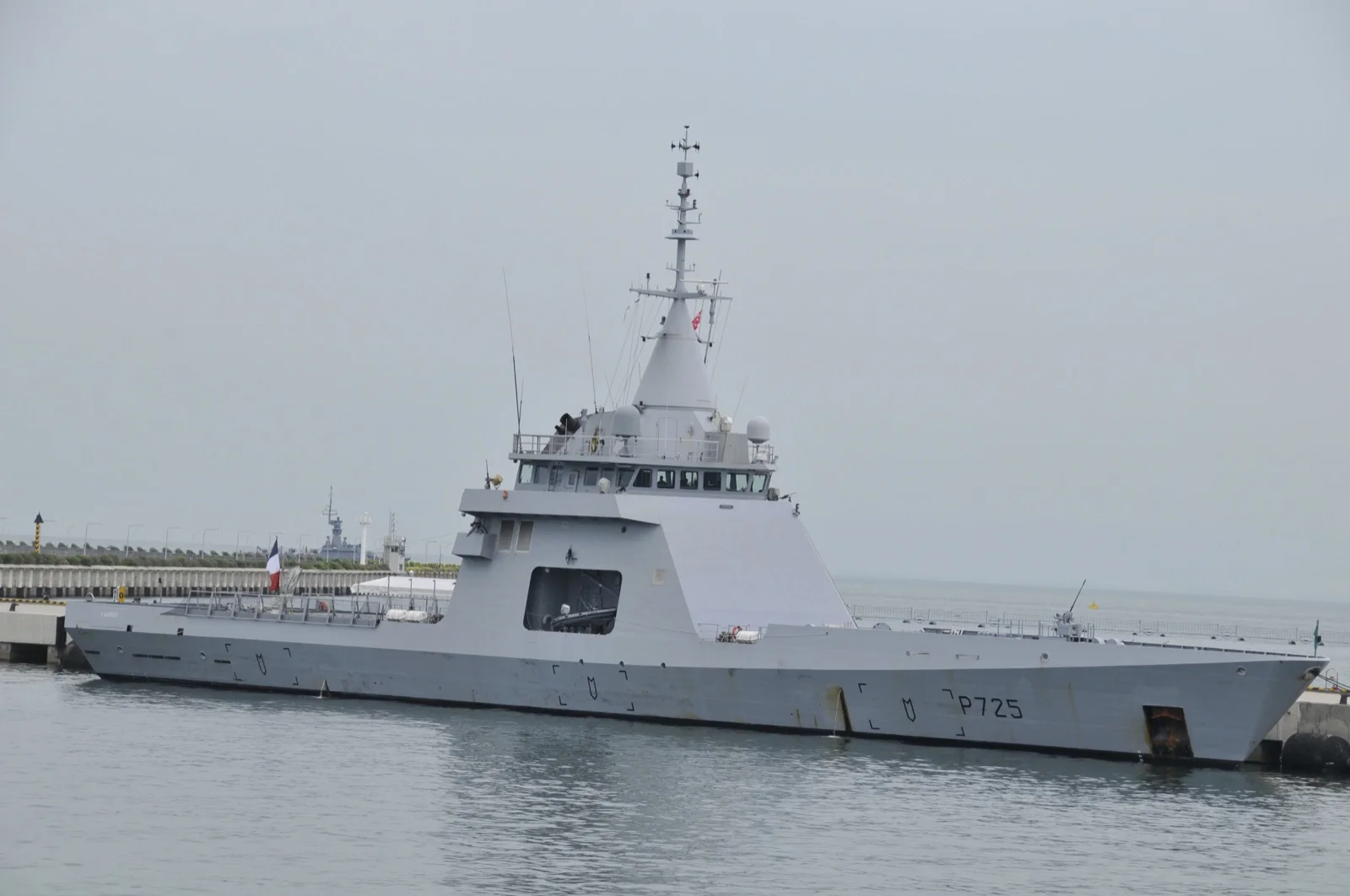
French shipbuilder Kership has launched the Petar Njegoš I, the first of two offshore patrol vessels ordered by Montenegro. The 620-tonne OPV 60M will be the most capable warship the country has operated since it retired its Kotor-class frigates in 2019, and it arrives with a sensor fit that says something about what the Adriatic now demands.
The launch
The ceremony took place on 11 September 2026 at the Concarneau yard in Brittany. Kership is a joint venture between Naval Group and Piriou, set up to combine naval requirements with commercial shipbuilding efficiency.
Montenegro’s Deputy Prime Minister Aleksa Bečić described the launch as an important step for the country’s ability to protect its maritime space.
The schedule is firm. Petar Njegoš I is due for delivery in April 2027, with the second vessel to be launched in the first quarter of 2027. The contract was signed in November 2024.
What the OPV 60M carries
The ship measures 62.2 metres in length and 9.5 metres in beam, displacing 620 tonnes. That puts it in the lower-middle band of the offshore patrol vessel category, designed for sustained presence in a semi-enclosed sea rather than for oceanic deployment.
Several elements of the fit stand out. The vessel carries a hull-mounted sonar, which is not standard for a patrol ship of this size and signals a serious interest in underwater awareness. There is a CBRN citadel. Naval Group’s Polaris combat management system ties sensors and effectors together. Two intervention craft are carried for special operations tasks.
The yard describes the platform as capable of anti-air and anti-surface warfare and of neutralising asymmetric threats. On a hull this size, anti-air should be read as point defence. The class exists primarily for smuggling interdiction, migration control, search and rescue, and sovereignty patrol.
Why Montenegro needs them
When Montenegro joined NATO in 2017, a country of 600,000 people brought geography rather than capability. Its coastline, wedged between Croatia and Albania, completed alliance control of the eastern Adriatic shore.
But after the two 1,250-tonne Kotor-class frigates were withdrawn in 2019, the navy was effectively reduced to small craft. NATO had closed the coast on the map without being able to patrol it in practice.
The two OPVs fill that gap. Narcotics and weapons trafficking routes across the Adriatic, irregular migration flows, and growing concern over undersea infrastructure security already define the ships’ likely taskings. The presence of a hull sonar suggests that last item is not incidental.
What it means for French naval exports
Kership has built a steady export line aimed at Europe’s small and mid-sized navies. Variants of the same OPV architecture are offered to different customers, resting on Naval Group’s mission systems and Piriou’s serial shipbuilding discipline.
In the Balkans, supplier choice carries a second dimension. Regional navies have spent the past decade choosing between Turkish, Italian, Dutch and French yards, and delivery time and integrated logistic support now weigh as heavily as price.
The Turkish angle
Turkish yards are active in the same tonnage band. ARES Shipyard, Dearsan and TAIS offer offshore patrol vessel families between roughly 60 and 95 metres, and Türkiye has signed contracts in this segment across the Gulf, Africa and Southeast Asia in recent years.
Montenegro is a reminder that small-navy procurement inside Europe is rarely a purely technical comparison. A country in the EU accession process choosing a French yard carries an alignment signal alongside the specification sheet. Turkish yards compete hardest precisely where that political layer is thinner.
Sources
- Opex360 / Zone Militaire, Kership launches Petar Njegoš I, 13 September 2026
- Kership (Naval Group – Piriou joint venture) corporate statements
- Government of Montenegro, remarks by Deputy Prime Minister Aleksa Bečić