Military Power of Georgia: How Many Tanks, Aircraft and Ships Are in the Inventory? (2026)

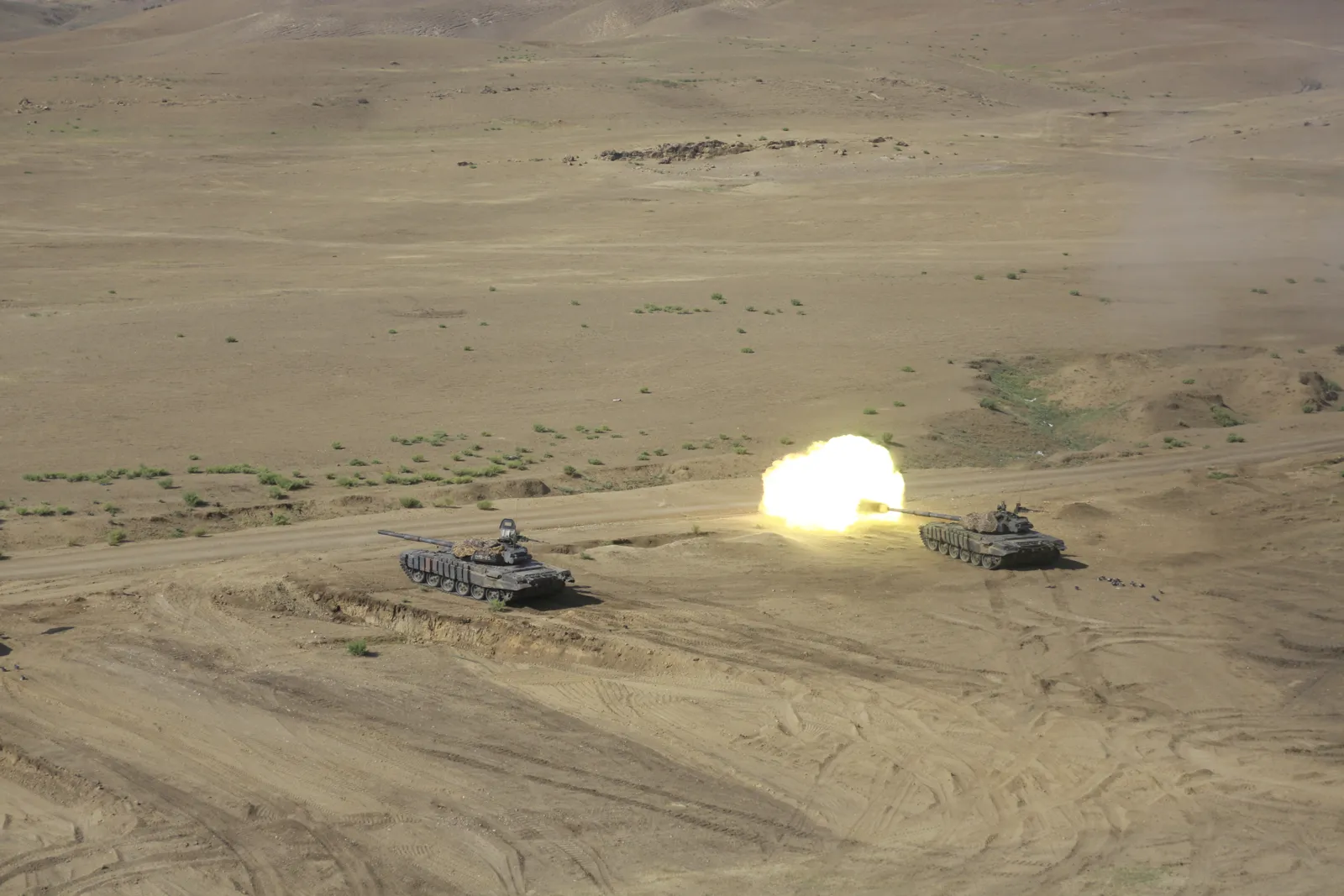
Georgia’s military inventory shows how a Black Sea country with roughly a fifth of its territory under Russian control has rebuilt its army since the 2008 war. Georgia ranks 95th of 145 countries in the Global Firepower 2026 index with a PwrIndx score of 2.0779. The inventory counts 132 tanks, 61 aircraft and 19 naval platforms; there are no fighter jets, and the navy was merged into the coast guard in 2009. The procurement map mirrors the country’s foreign policy: Soviet-era core platforms are backed by systems bought from Israel, France, Poland, the United States and Türkiye, while domestic production around the Delta centre grows with the Didgori armoured family and the RS-122 rocket launcher. This article covers the land, air, missile and naval inventory of the Georgian Defence Forces and the defence dimension of the relationship with Türkiye.
At a Glance
- Active personnel: Global Firepower gives 37,000 active personnel and 205,500 reserves. Parliament kept the force ceiling at 37,000 for 2026. The new defence code that entered into force in 2025 turned conscription into a 12-month service drawn by electronic lottery, with all conscripts now serving within the Defence Forces
- Main battle tanks: Global Firepower counts 132 tanks. The core is the T-72SIM-1, upgraded in Georgia with Israeli assistance to add GPS navigation, thermal vision and a friend-or-foe recognition system. Open-source lists give about 200 T-72s in total, with a significant share in storage
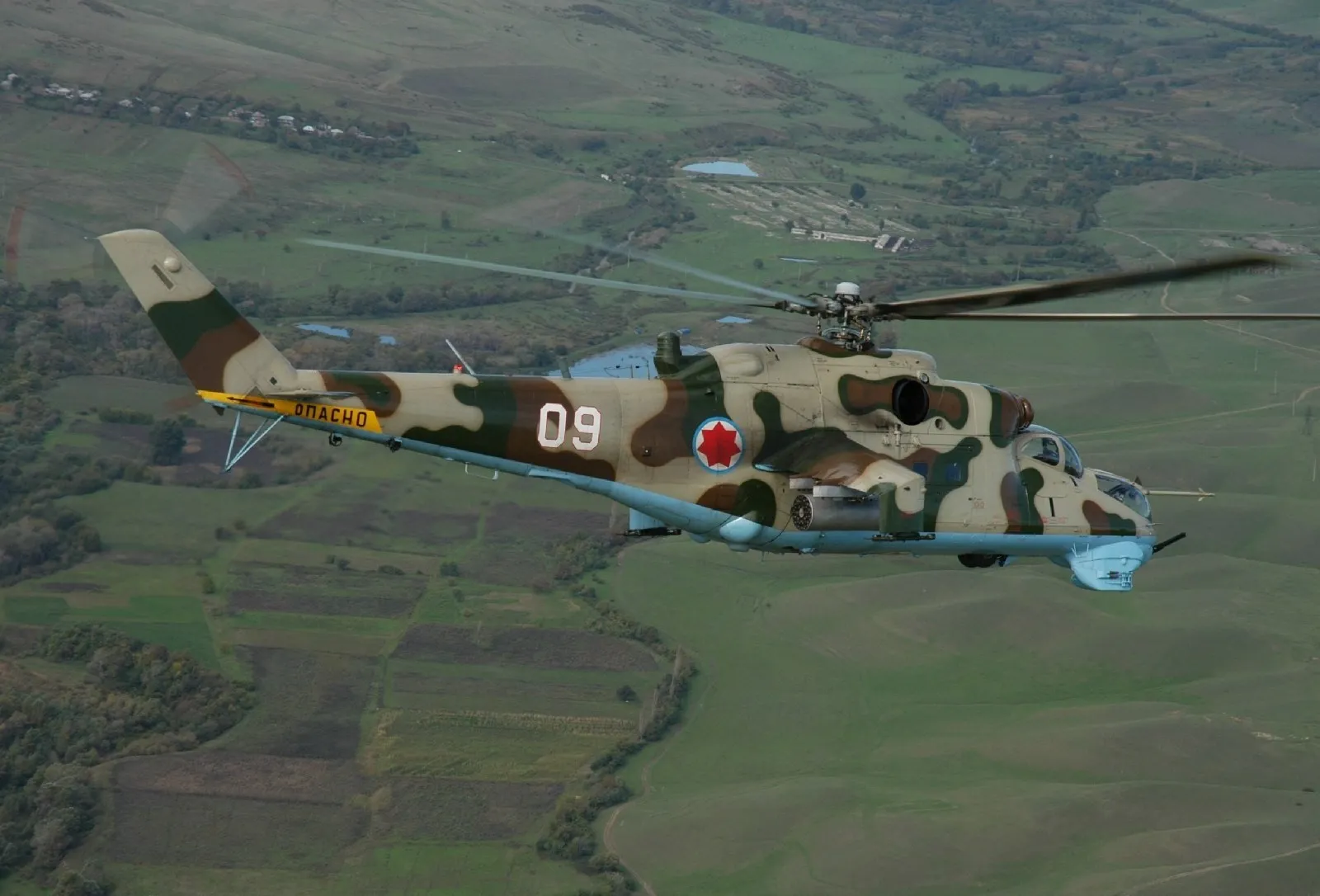
- Military aircraft: 61 (Global Firepower): 0 fighters, 5 attack aircraft, 2 transports, 44 helicopters. The striking power lies in the Su-25s overhauled by the Tbilisi Aircraft Manufacturing plant and 11 Mi-24 attack helicopters; all 8 L-39 trainer jets were restored and returned to service in 2026
- Artillery: Global Firepower counts 67 self-propelled guns (32 DANAs, 13 2S3 Akatsiyas, 20 2S1 Gvozdikas), 121 towed guns and 42 multiple rocket launchers: 12 LAR-160s, 18 RM-70s, 13 BM-21s and domestically built RS-122s
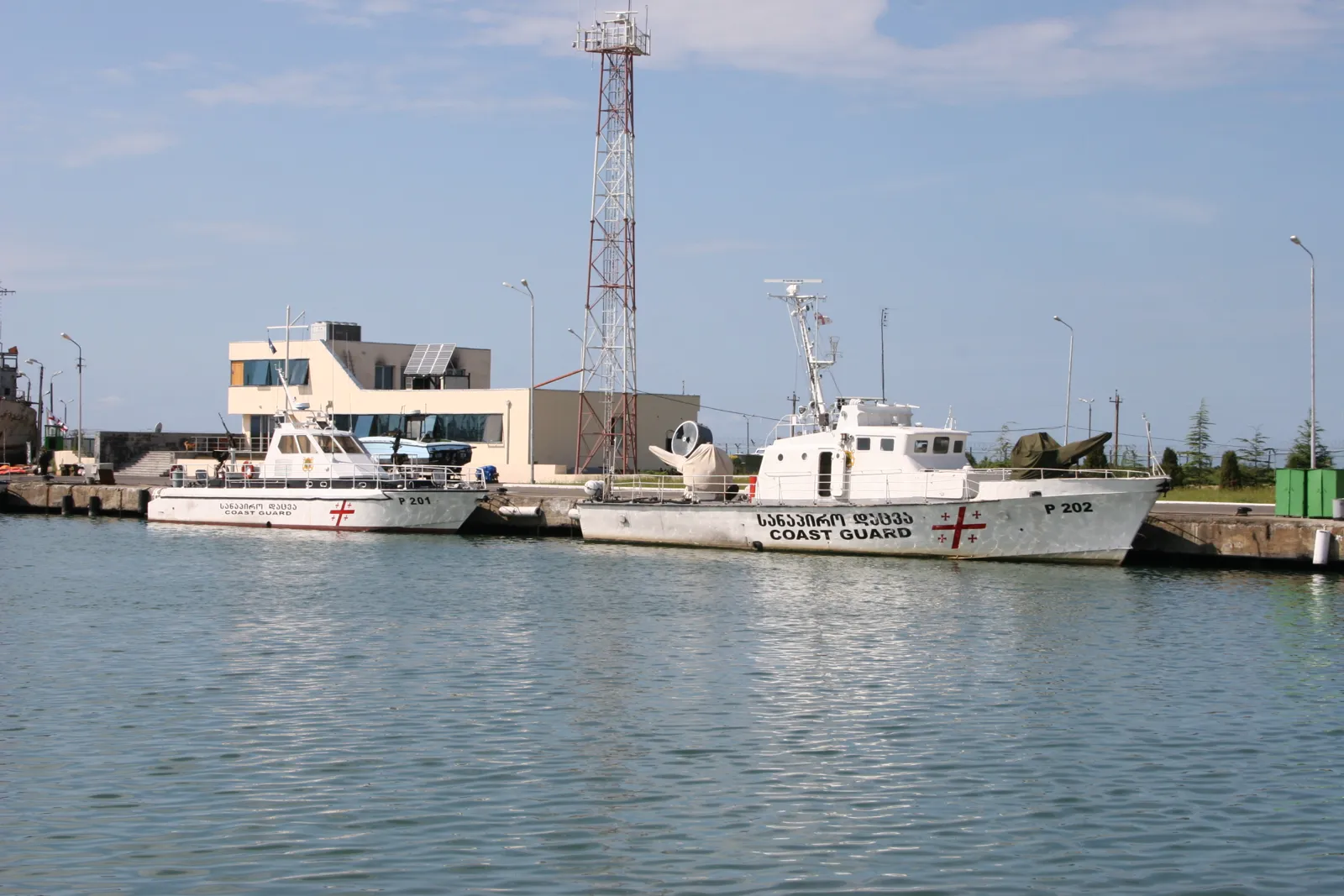
- Naval platforms: 19 (Global Firepower). The navy was disbanded in 2009 and its ships passed to the Coast Guard under the Interior Ministry’s Border Police; the main base is Poti. The largest vessels are two Island-class patrol boats gifted by the US on 18 October 2018: Ochamchire (P-23) and Dioskuria (P-25)
- Defence budget: The 2026 defence budget is 1.89 billion lari, about 703 million dollars and 1.66 percent of GDP. Georgia ranks 95th of 145 countries in Global Firepower with a PwrIndx score of 2.0779
Note: The inventory figures below are approximate values drawn from open sources such as Global Firepower, the IISS Military Balance and SIPRI.
About the Georgia Armed Forces
The Georgian Defence Forces consist of land units grouped under East and West commands, the Aviation and Air Defence Command, the Special Operations Forces and the National Guard. A 2018 legal reform renamed the Armed Forces as the Defence Forces. About 20 percent of the country’s territory — Abkhazia and South Ossetia — has been under Russian military presence since the 2008 war, and Moscow recognises both regions as independent states.
The Global Firepower 2026 count shows 37,000 active personnel and 205,500 reserves. Parliament kept the force ceiling at 37,000 for 2026; the cap does not apply in wartime or mobilisation. The new defence code that entered into force in 2025 reorganised conscription: 18-year-olds are selected by electronic lottery, service lasts 12 months and all conscripts now serve within the Defence Forces rather than in other agencies.
The commander-in-chief is President Mikheil Kavelashvili, installed by an electoral college in December 2024. The government is led by Prime Minister Irakli Kobakhidze of the Georgian Dream party, with Irakli Chikovani as defence minister. Defence policy operates in the shadow of the anti-government protests running since November 2024 and of strained relations with the West.
The 2026 defence budget is 1.89 billion lari, about 703 million dollars and 1.66 percent of GDP. The ratio sits below both NATO’s 2 percent benchmark and the regional average; Global Firepower counts the budget at 680 million dollars. Funds go mostly to personnel, the upkeep of ready forces and gradual modernisation, with major platform purchases remaining limited.
External defence ties have been reshaped since 2024. The EU accession process was frozen by government decision in November 2024 until 2028, Washington suspended the strategic partnership at the end of that year and several cooperation programmes stopped. By contrast, the trilateral format with Türkiye and Azerbaijan runs without interruption: the trilateral defence ministers’ mechanism, the Caucasus Eagle special forces exercises and the Eternity series focused on protecting energy and transport infrastructure all continue.
The defence industry is organised around the state-owned Delta scientific-technical centre. The Didgori armoured vehicle family, the RS-122 rocket launcher, ammunition and personal equipment sit in Delta’s product line; Tbilaviamsheni (TAM) overhauls the Su-25 fleet and develops the domestic T-31 attack UAV. Joint production lines set up with Poland’s WB Group build Warmate loitering munitions and FlyEye reconnaissance drones in Georgia.
Land Forces Inventory
| System type | Est. quantity |
|---|---|
| Main battle tanks (T-72SIM-1) | Global Firepower counts 132 tanks; open-source lists give about 200 T-72s, with a significant share in storage. The SIM-1 package was applied in Georgia in cooperation with Israel, adding GPS navigation, thermal vision, a target acquisition system and a tactical battle map with friend-or-foe recognition. In 2007, 400 Kombat gun-launched anti-tank missiles were bought from Ukraine |
| Infantry fighting vehicles (BMP-1 and BMP-2) | More than 30 BMP-1/1Us operational (over 140 hulls in total) and more than 46 BMP-2s. The armoured personnel carrier backbone consists of 43+ BTR-80s, 60+ BTR-70s and 66+ MT-LBs; some BRDM-2 scout cars have been through local modernisation |
| Armoured vehicles (BMC Vuran, Türkiye) | 46 delivered from Türkiye on 12 June 2024, the product of a defence cooperation agreement signed in 2022 and the newest armoured class in the inventory. In the same process, the 72 Nurol Ejders bought from Türkiye in 2009 were, according to open-source inventory lists, returned to Türkiye in exchange for the Vuran delivery |
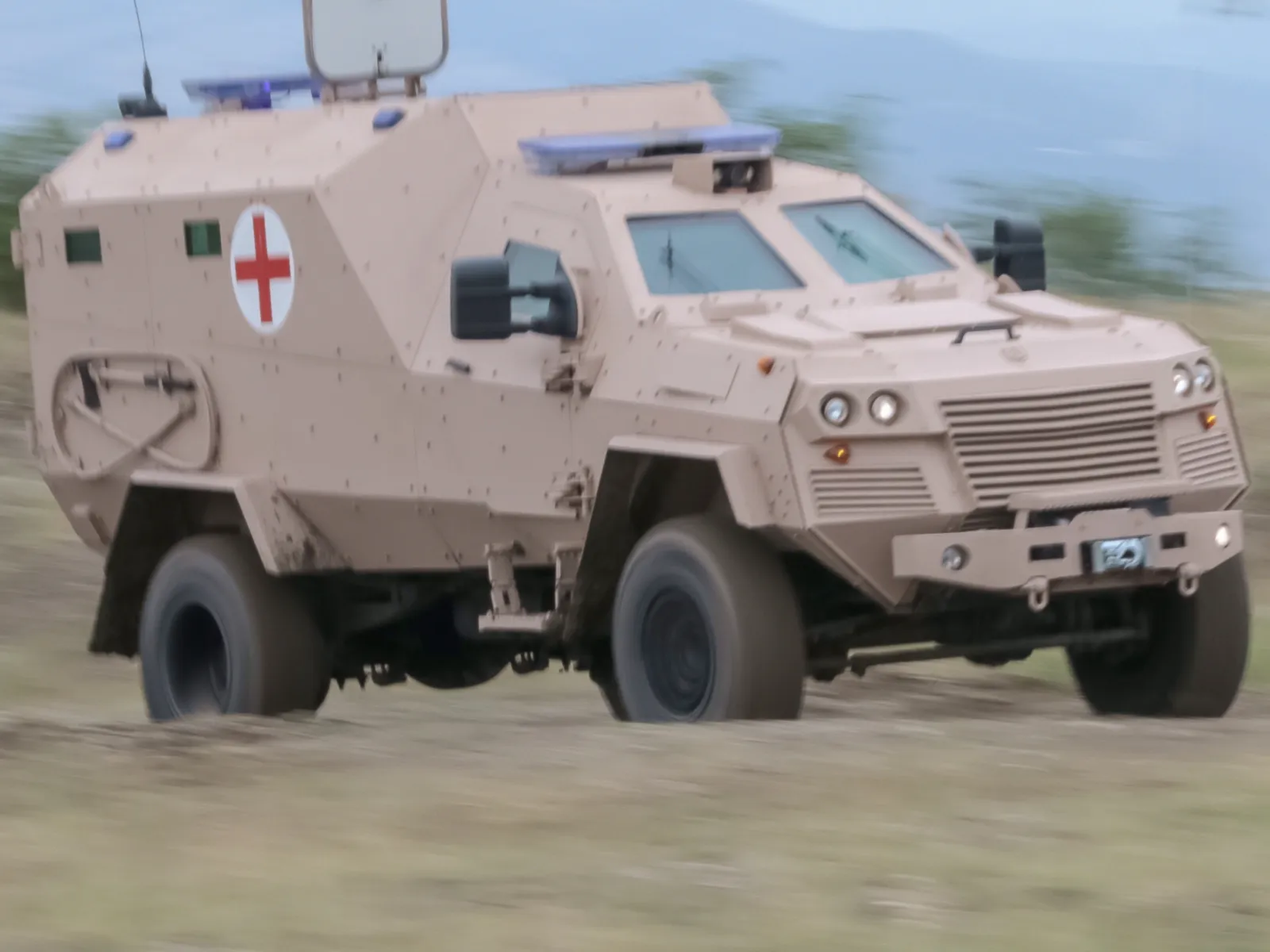
| Domestic armoured family (Didgori) | The Didgori-1 and Didgori-2 scout and personnel carriers and the Didgori-3 MRAP and ambulance versions, built by the state-owned Delta scientific-technical centre, are in service. Forty US-donated HMMWVs and 28 Israeli Wolf armoured vehicles bought in 2009 are in the inventory; the Lazika tracked fighting vehicle remained a prototype |
| Self-propelled and towed artillery | On the self-propelled side, 32 DANAs (152 mm, Czechoslovak-built), 13 2S3 Akatsiyas and 20 2S1 Gvozdikas. On the towed side, 58 D-30s, 12 D-20s, 10 Msta-Bs and 3 Giatsint-Bs; 16 MT-12 100 mm anti-tank guns are also in the inventory |
| Rocket artillery (including RS-122) | 12 Israeli-built LAR-160s (160 mm), 18 RM-70s and 13 BM-21 Grads. At least 8 domestic RS-122s, developed by Delta on the BM-21 base with an armoured cab, are in service; the system is one of the most visible products of the Georgian defence industry |
| Anti-tank weapons | 72 Javelin command launch units and 410 missiles delivered from the US in 2018-2019; a further sale of 46 launchers and 82 missiles was approved in 2021. Soviet-era Fagot, Konkurs and Metis and the Ukrainian-built Skif are also in service, and the Mi-24s carry Shturm missiles |
Air Force Inventory
| Platform | Est. quantity |
|---|---|
| Total military aircraft | 61 (Global Firepower): 0 fighters, 5 attack aircraft, 2 transports, 44 helicopters, 11 attack helicopters. The air force was dissolved as a separate service in 2010 and re-established in 2016 as the Aviation and Air Defence Command |
| Attack aircraft (Su-25) | 9 Su-25 combat airframes and 2 Su-25UB trainers; the fleet was overhauled and modernised at the Tbilaviamsheni (TAM) plant. The Su-25’s original production line was in Tbilisi in the Soviet era, and the Su-25KM Scorpion upgrade developed with Israel’s Elbit in 2001 came from the same plant |
| Trainer jets (L-39) | 8 L-39 Albatros; all were restored, modernised and returned to service in 2026. Besides jet training, the aircraft can also take on light attack duties |
| Helicopters | 11 Mi-24 attack helicopters (12 before the 2008 war), 15 Mi-8/171s, 6 UH-1Hs and 2 Mi-14s. The Interior Ministry’s Border Police also operates about 20 Mi-8s and 3 Airbus H145s ordered in December 2022 and delivered in 2024 |
| Unmanned aerial vehicles | More than 10 Israeli-built Elbit Hermes 450s plus Aerostar, and the Atlantic I and Alpha 800 bought from Spain in 2020. The weight is on joint production with Poland’s WB Group: 100 Warmate loitering munitions were ordered in 2022, a joint production line was set up in Georgia in 2023 and the first locally built Warmates were tested; the FlyEye reconnaissance drone is also co-produced. There is no armed MALE-class UAV |
| Domestic UAV project (T-31) | The domestic T-31 attack UAV project developed at Tbilaviamsheni drew inspiration from the performance of the Turkish-built Bayraktar TB2 in Karabakh. Transport duties fall to 2 An-28s; there is no strategic airlift capability |
Missile and Air-Defence Systems
| System | Type / Note |
|---|---|
| Medium-range air defence (Buk-M1) | 3 batteries; the vehicles came from Ukraine and 96 9M38 missiles were delivered in 2007-2008. The system stood out as the most effective element of Georgian air defence in the 2008 war with recorded shoot-downs of Russian aircraft |
| Israeli layer (SPYDER-SR and SPYDER-MR) | One SPYDER-SR battery and 75 Python-5 missiles were bought from Israel in 2008. According to open sources, a Ukrainian An-124 cargo aircraft carried 3 SPYDER-MR launchers from Israel to Georgia in 2025; the MR version offers a range of 35-50 kilometres |
| Short-range air defence | 8 Osa-AKM systems (bought from Ukraine after modernisation; 6-10 batteries according to sources), Mistral ATLAS launchers delivered from France in 2018, about 200 ZU-23-2s and 12 ZSU-23-4 Shilkas |
| Man-portable air defence | Alongside the Soviet-era Strela-2M, Strela-3 and Igla, a Grom package of 30 launchers and 100 missiles was bought from Poland in 2007; Stingers were ordered in 2018 and the Polish-built Piorun in 2024 |
| Radar and early warning | The backbone of the air picture is the 6 Ground Master 403 long-range and 6 Ground Master 200 tactical radars bought from France in 2018. Kolchuga passive sensors from Ukraine and Soviet-era P-18, 1L117 and ST-68U radars remain in service |
| Ballistic missiles and coastal defence | Air defence is the priority modernisation item as the main lesson of the 2008 war; even so, the inventory holds no ballistic or cruise missiles and no land-based anti-ship system |
Naval Power
| Class / Type | Est. quantity |
|---|---|
| Total naval platforms | 19 (Global Firepower). The Georgian Navy was disbanded in 2009 and its ships and missions passed to the Coast Guard Department under the Interior Ministry’s Border Police. The headquarters and main base are at Poti |
| Patrol vessels (Island class) | The fleet’s largest vessels are two 34-metre Island-class boats taken over from the US Coast Guard: Ochamchire (P-23) and Dioskuria (P-25), handed over at a ceremony in Poti on 18 October 2018. The names honour Georgian boats destroyed in the 2008 war |
| Patrol flotilla | Patrol boats and small craft, including Soviet-era Zhuk-class boats, form the body of the fleet. Four fast-response boats donated by the European Union and the International Organization for Migration are based at Poti and Batumi |
| Legacy of the 2008 war | In August 2008, Russian troops entered Poti and destroyed a large part of Georgia’s naval assets in port. The merger of the navy into the coast guard in 2009 was a direct consequence of that loss |
| The Abkhaz coast and Ochamchire | Russia’s plan to build a base for Black Sea Fleet elements at Ochamchire in occupied Abkhazia was announced in 2023. The project is the most critical item on Georgia’s maritime security agenda and brings Black Sea tensions to its shores |
| Frigates, corvettes and submarines | None. Maritime security rests on coast guard capabilities and international cooperation; the Black Sea littoral state hosts allied ship visits under the Montreux regime |
The Turkey Angle: Turkish Defence Industry
Türkiye is Georgia’s neighbour and one of its most visible defence partners. The most concrete current link is armoured vehicle procurement: on 12 June 2024 the Defence Forces formally took delivery of 46 BMC Vuran armoured vehicles from Türkiye, the product of a defence cooperation agreement signed in 2022. At the ceremony, Deputy Defence Minister Sergo Janelidze spoke of a long and successful defence cooperation record between the two countries, while Türkiye’s ambassador in Tbilisi, Ali Kaan Orbay, called the delivery a sign of Ankara’s support for Georgia’s security, independence and territorial integrity. Inventory lists also include Otokar Cobra vehicles.
The history of Turkish armour in Georgia goes back further. Nurol Makina’s Ejder 6×6 armoured personnel carrier entered serial production for the first time on a Georgian order; 72 vehicles were delivered by 2009, making the Ejder one of the first major references of Turkish armoured vehicle exports. According to open-source inventory lists, these vehicles were returned to Türkiye in connection with the Vuran delivery, and the same lists report that they were subsequently transferred to Syria.
The institutional backbone is the trilateral format that also includes Azerbaijan. The 12th meeting of the trilateral defence ministers’ mechanism was held in Ankara on 9 October 2025, where Yasar Guler, Zakir Hasanov and Irakli Chikovani signed a trilateral cooperation protocol. The 13th meeting took place in Shusha on 1-2 October 2026; a new protocol covering military, military-technical, military education and military medicine fields was signed, and the sides highlighted the role of the Eternity and Caucasus Eagle exercises in the partnership.
The exercise calendar shows the rhythm of the format. The 2025 edition of Caucasus Eagle, which brings together the special forces of the three countries, was held in Ankara; Georgia hosted the 2026 edition, with training run at the Major Gela Chedia Special Operations Training Centre at Mukhrovani near Tbilisi. The Eternity-2026 command post exercise, focused on protecting strategic infrastructure such as the Baku-Tbilisi-Ceyhan pipeline and the Baku-Tbilisi-Kars railway, was scheduled for November 2026 in Azerbaijan.
The economic foundation is even stronger than the defence relationship. Türkiye has been Georgia’s largest trading partner since 2008; bilateral volume exceeds 3.5 billion dollars and the two governments speak of a 5 billion dollar target. In 2025, Türkiye ranked first in Georgia’s imports with 2.78 billion dollars. Ankara does not recognise Abkhazia or South Ossetia and supports Georgia’s territorial integrity at every level; intense diplomatic traffic continued in 2025 with more than a hundred high-level visits.
The potential for the coming period is clear. Georgia is not a Baykar customer and holds no armed Turkish UAV; Tbilisi chose the domestic T-31 project, inspired by the TB2, and joint production with Poland for its drone needs. On the other hand, the armoured vehicle channel opened by the Vuran delivery, along with ammunition, small arms and modernisation, are fields where Turkish industry is strong. At a time of uncertainty in relations with the West, Türkiye’s position — a NATO member working with Tbilisi without interruption — offers a rare foundation in this series for defence cooperation to grow.
Frequently Asked Questions
How many tanks does Georgia have? The Global Firepower 2026 count shows 132 tanks. The core is the T-72SIM-1, upgraded in Georgia with Israeli assistance to add GPS navigation, thermal vision and a friend-or-foe recognition system. Open-source lists give about 200 T-72s in total, with a significant share kept in storage.
Does Georgia have combat jets? There are no fighters. The fixed-wing striking power consists of 9 Su-25s and 2 Su-25UBs restored and modernised by the Tbilisi Aircraft Manufacturing plant; the 8 L-39 trainer jets also returned to service in 2026. The weight of air power lies with 11 Mi-24 attack helicopters and the Warmate loitering munitions co-produced with Poland.
Does Georgia have a navy? No. The Georgian Navy was disbanded in 2009 and its ships passed to the Coast Guard under the Interior Ministry’s Border Police. Global Firepower counts 19 platforms; the largest vessels are two Island-class patrol boats gifted by the US in 2018. There are no frigates, corvettes or submarines.
What air defence systems does Georgia use? Medium-range cover comes from Buk-M1 batteries bought from Ukraine and the Israeli-built SPYDER; a SPYDER-SR battery was bought in 2008 and, according to open sources, 3 SPYDER-MR launchers were delivered in 2025. Osa-AKM, Mistral and ZU-23-2s serve at short range, and the air picture rests on Ground Master 403 and 200 radars bought from France.
Is there defence cooperation between Türkiye and Georgia? Yes, at both procurement and institutional level. Georgia took delivery of 46 BMC Vuran armoured vehicles from Türkiye on 12 June 2024 under a 2022 defence cooperation agreement, and 72 Nurol Ejders had been delivered by 2009. The 13th meeting of the Türkiye-Azerbaijan-Georgia defence ministers’ mechanism was held in Shusha on 1-2 October 2026, and Georgia hosted the Caucasus Eagle 2026 special forces exercise.
Bottom Line
Georgia’s inventory shows clearly what a small army that took heavy losses in 2008 prioritises on a limited budget. The picture has two layers: an old backbone of Soviet-era T-72s, BMPs and Buk-M1s, and a new layer formed by systems bought from Israel, France, Poland, the United States and Türkiye and by domestic production around Delta. The arrival of SPYDER-MR launchers in 2025, the Warmate and FlyEye joint production lines and the return of the entire L-39 fleet to service in 2026 show the direction of modernisation; the absence of fighters, a navy and long-range strike remains a structural limit. A budget stuck at 1.66 percent of GDP and the uncertainty in relations with the West make major platform purchases difficult in the short term. For Türkiye, Georgia is both a real customer and a strategic neighbour: 46 BMC Vurans have entered the inventory, the armoured vehicle relationship that began with the Ejder has passed fifteen years, and the trilateral ministers’ mechanism and the Caucasus Eagle exercises renew the institutional bond every year. The stability of the country crossed by the Baku-Tbilisi-Ceyhan and Baku-Tbilisi-Kars lines is a direct security matter for Ankara, and armoured vehicles, ammunition and counter-drone systems stand out as the fields where this relationship could turn into new procurement contracts.
Related Reading
Sources
- Global Firepower — Georgia
- IISS — The Military Balance
- SIPRI — Arms Transfers Database
- Wikipedia — Defence Forces of Georgia
- Wikipedia — Equipment of the Defence Forces of Georgia
- Wikipedia — Georgian Air Force
- Civil.ge — Georgia receives NATO-standard APCs from Turkey
- Overt Defense — 46 BMC Vurans delivered
- APA — 13th trilateral defence ministers’ meeting in Shusha
- Türkiye Today — 12th trilateral meeting and protocol in Ankara
- 1TV — Georgia hosts Caucasus Eagle 2026
- Azerbaijan MoD — Eternity-2026 planning conference
- Anadolu Agency — Türkiye-Georgia 5 billion dollar trade target
- DFWatch — 2026 force ceiling kept at 37,000