Best Turkish Armored Vehicles for Serbia: Domestic Industry, Terrain and Technical Fit Analysis


Serbia is a landlocked country at the heart of the Balkans, combining the flat Pannonian plain in the north with hilly, rugged terrain in the south. Unlike many mid-sized armies, Serbia possesses a developed domestic armored-vehicle industry: produced under Yugoimport SDPR, the Lazar 3 (8×8) armored personnel carrier, the Miloš (4×4) multi-purpose vehicle, the M-20 MRAP family and the BOV series cover most of the country’s wheeled-armor and mine-protected needs domestically. Its main battle tank inventory is built largely on the M-84 (a domestic T-72 derivative).
This makes an honest starting point essential when assessing the technical fit of Turkish armored vehicles for Serbia: in the wheeled armored personnel carrier and MRAP classes, where the domestic counterpart is strong, the technical fit of external procurement is low, because Serbia meets those needs with its own industry. The technical fit of Turkish vehicles stands out more in niche areas: classes such as a modern tracked infantry fighting vehicle, where the domestic gap is comparatively larger, plus specific special-mission packages and subsystem/integration solutions without export restrictions. This analysis relies solely on publicly available sources; it contains no sales, agreement or political forecast and aims to present a measured, balanced technical frame.
Wheeled Armored Vehicles
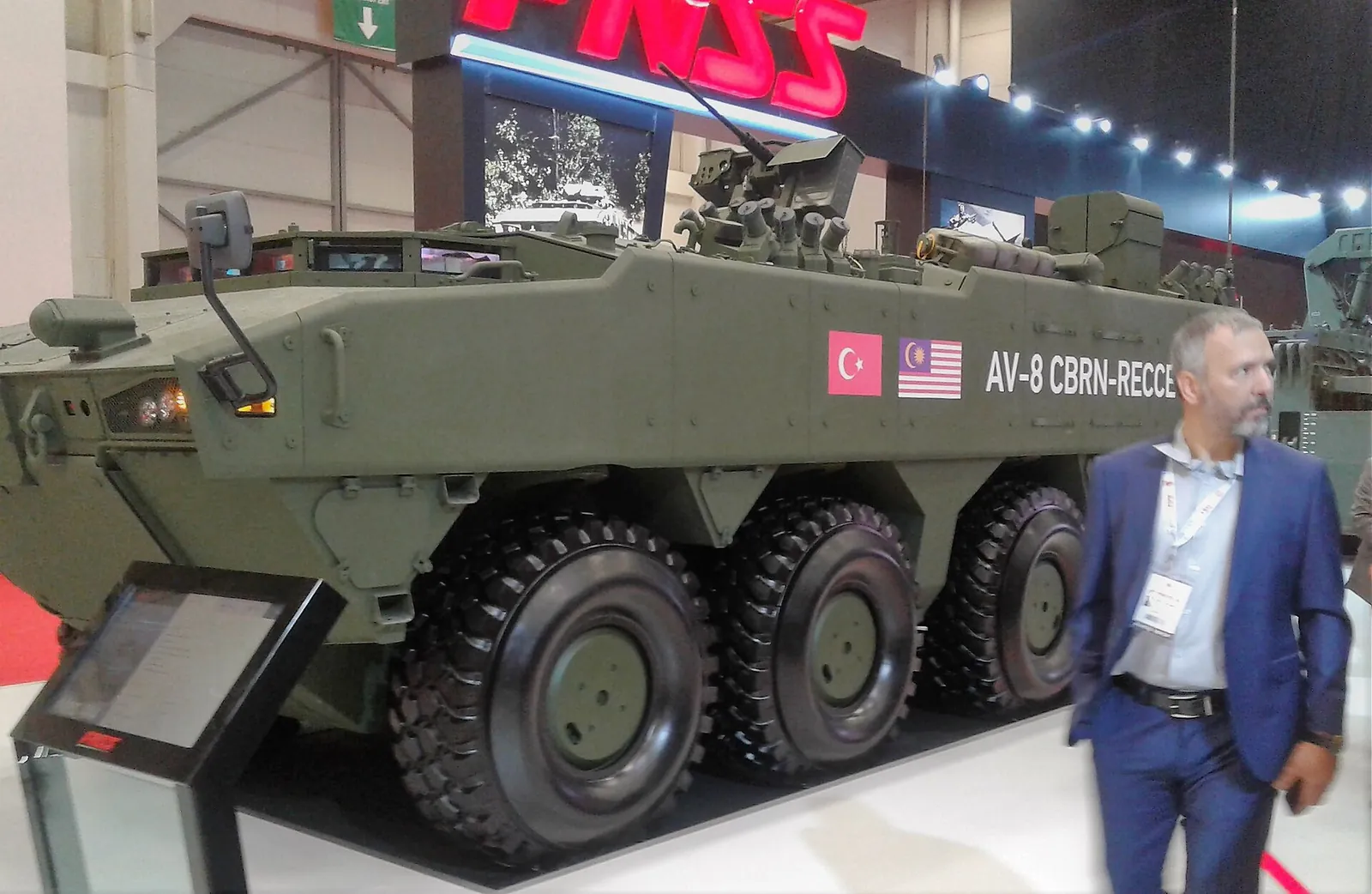
Although Serbia’s northern plains suit wheeled armored vehicles, this is the class where the country is most saturated. Yugoimport’s Lazar 3 (8×8) modular armored personnel carrier and Miloš (4×4) multi-purpose vehicle cover troop-transport, command and patrol needs domestically. Consequently, the technical fit of Turkish wheeled platforms such as FNSS PARS, Otokar ARMA or COBRA II is low in this class; although capable in their own right, they largely overlap with the existing domestic counterpart and form no strong technical case for external procurement.
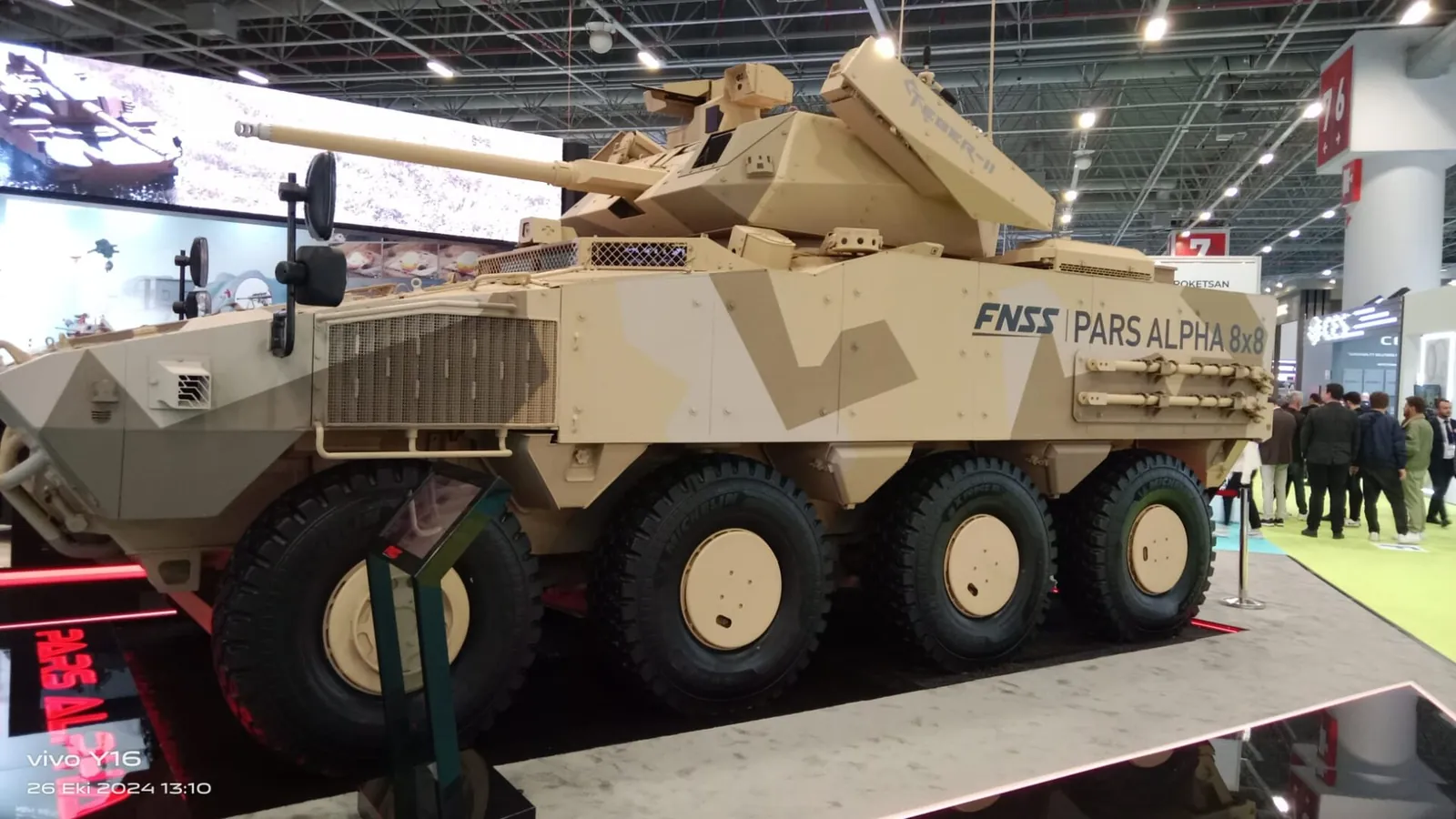
The FNSS PARS family is an amphibious, modular option across 4×4, 6×6 and 8×8 configurations; Otokar ARMA is similarly in the 6×6/8×8 amphibious wheeled class; Otokar COBRA II is a 4×4 recce/patrol platform. Their open-source characteristics are strong, but in Serbia’s context the technical need-gap that would set them apart is limited. The only possible niche is not a whole new platform, but sub-tier items such as specific mission modules or weapon-station integrations — and even that competes with domestic solutions.
| Turkish vehicle | Configuration | Domestic counterpart | Technical fit |
|---|---|---|---|
| FNSS PARS 8×8 | 8×8 amphibious | Lazar 3 (8×8) | Low — high domestic overlap |
| Otokar ARMA | 6×6 / 8×8 | Lazar 3 | Low — high domestic overlap |
| Otokar COBRA II | 4×4 | Miloš (4×4) | Low — domestic counterpart exists |
Configuration and equipment options are based on the manufacturer’s public brochures; any country-specific order content should be treated as an unconfirmed estimate.
MRAP and Mine-Protected Vehicles
Mine-resistant vehicles are another class in which Serbia is domestically strong. Yugoimport and related industry can meet mine-protected transport and patrol needs at home through the M-20 MRAP family and BOV series derivatives. The technical fit of Turkish MRAP/tactical armored vehicles such as Nurol Makina EJDER YALÇIN, BMC KIRPI or AMAZON for Serbia is therefore low; while these are capable platforms on their own, they overlap directly with existing domestic production capacity.
Nurol Makina EJDER YALÇIN is a 4×4 tactical armored vehicle with high ballistic and mine protection; Nurol NMS is a lighter 4×4; BMC KIRPI is a classic high-hull MRAP; BMC AMAZON is a modern 4×4 tactical MRAP. Although their technical characteristics look strong in open sources, Serbia’s domestic MRAP capability weakens the technical case for external procurement in this class. A limited technical fit could be considered only for very specific protection levels or special-mission configurations not yet covered by domestic production — and that is an unconfirmed assumption.
| Turkish vehicle | Class | Domestic counterpart | Technical fit |
|---|---|---|---|
| Nurol EJDER YALÇIN | 4×4 tactical armored | M-20 MRAP / BOV | Low — domestic overlap |
| Nurol NMS | 4×4 light | BOV derivatives | Low–medium niche |
| BMC KIRPI | MRAP | M-20 MRAP | Low — domestic overlap |
| BMC AMAZON | 4×4 tactical MRAP | M-20 / BOV | Low — domestic overlap |
In short, the mine-protected class is a need Serbia can largely cover with its own industry, which honestly keeps the technical fit of Turkish MRAP vehicles at a low level.
Tracked Armored Combat Vehicles
Tracked armored combat vehicles (IFVs) are the class where the technical fit of Turkish vehicles is comparatively highest in the Serbian context. Serbia’s mechanized-infantry inventory relies mainly on the Soviet/Yugoslav-legacy M-80A (BVP M-80) tracked IFV family, and these platforms are ageing. Although the domestic industry is strong in the wheeled and MRAP classes, a comparative gap exists in the fully modern, heavily protected tracked IFV class, which somewhat strengthens the technical case for external procurement or cooperation here.
The FNSS KAPLAN family is a modular tracked IFV/assault vehicle configurable with different turrets and anti-tank missile integrations. The Otokar TULPAR is a medium-heavy tracked IFV oriented to mechanized infantry with modern turret options. Across the mixed terrain between the plains-heavy north and the hilly south, high soft-ground performance and the ability to carry heavy protection raise the technical value of this class. Even so, the fit is not absolute: the high fuel, maintenance and training burden of tracked platforms must be stated plainly, and Serbia’s own potential to develop a tracked IFV could narrow this gap over time.
| Turkish vehicle | Class | Domestic status | Technical fit |
|---|---|---|---|
| FNSS KAPLAN | Tracked IFV/assault | M-80A ageing | Medium niche — gap exists |
| Otokar TULPAR | Medium-heavy tracked IFV | Modern counterpart limited | Medium niche — gap exists |
| Subsystem / turret integration | Modernization | Domestic hull + external subsystem | Niche — open to cooperation |
In sum, the tracked IFV is the class where the technical fit of Turkish vehicles for Serbia is most meaningful; yet even this is not an absolute advantage but a niche fit tied to the domestic gap, and it must be balanced against the logistics burden.
Comparative Assessment (Domestic Vehicles Included)
The tables below match the Turkish armored vehicles covered here with Serbia’s domestic counterparts and score their technical fit across ten criteria. The assessment is based on open sources; it is not a precise performance measurement. In the classes where Serbia’s domestic industry is strong, the overall external fit is honestly kept low.
Turkish vehicles and Serbian domestic counterparts
| Turkish vehicle | Serbian domestic counterpart | Shared mission area |
|---|---|---|
| FNSS PARS 8×8 | Yugoimport Lazar 3 | 8×8 wheeled transport |
| Otokar COBRA II | Miloš (4×4) | Light 4×4 multi-purpose |
| BMC KIRPI / EJDER YALÇIN | M-20 MRAP / BOV | MRAP mine protection |
| FNSS KAPLAN / Otokar TULPAR | M-80A (ageing) | Tracked IFV (domestic gap) |
Ten-criteria suitability scoring
Scores are an open-source technical assessment on a 1–10 scale, not a precise performance measurement. In the “Domestic gap” criterion, a higher score means the domestic counterpart is weak/absent (i.e. more room for an external solution). “Overall external fit” indicates the technical fit of the Turkish vehicle once Serbia’s domestic industry is taken into account.
| Vehicle | Terrain | Protection | Mobility | Firepower | Modular | Sustain. | Domestic gap | NATO/std. | Export fit | Overall ext. fit |
|---|---|---|---|---|---|---|---|---|---|---|
| FNSS PARS 8×8 | 8 | 7 | 8 | 8 | 9 | 7 | 3 | 7 | 6 | 4.2 |
| Otokar ARMA | 8 | 7 | 8 | 8 | 8 | 7 | 3 | 7 | 6 | 4.2 |
| Otokar COBRA II | 7 | 7 | 8 | 6 | 7 | 8 | 3 | 7 | 6 | 4.0 |
| EJDER YALÇIN | 7 | 8 | 8 | 7 | 8 | 7 | 3 | 7 | 6 | 4.3 |
| Nurol NMS | 7 | 7 | 8 | 6 | 7 | 7 | 4 | 7 | 6 | 4.6 |
| BMC KIRPI | 6 | 8 | 7 | 6 | 6 | 8 | 3 | 7 | 6 | 4.0 |
| BMC AMAZON | 7 | 8 | 8 | 6 | 7 | 7 | 3 | 7 | 6 | 4.1 |
| FNSS KAPLAN | 7 | 8 | 7 | 9 | 9 | 5 | 7 | 7 | 6 | 6.4 |
| Otokar TULPAR | 7 | 8 | 6 | 9 | 9 | 5 | 7 | 7 | 6 | 6.2 |
As the table shows, wheeled and MRAP-class Turkish vehicles show a low overall external fit because of Serbia’s strong domestic counterparts (Lazar 3, Miloš, M-20, BOV); the highest technical fit appears in the tracked IFV class (FNSS KAPLAN, Otokar TULPAR), where the domestic gap is comparatively larger. Even this is a niche, not an absolute, fit.
Technical Fit for Serbia: Synthesis
Unlike many countries, Serbia’s armored-vehicle requirement profile is largely met by a strong domestic industry. This is the decisive frame when assessing the technical fit of Turkish armored vehicles: in the classes where the domestic counterpart is strong, the technical case for external procurement is weak.
Wheeled armor (FNSS PARS, Otokar ARMA, COBRA II): because Yugoimport Lazar 3 (8×8) and Miloš (4×4) meet this need domestically, the technical fit is low. MRAP / mine-protected vehicles (Nurol EJDER YALÇIN, NMS, BMC KIRPI, AMAZON): due to the M-20 MRAP and BOV series, the technical fit is again low. In these two classes the Turkish vehicles are technically capable, but in Serbia’s context there is no strong technical case for external procurement.
The area where technical fit is comparatively most meaningful is the modern tracked infantry fighting vehicle class (FNSS KAPLAN, Otokar TULPAR). Because Serbia’s mechanized inventory relies on the ageing M-80A family, a domestic gap exists here; yet this fit is niche rather than absolute and must be balanced against the high sustainment burden of tracked platforms. Beyond that, cooperation areas with comparatively low export restrictions — such as subsystem, turret or weapon-station integration rather than a whole platform — may also carry a niche technical fit.
| Class | Domestic status | Turkish vehicle technical fit |
|---|---|---|
| Wheeled armor | Strong (Lazar 3, Miloš) | Low |
| MRAP / mine-protected | Strong (M-20, BOV) | Low |
| Tracked IFV | Ageing (M-80A) | Medium / niche (most meaningful) |
| Subsystem / integration | Partial gap | Niche — open to cooperation |
This assessment contains no forecast about any sale, agreement or political decision; it honestly maps requirement against solution using publicly available technical data only, with Serbia’s domestic industry taken into account.
Frequently Asked Questions
Why are Turkish armored vehicles a low priority for Serbia in most classes?
Serbia has a strong domestic armored-vehicle industry. The Yugoimport Lazar 3 (8×8), Miloš (4×4), M-20 MRAP and BOV series meet most wheeled and mine-protected needs domestically. So although Turkish wheeled and MRAP vehicles are technically capable, the technical fit of external procurement is low because the domestic overlap is high.
In which class is the fit of Turkish vehicles comparatively higher?
In the modern tracked infantry fighting vehicle (IFV) class. Because Serbia’s mechanized inventory relies on the ageing M-80A family, a domestic gap exists; the FNSS KAPLAN and Otokar TULPAR carry a comparatively more meaningful technical fit in that gap. Even so, this is a niche rather than an absolute fit.
What are Serbia’s domestic vehicles?
The leading ones are the Yugoimport SDPR-built Lazar 3 (8×8 armored personnel carrier), Miloš (4×4 multi-purpose), the M-20 MRAP family and the BOV series. The main battle tank inventory is built largely on the M-84 (a domestic T-72 derivative).
Why is the FNSS PARS a low fit for Serbia?
The PARS is a technically capable, modular, amphibious 8×8 platform; but because Serbia’s Lazar 3 (8×8) domestic vehicle meets the same need, the technical fit is low. Any country-specific order content should be treated as an unconfirmed estimate.
Why is the tracked IFV fit not absolute?
The FNSS KAPLAN and Otokar TULPAR could fill a gap relative to the ageing M-80A inventory; but tracked platforms carry a high fuel, maintenance and training burden. Serbia’s own potential to develop a tracked IFV could also narrow this gap over time. The fit is therefore kept at a niche level.
What does subsystem cooperation mean?
Instead of procuring a whole new platform, it means sub-tier cooperation such as integrating weapon stations, turrets or specific mission modules onto domestic hulls. These areas, with comparatively low export restrictions, may carry a niche technical fit; but they too compete with domestic solutions.
Is this analysis a sales forecast?
No. The content is purely an open-source technical assessment and makes no claim about any sale, agreement or negotiation. All country-specific configuration details should be treated as unconfirmed estimates.
Why is the assessment honest enough to say ‘low fit’?
An objective technical analysis must state plainly that in classes where the domestic industry is strong, the technical case for external procurement is weak. Offering a balanced frame rather than sales language is a basic requirement of this kind of fit analysis.
Bottom Line
Thanks to its developed domestic armored-vehicle industry (Yugoimport Lazar 3, Miloš, M-20 MRAP, BOV series), Serbia meets most of its wheeled armored personnel carrier and mine-protected vehicle needs with its own means. As a result, the technical fit of Turkish vehicles such as FNSS PARS, Otokar ARMA/COBRA II, Nurol EJDER YALÇIN, BMC KIRPI and AMAZON in these classes is honestly low — even though the vehicles are capable in their own right — because the domestic overlap is high.
The area where the technical fit of Turkish armored vehicles for Serbia is comparatively most meaningful is the modern tracked infantry fighting vehicle class (FNSS KAPLAN, Otokar TULPAR), where a domestic gap exists; even this is not an absolute advantage but a niche fit tied to the ageing M-80A inventory, and it must be balanced against a high sustainment burden. Subsystem and integration cooperation with comparatively low export restrictions may also carry a niche technical basis. This assessment maps requirement against solution using publicly available technical data only and contains no forecast of any sale or agreement.
Related Analysis
Sources
- Serbian Ministry of Defence — Serbian Armed Forces official information (mod.gov.rs)
- Yugoimport SDPR — official product information (Lazar 3, Miloš, M-20, BOV)
- IISS The Military Balance — Serbia section (ground-force inventory)
- SIPRI — military expenditure and arms transfers database
- Manufacturer technical brochures (FNSS, Otokar, Nurol Makina, BMC)
- Jane’s / specialist defense publications — Turkish and Serbian armored vehicle family data (open source)