Germany’s New Jammer Drops the Boxer: Knifefish Will Ride on Piranha 5

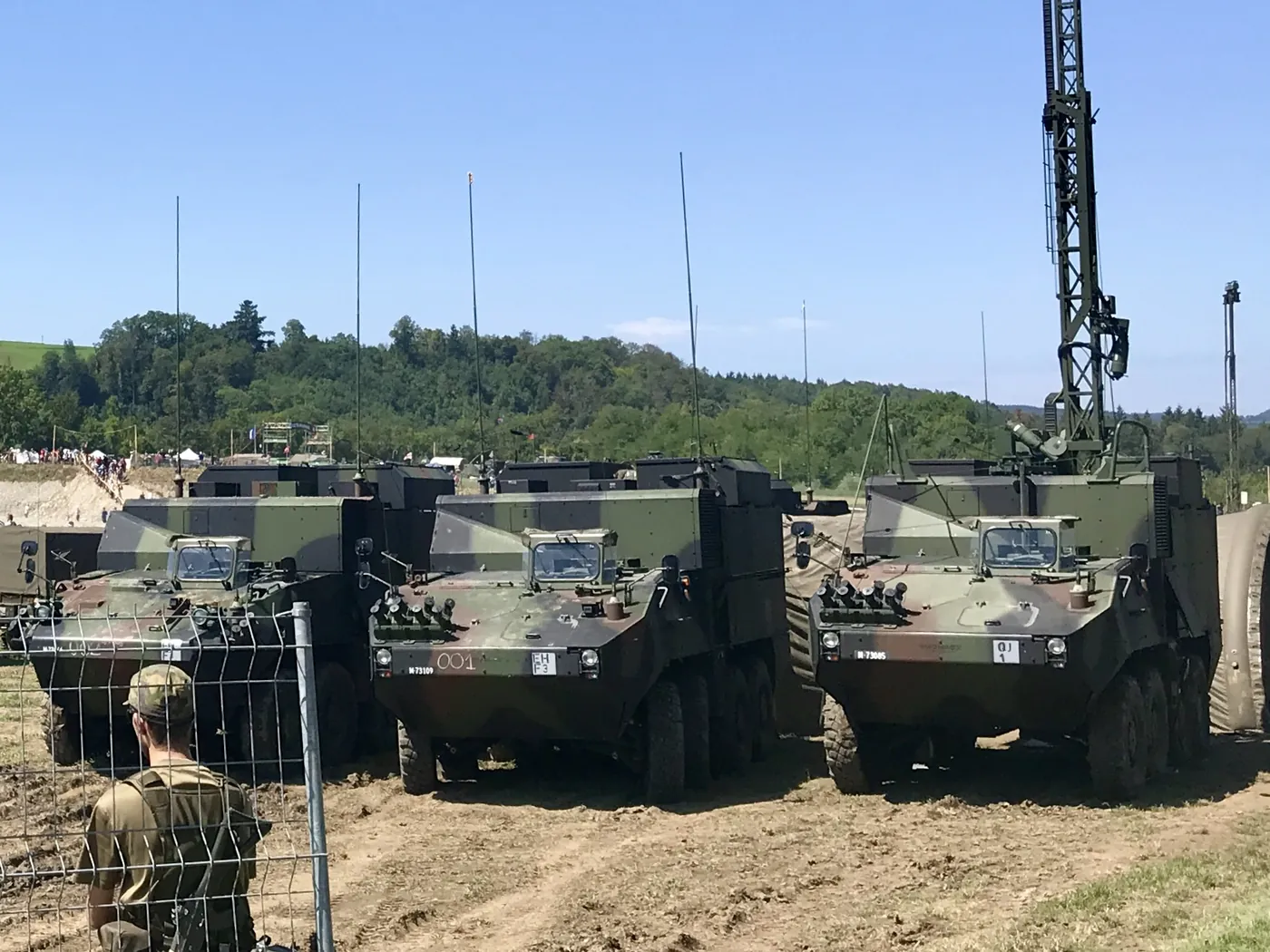
The Knifefish electronic warfare system that will renew the Bundeswehr’s jamming fleet is moving to a different chassis. Instead of the Boxer originally planned, it will be integrated on General Dynamics European Land Systems’ Piranha 5 wheeled armoured vehicle.
Knifefish replaces the ageing Hornisse jammers currently carried on Fuchs vehicles. Its role is jamming and deception against enemy radio communications.
Why the chassis changed
The reason is consortium arithmetic rather than engineering. Denmark and Switzerland — both already Piranha operators — showed greater appetite for joining the programme, and standardising on a hull those countries already support lowers the cost of entry for them. In systems where the mission payload is designed independently of the vehicle carrying it, the carrier decision routinely follows export and partnership logic rather than technical preference.
The Boxer, jointly developed by Germany and the Netherlands, is the more modular platform thanks to its swappable mission module architecture. The Piranha family simply has the broader European user base.
Numbers
Hensoldt is prime contractor for the EloKa systems; the company is reported to have acquired five Piranha 5 hulls for conversion. Roughly €100 million in initial orders is already booked, with the programme’s potential value across the Netherlands, Germany and partners estimated at around €300 million.
A first lot of 32 vehicles is projected, split between German and Dutch forces. Long-term requirement is on the order of 190 vehicles, of which 108 are planned for the Bundeswehr.
Why ground EW came back
Vehicle-mounted jamming was one of the capabilities European armies allowed to atrophy after the Cold War. Two decades of expeditionary operations reduced land electronic warfare largely to counter-IED jammers.
Ukraine reversed that. Intercepting, locating and jamming battlefield radio traffic now shapes everything from artillery cueing to uncrewed aircraft operations. Putting the jammer on an armoured vehicle is the practical consequence: a transmitter that cannot move after it radiates is a transmitter that has handed over its own grid reference.
Sources
- Hartpunkt, programme details and platform decision, 13 August 2026
- Netherlands Ministry of Defence announcements and Hensoldt corporate reporting