Rheinmetall Buys Romania’s Mangalia Shipyard for €138 Million

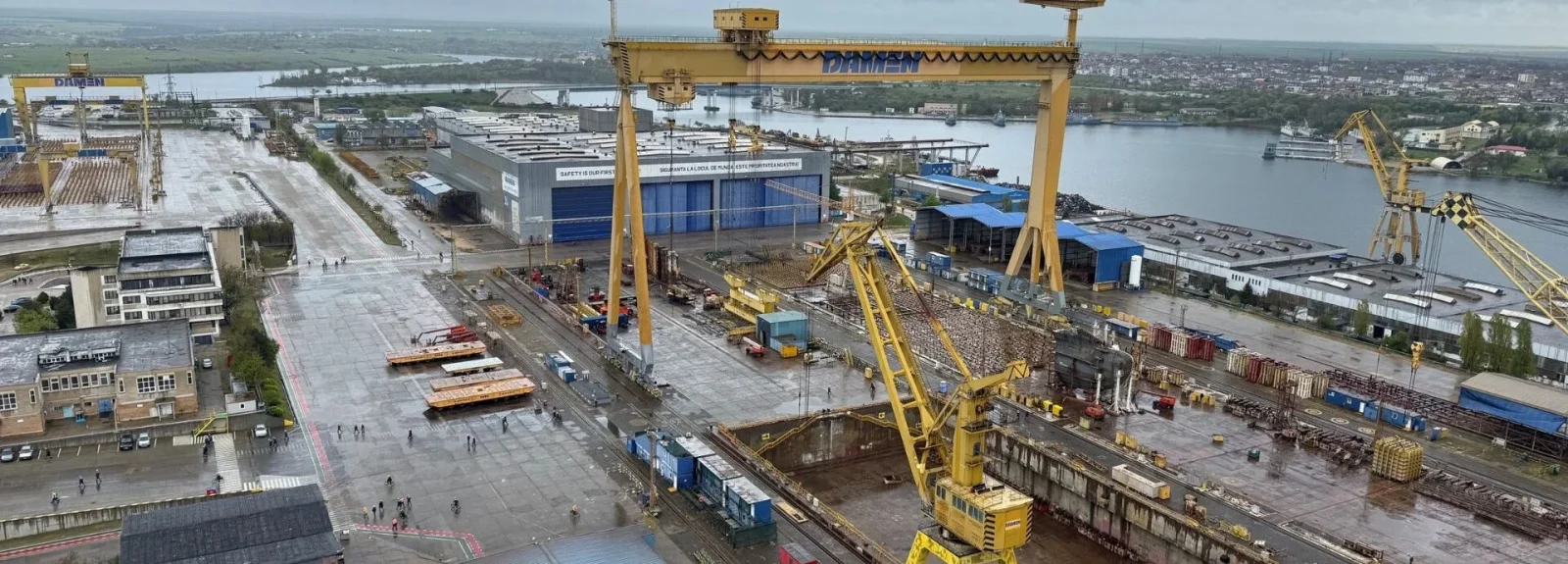
Quick take: German defense giant Rheinmetall won the bankrupt Mangalia shipyard in Romania at an October 9, 2026 auction for €138 million excluding VAT, run by court-appointed liquidator CITR. The sale still needs competition-authority sign-off; Rheinmetall plans to turn the yard into the production base for the roughly €920 million Romanian Navy ship order it won five months earlier.
How a shipyard went bankrupt, then got sold
Mangalia Shipyard had been a joint venture between Dutch Damen Shipyards and the Romanian state since 2018, with Damen holding 49% and the government 51%. Damen says the trouble began in 2023, when Romania changed the rules governing private enterprises, which it considered a breach of contract. After large loans to the venture went unrecovered, Damen filed for insolvency in 2024; creditors rejected a reorganization plan, and a court declared the company bankrupt in April 2026. At its peak, the yard employed 2,000 to 2,500 people.
The liquidator valued the assets at €84 million, but auctions opened at €184 million and the first three rounds drew no bidders by August. Only after the price was stepped down toward 75%, with a further drop to 50% available if needed, did Rheinmetall’s bid succeed — landing at exactly 75% of the original auction price. Romania’s defense minister said the yard had earlier been offered for just €10 million and that his ministry had rejected that, calling the Rheinmetall deal “a major step toward reviving the yard and restoring jobs.”
Rheinmetall’s shipbuilding push
Rheinmetall, primarily known as a weapons maker, entered shipbuilding by completing its acquisition of Naval Vessels Lürssen (NVL) in March 2026. It confirmed exploring a Mangalia takeover that May, the same month it won a roughly €920 million contract under the EU’s SAFE program to build two offshore patrol vessels and two support vessels for the Romanian Navy. The company wants to turn Mangalia into a major European shipbuilding hub and is exploring sharing the site with MSC, the world’s largest container shipping line, which had separately expressed interest in reviving the yard for maintenance and eventually commercial shipbuilding.
A production base on the Black Sea’s edge
The sale has not yet closed or cleared all regulatory hurdles; Romanian reporting indicates land and port infrastructure will remain state property, with mainly the production halls and equipment changing hands. Romanian coverage frames the deal as creating “a strategic defense and naval production hub for NATO’s eastern flank,” with commentary arguing that a functioning Mangalia yard could matter considerably while Russia maintains an aggressive posture in the region.
Why it matters for Turkey
Shipbuilding capacity on the Black Sea is a direct concern for Turkey, where the Montreux Convention constrains strait traffic and littoral states’ naval and shipyard capacity shapes the regional balance. As Turkish shipyards have expanded into Black Sea and neighboring export markets in recent years, Rheinmetall’s plan to build a European production hub at Mangalia points to a new competitor for both Romanian naval work and regional export contracts. Germany’s largest defense company establishing a permanent production base on the Black Sea coast is a regional power-balance development Ankara is likely to track closely.
Sources
- Maritime Executive, “Germany’s Rheinmetall Acquires Romania’s Mangalia Shipyard” — used for the sale price, the insolvency process, Rheinmetall’s shipbuilding strategy and Romanian government statements.
- Romania Insider, Mangalia shipyard sale coverage (October 2026) — used for the auction date, the €138 million price and the regulatory approval status.
- Naval News, Rheinmetall-Mangalia coverage (October 2026) — used for the NATO eastern-flank framing and strategic context.