Kongsberg to build counter-drone manufacturing plant in Poland

Kongsberg will build a counter-drone manufacturing and sustainment plant in northern Poland, investing more than PLN 200 million (about EUR 45 million) in a facility that is due to start serial production in the first half of 2028. The Norwegian group announced the decision on 13 October 2026, tying it directly to Poland’s SAN counter-UAS programme.
A plant on the Baltic coast
According to Kongsberg’s statement, the facility will be located in the Pomeranian region, close to Trójmiasto, the Tri-City area formed by Gdańsk, Gdynia and Sopot. The company expects to sign construction contracts before the end of 2026 and to begin building straight afterwards. Once at full capacity, the site is expected to employ more than 100 people in permanent positions.
The plant has a dual role: manufacturing counter-unmanned aerial systems and sustaining those already fielded. Kongsberg says it will be integrated into the group’s global manufacturing network and will serve Polish customers as well as future European ones. Defense News and Defence Blog put the investment at roughly $51 million.
Chief executive Eirik Lie said the facility would support Polish industry and defence capabilities while strengthening Kongsberg’s presence in the country. Speaking to Defense News, he added that the SAN deliveries were on track and that the company expects export contracts, which suggests the Pomeranian line is being sized for more than a single domestic customer.
What SAN actually buys
The investment follows the contract Kongsberg and its consortium partner, state-owned Polska Grupa Zbrojeniowa (PGZ), signed with Poland’s Armaments Agency on 30 January 2026. Kongsberg valued its share at about NOK 16 billion. Defense News reports the overall programme at roughly PLN 15 billion, financed through the EU’s Security Action for Europe (SAFE) loan instrument.
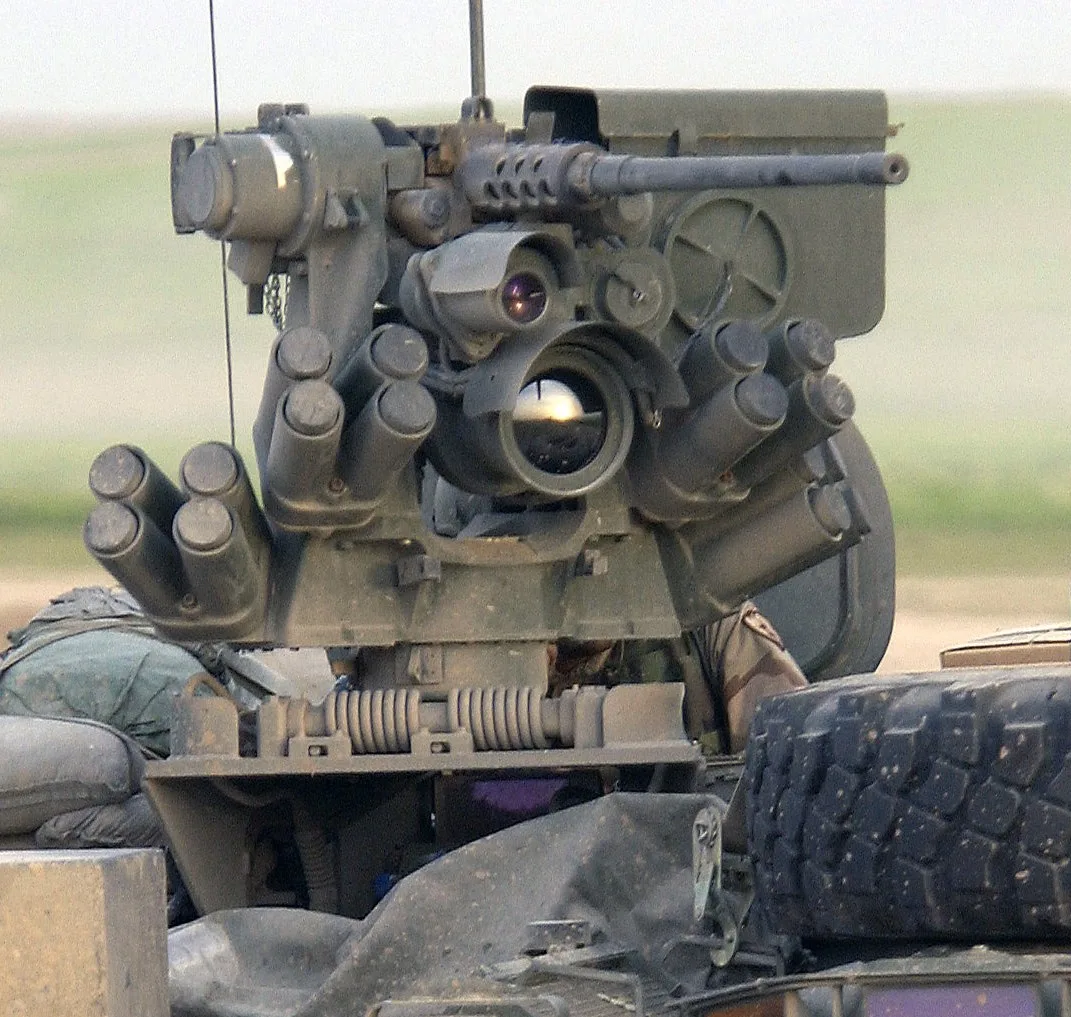
SAN covers 18 counter-UAS batteries. Kongsberg’s January release lists a layered set of effectors: 35mm, 30mm and 12.7mm guns, missiles, interceptor drones and other means of defeating aerial threats, with 70mm guided rockets as the primary missile armament on the remote weapon stations. Defense News adds that the package includes 52 firing platoons, 18 command platoons and 703 vehicles.
The hardware is drawn from Kongsberg’s PROTECTOR family, chiefly the unmanned, lightweight and fully digital MCT30 medium-calibre turret, which the company says is in full-rate production, and remote weapon stations with integrated counter-drone functions. Polish firm Advanced Protection Systems (APS) is supplying the command-and-control architecture that links sensors and effectors and connects them with the national air defence network.
Fifteen years in the Polish market
Kongsberg has been active in Poland for more than 15 years. Its best-known footprint there is the Naval Strike Missile, which equips the Polish Navy’s coastal missile unit, and the company previously set up an NSM sustainment centre at Wojskowe Zakłady Elektroniczne (WZE).
The new plant extends that relationship from coastal defence to short-range, low-altitude protection on land. In January Kongsberg had already signalled that it was preparing to expand manufacturing capacity in Poland as part of the SAN deliveries; the October announcement gives that plan a location, a budget and a schedule.
Why it matters on NATO’s eastern flank
The war in Ukraine has shown how cheap one-way attack drones, used in large numbers, can strain air defences built around costly interceptor missiles. SAN’s mix of cannon, rockets and interceptor drones is designed to match the cost of the response more closely to the cost of the threat, and Poland’s position on NATO’s eastern border makes it one of the alliance’s most exposed members to that kind of attack.
The deal also fits Warsaw’s procurement pattern: large foreign purchases are increasingly tied to local partners, work share and in-country production. With PGZ as consortium partner, APS on command and control and a dedicated plant near Gdańsk, a significant share of SAN’s lifecycle will sit inside Poland. EU-backed financing through SAFE adds a further incentive to keep production within Europe.
For the wider market, the move shows European counter-drone demand consolidating around layered batteries and regional production hubs. If the export orders Lie anticipates materialise, the Pomeranian facility could become one of Kongsberg’s main supply points for counter-UAS systems in Europe from 2028.
Sources
- KONGSBERG, “KONGSBERG to build manufacturing plant in Poland” (official press release, 13 October 2026): location, PLN 200m / EUR 45m investment, jobs, timeline, Eirik Lie quote, WZE NSM sustainment centre.
- KONGSBERG, “KONGSBERG wins NOK 16 billion contract to deliver Counter-UAS solutions in Poland” (official press release, 30 January 2026): SAN scope, 18 batteries, effectors, PROTECTOR MCT30 and RWS, APS C2.
- Defense News, “Kongsberg to build new plant in Poland for counter-drone systems” (13 October 2026, non-official): USD equivalent, programme value, platoon and vehicle numbers, SAFE financing, export remarks.
- Defence Blog, “Kongsberg puts $51M into Polish counter-drone plant” (13 October 2026, non-official): USD figure.