Britain Is Buying Its Way Back Into NATO’s Airborne Nuclear Mission

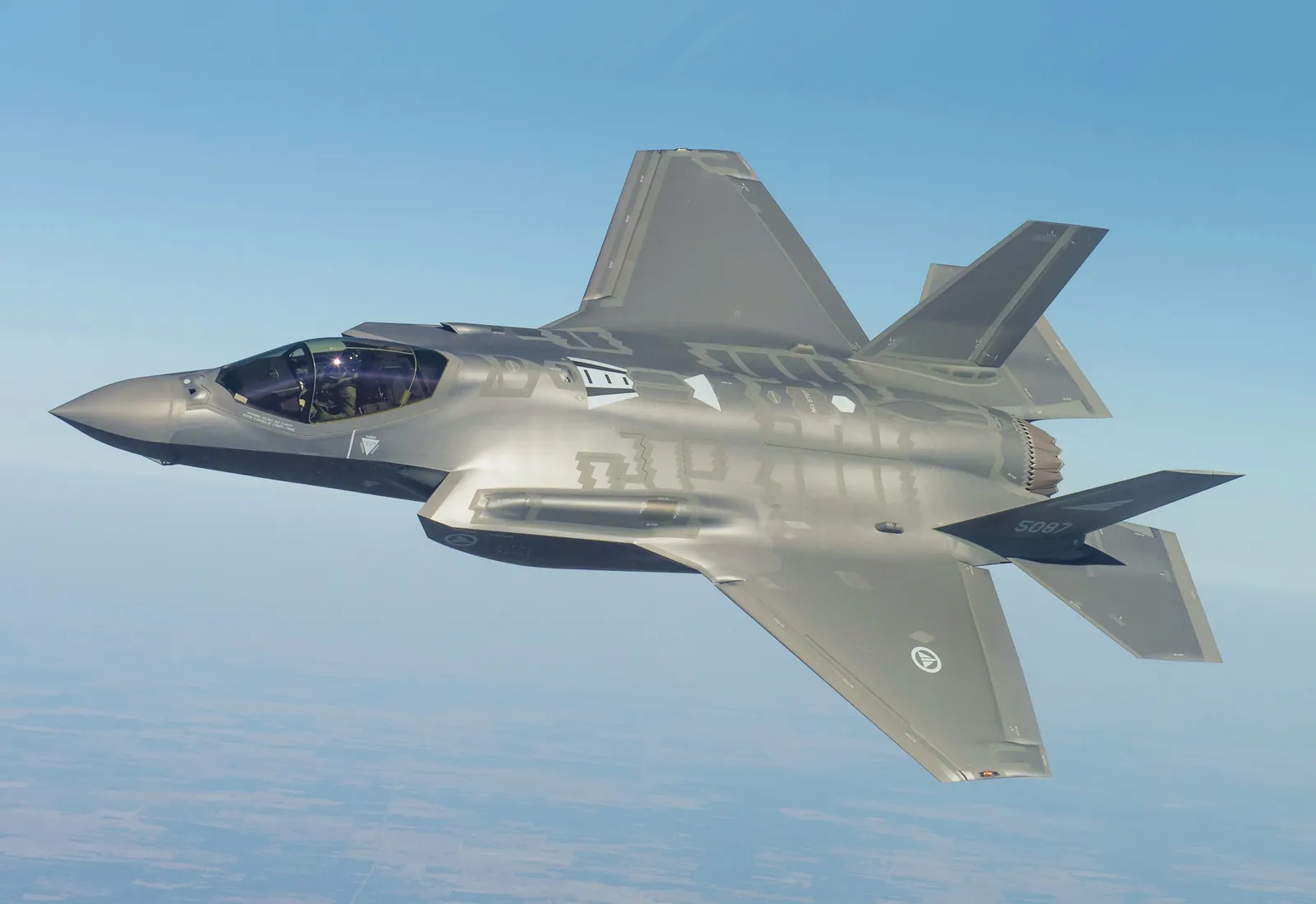
Britain’s 2026 Defence Investment Plan confirms that the first F-35A fighters will enter Royal Air Force service in the early 2030s, acquired to let the United Kingdom take part in NATO’s aircraft-based nuclear mission.
What the document says — and what it withholds
The plan gives a date but not a number. It allocates £2.2 billion to the F-35 programme across the 2026/27 to 2029/30 financial years without breaking that figure down by variant or programme element. Separately, £63.6 billion goes to the Defence Nuclear Enterprise over the same period — a distinction that keeps the submarine-based deterrent and the emerging airborne role in separate budget lines.
Why the A model
Britain currently operates 47 F-35Bs. The B is the short take-off and vertical landing variant, chosen so the jets could fly from the Queen Elizabeth-class carriers. That capability costs volume: the lift fan occupies space that would otherwise hold fuel and weapons.
The A is the conventional take-off model, with a larger internal bay and longer range — and, critically, it is the variant certified in the F-35 family to carry the B61-12 gravity bomb used in NATO’s nuclear sharing arrangement. Germany, the Netherlands, Belgium and Italy all bought the A for the same reason. Britain is now joining that group.
The UK has had no air-delivered nuclear capability since retiring the WE.177 in 1998, relying solely on Trident II D5 missiles aboard Vanguard-class submarines.
From one leg to two
A single-platform deterrent is efficient but brittle. Adding an air-delivered option diversifies the force and, in deterrence terms, inserts rungs into an escalation ladder that currently jumps straight from conventional conflict to a strategic exchange.
The timing is European as much as British. Russia’s war in Ukraine and its nuclear rhetoric reopened a debate most European capitals had considered settled, and France’s continued investment in its own air-launched ASMPA-R capability sits in the same conversation.
This is an infrastructure decision, not just a procurement
Standing up a nuclear-capable squadron requires far more than aircraft: certified weapon storage, hardened physical security, a dedicated personnel reliability programme and passage through NATO’s nuclear certification process. Bringing a base to that standard is a multi-year construction and inspection effort.
Seen that way, an early-2030s target is not leisurely — it is roughly what the preparatory work demands, which is why the decision is being announced now.
The £2.2 billion line, spread over four years and covering sustainment of the existing F-35B fleet as well, will not fund a large fleet. An initial F-35A batch is likely to be modest; Germany’s 35-aircraft nuclear-role order is a reasonable reference point.
The wider force
The plan frames the purchase under a “Next Generation Royal Air Force” concept combining fourth-, fifth- and sixth-generation crewed aircraft with uncrewed systems — Typhoon, F-35, the GCAP programme and future autonomous platforms in a single force construct. The document cites the existing F-35B fleet’s operational record, including the first British air-to-air engagement against a drone over Jordan.
What to watch next
Three questions remain open. The first is the aircraft count, which the investment plan deliberately leaves unstated. The second is basing: which RAF station will be brought up to nuclear certification standard, and on what construction timeline. The third is how the airborne role will be commanded and declared to NATO, given that Britain’s existing deterrent operates under national control rather than alliance assignment.
For Ankara there is a secondary line of interest. Britain is a central interlocutor in Turkey’s Eurofighter Typhoon acquisition, and the same investment plan sets out how the RAF intends to balance Typhoon, F-35 and GCAP over the coming decade. How much industrial capacity London reserves for its own fleet will shape what it can offer partners.
Sources
- UK Ministry of Defence, Defence Investment Plan 2026
- Defence Industry Europe, 24 August 2026
- Public NATO nuclear sharing documentation