Embraer Weighs Third C-390 Assembly Line in the United States

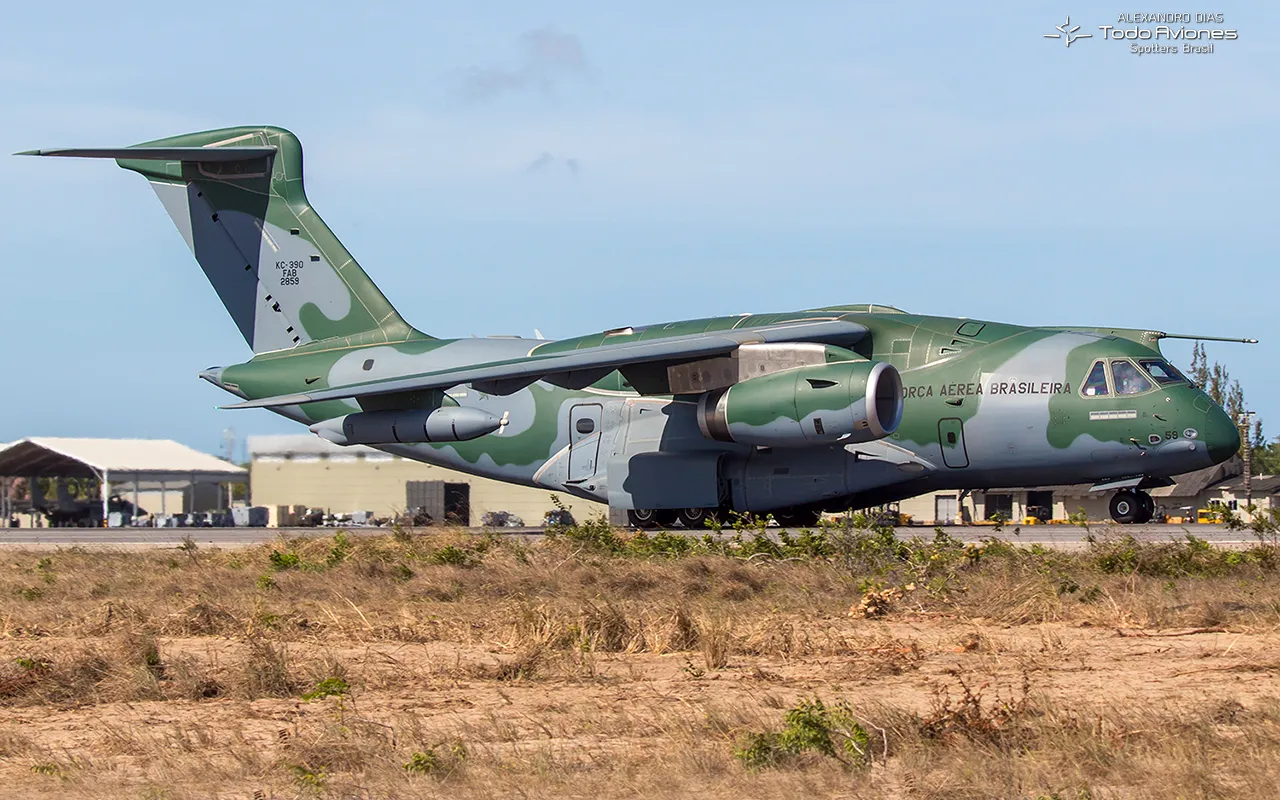
Brazilian aerospace manufacturer Embraer said on August 13, 2026, during its second-quarter earnings call, that it is considering the establishment of a third C-390 Millennium military transport aircraft assembly line, this time in the United States.
At a Glance
- Embraer is evaluating a possible third C-390 assembly line in the United States, in addition to its existing Brazilian production line and a further-along proposal under discussion for India.
- CEO Francisco Gomes Neto said the viability of a U.S. line would depend on the size of an as-yet-undisclosed order.
- Embraer’s Brazilian facilities are expected to reach a production capacity of 10 C-390 aircraft per year by 2030.
- The United Arab Emirates ordered 10 C-390s with options for 10 more — the program’s first Middle East customer and its largest international order to date.
- Colombia became the 13th country to select the KC-390, while India is pursuing 60 to 80 aircraft through its Medium Transport Aircraft (MTA) competition.
- Embraer’s Defence and Security division reported $304 million in Q2 2026 revenue, up 38% year-over-year, with backlog up 42% and a 2.6 book-to-bill ratio over the trailing 12 months.
Background
The C-390 Millennium, also marketed as the KC-390, is a medium-to-heavy tactical military transport and tanker aircraft developed with the Brazilian Air Force. Its jet-powered design gives it a speed and range advantage over turboprop-driven predecessors such as the C-130 Hercules and the CN-235/CASA family, and it is built to handle troop and cargo transport, aerial refueling, medical evacuation, search and rescue, and firefighting missions.
The program has recently gained momentum in export markets. The United Arab Emirates’ order for 10 aircraft, with options for 10 more, marked a milestone as the type’s first sale in the Middle East and the largest single international order Embraer has secured for the C-390 to date. Colombia’s selection of the aircraft brought the total number of KC-390 customer nations to 13. India, meanwhile, is weighing the C-390 as part of its Medium Transport Aircraft program, a competition for 60 to 80 aircraft that also carries the possibility of a more advanced local co-production arrangement than the one now being discussed for the United States.
That export momentum is showing up in Embraer’s financial results. The company’s Defence and Security division posted $304 million in revenue for the second quarter of 2026, a 38% increase from the same period a year earlier. Backlog climbed 42% year-over-year, and the division’s book-to-bill ratio over the trailing 12 months stood at 2.6 — meaning new orders significantly outpaced deliveries. To keep up with demand, Embraer is targeting a Brazilian production capacity of 10 C-390s per year by 2030.
Against that backdrop, a prospective U.S. assembly line remains an earlier-stage idea than the India proposal. Gomes Neto described it during the call as “another opportunity we are working on,” tying its ultimate feasibility to order size, while the specific U.S. military procurement effort it would support has not been disclosed.
What It Means for Turkey
Turkey’s own tactical and medium airlift fleet still relies heavily on aging C-130 Hercules and CN-235/CASA aircraft, and Turkish Aerospace Industries (TUSAŞ) has separately explored future transport aircraft concepts without yet committing to a full production program. Embraer’s export run with the C-390 — and its pursuit of a multi-country manufacturing footprint spanning Brazil, and potentially India and the United States — offers a useful point of comparison for Turkish industry as it weighs its own next steps in this segment.
The comparison is most relevant to how Turkish programs pursue international sales rather than to airlift specifically: TUSAŞ’s KAAN fighter and Hürjet trainer are both being marketed abroad with an eye toward eventual co-production partnerships, echoing the model Embraer has used to expand the C-390’s customer base to 13 countries. Embraer’s trajectory — from a single home-country line to discussions of assembly facilities abroad tied to major export orders — illustrates one path Turkish platforms could follow as their own international sales campaigns mature, though it does not suggest Turkey is acquiring or building the C-390.
FAQ
Why is Embraer considering a third assembly line in the United States?
The company says it wants to raise global production capacity and support an as-yet-undisclosed U.S. military procurement effort. CEO Francisco Gomes Neto said the line’s viability depends on the size of the eventual order.
How does the India proposal compare to the U.S. one?
The India proposal is at a more advanced stage of discussion and is linked to India’s 60-80 aircraft Medium Transport Aircraft (MTA) competition.
What is the C-390’s biggest export order so far?
The United Arab Emirates’ order for 10 aircraft, with options for 10 more, is both the program’s first Middle East sale and Embraer’s largest international C-390 order to date.
Does this development directly involve Turkey?
No — Turkey is neither purchasing nor manufacturing the C-390. Embraer’s export success and multi-country production model do, however, serve as a comparison point for the international sales strategies behind Turkish programs like KAAN and Hürjet.
Sources
- defence-industry.eu
- Embraer Q2 2026 Earnings Call (August 13, 2026)