KAAN and AMCA: Two Industrial Architectures for the Same Goal

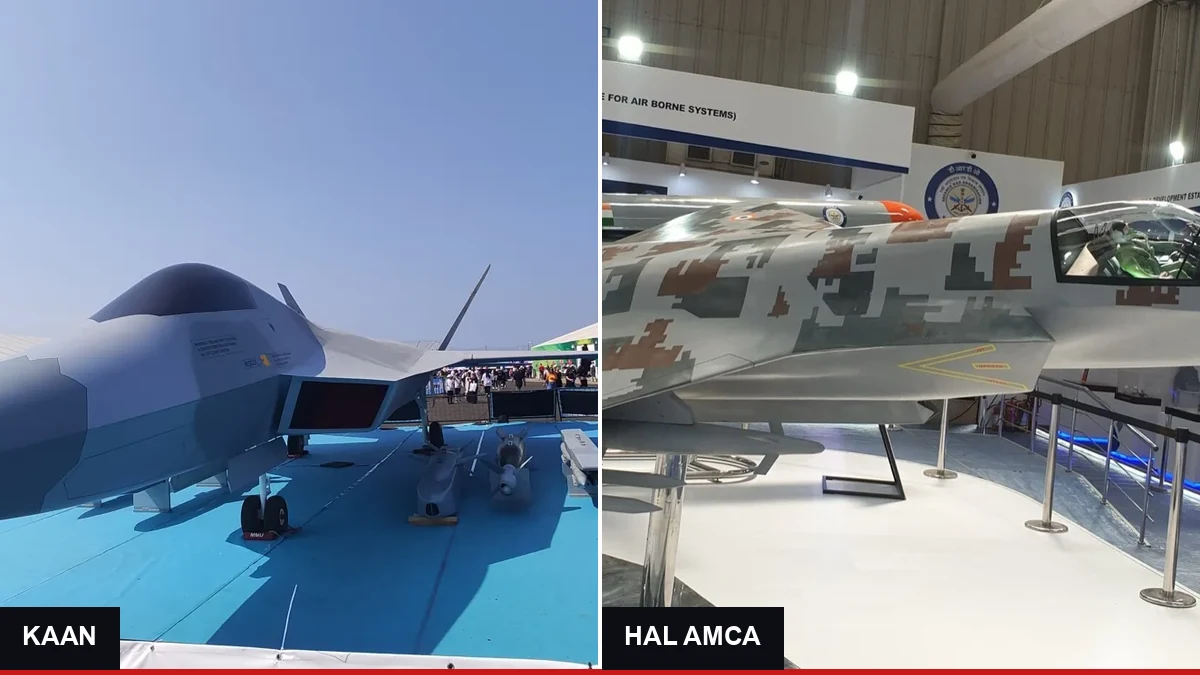
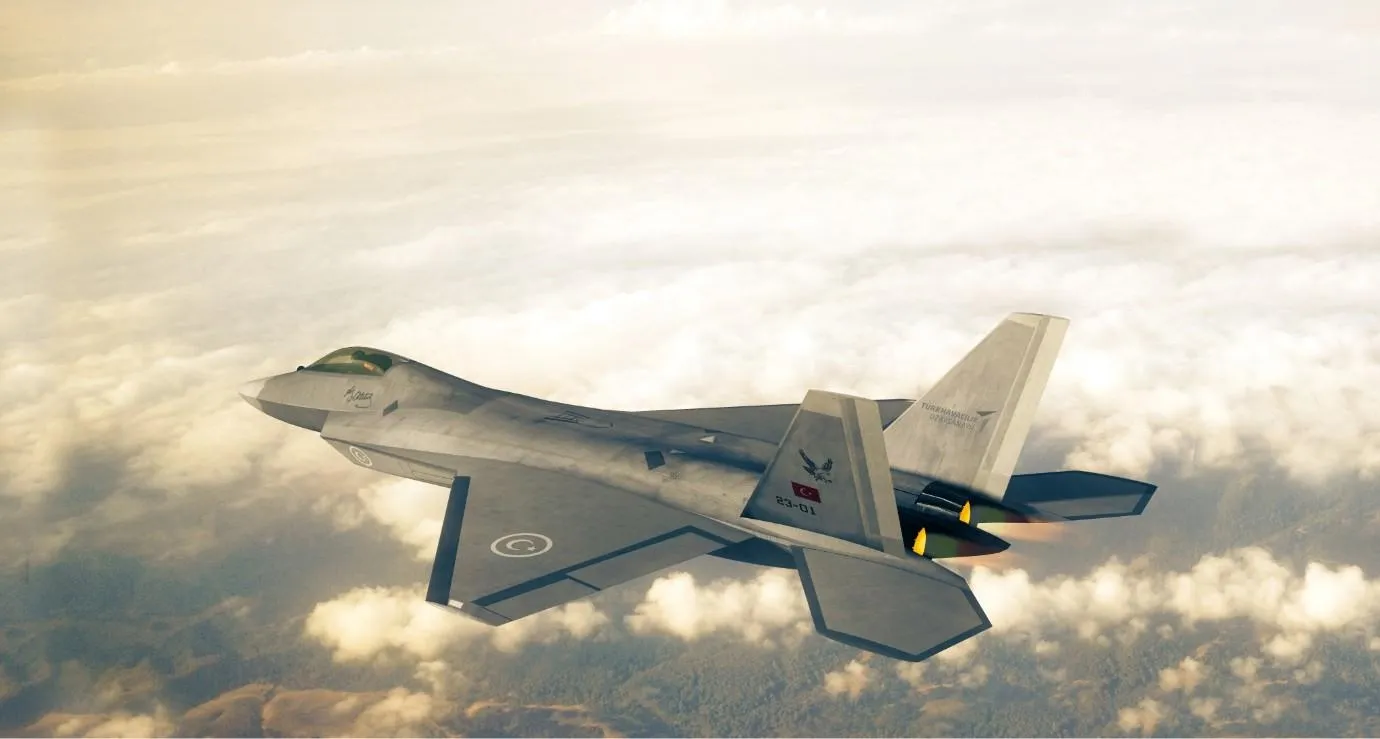
Türkiye and India set out in a similar period towards a similar goal: developing their own fifth-generation fighter. The calendars diverged — KAAN flew in February 2024, AMCA’s first flight has not yet happened. But the calendar is not this file’s subject. How the two programmes organise industry differs sharply, and that difference also explains the calendar.
The tenth file compared KAAN with South Korea’s KF-21 through risk sequencing: one solved production risk first, the other demand risk. Here the axis changes. The question is: how does a fighter programme mobilise a country’s industrial base — through a single prime contractor, or through a contract opened to competition?
The argument
Two countries are heading for the same goal with two different industrial architectures. Türkiye runs the programme through a single prime in a vertically organised structure. With the execution model it approved on 27 May 2025, India opened prototype development to competition between the public and private sectors. The first shortens the decision loop; the second widens the industrial base. Both are defensible — but their bills are paid from different line items.
What this file does not compare
Fifth-generation debates usually run on radar cross-section, sensor fusion and supercruise. This file does not hold that debate and could not: no comparable, verified performance data is public for either programme. Moreover, the «fifth generation» label itself has no standard definition; there is no common criterion for which items are mandatory.
Excluded from this file
- Unverifiable radar cross-section, range and manoeuvre performance claims.
- Model, thrust figure and schedule for the definitive engine — no official, verifiable announcement could be found for either programme.
- First-flight and service-entry target dates that contradict each other across secondary sources.
- Rankings built on an undefined «fifth generation» criterion.
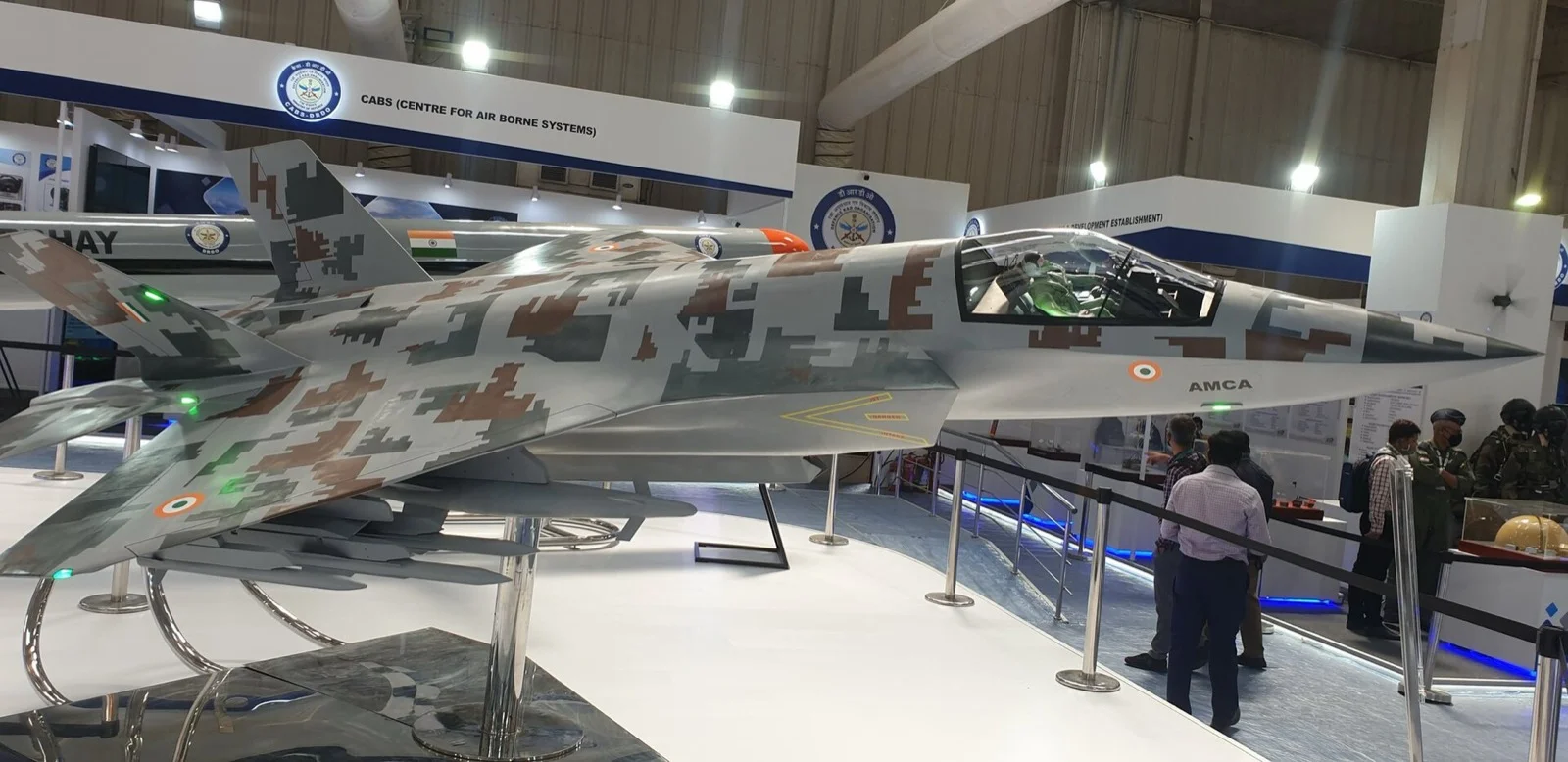
AMCA’s verified milestones
The items below rest on official records and ministry statements. Dates circulating in secondary sources for the first flight and service entry contradict each other and are not placed in the table.
| Stage | Date | Note |
|---|---|---|
| Completion of design work | 2023 | — |
| Prototype development approval | March 2024 | Cabinet Committee on Security |
| Full-scale engineering development | April 2024 | Start of the phase |
| Programme Execution Model approval | 27 May 2025 | Defence Minister’s approval; prototype work opened to competition |
| First flight | not achieved | Announced targets vary between sources |
The fourth row is this file’s backbone. According to the ministry the model provides equal opportunities to both private and public sectors on a competitive basis for prototype development, with the requirement that a bidder be an Indian company compliant with the laws and regulations of the country. The ministry describes it as a step towards harnessing indigenous expertise, capability and capacity to develop the prototype.
What the model changed
Fighter programmes in India have traditionally gone to the public-sector prime. The Execution Model removed that automatic award: the prototype contract is now decided by competition, and private companies can bid alone, in a consortium or as a joint venture. That is less an aircraft decision than an industrial policy decision.
The two programmes on one timeline
Left column KAAN, right column AMCA. Only verified items appear.
The chart shows two different kinds of movement. The KAAN rows are about the aircraft: flight, flight, engine test, export. The AMCA rows are about the programme: design approval, budget approval, phase start, execution model. That is not a value judgement but the natural consequence of two programmes being at different stages.
The last bar carries no forecast. Announced first-flight targets for AMCA contradict each other across secondary sources, so no date is given here.
Single prime versus a contract opened to competition
This is the real division. A fighter programme can mobilise a country’s aerospace industry in two different ways, and each has its own logic.
| Metric | Single prime | Contract opened to competition |
|---|---|---|
| Decision loop | Short | Long; a tender process is added |
| Industrial base | Deepens around the prime | Spreads across a wider base |
| Cost pressure | Comes from inside | Comes from competition |
| Risk | Concentrated at one point | Distributed, but coordination gets harder |
| Knowledge | Gathers in one institution | Forms across several institutions |
| Speed | Advantageous in the early phase | Builds capacity over the long run |
The first row explains a good part of the calendar difference. Under a single prime, the time from a design decision to its implementation is short; under a competitive model the same decision passes through specification, bid evaluation and contract stages. That extra time is not inefficiency but the price of a deliberate choice: the aim is not to finish faster but to make more companies competent.
On the Turkish side the same end is pursued another way: the prime stays fixed while the subcontractor network deepens, as the breadth of the manufacturer’s product range shows. As the ninth file argued for the flying wing and the tenth for the fighter, the real barrier to entry in this class is not the airframe but the subsystem network — and that network has to be built under either model.
Three concrete consequences of opening to competition
The Execution Model is not an abstract regulation; it decides who builds the prototype. It has three concrete consequences, and they do not all pull the same way.
| Consequence | Direction | Explanation |
|---|---|---|
| Spread of competence | Positive | Every bidding company must build fighter-level engineering capacity |
| Cost discipline | Positive | Bid competition creates price pressure absent in a sole-source contract |
| Calendar | Costly | Specification, bid evaluation and contract stages add time to the programme |
The third row is the institutional explanation of the calendar difference noted at the top. But reading it as a delay would be wrong: the model was built not to accelerate the work but to widen the base. A country raising three companies rather than one to fighter-programme level gains something that outlives the programme itself.
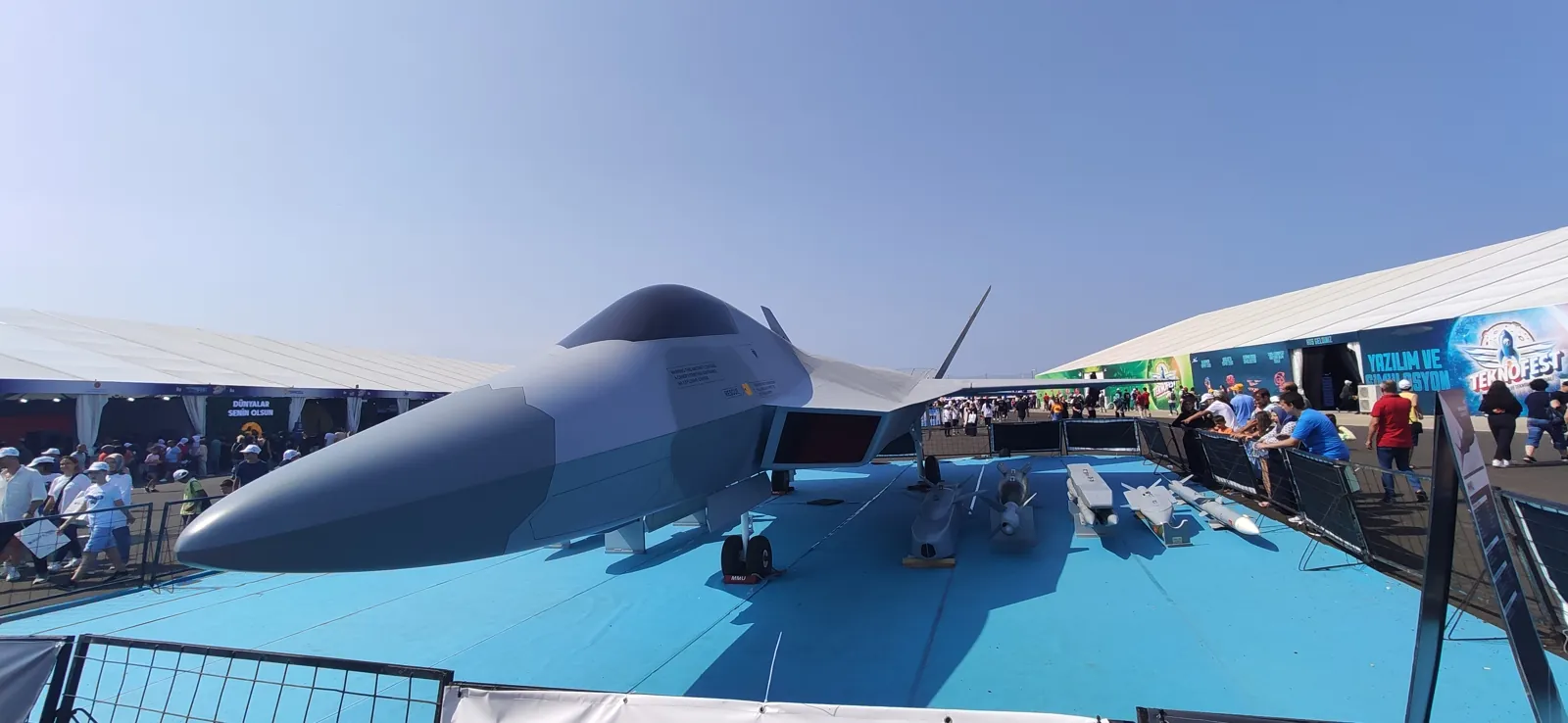
The accumulation behind the two programmes
No fighter programme starts from nothing. Both rest on an inheritance from earlier platforms, and the shape of that inheritance shapes the programme.
| Metric | Türkiye | India |
|---|---|---|
| Previous fighter programme | None; the first national fighter programme | An existing light combat aircraft line |
| Unmanned aircraft accumulation | Products in tactical, heavy and UCAV classes | Low conversion rate from programme to product on the unmanned side |
| Prime structure | Single prime | Public-sector prime plus work opened to competition |
| Engine | Interim foreign engine; domestic work continues | Interim foreign engine; partnership sought for the definitive engine |
The first two rows balance each other and that should be written plainly. India’s light combat aircraft line carries a manned fighter production experience Türkiye does not have. Against that, as the third file in this series showed, India’s conversion rate from unmanned programme to product stayed low. The accumulation exists on both sides, but on different lines.
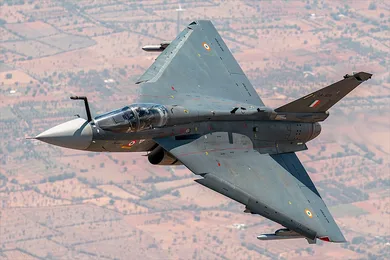
The prototype fleet: the quiet variable in test pace
An element underlined for KIZILELMA in the eighth file applies here too: the number of prototypes flying at once decides whether the test schedule runs in sequence or in parallel. A programme on one airframe must run every test one after another; a programme on three can run aerodynamic, systems and weapons testing simultaneously.
A five-prototype plan has been announced for AMCA, indicating an intent to structure the test phase in parallel. No verifiable total for flying KAAN prototypes has been published, so no figure is given here.
| Fleet size | Test structure | Result |
|---|---|---|
| Single prototype | Tests run in sequence | Calendar lengthens; one fault halts the whole programme |
| Two or three | Aerodynamic and systems testing separate | Calendar shortens markedly |
| Four or more | Weapons and sensor testing parallelise too | High investment; shortest calendar |
The table also explains the cost side: raising the prototype count shortens testing but enlarges the up-front investment. Which balance is chosen is, again, a programme architecture decision — and lands on this file’s central argument.
The shared constraint: the engine
Both programmes stall at the same place, and that is no coincidence. A fighter engine is a technology line only a handful of countries can produce. Both proceed on an interim foreign engine: KAAN made its early flights on the General Electric F110-GE-129, and General Electric F414-class engines are foreseen for AMCA’s first prototypes.
The definitive engine: why we give no date or model
Work on a definitive engine continues in both countries. But no model, thrust figure or schedule appears in this file: no verifiable official announcement could be found for either programme, and figures circulating in secondary sources contradict each other. The rule set for the TB2’s engine in the sixth file applies here too.
Why the engine weighs so heavily was explained by the fifth threshold in the sixth file: if a critical component depends on another state’s export licence, the system is not an export product but a conditional assembly line. The constraint applies identically to both programmes, and both are working in the same direction.
Why «fifth generation» is not a yardstick
Both programmes are described with a fifth-generation target. But the label has no standard definition; different sources treat different items as mandatory. That is why no generational ranking is made in this series.
| Item | Why it is contested |
|---|---|
| Low observability | No measured radar cross-section is published for any programme |
| Internal weapons carriage | Presence is public; capacity is not |
| Sensor fusion | A software matter; cannot be verified externally |
| Supercruise | Depends on engine data; the definitive engine is unsettled in both |
| Network-centric warfare | Definition varies by country and doctrine |
What the table says is simple: fifth generation is a target description, not a measurable class. Whether a programme fits the label can only be argued after it enters service and accumulates operational data.
Where are the six thresholds in the two programmes?
The six-threshold model was built for unmanned platforms and adapted to the fighter in the tenth file. Applied to these two programmes it gives the following.
| Threshold | KAAN | AMCA |
|---|---|---|
| First flight | 21 February 2024 | not achieved |
| 1. Home inventory | not completed | not completed |
| 2. Weaponisation / operational use | ongoing | not begun |
| 3. First export contract | Indonesia (IDEF 2025) | none |
| 4. Allied customer | not established | not established |
| 5. Supply-chain independence | ongoing, on the engine axis | ongoing, on the engine axis |
| 6. Production abroad | part of the contract | not on the agenda |
What stands out is that the two programmes sit at the same place on the first threshold. Neither has entered its own air force’s inventory. That is the fighter class’s sharpest difference from the unmanned class: the scale is so large that the service-entry step arrives years after the first flight, and each of the acceptance steps listed in the eighth file multiplies in length here.
EM-PDI assessment
The Envanter Medya Programme Development Index (EM-PDI) is used across the series to score programmes against common criteria. It is an editorial assessment, not an official ranking; the weightings are set out in the first file. All three programmes are at an early stage, so the scores sit in a low band.
AMCA’s score follows from the first flight not yet having taken place; the index weights operational service, serial production and calendar. The score is not a capability judgement but a measure of the stage a programme is at, and it changes as the stage advances.
The limits of this comparison
This file compares industrial architectures and verified programme stages. The limits need stating plainly:
- India’s manned fighter production experience is longer. The light combat aircraft line provides serial-production and inventory accumulation with no counterpart in Türkiye.
- A competitive model builds capacity over the long run. The Execution Model’s purpose is not to speed the work but to raise several companies to fighter-programme competence. That is a gain paid for with calendar.
- No capability data. No comparable radar, range or observability data is public for either programme.
- Target dates excluded. AMCA’s first-flight and service-entry targets contradict each other across secondary sources and do not appear here.
Conclusion: architecture comes before calendar
What this series keeps finding holds here too: what decides where a programme ends up is not technology but programme architecture. In the divergence of ANKA and TAPAS the problem was not technical shortfall; nor was it in the demonstrator generation. Here too, two countries head for the same goal on different industrial decisions, and much of the calendar difference follows from those decisions.
India’s choice means a calendar cost in the short run and an industrial-base gain in the long run. Türkiye’s choice means speed in the short run and risk concentrated at one point in the long run. Both accounts will be settled over the coming decade — the kind of accumulation a manufacturer’s global standing only registers slowly.
Next in the series
File 12 — HÜRJET and the FA-50. We step down a class from the fighter: jet trainer and light attack. That band is far more active on export than the fighter class — and South Korea moved early in it. The full series sits on the Türkiye and World Defence Programmes page.
Frequently asked questions
What stage is the AMCA programme at?
Design work was completed in 2023, prototype development approval came from the Cabinet Committee on Security in March 2024, and the full-scale engineering development phase began in April 2024. The Programme Execution Model was approved on 27 May 2025. The first flight has not taken place; announced target dates vary between sources and are not given as fact in this file.
What did the AMCA Programme Execution Model change?
India’s Defence Minister Rajnath Singh approved the model on 27 May 2025. According to the Defence Ministry, it provides “equal opportunities to both private and public sectors on a competitive basis” for prototype development, with the requirement that a bidder “should be an Indian company compliant with the laws and regulations of the country”. The ministry describes it as a step towards harnessing indigenous expertise, capability and capacity to develop the prototype.
What is the core difference between KAAN and AMCA?
Beyond the calendar, a difference of industrial architecture. Türkiye runs the programme through a single prime contractor; India opened the prototype contract to competition between the public and private sectors. Two different models for mobilising an industry.
What stage is KAAN at?
The maiden flight took place on 21 February 2024 and lasted 13 minutes; the second flight on 6 May 2024 reached 10,000 feet. Afterburner tests were conducted in early December 2024. A definitive sales contract for 48 aircraft with Indonesia was signed in Istanbul during IDEF 2025.
What is the engine situation in the two programmes?
Both are proceeding on interim engines. KAAN made its early flights on the General Electric F110-GE-129; General Electric F414-class engines are foreseen for AMCA’s first prototypes. Work on a definitive engine continues in both countries; no model, thrust figure or schedule is given in this file because no verifiable official announcement could be found.
Does this file say which aircraft is better?
No. No comparable, verified performance data is public for either programme. The file compares programme calendars and industrial architecture; it makes no capability ranking.
Why is the «fifth generation» label contested?
It has no standard criterion. There is no common definition of which items — low observability, internal weapons carriage, sensor fusion, supercruise — are mandatory. No generational ranking is therefore made in this series.